
Positive ADOA data points to less frequent dosing and broader potential
PYC Therapeutics (ASX: PYC) has released a program update on PYC-001, its drug candidate for Autosomal Dominant Optic Atrophy (ADOA), reporting two positive results across its non-clinical and clinical work.
Studies in Non-Human Primates (NHPs) demonstrated a sustained increase in target gene (OPA1) expression in the retina 4 months after a single dose, while ADOA patients in the ongoing Phase 1/2 trials showed sustained improvements in visual acuity alongside decreased retinal stress.
The NHP data supports extending the dosing interval being evaluated in the ongoing trials beyond once every 4 months, and the precision medicine company will now review and amend the clinical protocol accordingly. The results are also supportive of translational potential into other blinding eye diseases, including glaucoma, where increased OPA1 expression could impact the disease course.
The update was released on 21 July 2026 by the Perth and San Francisco based company, which describes itself as dedicated to changing the lives of patients with genetic diseases who have no treatment options available.
When big ASX news breaks, our subscribers know first
What ADOA and PYC-001 actually target
ADOA is an inherited blinding eye disease caused by a ~50% reduction in OPA1 expression in the retinal ganglion cells. When OPA1 protein falls, these cells progressively lose function, leading to vision loss.
PYC-001 is designed to address the underlying cause rather than the symptoms. It is an RNA therapy engineered to increase OPA1 protein expression, aiming to correct the root deficiency that drives the disease.
PYC develops its candidates using a proprietary drug delivery platform intended to enhance the potency of precision medicines within the RNA therapeutic class. The company focuses on monogenic diseases, conditions caused by a defect in a single gene.
- ADOA cause: ~50% drop in OPA1 protein
- PYC-001 mechanism: boosts OPA1 expression
- Goal: disease-modifying, not symptomatic relief
Non-clinical data supports a less frequent dosing schedule
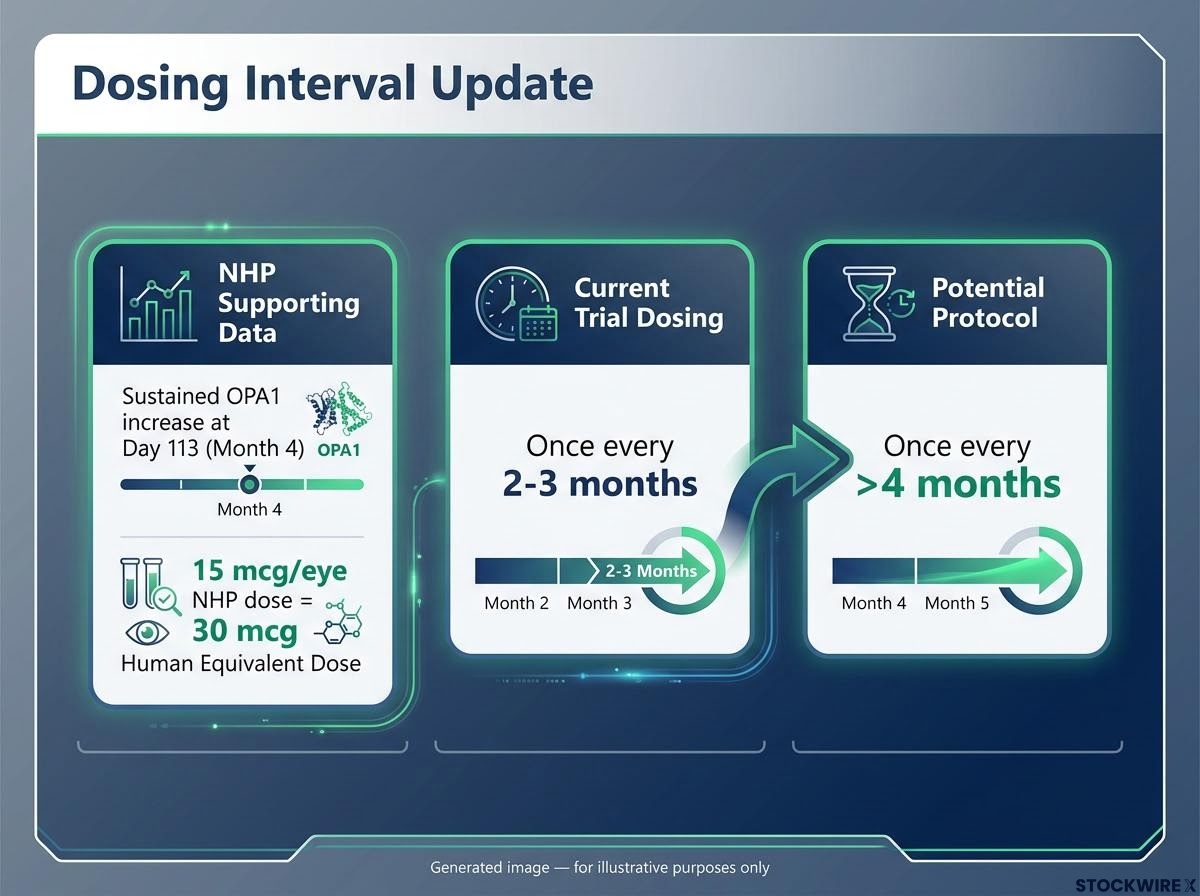
In the NHP studies, a single 15 mcg per eye dose, the Human Equivalent Dose of the 30 mcg dose currently being evaluated in the ongoing Phase 1a/1b human trials, produced a statistically significant, sustained increase in OPA1 protein in the retina at Day 113 (Month 4). The result was measured against untreated control animals using a Welch’s t-test (p<0.05).
At the ARVO 2026 data presentation in May, PYC reported a 1.6-fold increase in OPA1 protein expression in non-human primates alongside low-contrast visual acuity improvements extending beyond 60 weeks in ADOA patients, providing an earlier cross-program snapshot that contextualises the Month 4 NHP result reported here.
Patients in the ongoing trials currently receive PYC-001 once every 2-3 months. According to the company, the NHP data supports an extension of that interval to once every >4 months, and PYC will now review the clinical protocol with a view to extending it.
A longer dosing interval could reduce patient treatment burden. The company notes this is particularly important for a potential glaucoma indication, as glaucoma patients are sensitive to dosing frequency.
| Data Point | Result | Investor Impact |
|---|---|---|
| NHP OPA1 expression at Month 4 | Statistically significant sustained increase (p<0.05) | Supports disease-modifying mechanism |
| Dosing interval | Current 2-3 months, potential >4 months | Reduced treatment burden |
| Dose | 15 mcg/eye NHP = HED of 30 mcg human dose | Translational relevance to human trials |
Patients show sustained vision gains with a clean safety profile
The clinical data comes from the ongoing Phase 1/2 MYRTLE trial, where ADOA patients demonstrated sustained improvement in Low Contrast Visual Acuity (LCVA) and decreased retinal stress following repeat doses of PYC-001.
The LCVA data was drawn from patients who received 10 mcg or more of the drug candidate and had an LCVA of <50 in the treated eye at baseline, along with at least one follow-up visit with LCVA recorded. 11 of the 15 patients enrolled in the study met these criteria, with data accurate as at 30 June 2026. Treated eyes showed improvement relative to untreated fellow eyes, reinforcing the treatment effect.
Retinal stress was measured via Flavoprotein Fluorescence (FPF), a biomarker of mitochondrial stress that acts as a precursor of retinal cell death. Decreased FPF was associated with the observed improvements in visual acuity.
On safety, the company reported continuation of the absence of any Treatment-Related Serious Adverse Events in any patient who has received PYC-001 to date, including those who have received multiple doses.
-
Sustained visual acuity improvement (treated versus untreated fellow eyes)
-
Decreased retinal stress (FPF biomarker)
-
No Treatment-Related Serious Adverse Events to date
Why this data strengthens the investment case
The combination of results connects several strands of the investment case. A disease-modifying mechanism validated in NHPs, real patient vision improvements, and a clean safety profile together support the protocol amendment and the potential in additional indications.
The update also introduces dual optionality. The non-clinical data supports an extended dosing interval, while the underlying mechanism opens the door to additional indications where increased OPA1 expression has potential to impact the disease course.
PYC Therapeutics ADOA Program Update
“The sustained increase in OPA1 protein expression is supportive of both the disease-modifying potential of PYC-001 (given that decreased OPA1 expression is the root cause of ADOA) and an extended dosing interval in the ongoing clinical trials.”
What comes next for PYC-001
The immediate next step is a review and amendment of the clinical protocol to extend the dosing interval in the ongoing ADOA trials, subject to the risks and uncertainties outlined in the company’s ASX disclosures.
Beyond ADOA, PYC is evaluating PYC-001 in pre-clinical models of glaucoma, with a view to initiating a Phase 2 study in glaucoma patients if these models are successful. This expansion remains conditional, subject to alignment with regulatory authorities and the final outcomes of the ongoing ADOA trials.
The company currently has three clinical-stage drug development programs in total, providing pipeline breadth alongside the lead ADOA candidate.
PYC’s three clinical-stage programs span ADOA, RP11, and Polycystic Kidney Disease, with the PKD program advancing through Phase 1 cohort dosing in parallel with the eye disease pipeline.
- Amend clinical protocol for extended dosing interval
- Advance pre-clinical glaucoma models
- Potential Phase 2 glaucoma study (conditional on regulatory alignment and ADOA trial outcomes)
Don’t Miss the Next Healthcare Breakthrough on ASX
Big News Blast delivers FREE breaking ASX healthcare news directly to your inbox within minutes of release, complete with in-depth analysis. Join 20,000+ subscribers already ahead of the market and never miss a critical clinical update. Click the “Free Alerts” button at Big News Blast to start receiving alerts the moment ASX healthcare news breaks.