

Noxopharm’s Sofra technology triggers immune response to dying cancer cells in new preclinical study
Noxopharm Limited (ASX:NOX) has generated new preclinical data showing that its Sofra™ technology can help activate immune cells in response to dying cancer cells. The result strengthens the case for the technology’s potential in immuno-oncology, an area attracting substantial global investment.
The core finding was clear. Significant immune activation occurred when the company’s TLR8-amplifying oligonucleotide was combined with dying cancer cells, and this response was not observed when the oligonucleotide was absent. The study, conducted with the Hudson Institute of Medical Research, advances Noxopharm’s oncology program towards in vivo proof-of-concept studies.
When big ASX news breaks, our subscribers know first
What the new data showed
The experiment focused on macrophages, the immune cells that naturally engulf and clear dying cells. These macrophages were derived from the bone marrow of mice carrying human TLR8, an immune sensor that can trigger a broader immune response when activated.
Laboratory-grown human cervical cancer cells, known as HeLa cells, were exposed to UV light to induce cell death. The dying cancer cells were then fed to the macrophages.
On their own, the dying cancer cells did not trigger immune activation. When combined with 1 µM of the TLR8-amplifying oligonucleotide (Nox-oligo), the treatment elicited a strong immune response, reaching 7-fold the level of the untreated group.
A parallel preclinical experiment from the same Hudson Institute collaboration recorded a 437% immune response above baseline when the TLR8-potentiating oligonucleotide was combined with immune-silent cellular RNA, a result that independently confirmed the platform’s ability to unmask RNA the immune system would otherwise ignore.
| Treatment group | Immune activation outcome | Relative level |
|---|---|---|
| Untreated | Baseline | Baseline |
| Dying cancer cells alone | No activation | No response |
| Dying cancer cells + Nox-oligo | Significant activation | 7-fold vs untreated |
Immune activation was measured as a TLR8-driven immune activation biomarker (pg/ml), with results graphed as Mean ± SEM. Statistical significance was reported at * p<0.05 by One-way ANOVA followed by Dunnett’s test.
Professor Michael Gantier, Hudson Institute
“These findings show that by sensitising TLR8 to the detection of RNA that would otherwise remain hidden, we can activate macrophages and potentially initiate an immune response targeted against cancer cell debris. We are now focused on demonstrating how this mechanism could translate into a powerful new approach for cancer treatment.”
Understanding the science: how Sofra makes cancer ‘visible’ to the immune system
When cancer cells die following treatments such as chemotherapy or radiotherapy, they release cellular material, including RNA, that could potentially alert the immune system. The problem is that this cancer-derived RNA can remain “immune-silent”, limiting the immune system’s ability to recognise and respond to the tumour.
At a conceptual level, the Sofra approach aims to reveal the presence of cancer to the immune system. It uses synthetic oligonucleotides to sensitise the TLR8 immune sensor, helping to expose otherwise hidden cancer RNA so that immune cells respond.
The mechanism can be summarised in three steps:
-
An immune cell (macrophage) approaches and engulfs dying cancer cells, but no threat is recognised on its own.
-
The TLR8-amplifying Sofra oligonucleotide is added, sensitising the immune cell.
-
The sensitised immune cell engulfs the dying cancer cells, resulting in successful immune activation.
This work is relevant to the growing field of cancer immunotherapy, which includes Merck’s Keytruda immuno-oncology drug, currently being used in combination with a Moderna mRNA vaccine in a successful melanoma skin cancer trial. That reference reflects broader field context rather than any Noxopharm collaboration.
The latest results build on earlier Noxopharm research showing the Sofra technology could expose otherwise hidden RNA to the immune system (see ASX announcement dated 4 August 2026). This study extends that work to whole cancer cell debris, more closely reflecting what occurs when cancer cells die.
According to CEO Dr Olivier Laczka, “For the first time, we have shown that our technology can help immune cells respond directly to dying cancer cells.”
Why it matters for investors and what’s next
For investors, the data supports the technology’s potential to complement existing cancer treatments that kill tumour cells, including chemotherapy and radiotherapy, rather than replace them. That points to a broad potential application across the oncology setting, though the findings remain preclinical and do not yet imply clinical or human efficacy.
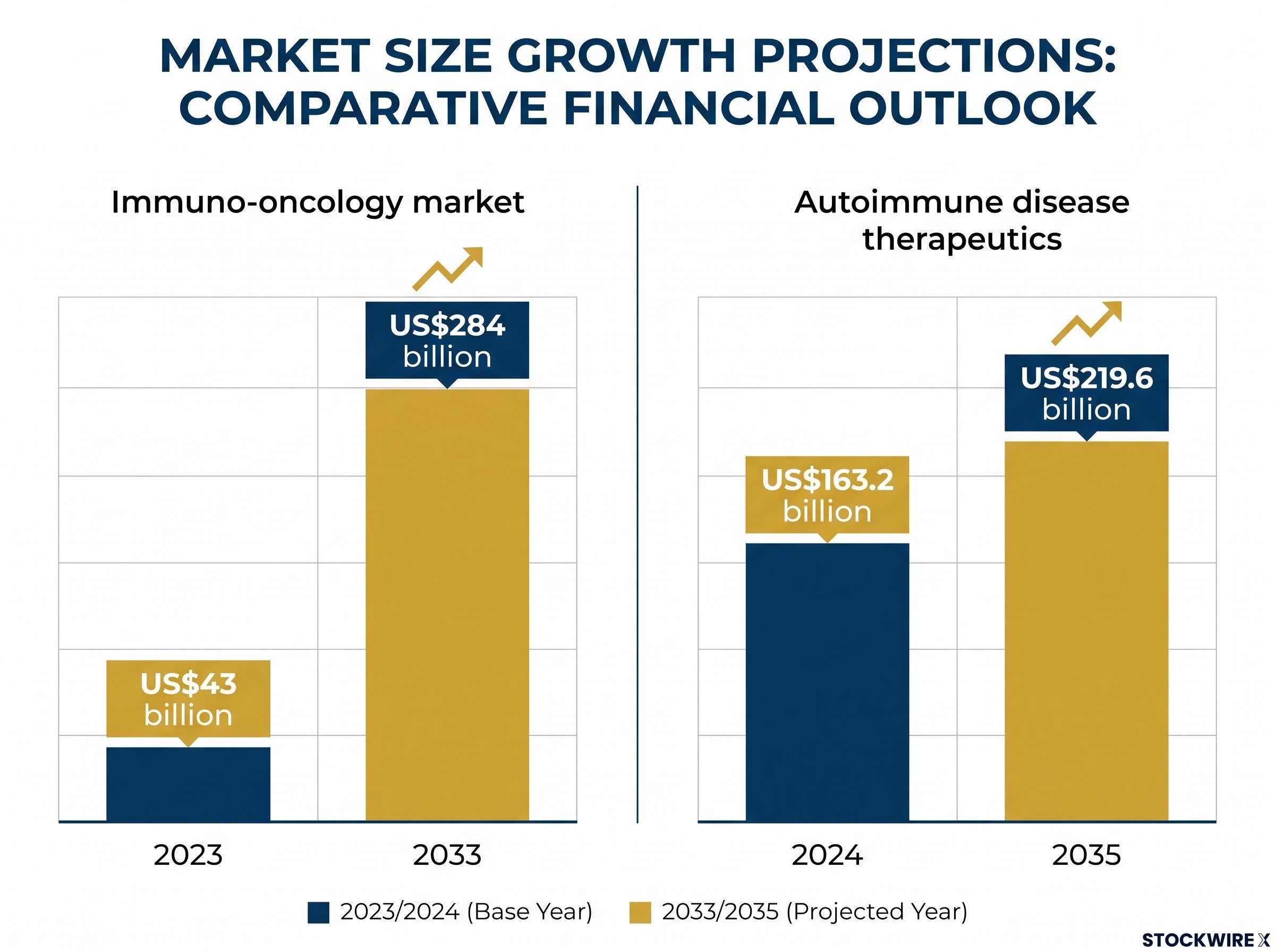
The commercial backdrop is sizeable. According to figures cited in the announcement, the worldwide immuno-oncology market was worth US$43 billion in 2023 and is projected to reach US$284 billion by 2033. The broader global autoimmune disease therapeutics market was valued at US$163.2 billion in 2024 and is expected to reach US$219.6 billion by 2035.
The new data also reinforces validation of the wider Sofra platform. Its lead clinical asset, SOF-SKN™, is a topical therapy initially being developed for cutaneous lupus erythematosus, with Phase I completed and further clinical development progressing.
CEO Commentary
“These results provide an important step forward for our oncology program… This supports the potential for our approach to complement cancer treatments such as chemotherapy and radiotherapy, while providing further validation of the broader Sofra platform as we progress towards in vivo proof-of-concept,” said Dr Olivier Laczka, Chief Executive Officer.
With the ex vivo findings now in hand, the next milestone for the oncology program is in vivo proof-of-concept.
Bridging ex vivo results like these into in vivo proof-of-concept requires a reliable testing system, and Noxopharm’s purpose-built human-relevant TLR8 animal model, validated at a 66-fold immune activation level, is the infrastructure designed to carry the oncology program through its next milestone.
Don’t Miss the Next Healthcare Breakthrough
Big News Blast delivers FREE breaking ASX healthcare news to your inbox within minutes of release, complete with in-depth analysis. Join 20,000+ investors already staying ahead of the market. Click the “Free Alerts” button at StockWire X to get the next market-moving announcement the moment it drops.