

Ethics approval secured as Imagion’s Phase 2 breast cancer trial moves to patient enrolment
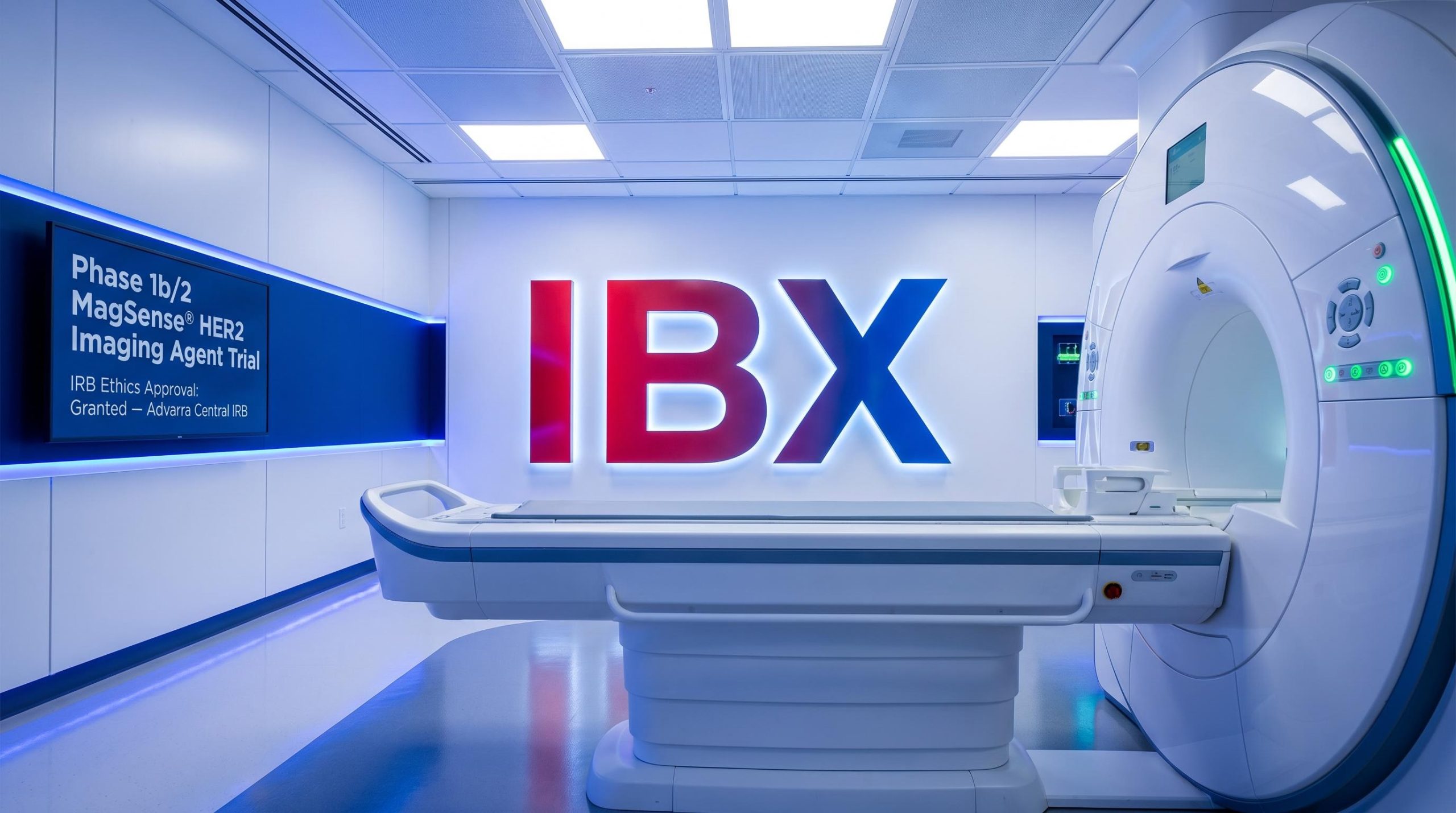
Imagion Biosystems (ASX: IBX) has announced that Advarra, Inc. has granted central Institutional Review Board (IRB) ethics approval for the company’s Phase 1b/2 clinical trial of the MagSense® HER2 Imaging Agent. The approval clears a key ethics and regulatory requirement prior to patient enrolment and, combined with the previously received U.S. Food and Drug Administration (FDA) Investigational New Drug (IND) clearance, satisfies both the regulatory and ethics requirements needed to commence the trial in the United States. Site activation activities are now underway, with first patient enrolment expected to commence following first site activation.
When big ASX news breaks, our subscribers know first
What the central IRB approval means for the trial — and why it matters
An Institutional Review Board is an independent ethics committee that reviews clinical research proposals to protect the rights, safety, and welfare of study participants. In the United States, no patients can be enrolled in a clinical trial until an IRB has formally approved the study protocol, informed consent process, and participant safeguards. This makes IRB approval a non-negotiable regulatory gate that must be cleared before any human participants enter a trial.
FDA IND clearance for the MagSense® programme, issued via a Study May Proceed Notice earlier in 2026, assigned IND number 165081 and confirmed the regulatory pathway for a three-part trial designed to generate safety, dose optimisation, and diagnostic performance data across up to 70 subjects.
Imagion’s trial is operating under a central IRB model, managed by Advarra. Rather than each participating clinical site conducting its own separate, independent ethics review, sites may rely on Advarra’s single centralised approval. This reduces duplication across the trial network and supports more rapid site activation and patient enrolment.
Advarra’s review confirmed that the following elements meet U.S. ethical and regulatory standards for clinical research involving human participants:
- Study protocol
- Informed consent forms
- All study materials
- Participant safeguards
The central IRB structure signals disciplined trial design. By enabling multiple sites to activate under a single ethics determination, this model compresses the timeline between regulatory clearance and the generation of Phase 2 efficacy and safety data, which represents the next material value inflection point for the programme.
MagSense® — a radiation-free approach to cancer imaging
MagSense® is a new class of MRI imaging agents designed to improve cancer detection by adding molecular specificity to conventional imaging, without using ionising radiation or radioactive tracers. The technology uses targeted magnetic nanoparticles to potentially tag and detect cancers, enabling visualisation through standard MRI equipment.
Conventional imaging methods are limited in their ability to differentiate benign tumours from malignant cancers. MagSense® aims to address this diagnostic gap by providing molecular-level information that existing techniques cannot reliably deliver.
The lead MagSense® product has successfully completed a Phase 1 study for the detection of nodal metastases (spread) in HER2-positive breast cancer and is now advancing into the planned Phase 1b/2 study. Beyond breast cancer, the MagSense® technology platform has the potential to expand into two additional indications: prostate cancer and ovarian cancer.
| Indication | Stage | Radiation Used | Key Feature | Status |
|---|---|---|---|---|
| HER2+ breast cancer | Phase 1b/2 | None | Detection of nodal metastases via targeted magnetic nanoparticles | Active — site activation underway |
| Prostate cancer | Pipeline | None | MRI-based molecular detection | Future indication |
| Ovarian cancer | Pipeline | None | MRI-based molecular detection | Future indication |
Next steps: from site activation to first patient enrolment
With both FDA IND clearance and central IRB ethics approval now in hand, Imagion and its clinical trial partners are finalising the remaining pre-enrolment activities required before the first site can open. These activities include site contract execution, investigator training, and patient recruitment planning.
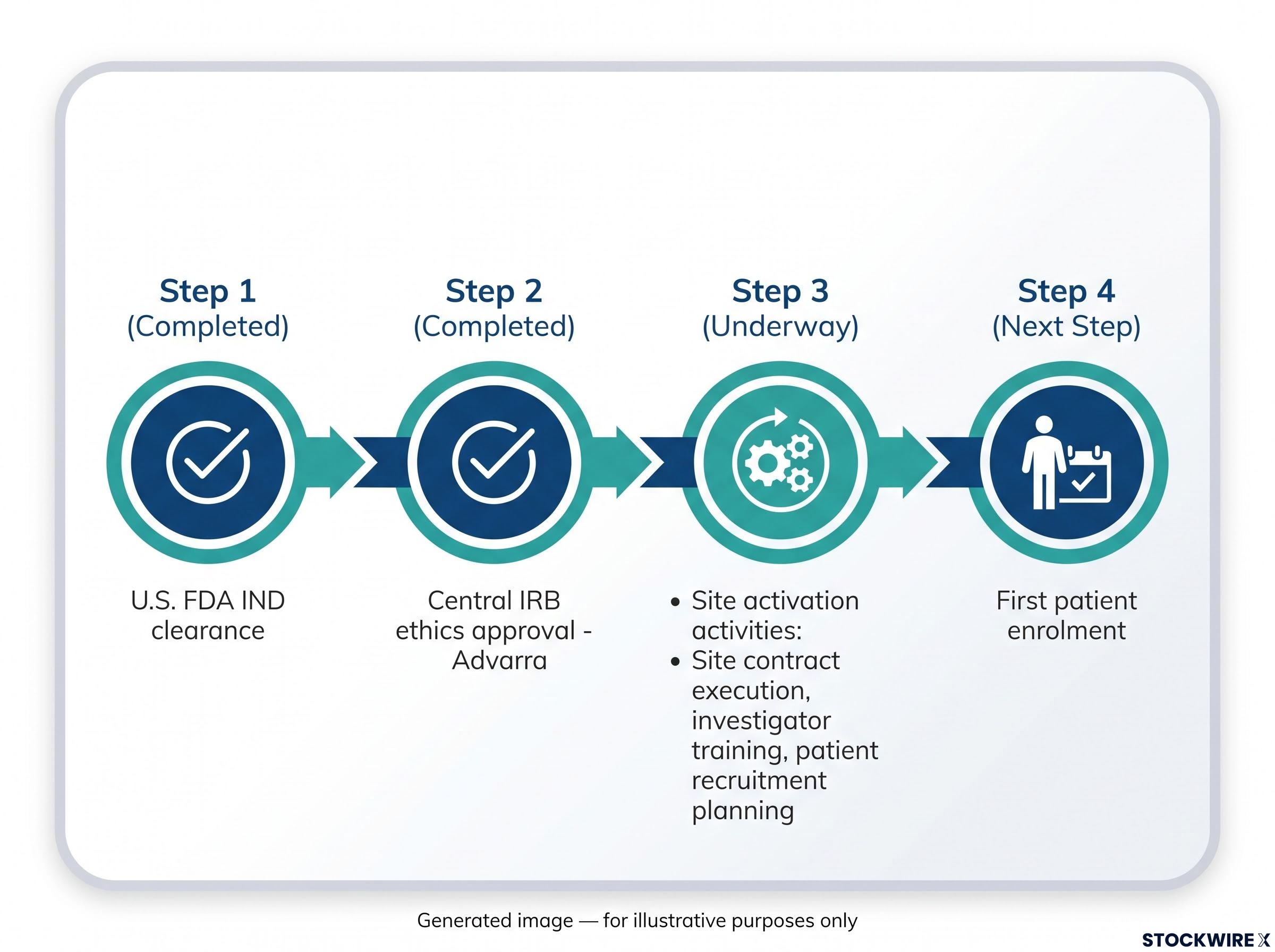
The sequencing is clear: first site activation must be completed before first patient enrolment can commence. The company has not indicated that enrolment has yet begun.
For readers wanting a closer look at the operational infrastructure behind the trial, our full explainer on the CRO partner agreements and site activation status details the work orders executed across the primary, imaging, and pathology CROs, the manufacturing and distribution clearance for the investigational product, and the remaining startup steps outstanding before first patient enrolment.
Ward Detwiler, President, Imagion Biosystems U.S. Operations
“Central IRB approval is an important milestone as we progress towards study activation and it reflects the disciplined work of our team in designing and preparing for this clinical trial… With both regulatory and ethics approvals now secured, our focus remains on completing the final stages of site activation and advancing towards opening the study for patient enrolment.”
Generating Phase 2 efficacy and safety data from the MagSense® HER2 Imaging Agent trial represents the next value-creating milestone in Imagion’s clinical development programme. The completion of both regulatory and ethics approvals positions the company to advance towards that data readout as site activation progresses.
Don’t Miss the Next Healthcare Breakthrough in Your Inbox
Big News Blast delivers FREE breaking ASX healthcare news and in-depth analysis directly to your inbox within minutes of release. Join 20,000+ subscribers already staying ahead of the market on the announcements that matter. Click the “Free Alerts” button at StockWire X to start receiving alerts the moment news breaks.