BlinkLab enrols first participant in pivotal FDA validation study
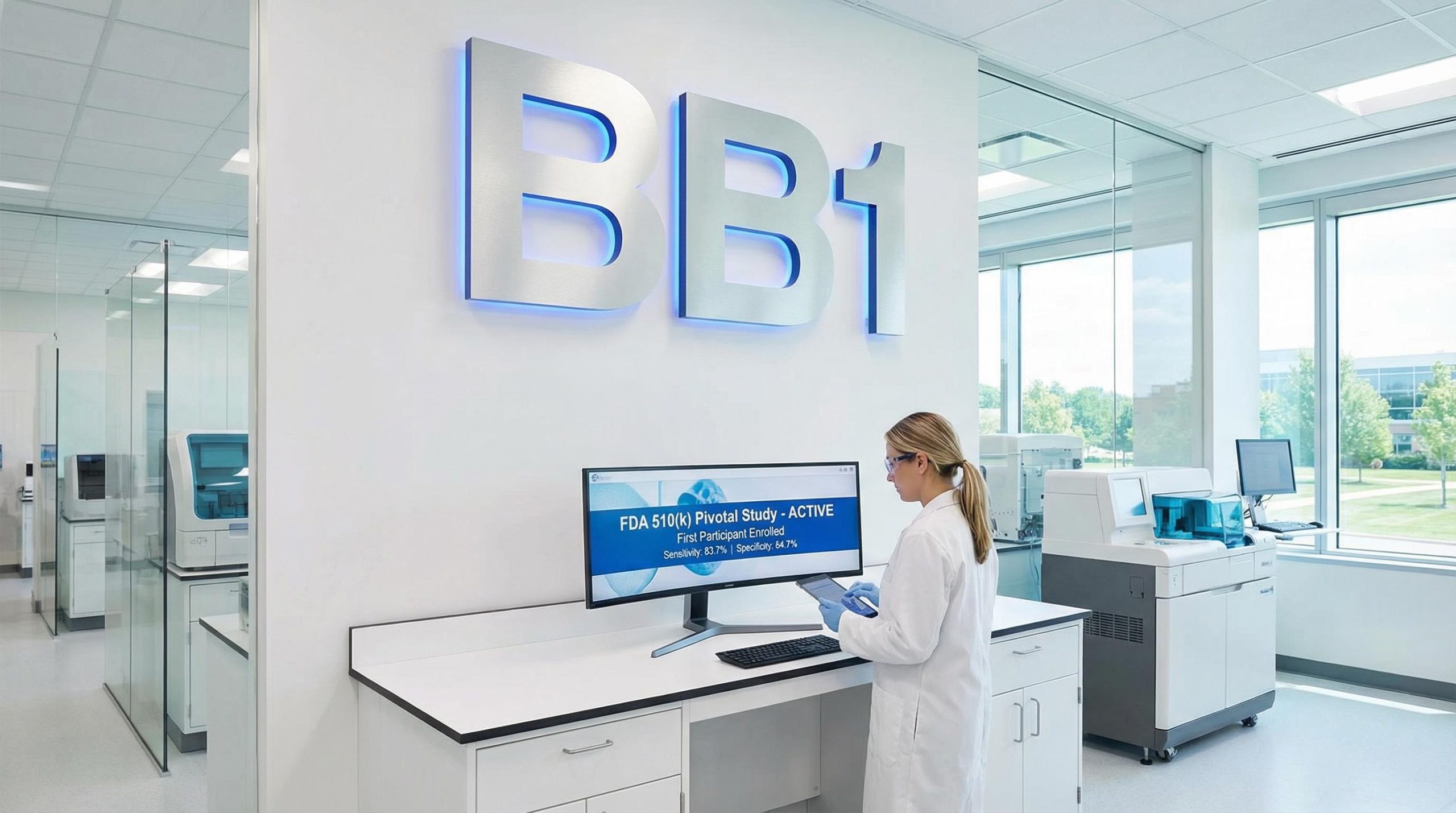
BlinkLab Limited (ASX: BB1) has enrolled its first participant in the BlinkLab FDA 510(k) Validation Program, marking commencement of the registrational study for its autism diagnostic aid. The child participant completed initial testing using BlinkLab Dx1 on 24 March 2026, initiating the pivotal clinical phase required for US market authorisation.
The validation program is led by Contract Research Organisation IQVIA-MCRA and aims to generate the core clinical and usability evidence required to support BlinkLab’s planned FDA 510(k) submission. Participant recruitment is expected to complete within approximately 8 months, with the regulatory package targeted for submission to the US Food and Drug Administration by year-end 2026.
This milestone represents the transition from development to the pivotal evidence-generating stage following years of technology optimisation, FDA collaboration, and securing Institutional Review Board (IRB) approvals to support clinical execution.
Dr Henk-Jan Boele, CEO and Managing Director
“It marks what I believe is the most important milestone for BlinkLab to date, following years of focused development, extensive testing, optimisation of our tech, close collaboration and meetings with the FDA, and securing IRB approvals to support clinical execution. With a clear pathway toward FDA submission and strong execution underway, we believe BlinkLab is well positioned to transform how autism is assessed in clinical practice.”
For investors, this development signals progression to the critical regulatory phase that determines US market access. Successful completion positions the company for potential FDA clearance and commercial launch in 2027, subject to regulatory review timelines.
When big ASX news breaks, our subscribers know first
What is an FDA 510(k) submission and why it matters
The FDA 510(k) pathway is a premarket submission route for medical devices that demonstrates substantial equivalence to existing approved products. This regulatory mechanism allows medical device manufacturers to bring products to market faster than alternative pathways, provided they can show their device is as safe and effective as a legally marketed predicate device.
For diagnostic aids like BlinkLab Dx1, the 510(k) process requires clinical validation data comparing the device’s performance against established diagnostic standards. Key performance metrics evaluated include sensitivity (the ability to correctly identify positive cases), specificity (the ability to correctly identify negative cases), and predictive values (the likelihood that test results accurately reflect true diagnostic status).
Successful FDA clearance through the 510(k) pathway enables commercial sale of the device throughout the United States market. For BlinkLab, this represents access to the world’s largest healthcare market, where autism spectrum disorder affects approximately 1 in 36 children according to CDC estimates. The company’s smartphone-based platform aims to support clinicians by providing objective digital biomarkers derived from patient behaviour, complementing traditional clinical assessment methods.
The BlinkLab FDA 510(k) Validation Program is designed to generate the evidence package demonstrating that BlinkLab Dx1 meets FDA performance standards for an autism diagnostic aid.
Pilot study results underpin pivotal validation design
The pivotal validation study builds on completed pilot study results that exceeded performance thresholds, providing confidence in the diagnostic platform’s clinical capabilities before advancing to the registrational phase.
The pilot study enrolled 485 participants and evaluated BlinkLab Dx1’s diagnostic performance against established autism assessment methods. Results announced in October 2025 demonstrated:
- Sensitivity: 83.7% (target threshold was >65%)
- Specificity: 84.7% (target threshold was >65%)
- Both metrics significantly exceeded minimum performance requirements
For investors, exceeding target thresholds by meaningful margins (approximately 18 percentage points for both sensitivity and specificity) de-risks the pivotal validation phase. The pilot study validated both the study design methodology and the technology’s ability to deliver clinical-grade diagnostic performance in real-world testing conditions.
The registrational trial now underway uses the same validated approach, scaled to generate the comprehensive evidence package required for FDA review. Strong pilot study performance provides a technical foundation supporting the company’s year-end 2026 submission timeline.
Study design and clinical endpoints
The registrational trial employs a double-blinded, multi-centre, within-subjects comparison design. This methodology compares BlinkLab Dx1’s diagnostic output against clinician assessments using gold-standard autism diagnostic methods as the reference standard.
The study structure includes two distinct phases. The usability phase ensures clinicians and caregivers can safely and effectively operate the BlinkLab platform in real-world clinical settings, including correct system operation and appropriate interpretation of diagnostic outputs. In alignment with FDA expectations and regulatory guidance, this usability phase will seamlessly transition into the clinical validation phase.
The clinical validation phase evaluates diagnostic performance against established standard-of-care assessments for autism. Key endpoints being measured include:
- Sensitivity (ability to correctly identify autism spectrum disorder cases)
- Specificity (ability to correctly identify non-autism cases)
- Negative Predictive Value (NPV) (probability that a negative test accurately rules out autism)
- Positive Predictive Value (PPV) (probability that a positive test accurately confirms autism)
BlinkLab’s device is designed as an aid in diagnosis, intended to support rather than replace clinical decision-making. The platform combines objective digital biomarkers with clinician expertise to enable earlier, more accurate, and more accessible autism assessment.
Ten leading US clinical sites support pivotal trial
The BlinkLab FDA 510(k) Validation Program is being conducted across a network of 10 leading US clinical sites, each with established expertise in autism research and clinical trial execution. The geographic distribution spans multiple states, providing demographic diversity representative of the broader US population.
| Clinical Site | Location |
|---|---|
| Cincinnati Children’s Hospital | Ohio |
| Seattle Children’s Hospital | Washington |
| University of Pennsylvania (Perelman School of Medicine) | Pennsylvania |
| MU Thompson Center for Autism & Neurodevelopmental Disorders | Missouri |
| Southwest Autism Research & Resource Center | Arizona |
| University of Nebraska Medical Center | Nebraska |
| Vanderbilt Kennedy Center | Tennessee |
| Rush University Medical Center | Illinois |
| Drexel University | Pennsylvania |
| University of Arkansas | Arkansas |
These institutions represent established autism research centres with proven track records in clinical trial execution. The multi-centre design provides geographic and demographic diversity, strengthening the generalisability of study findings across the US population. For investors, this institutional backing reduces execution risk and enhances the credibility of the evidence package being generated for FDA review.
The study is led and conducted by global Contract Research Organisation IQVIA-MCRA, ensuring full adherence to study protocols, data quality standards, and regulatory requirements throughout the trial.
Regulatory pathway and timeline to FDA submission
BlinkLab has articulated a clear execution roadmap with defined milestones for the BlinkLab FDA 510(k) Validation Program. The company targets completion of key regulatory activities and submission of its regulatory package to the FDA by year-end 2026.
The projected timeline includes:
- Participant recruitment completion: Approximately 8 months from commencement (estimated November 2026)
- Data analysis and regulatory package preparation: Following recruitment completion
- FDA 510(k) submission target: Year-end 2026
- Potential FDA clearance and US commercial launch: Subject to regulatory review, potentially 2027
The device is positioned as an aid in diagnosis, designed to support rather than replace clinical decision-making. BlinkLab Dx1 combines objective digital biomarkers derived from patient behaviour with clinician expertise, aiming to enable earlier, more accurate, and more accessible autism assessment compared to traditional evaluation methods alone.
For investors, the year-end 2026 FDA submission target provides a concrete milestone for monitoring execution progress. Successful FDA clearance would enable commercial deployment of the platform across US clinical settings, providing access to the world’s largest healthcare market. The company has now transitioned from technology development to the pivotal regulatory phase that determines US market authorisation, with first participant enrolment representing tangible progress against the stated timeline.
The BlinkLab FDA 510(k) Validation Program follows years of focused development, extensive testing, technology optimisation, close collaboration with FDA, and securing institutional approvals. With a validated pilot study demonstrating performance exceeding target thresholds, a network of 10 leading clinical sites, and an 8-month recruitment timeline, BlinkLab has established the operational infrastructure to execute its registrational study and advance toward potential US market entry.
Get Healthcare Breakthroughs Before the Market Reacts
Join 20,000+ investors receiving FREE breaking ASX healthcare news delivered within minutes of release, complete with in-depth analysis. Click the “Free Alerts” button at Big News Blast to get real-time alerts and expert coverage the moment market-moving announcements drop.