
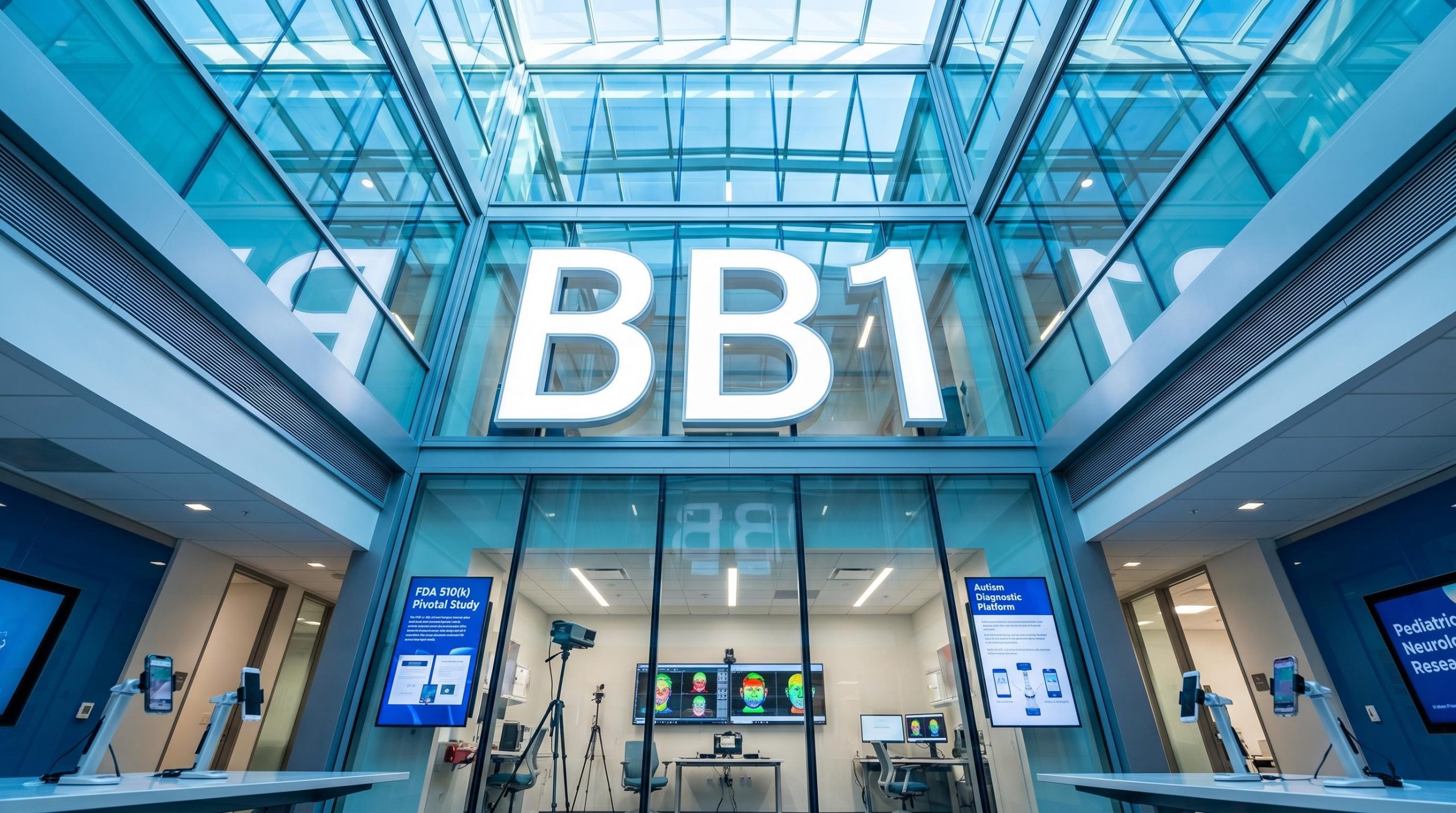
BlinkLab takes AI autism diagnostics to Asia-Pacific investors
BlinkLab Limited has presented its smartphone-based autism diagnostic platform to institutional investors at the Ignite Investment Summit events in Hong Kong and Singapore, following its $17.7 million capital raise. The company attended the Hong Kong summit on 15-16 April 2026 and is scheduled to present in Singapore on 21-22 April 2026 at The Fullerton Hotel.
Chairman Brian Leedman participated in a panel presentation at the Singapore event, while CEO and Managing Director Dr Henk-Jan Boele delivered the company’s CEO presentation. The dual-event attendance reflects BlinkLab’s established investor relationships across the Asia-Pacific region and positions the company ahead of key FDA milestones expected through 2026 and into 2027.
The Ignite Investment Summit platform provides opportunities for BlinkLab’s management to engage with professional and sophisticated investors through formal presentations, one-on-one meetings, and follow-up discussions. The timing aligns strategically with completion of the company’s placement of new ordinary shares to institutional, sophisticated, and professional investors, announced on 16 April 2026.
When big ASX news breaks, our subscribers know first
What is BlinkLab’s smartphone diagnostic technology?
BlinkLab’s platform uses artificial intelligence and computer vision to measure facial reflexes via smartphone, generating digital biomarkers that evaluate brain function in children with suspected autism. The technology was developed by neuroscientists at Princeton University and addresses a fundamental gap in paediatric healthcare: no objective medical test currently exists for autism diagnosis, despite over 100 questionnaires developed since 1969.
The system operates through a four-step process. First, the smartphone application presents visual and auditory stimuli to evoke facial reflexes in the child. Second, computer vision technology tracks facial features in real-time and transmits the data to BlinkLab’s cloud platform. Third, proprietary algorithms detect biomarkers from the tracked movements. Fourth, state-of-the-art analysis methods and AI modelling map the functioning of brain regions involved in autism spectrum disorder.
Traditional autism diagnosis typically occurs around age five, often missing the crucial window for early intervention when therapies can have the greatest impact. BlinkLab’s smartphone-based screening can assess children as young as 18 months, enabling earlier detection during the developmental period when intervention is most effective. The American Academy of Pediatrics recommends screening all children for autism at ages 18 and 24 months.
Current clinical diagnosis relies entirely on behavioural assessments based on DSM-5 criteria, using questionnaires and clinician observations. There is no biomarker such as a blood test or brain scan used in clinical practice. BlinkLab’s technology aims to provide the first objective, data-driven diagnostic aid to support clinicians in their assessment process.
Pilot study results and FDA pathway
BlinkLab completed its US pilot study in October 2025, enrolling 485 children across a clinically diverse population representing the full spectrum of developmental concerns. The study achieved 83.7% sensitivity and 84.7% specificity relative to clinical reference diagnosis, significantly exceeding the FDA’s minimum performance threshold.
In a formal pre-submission meeting on 16 October 2025, the FDA confirmed a minimum performance threshold of >65% sensitivity and >65% specificity for regulatory clearance under the 510(k) pathway. The agency also agreed with BlinkLab’s pivotal study design, which has been refined to enrol approximately 528 participants across 10 leading US autism research centres.
| Metric | Result |
|---|---|
| Pilot study participants | 485 children |
| Sensitivity achieved | 83.7% |
| Specificity achieved | 84.7% |
| FDA minimum threshold | >65% sensitivity and >65% specificity |
| Pivotal study enrolment | 528 participants |
| Clinical sites | 10 leading US autism centres |
The pivotal study commenced in March 2026 with the first participant enrolled. Participating centres include Seattle Children’s Hospital, Southwest Autism Research & Resource Centre, Cincinnati Children’s Hospital, Vanderbilt Kennedy Centre, and the Perelman School of Medicine at the University of Pennsylvania. IQVIA-MCRA is serving as the contract research organisation managing study execution.
BlinkLab targets completion of the pivotal study and submission of results to the FDA by Q4 2026, with an anticipated FDA response on 510(k) clearance in Q1 2027. The pilot study results de-risk the pivotal programme, as performance exceeded the regulatory threshold by a substantial margin across a diverse patient population.
How BlinkLab compares to FDA-approved competitors
BlinkLab’s pilot study performance positions the technology ahead of the two FDA-approved digital autism diagnostic tools currently on the market. Cognoa received De Novo clearance but achieved 52% sensitivity and 19% specificity when calculated over all study completers, with the device yielding indeterminate results in 68% of cases. EarliTec received 510(k) approval with 71% sensitivity and 81% specificity but is not smartphone-based.
| Company | Sensitivity | Specificity | Smartphone-based | FDA Status |
|---|---|---|---|---|
| BlinkLab | 84% | 85% | Yes | 510(k) pending |
| Cognoa | 52%* | 19%* | Yes | De Novo approved |
| EarliTec | 71% | 81% | No | 510(k) approved |
*Cognoa figures calculated over all study completers; device yielded indeterminate results in 68% of cases
BlinkLab’s smartphone-based approach provides accessibility advantages over non-mobile solutions, enabling testing in both clinical and home settings. The company’s performance ceiling is estimated at 85-90% due to diagnostic ambiguity and autism heterogeneity. Autism clinical diagnostic stability is estimated around 80-90%, and expert consensus on diagnosis is approximately 70-80% accurate, meaning a digital biomarker trained on clinical reference diagnoses cannot exceed these natural limits.
Upcoming catalysts and commercial strategy
BlinkLab has outlined a series of regulatory and commercial milestones through 2027 across its Dx1 autism diagnostic and Dx2 ADHD product pipeline. The company is pursuing both European CE/MDR clearance and US FDA 510(k) clearance for its autism diagnostic, with parallel development of its ADHD model.
Key milestones for 2026-2027:
- Complete European ADHD Study – Q2 2026
- Submit CE/MDR clearance for Dx1 and Dx2 – Q3 2026
- Complete Pivotal Study for Dx1 – Q4 2026
- Submit Pivotal Study results to FDA – Q4 2026
- FDA response on 510(k) clearance for Dx1 – Q1 2027
The company has also secured a commercial partnership with the Moroccan government to roll out its autism screening technology across 3,000 centres to screen 600,000 children annually. The programme is fully funded by the Moroccan government and provides large-scale adoption evidence ahead of FDA clearance. BlinkLab retains data ownership and intellectual property rights, with commercial terms subject to renegotiation following FDA clearance.
Morocco Government Contract
“Roll-out across 3,000 centres to screen 600,000 children annually, fully funded by the Moroccan government.”
The ADHD diagnostic programme is progressing alongside the autism pathway. BlinkLab is completing its European ADHD study in Q2 2026 with expected release of results from 300 patients. The company plans to submit for CE/MDR clearance in Q3 2026 and commence the US pivotal study for ADHD in Q1 2027, targeting FDA submission by Q4 2027 and potential clearance in Q1 2028.
BlinkLab’s intellectual property portfolio includes patents filed by Princeton University under an exclusive licence agreement, as well as proprietary patents filed directly by the company. The portfolio covers systems for neurobehavioral testing using mobile devices across multiple jurisdictions including the United States, Europe, Japan, Canada, Australia, and Korea.
Corporate snapshot and financial position
BlinkLab reported a strengthened balance sheet following completion of its capital raise, with approximately $22.8 million in cash. The figure includes the company’s 31 December 2025 quarterly cash balance, research and development tax rebates, and proceeds from the $17.7 million placement (before costs) announced on 16 April 2026.
The company’s capital structure comprises 153.1 million shares on issue, resulting in a market capitalisation of $114.9 million based on a share price of $0.75. Founders and directors hold 24.1% of the issued capital, demonstrating significant insider alignment with shareholder interests. The company also has 49.7 million options on issue and 4.4 million performance rights outstanding.
The current cash position is sufficient to fund completion of the FDA pivotal study for Dx1, European regulatory submissions for both Dx1 and Dx2, and progression of the ADHD pivotal study planning through to anticipated FDA clearance milestones in 2027. The company is led by CEO and Managing Director Dr Henk-Jan Boele, a neuroscientist with positions at Erasmus MC and Princeton University, and COO Anton Uvarov, who previously served as a biotechnology analyst with Citibank and co-founded two publicly traded biotechnology companies.
Chairman Brian Leedman brings extensive experience as co-founder of five ASX-listed healthcare companies, including digital healthcare company ResApp Health, which was acquired by Pfizer for $180 million in 2022. Non-Executive Director Richard Hopkins contributes over 20 years of corporate leadership experience with public biotechnology companies.
Get Healthcare Breakthroughs Before the Market Does
Join 20,000+ investors receiving FREE ASX healthcare alerts within minutes of release, complete with in-depth analysis. Click the “Free Alerts” button at Big News Blast to get breaking biotech and medtech news delivered straight to your inbox the moment it hits the market.