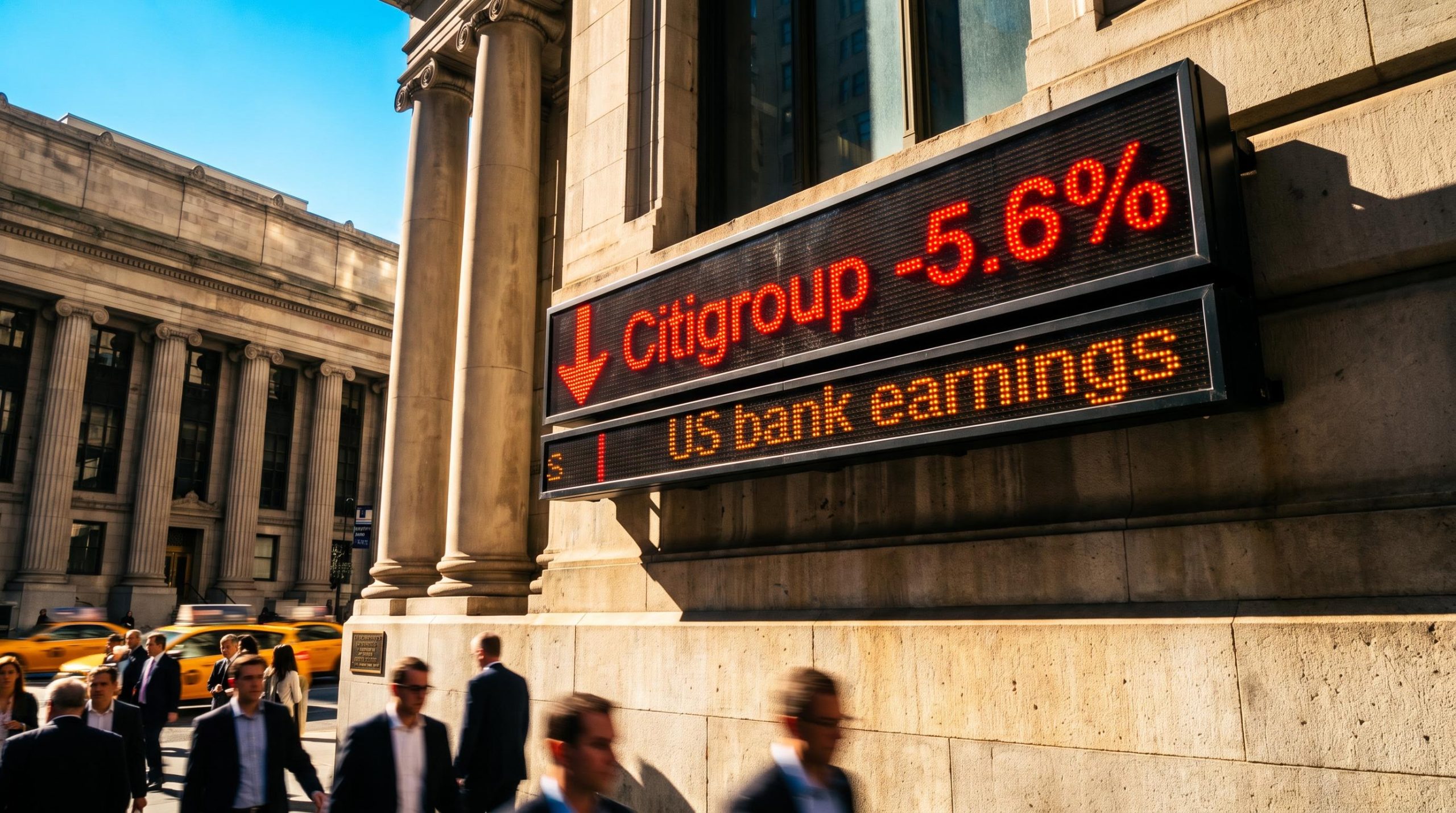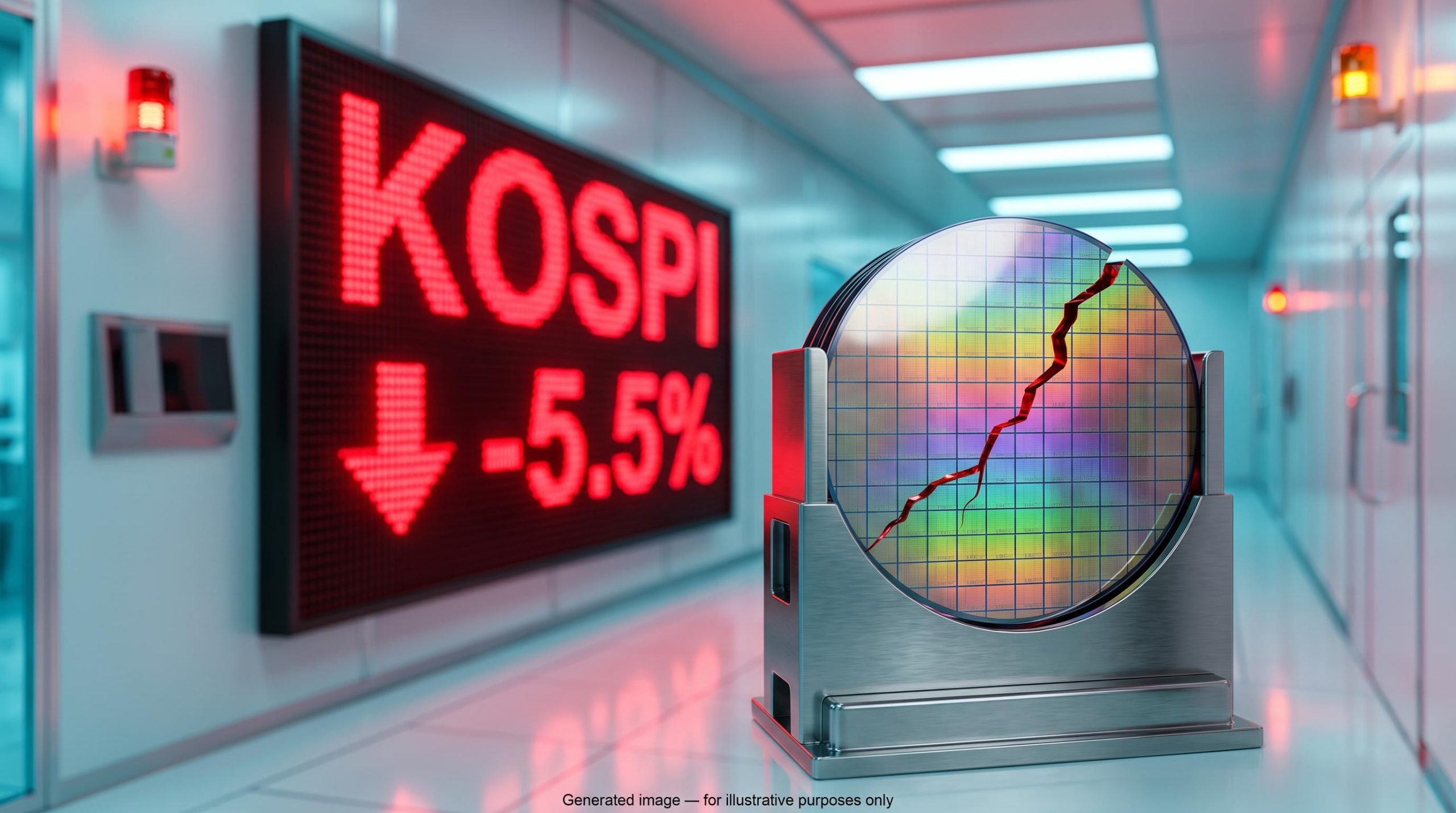
On Tuesday 13 October 2026, South Korea’s KOSPI closed down about 5.5% and briefly slipped below 6,000, with memory giants Samsung Electronics and SK hynix leading the fall. Yet DRAM prices are still forecast to rise. So why would a memory chip sell-off hit this hard when demand is strong and prices are climbing?
The trigger was reported progress at CXMT, China’s largest DRAM maker. Nothing broke in this quarter’s earnings. Instead, the market started pricing a fear about future supply.
Samsung and SK hynix together make up more than half of the KOSPI’s market capitalisation. That is why one theme about one rival could drag down an entire national index.
This explainer shows you what actually spooked the market and which parts of the fear the evidence supports. It also points you to the next real test: Samsung’s full results on 29 October.
What happened on 13 October, and what actually triggered it?
The damage spread well beyond Seoul. Foreign investors accelerated their selling of large Korean memory stocks, and the move carried into US trading.
The scale of the Korean drop reflects index construction as much as news, because foreign investors sold a net 4.52 trillion won of a market dominated by two memory names.
| Asset | Reported move | Stated reason |
|---|---|---|
| KOSPI | Down about 5.5% at close, briefly below 6,000 | Foreign selling of memory heavyweights |
| Samsung | Down about 7%-8% intraday (other reports: more than 6%) | Fear of tougher DRAM competition and margin pressure |
| SK hynix | Down about 8.9%-10% intraday | Same concern, plus heavy index weighting and doubts about the AI-memory boom’s length |
| Micron | Down about 3.6% (some premarket coverage: about 4%) | Concern extended to the global DRAM oligopoly |
Note: the original source put SK hynix down 3.2%, while later reports show intraday falls of about 8.9%-10%. Different measurement points may explain the gap, but that is unconfirmed.
Here is the surprising part. There was no evidence that CXMT had taken business from the leaders.
The trigger was a forward-looking package of three things. First, CXMT’s reported 4F² DRAM architecture, a denser memory-cell design that packs more storage into the same chip area. Second, a plan to launch DDR5 registered DIMMs (RDIMMs, the memory modules used in servers) by the end of 2026, a target described by CXMT President Cao Kanyu at an industry event in Shanghai. Third, the fear that CXMT could eventually compete in higher-value server memory.
Elon Musk added fuel with a mixed take.
Elon Musk on CXMT Musk said China tends to scale manufacturing more than the rest of the world combined, that RAM was a low-margin commodity three years ago, and that CXMT may struggle to match Micron and others in high-bandwidth memory.
For you, the size of the drop signals that the market repriced the future of standard DRAM profits. It was not a verdict on today’s business.
When big ASX news breaks, our subscribers know first
Why does standard DRAM worry investors while HBM does not?
To make sense of the fear, you need one idea: not all memory is the same product.
Commodity DRAM
Conventional DRAM covers DDR4, DDR5, LPDDR (low-power memory for phones and laptops) and server RDIMMs. These chips follow industry standards, so a server maker can qualify several suppliers for the same part.
Once a new supplier reaches acceptable density, reliability and yield, competition shifts to price and availability. That is exactly where CXMT can push in.
Conventional DRAM economics deserve attention here, since Bernstein research suggests it earns more than twice the revenue per wafer of HBM, which is why pricing pressure in the standard segment matters so much.
HBM
High-bandwidth memory (HBM) is DRAM stacked vertically and connected to AI accelerators, the chips that train and run AI models. It is far harder to make well:
- Several DRAM dies must be stacked on top of each other.
- It needs through-silicon vias (tiny vertical electrical connections drilled through each die), advanced packaging and heat management.
- It must run at very high bandwidth with low error rates.
- It must be qualified with specific AI accelerators and their packaging systems.
- Yield losses compound across the stack, so one bad die can ruin the whole unit.
Yield means the share of chips that come out working. A SemiAnalysis modelling estimate, not a CXMT disclosure, puts CXMT’s overall yield for an eight-high HBM3 stack at roughly 25%, from about 35% front-end and 70% back-end.
| Factor | Conventional DRAM | HBM |
|---|---|---|
| Qualification | Multiple suppliers per part | Tied to specific AI accelerators |
| Complexity | Standardised | Stacking, vias, packaging, thermal limits |
| Competition basis | Price and availability | Yield, performance, qualification |
| CXMT position | About 8% of Q1 2026 revenue | Forecast about 0.4% in 2027, 3% in 2028 |
Counterpoint data shows SK hynix held about 58% of Q1 2026 HBM revenue, with Samsung and Micron at about 21% each. Counterpoint, via Morningstar, expects CXMT to reach only about 0.4% in 2027 and 3% in 2028.
The AI-driven profits that make these companies valuable sit largely in HBM, the segment CXMT finds hardest to enter. So the threat you are weighing is real but uneven, which also helps explain why Micron fell less than the Korean names.
How big is CXMT really, and is it actually cheaper?
Share gains and the measurement caveat
CXMT is no longer a footnote.
| Tracker | Period | CXMT share | Comparison |
|---|---|---|---|
| TrendForce | Q2 2026 | 9.5% revenue share | Up from 7.6% in Q1 |
| Counterpoint | Q2 2026 | About 10% | 4% a year earlier, 8% in Q1 |
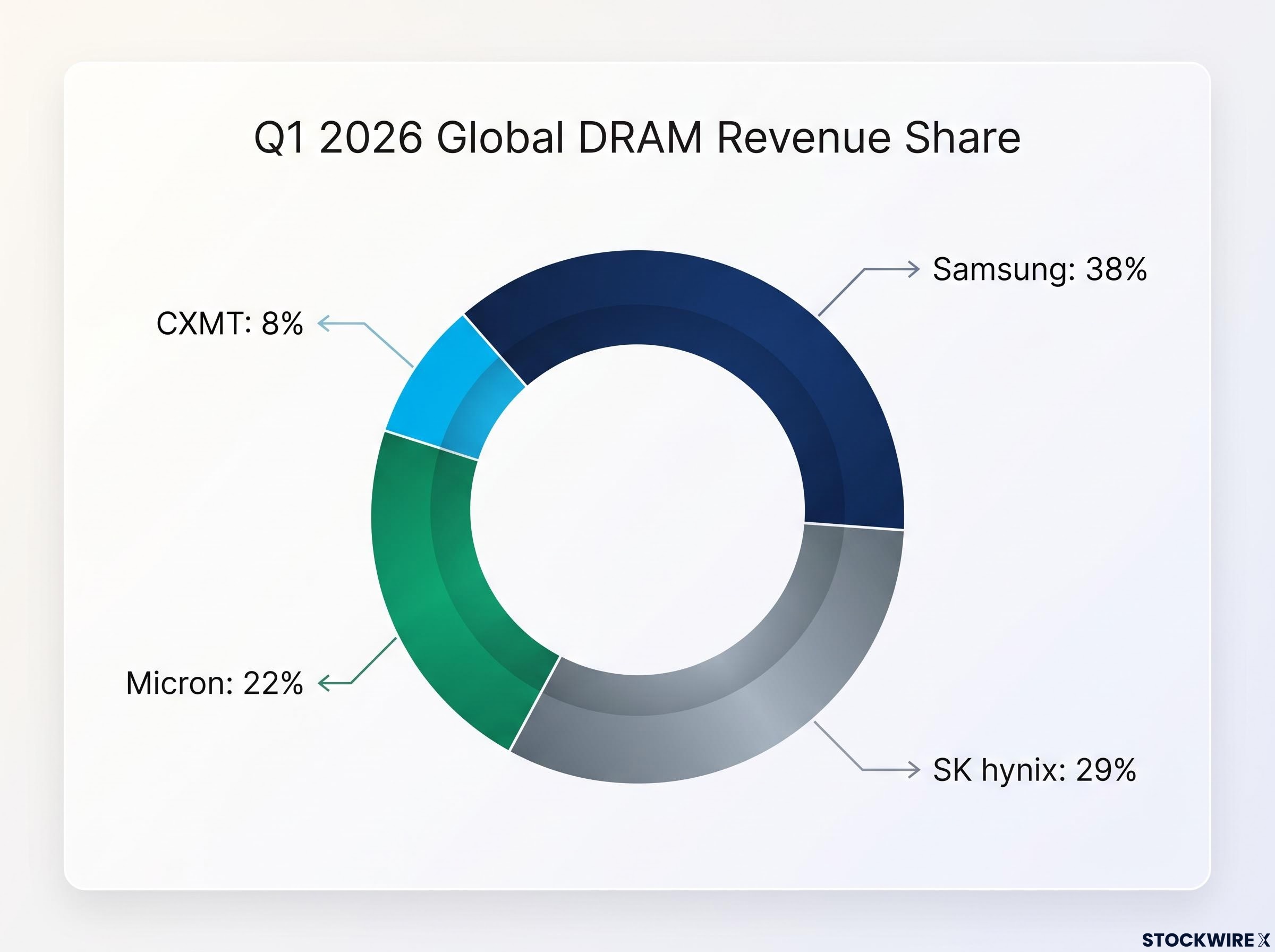
| Counterpoint | Q1 2026 | 8% revenue share | Samsung 38%, SK hynix 29%, Micron 22% |
The TrendForce and Counterpoint figures differ because the trackers use different methods. Revenue share, bit share and shipment share are not interchangeable, so compare like with like when you see a headline number. Even so, Samsung, SK hynix and Micron still hold roughly 90% of global DRAM revenue.
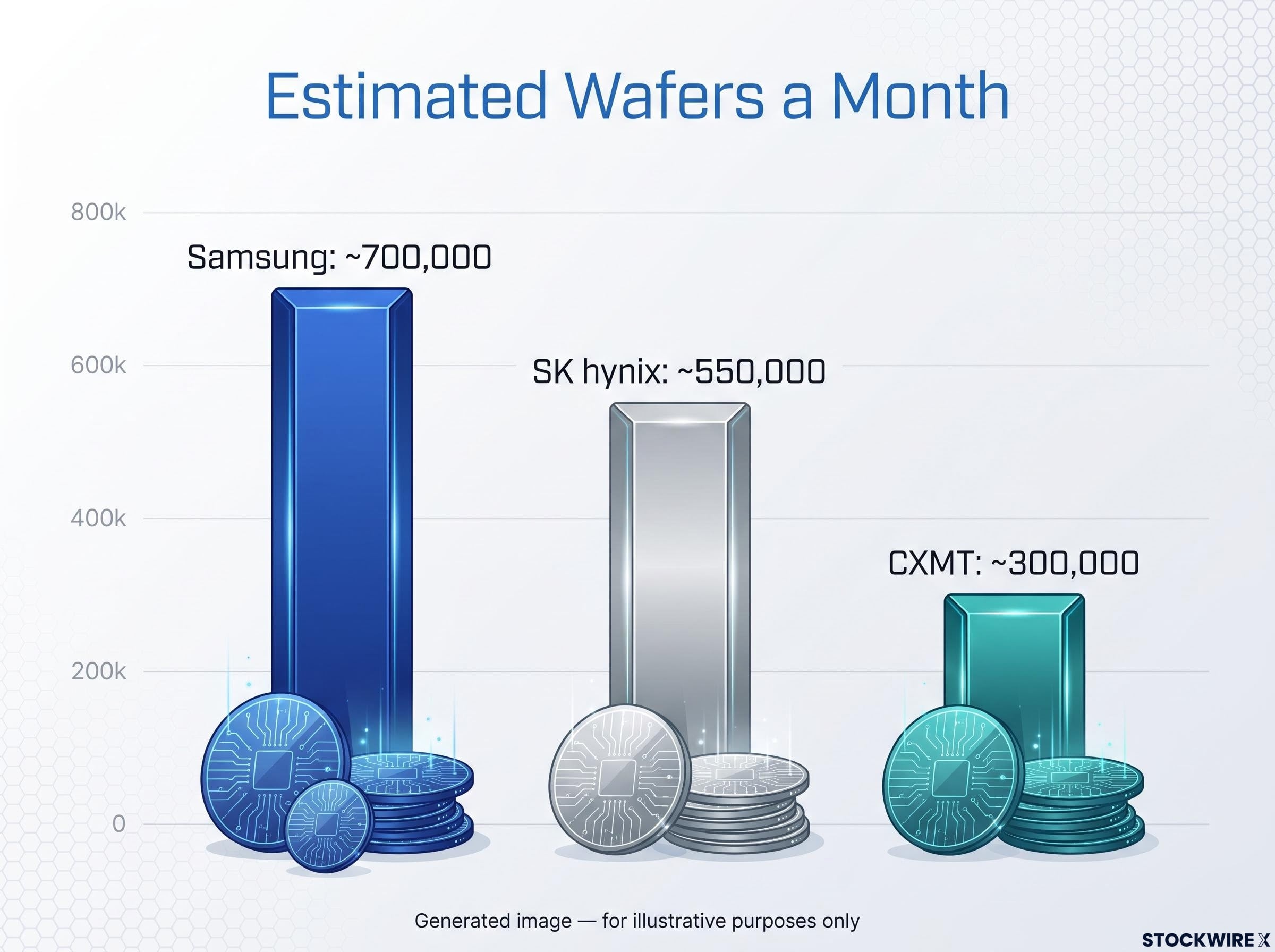
Capacity explains the momentum. CXMT completed a roughly US$8.6 billion IPO and listed in Shanghai on 27 July 2026. It runs about 300,000 wafers a month, against about 700,000 for Samsung and 550,000 for SK hynix, and CSIS reports its new Shanghai fabs are projected at two to three times the capacity of its Hefei flagship.
Pricing: premium in China, narrow discount elsewhere
The “cheap Chinese memory” story does not hold up well:
- Reuters reported on 24 July 2026 that CXMT charged more than Samsung’s roughly US$1,240 per 64GB DDR5 server module in some deals.
- SemiAnalysis put CXMT’s Q1 average selling prices only 5%-10% below the leaders.
- Chinese buyers sometimes paid more for CXMT and YMTC products because domestic supply is strategically valuable.
Those China prices reflect shortages and supply-security preferences, not lower costs. You should not read CXMT’s share gains as proof it can undercut rivals worldwide.
Is the sell-off justified? Weighing the threat against the data
The bear case is credible. The bull case is backed by hard numbers. Here is where the experts land.
| Institution | Position | Reasoning |
|---|---|---|
| Citigroup | “Medium-term price threat” | Samsung and SK hynix have more general-purpose DRAM exposure than Micron |
| Morningstar | Significant competitor, disadvantaged in HBM | HBM complexity delivers low economic returns |
| SemiAnalysis | Close enough on conventional pricing to matter | Prices 5%-10% below leaders; weak HBM yields |
| Counterpoint (MS Hwang) | Likely to make HBM, at low volume at first | Yield, capacity and speed limits |
Now set the fear against current conditions. Samsung’s preliminary Q3 2026 operating profit came in at about KRW 107.4 trillion on revenue of about KRW 195 trillion, up about 782.5% year on year according to TrendForce. TrendForce also expects conventional DRAM contract prices to rise a further 10%-15% quarter on quarter in Q4 2026, with Morgan Stanley reported to hold a similar view, and analysts expect supply to stay below demand into 2027.
Buyers are also locking in multi-year supply agreements with upfront deposits, which supports the view that analysts expect supply to stay below demand into 2027.
CXMT also faces real limits:
- US export controls deny it EUV lithography, the advanced chipmaking tools Morningstar says it needs to close the technology gap.
- Its HBM yield gap remains wide.
- A 4F² announcement is not high-volume production with competitive yield and customer qualification.
- Controls cut both ways, pushing China to localise equipment and favour domestic buyers.
Cyclical or structural?
Past DRAM downcycles followed a familiar path: shortage, rising prices, capacity build, slowing demand, then a price collapse. CXMT adds something new, a state-backed fourth supplier that may accept lower returns to win share while rivals depend on capital discipline. YMTC’s rise to about 13% of global NAND shipments in Q3 2025, per CSIS, shows Chinese memory makers can scale fast without matching leaders everywhere.
The central caveat CXMT is a credible medium-term threat, but the evidence does not show it has already caused global DRAM or HBM oversupply.
The sell-off is a bet on 2027 and beyond. Judge it by whether you believe Chinese capacity will arrive before AI demand cools.
What to watch next: Samsung’s 29 October results and the signals that matter
Samsung’s preliminary release on 8 October left big gaps. It did not show memory-division profit, HBM revenue, product mix or customer contract details.
Key date Samsung reports full Q3 2026 results and its segment breakdown on 29 October 2026 at 10:00 a.m. KST.
Analyst Douglas Kim estimates Samsung’s Q3 HBM bit shipments rose about 50% quarter on quarter. Reporting suggests memory supply stays tight through 2028, but no public list of Samsung’s 2027 deals or Samsung-specific HBM4 price forecast has surfaced.
Your watchlist, in order of timing:
- 29 October: Samsung’s memory-division profit and HBM revenue.
- 29 October: Any commentary on 2027 supply arrangements and HBM pricing.
- Q4 contract data: Whether prices track TrendForce’s 10%-15% forecast.
- Year-end: Whether CXMT ships server DDR5 RDIMMs on schedule.
- Year-end: Evidence of CXMT’s HBM production starting, and at what volume.
If Samsung signals firm 2027 HBM pricing and supply, you have evidence the incumbents’ premium segment is insulated. Vague guidance would give the bear case more weight.
What the sell-off changes, and what it does not
What changed is that CXMT is now large enough to matter, at roughly 9.5%-10% of Q2 DRAM revenue. The market is repricing the conventional-DRAM oligopoly ahead of hard evidence.
What has not changed is the gap at the top. CXMT’s HBM share is tiny, its reported HBM yields are weak, it lacks EUV access and its capacity remains smaller than its rivals’.
For your decisions, treat 29 October and the next contract-price readings as the real checkpoints, not one day’s price drop.
This article is for informational purposes only and should not be considered financial advice. Investors should conduct their own research and consult with financial professionals before making investment decisions. Past performance does not guarantee future results. Financial projections are subject to market conditions and various risk factors.