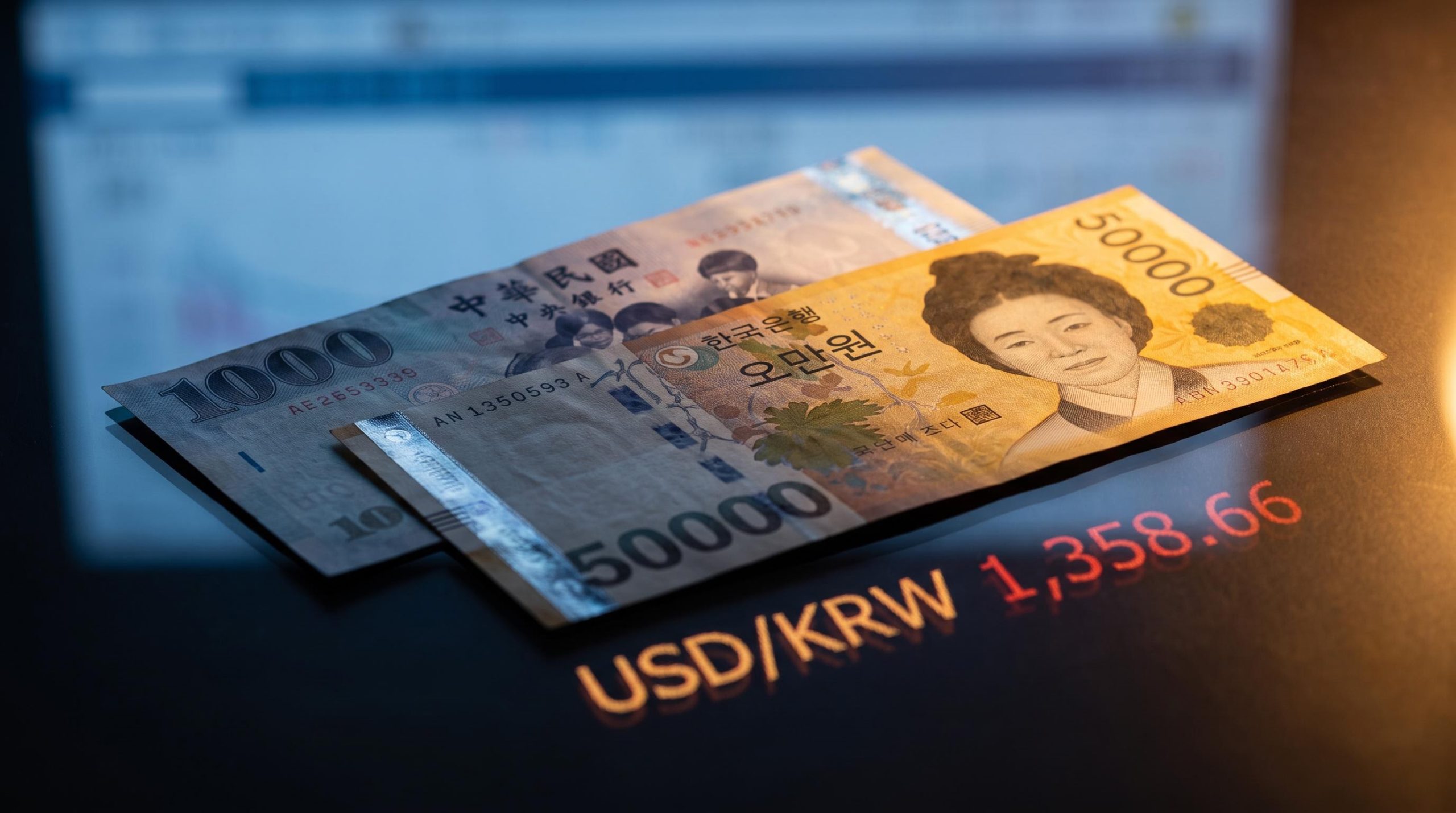
The most talked-about currencies in the global AI trade are not the dollar or the yuan. They are the South Korean Won and the New Taiwan Dollar, two currencies from two small economies that between them make much of the hardware the world’s AI buildout runs on.
Here is the awkward part. If AI demand is supposed to reflect in the currencies of the countries building the chips, both the Won and the Taiwan Dollar are trading weaker against the dollar in 2026, not stronger. That gap between the story and the spot price is exactly where this analysis lives.
The pivot point is the shift from AI training to AI inference. Training was a narrow story about buying GPUs and advanced chips to build models; inference is a broader story about running those models on consumer devices and edge hardware. MUFG analyst Michael Wan is betting that transition supports Asian tech-linked FX, naming the Korean Won (KRW) and New Taiwan Dollar (TWD) as his preferred Asian currency positions, with the Malaysian Ringgit (MYR) and Singapore Dollar (SGD) as secondary plays.
What follows below lays out the mechanism behind that call, where the currencies actually stand right now, the historical precedent, and the geopolitical variables that could break the thesis entirely. The goal is to give you the tools to judge the argument, not to tell you it is correct.
How the shift from AI training to inference is supposed to move Asian currencies
The link between AI demand and Asian currencies is not one connection. It is three, and they carry different amounts of analytical weight. Walking through them in order is the only way to judge how much conviction the thesis deserves.
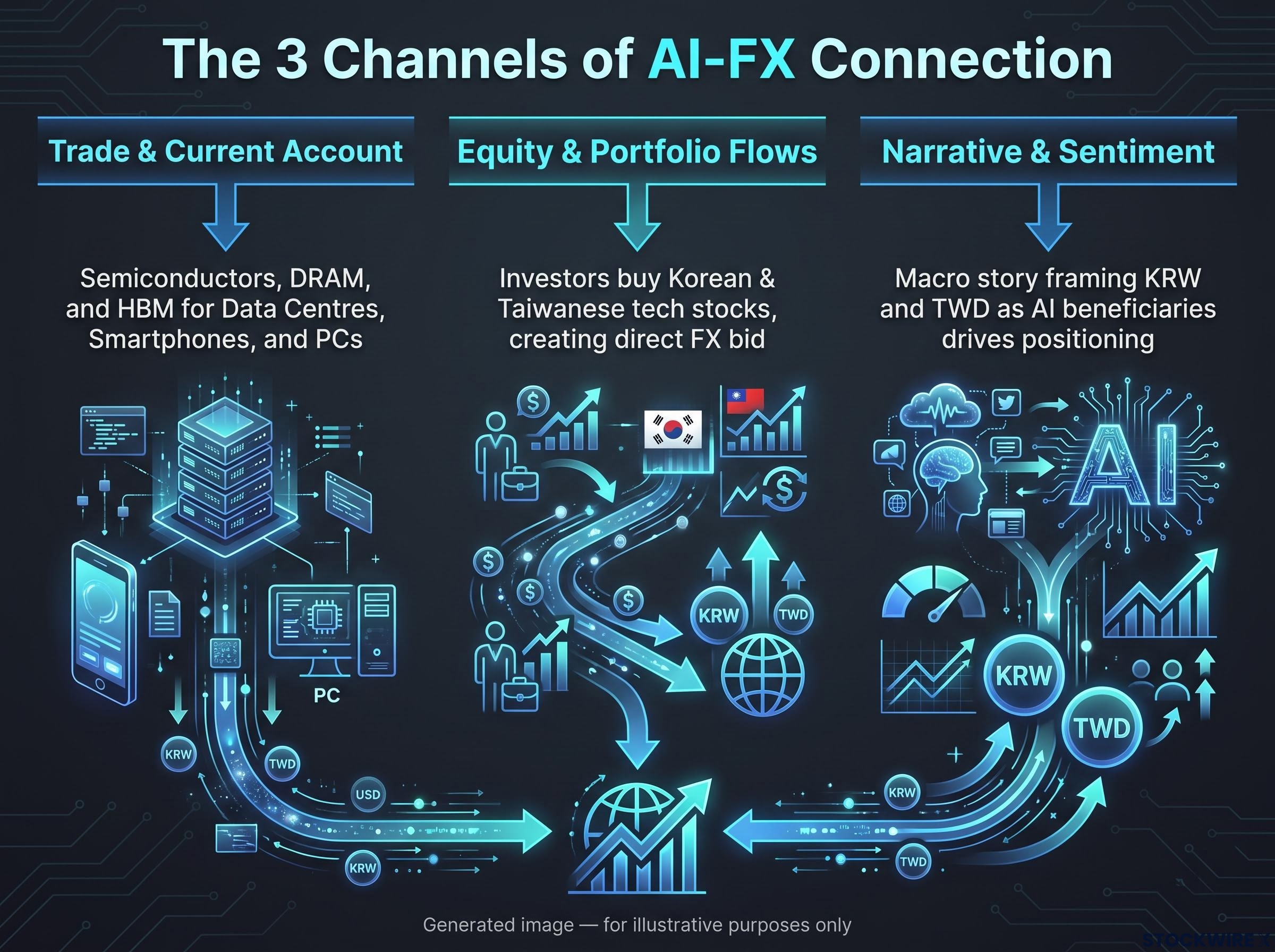
The first channel is trade and the current account. South Korea and Taiwan export enormous volumes of semiconductors, memory chips including DRAM and high-bandwidth memory (HBM), and the components that go into AI data centres and edge devices. Strong global AI demand improves their trade balances, and stronger current-account surpluses tend to support a currency directly.
The training-to-inference shift matters here because of where the demand goes. Training-phase AI was concentrated: data-centre and GPU-heavy, a narrow capital-spending spike. Inference-phase AI spreads the hardware demand across smartphones, PCs, and embedded devices, which the thesis argues extends the cycle rather than letting it burn out in one boom.
The training vs inference split reshapes hardware economics in ways most currency analysts underweight: inference workloads route requests independently rather than requiring full-cluster synchronisation, which means the same silicon base can serve a broader range of devices at lower incremental cost per unit of AI output.
Gartner AI infrastructure spending forecasts published in August 2026 project AI-optimized infrastructure growth of 96 percent through the year, with inferencing workloads increasingly driving that expansion beyond the initial training-phase concentration in high-end GPUs.
The second channel is equity and portfolio flows. When global investors rotate into Korean and Taiwanese tech stocks, semiconductor foundries and memory producers among them, they usually have to buy the local currency to buy the shares. That creates a direct FX bid that rides alongside the equity inflow.
MUFG’s Michael Wan frames the Korean Won and New Taiwan Dollar as the preferred currency positions within Asia, treating both as high-beta proxies for the global technology and semiconductor cycle.
That “high-beta” label is the key idea: these currencies move more sharply with the tech cycle than most other emerging-market Asian currencies, in both directions.
The narrative layer: when the story becomes the trade
The third channel is the softest, and honesty requires flagging it as such. A large part of the AI-FX link is narrative. Strategists frame KRW and TWD as AI beneficiaries because it makes a coherent macro story, even when the near-term data are mixed.
That framing is not nothing. Positioning built on a story becomes self-fulfilling for a while, as flows chase the narrative. But it also creates fragility, because when the story is questioned, the positioning unwinds fast.
There is a competing read worth holding onto. Some analysts argue AI value capture will skew toward US platform companies, which would cap the hardware-driven upside for Asian currencies once the initial buildout passes. The three-channel breakdown tells you the thesis is part mechanical and part sentiment, and you should trust the first two channels more than the third.
When big ASX news breaks, our subscribers know first
Where KRW, TWD, MYR, and SGD actually stand in September 2026
Here is the tension the mechanism sets up. If the AI story is a tailwind, the spot prices have not received the message.
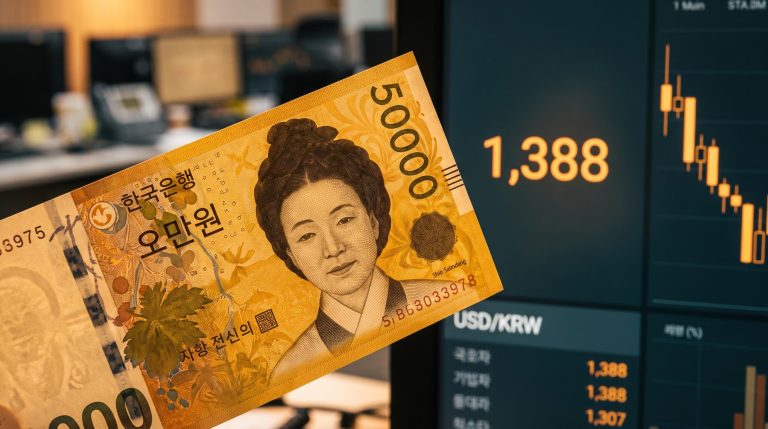
USD/KRW sat at approximately 1,358.66 on 22 September 2026, according to TradingEconomics, down around 1.19% on the day, with Forbes Advisor showing an alternate reference of 1,372.62 on 21 September 2026. The working range across mid-to-late September was roughly 1,359 to 1,373 per dollar. The Won is trading weaker year-to-date, not stronger, despite carrying the strongest AI linkage in the region.
Dollar-strength headwinds in September 2026 compound from two directions simultaneously: the Fed’s hawkish repricing toward a 4.2% implied year-end rate widens the yield differential pulling capital from Asian local-currency assets, while the Strait of Hormuz tanker seizure on 17 September added a risk-off energy-price shock that hit oil-import-dependent Asian economies directly.
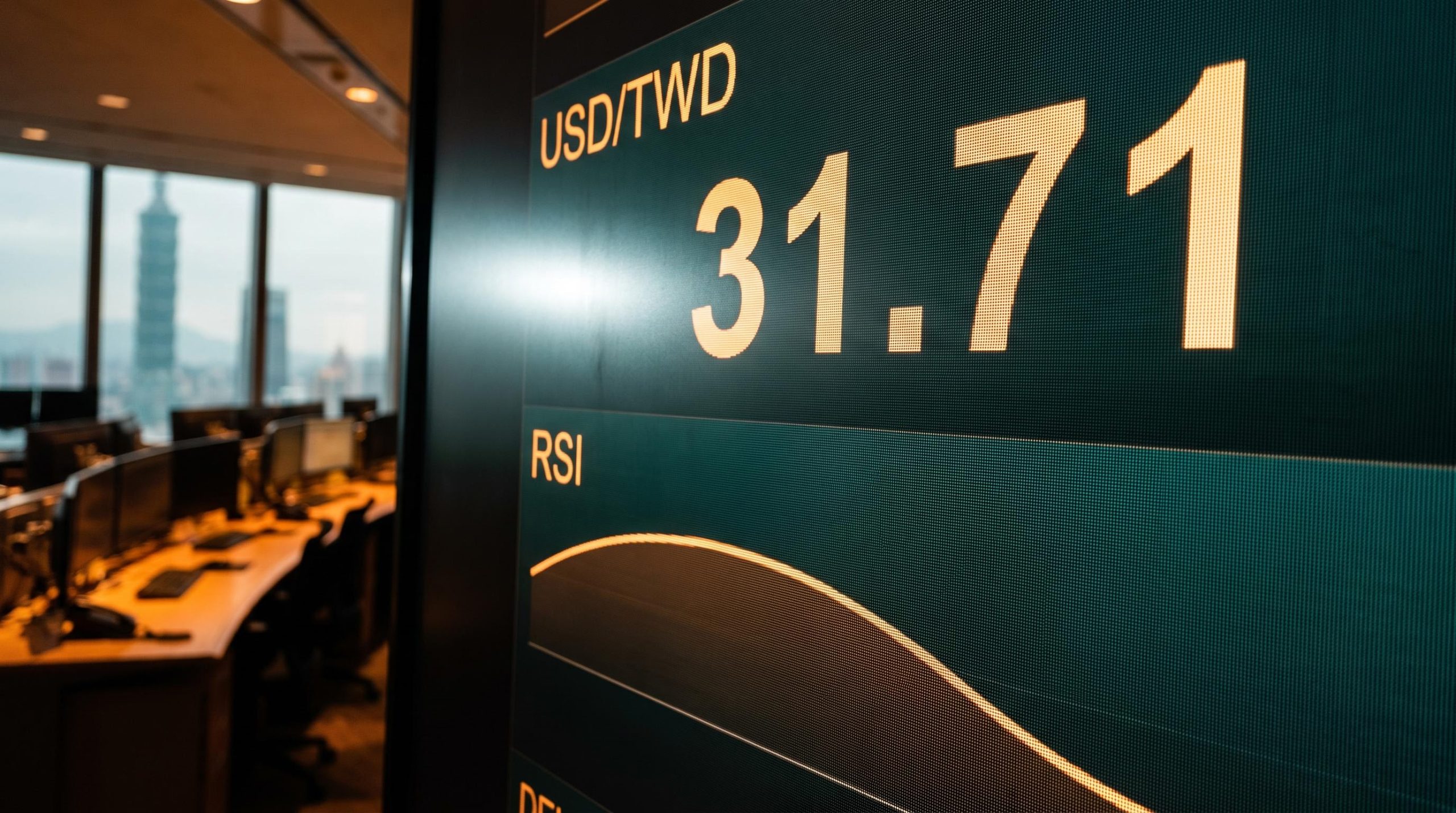
USD/TWD closed at approximately 31.682 on 22 September 2026 per Investing.com, with the US Federal Reserve’s H.10 release listing official reference rates between 31.46 and 31.64 in mid-September. TradingEconomics puts the Won’s annual change near 2.57%, though a clean full-year 2026 figure is not cleanly available from a single authoritative source.
The four currencies do not carry equal AI exposure, and the table below sorts them.
| Currency | Pair | Level (Sept 2026) | AI-Linkage Tier | Key Structural Note |
|---|---|---|---|---|
| Korean Won | USD/KRW | ~1,358.66 | Primary | Direct semiconductor and memory export exposure |
| New Taiwan Dollar | USD/TWD | ~31.68 | Primary | Foundry heartland; carries geopolitical risk premium |
| Malaysian Ringgit | USD/MYR | Grouped in EM-Asia cluster | Secondary | Broader tech-sector linkage, less chip-concentrated |
| Singapore Dollar | USD/SGD | Grouped in EM-Asia cluster | Secondary | NEER-targeting regime dampens direct FX beta |
That last note on Singapore matters. The SGD is managed against a basket via a nominal effective exchange rate (NEER), a trade-weighted average rather than a fixed USD/SGD peg, which softens how much the AI story can move it directly.
Reuters reported on 17 September 2026 that dollar strength and higher oil prices were feeding bearish bets across USD/CNY, USD/KRW, USD/SGD, USD/TWD, and USD/MYR, listing them together in a single positioning table.
That grouping is the tell. All four AI-linked currencies are being shorted together as one emerging-Asia cluster, which means macro dollar dynamics are currently overwhelming any AI-specific positive positioning. That is precisely the complication the thesis has to survive.
What the historical semiconductor cycle tells you about trusting this thesis
The AI-FX thesis has a genuine precedent, and it is worth seeing clearly before turning it against itself. Asian currencies have responded to tech-driven export booms before.
In past semiconductor upcycles, KRW and TWD appreciated as export earnings rose, trade balances improved, and global investors bought Korean and Taiwanese tech equities. The pattern repeats across several waves of US tech investment.
WSTS global semiconductor market forecasts for 2026 project the industry surpassing $1.5 trillion in revenues, with AI infrastructure, high-bandwidth memory, and accelerated computing platforms cited as the primary growth drivers, a scale that gives the trade-channel argument its quantitative foundation.
- Memory and smartphone upcycles: rising chip and component orders lifted export earnings, pulling both currencies stronger.
- Cloud build-outs: heavy US capital spending on data-centre hardware flowed through to Asian suppliers and their currencies.
- 5G rollouts: component demand accelerated, strengthening FX as capex ramped and weakening it when it slowed.
This is what earns KRW and TWD the “tech-beta” description. They track the global tech cycle far more tightly than most other regional currencies.
Where the inference shift changes the calculus
Now the caution. Every one of those precedents was hardware-intensive from start to finish, and the inference phase may not be.
If inference runs primarily on existing silicon with software optimisation squeezing more from the same chips, the incremental demand for new hardware is lower, and the trade channel that supports the currencies thins out. The skeptical version of this argument is that once the first wave of data-centre spending peaks, marginal inference growth becomes more software- and services-heavy.
This connects to the structural worry that AI value capture concentrates in US platform companies rather than Asian hardware makers. If that holds, less of the AI revenue cycle turns into Korean and Taiwanese export earnings.
This is a live debate among analysts, not a settled question, so treat it as a risk to monitor rather than a verdict. History validates the sensitivity of these currencies to tech cycles. It also warns you that the entry point matters: buying the thesis after the training-phase capex spike may mean arriving late, not early.
The geopolitical variables that could override the entire thesis
Everything above assumes markets get to price AI on its merits. They often do not. The following risks escalate from manageable to structural, and any one of them can override the fundamental case.
- US export controls: restrictions on advanced chips, GPUs, HBM, or chip-making tools can cut supplier revenue and trigger sharp risk-off moves in KRW and TWD regardless of AI optimism.
- Taiwan-China tension: a structural risk premium is embedded in TWD, and any escalation drives safe-haven flows into the US dollar and yen even when tech fundamentals are strong.
- CNY spillover: when the Chinese Yuan weakens, neighbouring currencies including KRW, MYR, and SGD face pressure to depreciate to stay competitive, a channel that works independently of AI sentiment.
- Intervention risk: authorities in Korea, Taiwan, Singapore, and Malaysia are willing to smooth volatility and cap rapid appreciation, limiting the upside for any speculative AI-theme trade.
US chip-export controls escalated materially in May 2026 when the Commerce Department closed a roughly one-year enforcement gap by requiring licences for any Chinese-headquartered entity purchasing advanced AI processors, regardless of where that entity physically operates, a structural tightening that investors in Korean and Taiwanese supplier equities cannot treat as a one-off event.

That last risk is easy to underweight. A currency can be a genuine AI beneficiary and still be prevented from appreciating far, because a central bank decides rapid gains hurt exporters.
Near-term, the Chinese Yuan is expected to perform steadily with limited volatility ahead of a planned summit between US President Trump and Chinese President Xi Jinping, with constructive US-China diplomatic rhetoric contributing to an improved market tone.
That calm is real, but read it correctly. AI is itself a geopolitical variable in the US-China rivalry: tighter restrictions can re-route production to US-aligned markets, which supports KRW and TWD, but they also raise the tail-risk premium across Asian FX when policy surprises land. The current diplomatic warmth helps the thesis; it has not neutralised the structural tensions underneath it.
What the thesis actually requires to hold, and what to watch
Strip away the noise and the AI-FX story is a conditional argument, not a verdict. It holds under specific conditions and breaks under others, and both are worth naming.
The bull case needs three things at once. Inference-phase AI has to sustain hardware demand across both edge devices and data centres. US-China relations have to stay stable enough to keep export controls from escalating. And dollar strength has to stay contained rather than dominating the whole emerging-Asia complex, as it currently is.
Timing sharpens the stakes. Asian export growth is anticipated to slow modestly in 2027, which means the thesis has to prove hardware-demand durability before that slowdown arrives. The current backdrop is moderately supportive rather than strongly bullish: improved risk sentiment tied to Meta’s Muse AI assistant launch and constructive US-China rhetoric, with the US dollar edging modestly higher while yields hold stable.
For lower-conviction exposure, MUFG’s hierarchy is useful. KRW and TWD are the preferred positions, while MYR and SGD offer tech-linked Asian FX exposure with less single-name geopolitical concentration than either the Won or the Taiwan Dollar carries alone.
Three variables to watch over the next quarter
- Hardware intensity of the inference phase. Watch Korea Customs Service and Taiwan Ministry of Finance monthly export data for semiconductor-category trends. If chip and component exports stay strong as inference scales, the trade channel is intact; if they soften, the software-capture worry is winning.
- The Trump-Xi summit tone. Watch the framing of any post-summit joint statement. Constructive language supports the diplomatic-stability condition the thesis depends on; a breakdown reintroduces export-control risk immediately.
- US chip-export policy signals. Watch for any additions to the Bureau of Industry and Security (BIS) Entity List or new export-licensing requirements. Fresh restrictions can hit supplier revenue and Asian FX faster than any AI tailwind can offset.
The honest read is that the AI-FX story is real in mechanism but conditional in outcome, and those conditions are testable with data arriving over the next one to two quarters.
For investors wanting to translate the hardware-demand monitoring framework into specific portfolio decisions, our dedicated guide to semiconductor cycle timing maps the five leading indicators that separate peak-cycle gains from the simultaneous earnings and multiple compression that arrives when supply overtakes demand.
This article is for informational purposes only and should not be considered financial advice. Investors should conduct their own research and consult with financial professionals before making investment decisions. Past performance does not guarantee future results, and these forward-looking statements are speculative and subject to change based on market and policy developments.