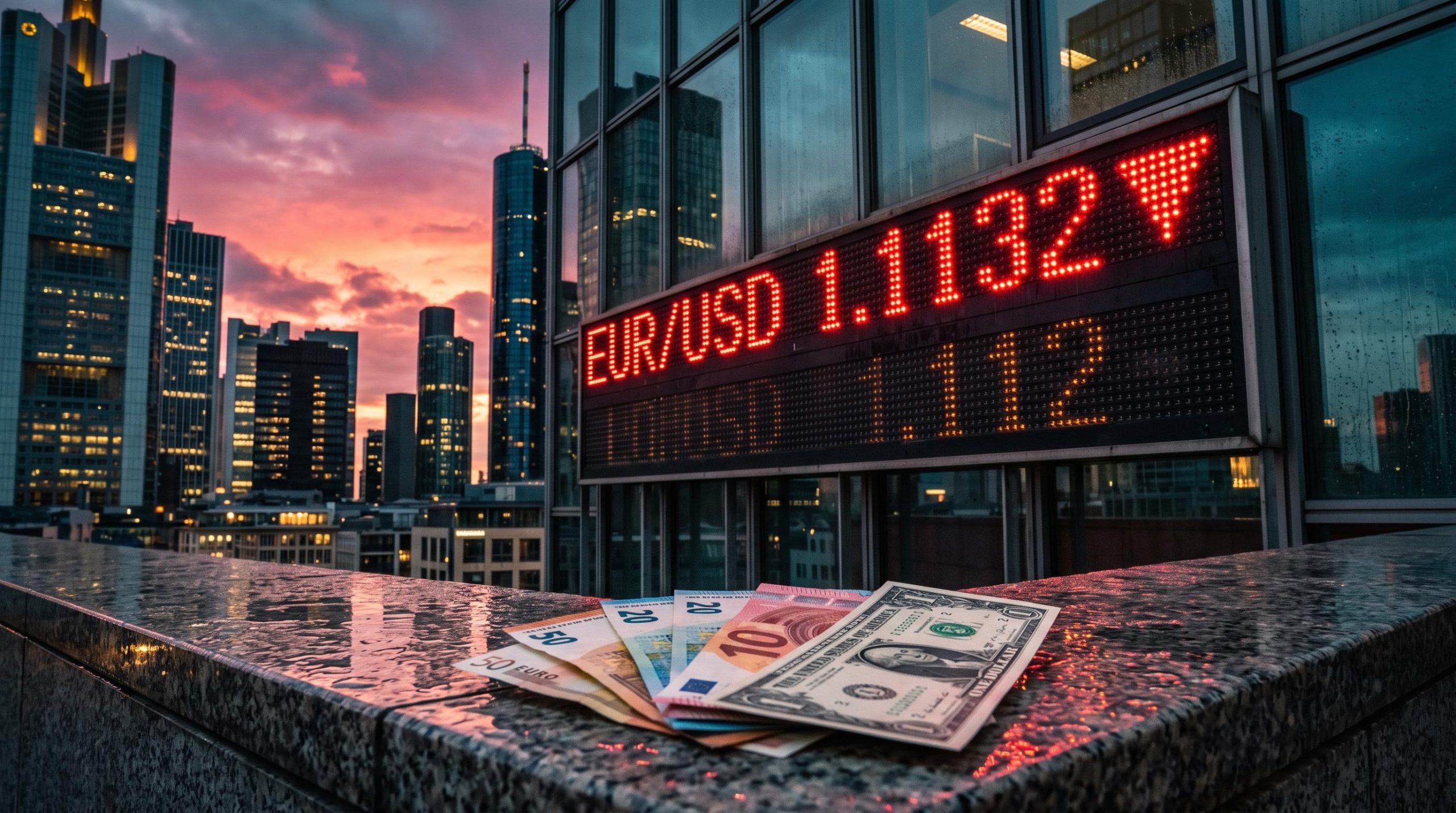
Norges Bank held its policy rate at 4.50% on 4 November 2026, with the decision published on 5 November. The bigger influence on the Norwegian krone (NOK) in the weeks ahead, however, may come from oil and gas markets rather than from Oslo.
The hold was unanimous and widely expected. All 26 economists in the Reuters poll had forecast it. The Bank still struck a firm tone, saying it will likely keep the rate elevated for a time and stands ready to raise it if needed.
That wording leaves a December move possible without promising one.
For anyone tracking the krone, the useful skill now is separating two forces: what central bank guidance does to the NOK and what energy prices do to it. Here is how each one works, and which is likely to dominate before the next meeting.
Why a neutral hold leaves energy prices in charge of the krone
The muted reaction
Markets had little to absorb. Before the decision, pricing implied only about 9 basis points of tightening for December, according to XTB. A basis point is one hundredth of a percentage point, so traders saw a December hike as a remote possibility.
USD/NOK fixed at 9.2278 on 4 November, according to Norges Bank’s daily rate. Commerzbank’s Antje Praefcke judged the outcome broadly neutral for the NOK because it delivered exactly what investors expected.
The September hike to 4.50% had already repriced the USD/NOK outlook, with core CPI, oil and Federal Reserve signals emerging as the variables that matter most for the pair.
Commerzbank’s read Praefcke expects oil and gas prices, driven by conflict in the Middle East, to cause more NOK volatility in the coming weeks than any monetary policy surprise.
How oil and gas reach the krone
The backdrop explains her view. Brent crude has averaged about US$90 per barrel in 2026, up from roughly US$70 the year before. It briefly topped US$120 in April after disruption to Gulf production and the Strait of Hormuz, Reuters reported.
Norway is a major petroleum exporter, but the link to its currency runs through several channels:
- Terms of trade: export prices rise relative to import prices, lifting national income.
- Export revenue: petroleum cash flow and government revenue increase.
- Headline inflation: transport and household costs climb.
- Rate expectations: sticky inflation can mean a higher or longer Norges Bank path.
- Risk sentiment: a severe conflict can spark global risk aversion that weakens the small, risk-sensitive NOK.
- Reversal risk: if the supply premium fades, prices can fall fast and remove this support.
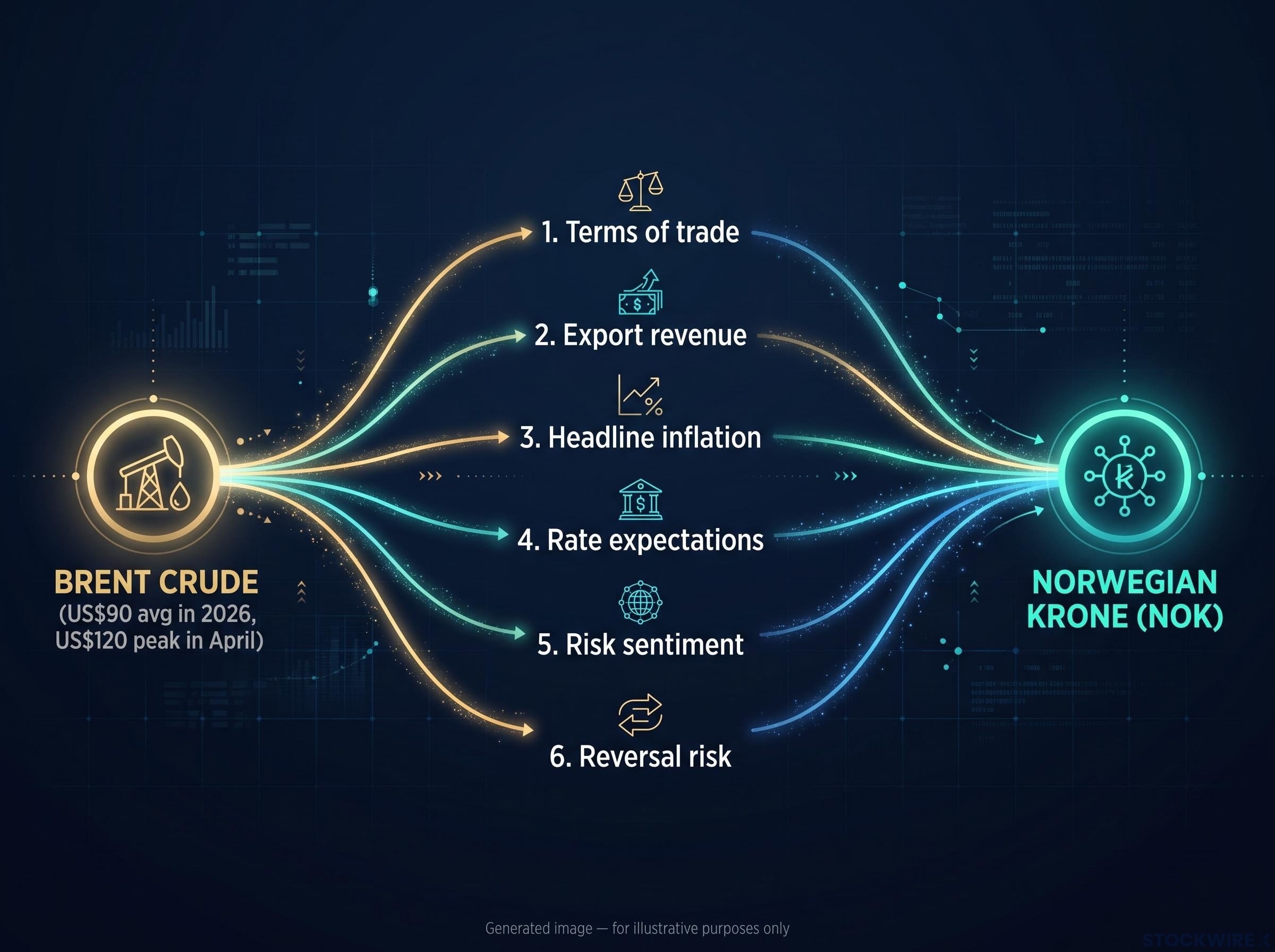
Brent crude at US$90 average in 2026 and a US$120 peak in April transmits into the Norwegian krone through six distinct economic pathways.
Higher oil does not guarantee a stronger krone. Much of Norway’s petroleum wealth is invested abroad through its sovereign wealth fund rather than converted straight into NOK. The Canadian and Australian dollars show the same pattern, gaining from commodity prices only when risk appetite holds.
For you, that means watching Brent and European gas headlines as closely as Norges Bank statements, because fear can override the oil benefit.
Why inflation well above target keeps hikes on the table
The Bank’s firm language rests on numbers that remain stubborn. September CPI rose 3.4% year on year, according to Statistics Norway, while CPI-ATE (core inflation excluding tax changes and energy) reached 3.0%. Monthly, CPI climbed 0.5% and CPI-ATE 0.2%.
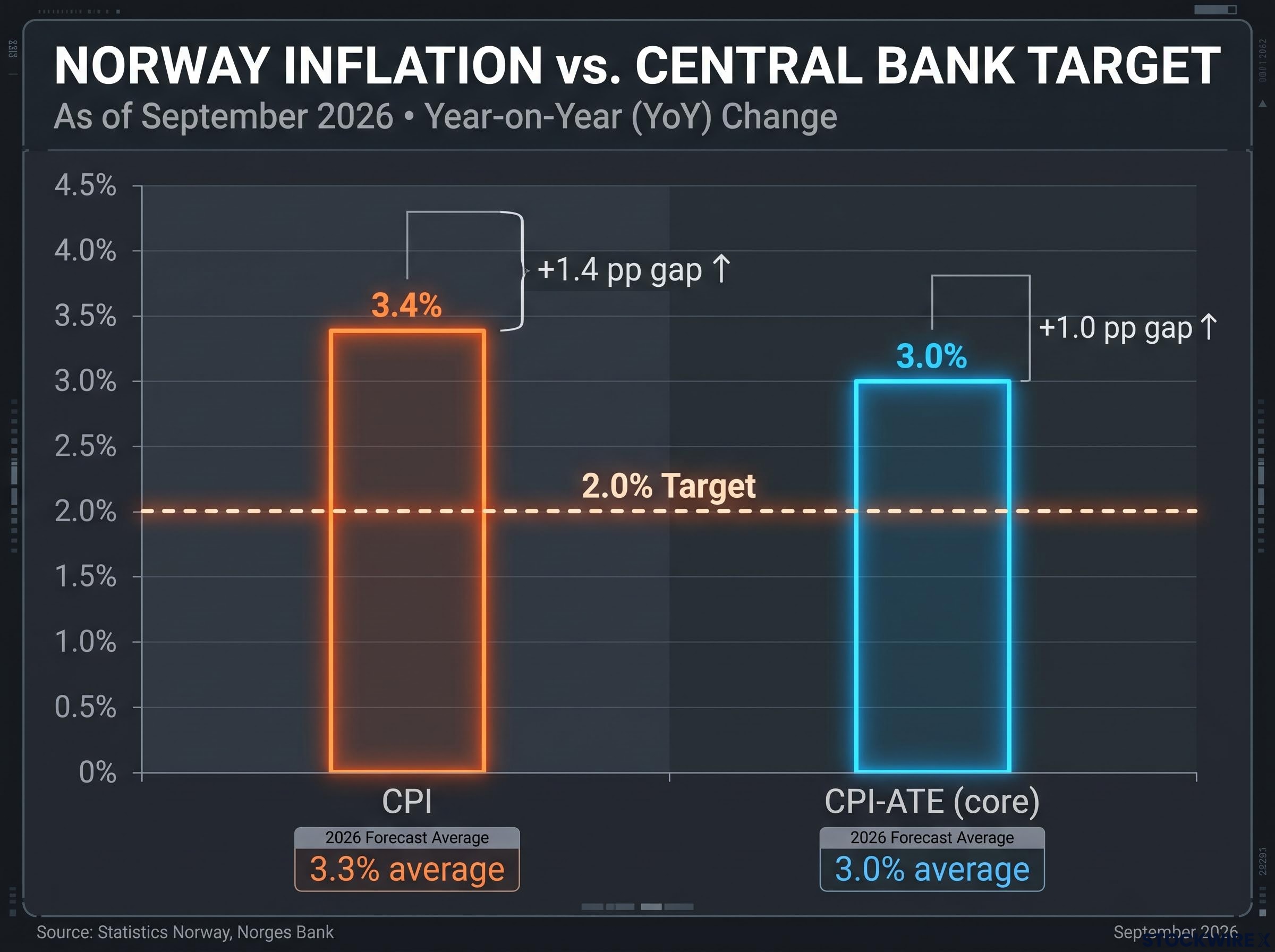
September 2026 CPI reached 3.4% and CPI-ATE core hit 3.0%, representing a +1.4 pp and +1.0 pp gap respectively against the 2% target.
| Measure | September 2026 y/y | Gap to 2% target | Norges Bank 2026 forecast |
|---|---|---|---|
| CPI | 3.4% | +1.4 pp | 3.3% average |
| CPI-ATE (core) | 3.0% | +1.0 pp | 3.0% average, approaching 2% in 2029 |
A core rate not expected to near target until 2029 gives the hawkish wording real weight.
Norges Bank’s guidance “It will likely be necessary to keep the policy rate elevated for a time, and we are prepared to raise the policy rate if needed to bring inflation down to target within a reasonable time horizon.”
Commerzbank sees a December hike as still possible, arguing that inflation well above target supports keeping rates “high for longer”. Yet no new forecasts were produced this month, so the September Monetary Policy Report remains the latest set.
The September rate path, which shows gradual cuts only from end-2027 and inflation near 2% in 2029, was the real message of the pre-decision debate, since the hold itself was priced in.
That makes the statement optionality, not a promise. October CPI on 10 November and fresh forecasts on 17 December are the real tests, and you should treat this week’s language as a signal of readiness rather than a commitment.
How far into 2027 could rates stay high, and what would shift the call?
Beyond December, institutions split into three camps. Some see real hike risk, others treat 4.50% as the peak, and a third group expects cuts only in late 2027 or 2028. The Reuters poll leaned towards the middle, with most respondents expecting no further hikes.
| Institution | Date | View on path |
|---|---|---|
| SEB | 3 Nov | About 40% chance of another hike by March 2027; 4.40% at end-2027, 3.90% at end-2028 |
| DNB Carnegie | 5 Nov | Two cuts towards end-2027, to 4.00% |
| Nordea | 5 Nov | No clear signs of cuts before 2028 |
| Nomura | 5 Nov | No changes in 2026-27; next move a cut, probably from 2028 |
Several triggers could pull the debate one way or the other:
- Energy surge: a fresh supply shock lifts inflation and raises the odds of a December hike.
- Energy reversal: de-escalation weakens terms of trade and eases price pressure.
- Federal Reserve: a restrictive Fed strengthens the US dollar and can push USD/NOK higher even if Norges Bank stays hawkish.
- European Central Bank (ECB): ECB cuts while Norway holds would support the NOK.
- Riksbank: faster Swedish easing makes the krone relatively more attractive.
A stronger NOK would also cool import costs, reducing the case for tightening. With no consensus path, you should expect the krone to react to data and energy news rather than to a settled rate view.
Bank EUR/NOK forecasts agree the krone strengthens over time but differ on pace, and the carry advantage over the ECB helps only while markets expect it to last.
What to watch between now and 17 December
This week’s hold changed little for the NOK. Energy prices and inflation data now carry the next move, with three checkpoints ahead:
- 10 November: October CPI release.
- Ongoing: Middle East-driven swings in oil and gas.
- 17 December: rate decision alongside Monetary Policy Report 4/26.
If you are tracking the krone, the decision point is whether incoming inflation confirms the Bank’s readiness to act, or whether an energy reversal does the cooling for it. Projections and market pricing reflect information available as of 6 November 2026.
Past performance does not guarantee future results. Financial projections are subject to market conditions and various risk factors.
This article is for informational purposes only and should not be considered financial advice. Investors should conduct their own research and consult with financial professionals before making investment decisions.