
Xaranetide mechanism studies reveal multi-target action behind Phase 2 signal
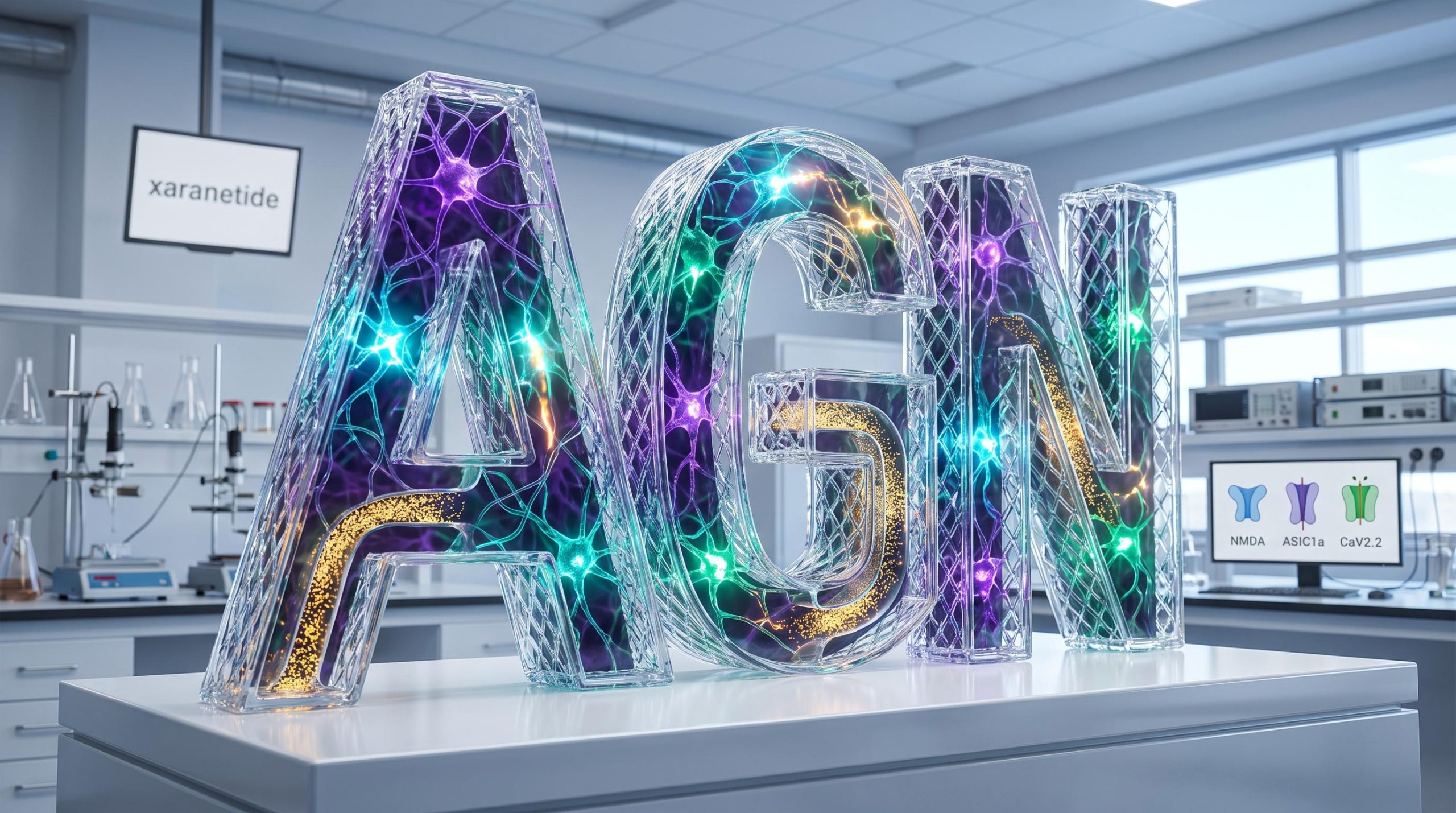
Argenica Therapeutics (ASX: AGN) has reported results from pharmacology studies that strengthen the evidence for xaranetide’s multi-target mechanism of action. The laboratory work found that xaranetide inhibited subunits of the N-methyl-D-Aspartate (NMDA) receptor, as well as ASIC1a and CaV2.2.
Argenica is reporting the inhibition of CaV2.2 and ASIC1a for the first time. The company links the multi-target profile to the “exploratory Phase 2 signals” seen in more severely affected patients, and describes the mechanism as offering “a possible explanation” rather than proof.
The studies were conducted at specialist laboratories ApconiX (UK) and B’SYS (Switzerland). The findings are preclinical, in vitro results and do not constitute clinical evidence of efficacy in patients.
Dr Liz Dallimore, CEO and Managing Director
“…the proposed mechanism targets NMDA channels once they open, potentially limiting damaging calcium entry. […] This could be particularly relevant in more severe strokes where still-living tissue is under substantial stress resulting in channel opening, and offers a possible explanation for our exploratory Phase 2 signals…”
When big ASX news breaks, our subscribers know first
Why excitotoxicity matters in stroke and TBI
Acute ischaemic stroke and traumatic brain injury (TBI) trigger damaging biological processes that can begin within minutes and continue over hours to days. One of these is excitotoxicity, where glutamate accumulates and excessively activates receptors on neurons, particularly NMDA receptors.
This allows calcium to enter and build up within the cells. The resulting calcium overload can damage mitochondria and activate processes that lead to neuronal death.
In stroke, the therapeutic aim is to preserve viable but threatened tissue around the infarct core, known as the penumbra, while blood flow is restored. Reducing excessive NMDA receptor activity may interrupt this injury cascade before further damage occurs.
The Stroke Treatment Academic Industry Roundtable (STAIR), an international expert forum, has recommended prioritising therapies that act on multiple injury pathways. It proposed that this approach could improve the likelihood of successful brain protection, and xaranetide’s inhibitory activity across NMDA, ASIC1a and CaV2.2 channels is described as consistent with this development rationale.
The three channels play the following roles:
- NMDA: a major mediator of excitotoxicity, allowing calcium entry when excessively activated
- ASIC1a: responds to tissue acidity, which can occur when oxygen and blood flow are reduced
- CaV2.2: helps control calcium entry and the release of chemical signals between brain cells
Pharmacology results: what the laboratory data showed
Argenica completed a series of in vitro studies measuring the inhibition of ion channels associated with glutamate-related excitotoxicity. The work evaluated the inhibitory potential, kinetics, mechanism and voltage dependence of xaranetide on NMDA receptor currents.
Rapid inhibition that persisted under high glutamate
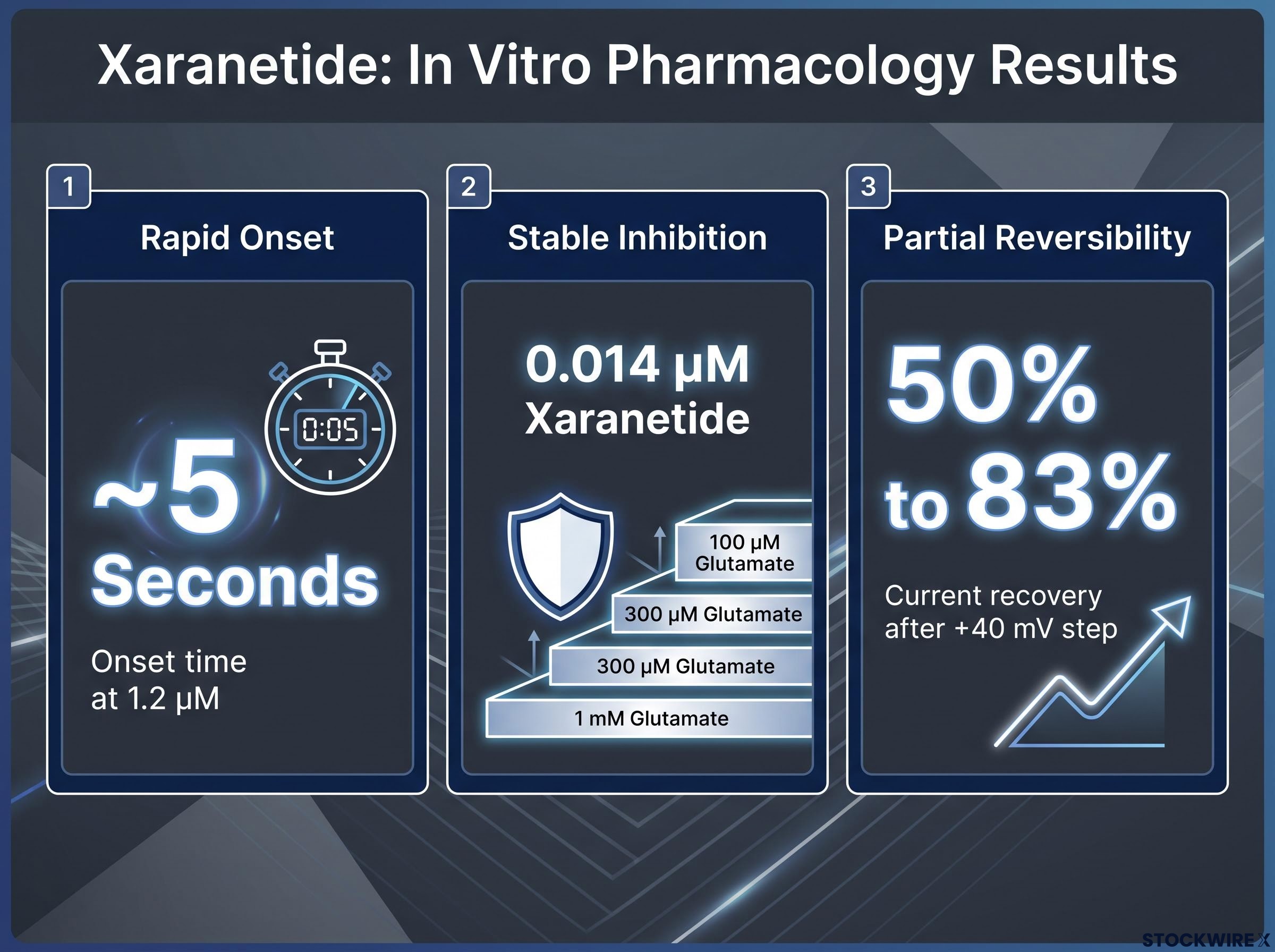
The NMDA studies showed xaranetide reduced activity in both receptor subunits tested, with greater inhibition as concentration increased. At 1.2 μM, the measured onset time constants were approximately five seconds for both subtypes, indicating inhibition developed rapidly in these laboratory experiments.
A follow-up B’SYS study examined GluN1/GluN2A receptors in the presence of 0.014 μM (14 nM) xaranetide. Increasing glutamate from 100 μM to 300 μM and then to 1 mM did not overcome the inhibition, which is consistent with inhibition that does not depend on competition at the glutamate binding site.
Further testing of the NMDA 1/2A subtype supports a voltage-dependent, non-competitive open-channel blocking mechanism. This matters because glutamate can accumulate during brain ischaemia, and xaranetide retained inhibitory activity under the high-glutamate conditions tested.
Partial reversibility
After xaranetide exposure and a voltage step to +40 mV, mean current measured back at -80 mV recovered from approximately 50% to 83% of the initial response. This demonstrated partial reversal of inhibition under that protocol.
NMDA receptors help strengthen connections between brain cells, supporting learning and adaptation during recovery. The therapeutic aim is to limit excessive activity during acute injury while retaining the signalling needed for recovery.
| Finding | Result | Why it matters |
|---|---|---|
| Onset of NMDA inhibition | Time constant of approximately five seconds at 1.2 μM for both subtypes | Inhibition developed rapidly once the peptide was applied |
| Effect of rising glutamate | Inhibition at 0.014 μM not overcome by 100 μM, 300 μM or 1 mM glutamate | Glutamate can accumulate during brain ischaemia |
| Partial reversibility | Current recovered from approximately 50% to 83% after a step to +40 mV | NMDA receptors support normal signalling, learning and plasticity |
The methodology was as follows:
- Electrophysiological recordings were made from Human Embryonic Kidney (HEK) cell lines stably expressing the full-length ion channel
- A positive control was tested in parallel for each ion channel
Building the evidence base and what it means for investors
The findings build on published research by Professor Bruno Meloni and colleagues (Edwards et al., 2018), which demonstrated that R18D (xaranetide) reduces glutamate-induced calcium accumulation in cultured neurons and protects them against excitotoxic injury. The new electrophysiological studies provide more specific evidence of how xaranetide may achieve this effect.
For investors, the results add to the scientific rationale supporting xaranetide as Argenica’s lead drug candidate, linking earlier observations of reduced calcium overload and improved neuronal survival with inhibition of specific channels. The announcement does not disclose development timelines, funding or trial dates.
Separate from the mechanism work, Argenica has completed all three FDA safety assays requested to address its clinical hold, including a clean hERG cardiac result, which is the regulatory backdrop to any US Phase 2b plans.
Argenica has since convened a six-member Clinical Advisory Committee to shape endpoint selection, patient selection and dosing in the Phase 2b design, which is where severity-related signals like these would be tested further.
Argenica states that, by targeting multiple interconnected pathways responsible for secondary brain injury, xaranetide has the potential to preserve brain tissue, reduce neurological disability and improve functional recovery. These remain statements of potential, and the data reported are laboratory findings.
Don’t Miss the Next Healthcare Breakthrough
Join 20,000+ investors getting FREE breaking ASX news delivered to their inbox within minutes of release, complete with in-depth analysis. Click the “Free Alerts” button at Big News Blast to receive healthcare and biotech alerts the moment market-moving announcements break, and stay ahead of the market.