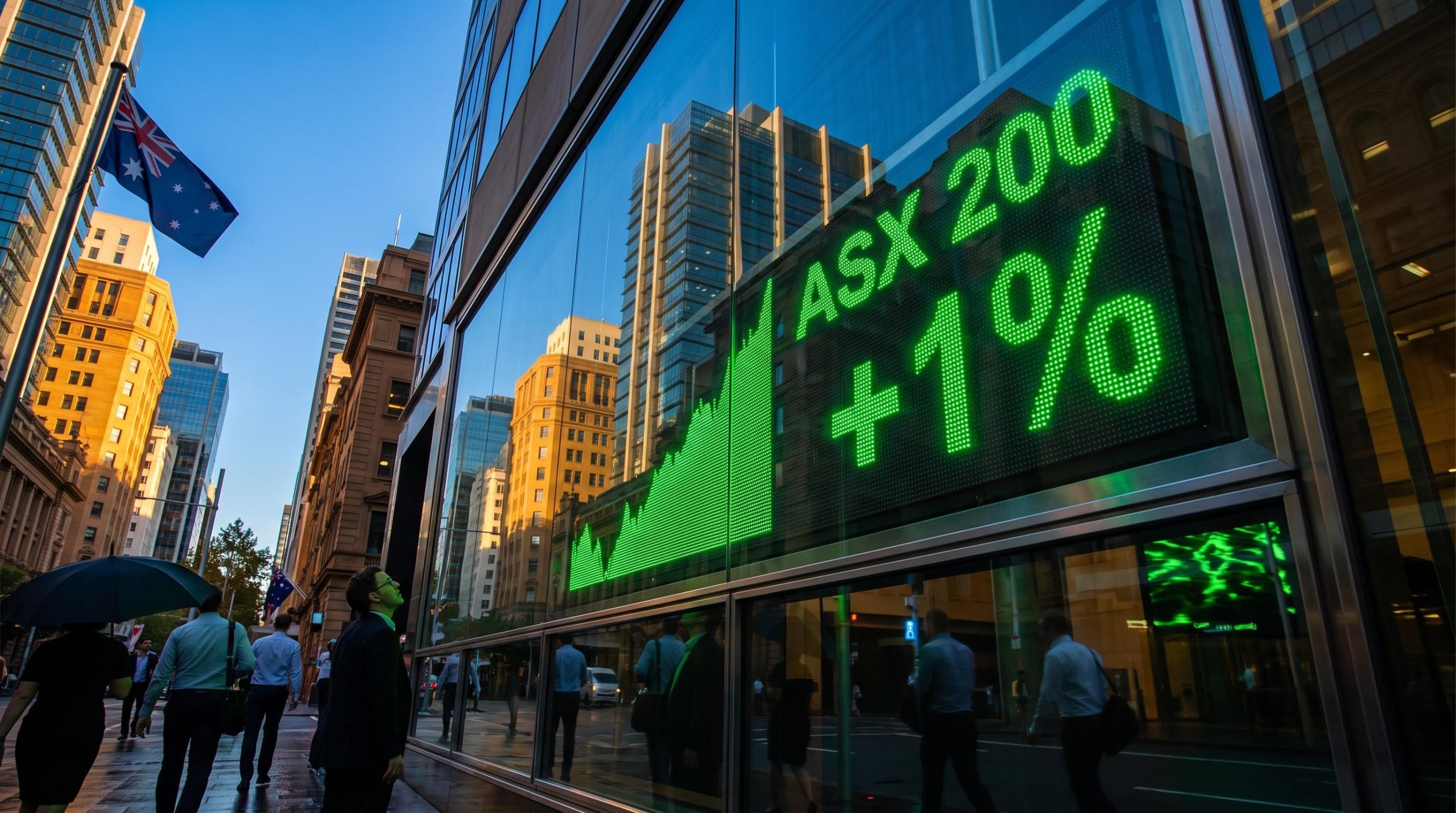
The S&P/ASX 200 closed Friday 16 October 2026 with its strongest day and week in about two months, up roughly 87 points, or about 1%. It was the index’s first daily gain above 1% since early August and its third straight weekly gain, breaking a stretch in which rate-hike fears had capped every advance on the ASX 200 today and through recent weeks.
The trigger was a weak jobs report on Thursday that changed the rate outlook for Australian investors almost overnight. One caution on the figures: Trading Economics put the close at 8,808, up only 0.29%. The roughly 1% gain matches same-day CommSec/7NEWS coverage, but you should confirm final-close figures against the ASX.
Below, you will find what drove the move, which parts of the market led and which stocks stood out. You will also get the dated events that could decide whether the rebound survives next week.
Why did the jobs report and Warsh’s comments trigger the rally?
The number was a shock. Australia shed 39,300 jobs in September, according to ABS data reported by Reuters, when NAB had pencilled in a rise of about 20,000.
- Employment: down 39,300 in September
- Unemployment rate: 4.7%, up from 4.6%, a five-year high
- No November RBA hike: market-implied odds rose from 66% to nearly 90%
- US October hike odds: fell to about 15% from nearly 30%
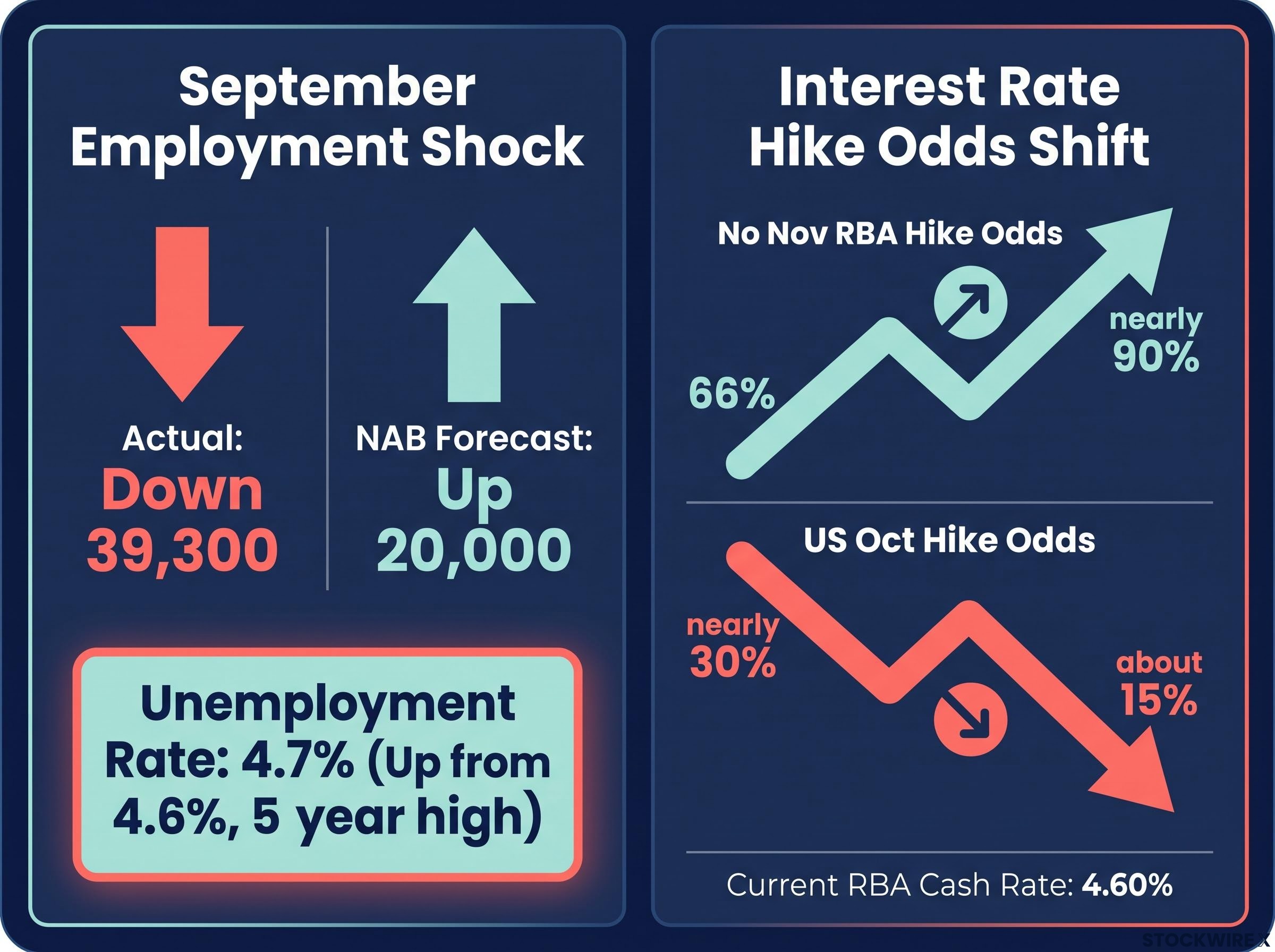
Reuters said the data “quashed” the near-term risk of a hike at the Reserve Bank’s 3 November decision on Melbourne Cup Day. The cash rate sits at 4.60% after September’s increase, the fourth of 2026. CBA economist Kristina Clifton said the figures backed the bank’s call for a hold in November.
Not everyone has moved on, though. FN Arena still sees a 25-basis-point increase (a quarter of a percentage point) as more likely than not over the broader horizon. Hebe Chen of Vantage said many analysts still expect one more hike before the end of 2026. The debate is about timing, not direction.
Several forecasters treated 4.60% as a floor rather than a ceiling, with ANZ projecting back-to-back hikes toward 4.85% by November before this week’s jobs shock reset the near-term odds.
Warsh and Wall Street add a second tailwind
The second leg came from Washington. Fed Chair Kevin Warsh declined to prejudge the October and December meetings, saying he would assess conditions at each.
“We removed a dose of accommodation about a month ago.”
That was enough to pull US October hike odds down to about 15%, and the Dow Jones rose about 1.1% overnight. For you, lower hike odds ease short-term pressure on mortgage-sensitive and growth-sensitive holdings. With economists still expecting a later RBA move, though, the relief is a pause rather than a policy pivot.
Which sectors and stocks led the ASX 200 today, and will the rebound last?
The sector gaps show how broad the bounce was.
| Sector | Day move | Note |
|---|---|---|
| Technology | Up over 5% | Best performer, helped by rate relief |
| Materials | Up over 3% | Rebound after weak commodity sessions |
| Healthcare | Up about 2.5% | Followed US healthcare stocks |
| Consumer discretionary | Up over 1% | Rate-sensitive spending names |
| Financials | Laggard | Still up more than 3% for the week |
| Consumer staples | Down nearly 1% | Weakest on the day, strong for the week |
The stock moves supply the proof, and most read as recoveries from sharp falls.
Gainers
- Life360, WiseTech Global and Megaport rose 6% to 9%. WiseTech added about 9% after nearly 3% on Thursday, once ASIC issued no-action letters clearing founder Richard White and two staff in two share-trading investigations. One investigation remains open.
- Paladin Energy gained about 6% and Boss Energy about 8.5%, after Paladin fell close to 20% over three sessions.
- BHP climbed about 3.5% after a 4.7% drop the day before.
- CSL rose about 2.8% and has more than doubled from its June lows.
Decliners
- Cleanaway fell about 6% after answering an ASX price query, with a decision on private equity firm EQT‘s takeover proposal approaching.
- Westpac slipped about 1.5% after a near 3% gain.
- Woolworths eased about 0.2% after jumping more than 4% to its highest since 2021.
Rebound or rotation?
The previous session had closed at 8,719.70, down 8.2 points, as tech and miners sold off. Chen described miners as caught in a broad sell-off across gold, silver, copper and iron ore, while AI valuations, a firmer US dollar and the RBA’s inflation worries remain unresolved.
Financials and staples also held weekly gains, which muddies any clean rotation story. If you hold tech, miners or uranium names, judge Friday’s bounce against the earlier drawdown. On the evidence, this was a powerful short-term rebound, not a confirmed new trend.
Trimmed-mean inflation is not forecast to return to target until 2028, so rate-sensitive sector valuations, already well off their highs, are likely to stay driven by rate expectations well beyond this week’s relief.
What is the weaker Australian dollar signalling, and what is on the calendar next week?
While shares celebrated, the currency sent a quieter message. The Aussie dipped below 69 US cents overnight, its lowest in about three months, before recovering to about 69.4 US cents after Warsh spoke. It is down about 0.5% for the week and lower in five of the last six weeks.
Lower RBA hike bets, firm US policy expectations, a stronger greenback, China demand worries and soft commodities all weighed.
The Aussie’s slide below 69 US cents reflects five forces driving the Aussie at once, from RBA policy and iron ore to China demand, risk sentiment and the trade balance, rather than any single headline.
- Gains: exporters and miners earning in US dollars
- Losses: importers paying more for fuel, machinery, technology and consumer goods
The tension is direct. The rate relief lifting your shares is also pushing up imported inflation, which could bring the RBA back into play.
The week ahead, in date order
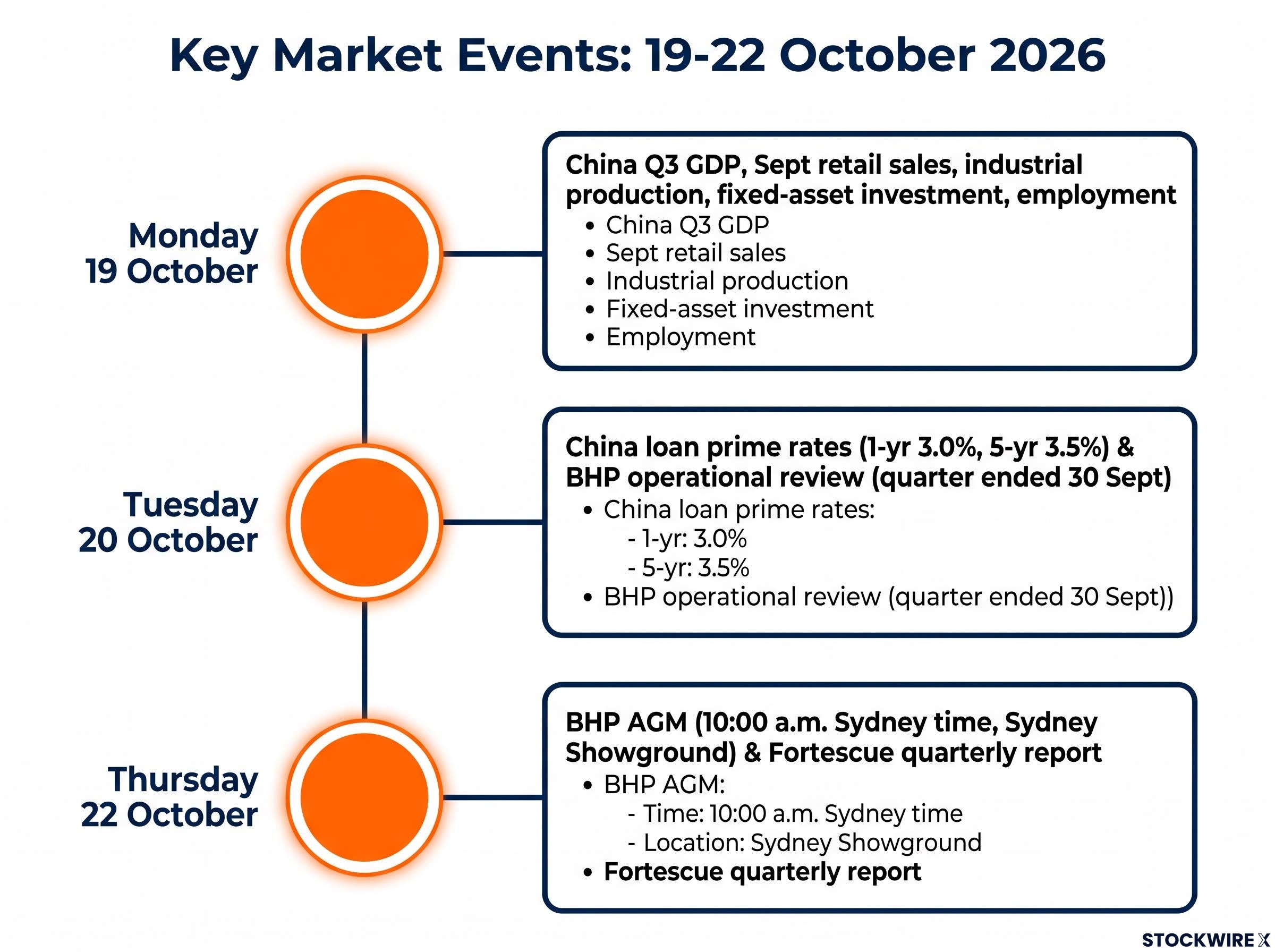
- Monday 19 October: China Q3 GDP, September retail sales, industrial production, fixed-asset investment and employment. This has the most direct read-through to miners.
- Tuesday 20 October: China loan prime rates (one-year 3.0%, five-year 3.5%); BHP operational review for the quarter ended 30 September.
- Thursday 22 October: BHP AGM at 10:00 a.m. Sydney time at Sydney Showground; Fortescue quarterly report.
- During the week: US earnings from Netflix, Meta and Tesla; Stockland and Transurban AGMs; Northern Star, Woodside and Santos production reports; Cleanaway’s EQT decision, with no confirmed date.
What the rally settles, and what it leaves open for the RBA
One weak jobs print and a more cautious Fed chair were enough to lift the index to its best week in two months. Neither removes the inflation question or the chance of a later RBA hike before the 2-3 November meeting and beyond.
Three variables will tell you whether the move holds: China’s Monday data, BHP’s quarterly and AGM commentary, and how the dollar reacts to any further rate repricing. If all three hold up, the rebound has room to run. If they do not, treat Friday as relief rather than a turn.
China’s consumer weakness, with retail sales crawling at 0.4% even as exports surged 25%, is a reason the Monday retail sales and GDP prints carry such weight for Australian miners.
This article is for informational purposes only and should not be considered financial advice. Investors should conduct their own research and consult with financial professionals before making investment decisions. Forward-looking views cited are speculative and subject to change based on market developments.