
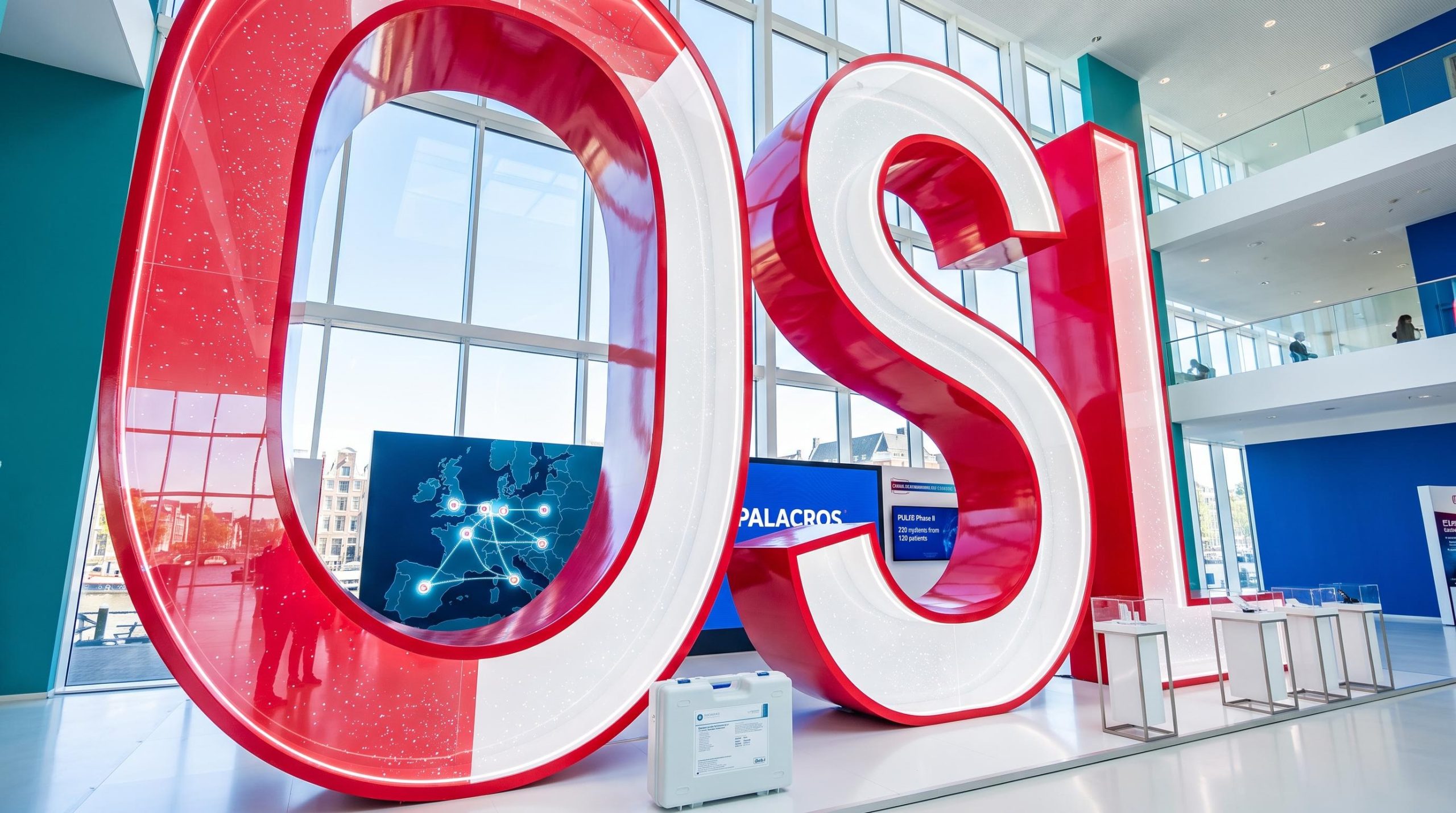
PALACROS European programme launches with OncoSil Medical on board
OncoSil Medical (ASX: OSL) has participated in the official launch of the PALACROS European research programme in Amsterdam, the Netherlands. The programme brings together European hospitals, researchers and industry partners to advance treatment options for patients with locally advanced pancreatic cancer (LAPC).
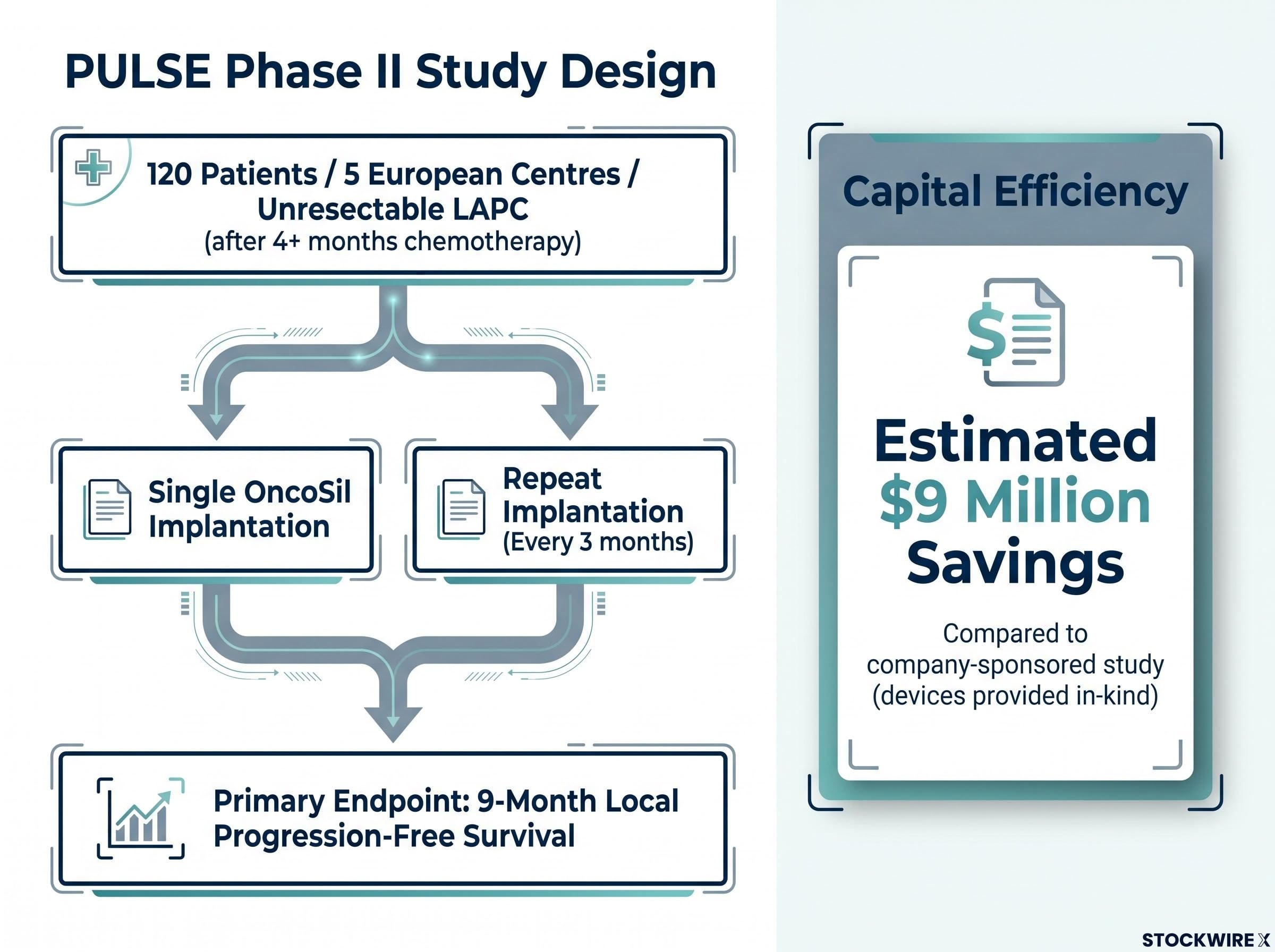
OncoSil Medical Europe GmbH is a consortium partner through the PULSE Phase II clinical study, which will investigate repeat OncoSil™ treatment in 120 patients across five European centres. The kick-off meeting provided an opportunity for partners to align on objectives and research priorities as PALACROS moves into its implementation phase.
For investors, the study represents a further clinical evidence step in Europe, where OncoSil™ holds CE Marking.
Nigel Lange, CEO & Managing Director
“The official launch of PALACROS in Amsterdam represents an important milestone in bringing together leading European institutions to advance pancreatic cancer research and treatment…”
“…We look forward to working closely with our consortium partners as PALACROS progresses.”
When big ASX news breaks, our subscribers know first
About PALACROS: who is involved and what it aims to do
PALACROS is a European research initiative supported by the Horizon Europe programme and the EU Mission on Cancer. It brings together multidisciplinary expertise to investigate innovative treatment approaches and improve care pathways for patients with LAPC.
The programme seeks to:
- Strengthen collaboration between specialist treatment centres
- Support the generation of clinical evidence
- Address disparities in access to advanced pancreatic cancer care across Europe
PALACROS also identifies innovative local therapies, including the OncoSil™ device, as a key component of its strategy to improve outcomes for patients who remain unresectable after chemotherapy.
According to the company, participation provides an opportunity to engage with leading European pancreatic cancer specialists.
Why locally advanced pancreatic cancer matters
“Unresectable” means a tumour cannot be removed by surgery. For patients with unresectable LAPC, other treatment approaches are needed, which is where local therapies come into focus.
OncoSil™ is a single-use brachytherapy (internal radiation) device. It delivers a pre-determined dose of beta radiation directly into cancerous tissue using targeted intratumoural placement of Phosphorous-32 microparticles, while limiting exposure to surrounding critical organs.
Pancreatic cancer sees 500,000 new cases detected globally every year and is generally diagnosed at a later stage, which is associated with a poor prognosis for long-term survival.
Inside the PULSE Phase II study
The table below summarises the key study details disclosed in the announcement.
| Parameter | Detail |
|---|---|
| Study design | Phase II, multi-centre, randomised (1:1) |
| Patients | **120** participants across **five** European centres |
| Patient population | Unresectable, non-progressive LAPC following at least **four months** of induction chemotherapy |
| Treatment arms | Single OncoSil™ device implantation; or repeat OncoSil™ device implantation every **three months** until disease progression |
| Primary endpoint | Nine-month local progression-free survival |
Secondary endpoints are:
- Overall progression-free survival
- Overall survival
- Safety and tolerability
- Quality of life
- Pain
- Opioid use
- Conversion to surgical resection
- Biomarker assessment
The study will also include a health economic assessment evaluating the cost-effectiveness and budget impact of repeat versus single implantation.
The PULSE trial builds on earlier prospective clinical studies, including TRIPP-FFX, PANCOSIL and PANCO. It aims to generate multicentre evidence on the role of repeat OncoSil™ treatment in improving local tumour control and potentially increasing the number of patients eligible for curative surgery.
The TRIPP-FFX results showed an 82.2% local disease control rate and 18.3-month median overall survival, giving PULSE a strong prior dataset on which to test whether repeat implantation can extend local tumour control further.
Capital-efficient structure: an estimated $9 million saving
Under the study agreement, OncoSil Medical will provide OncoSil™ devices in-kind, with no additional study-related costs to be incurred by the Company. The trial sponsor bears the associated study costs rather than the Company.
The arrangement is expected to deliver an estimated cost saving of approximately $9 million compared with conducting an equivalent OncoSil Medical-sponsored study. The announcement describes the avoided costs as site, monitoring, regulatory, data management and operational expenses typically associated with a company-sponsored trial of similar scale and duration.
The Company still stands to benefit from the clinical evidence generated. The $9 million figure is a company estimate, and the announcement does not specify the value of the in-kind devices, nor does it disclose the trial sponsor, a timeline or a completion date.
The in-kind trial structure sits alongside a recent institutional capital raise of $5.6 million that lifted pro-forma cash to $12.1 million, leaving the balance sheet better placed to fund US and Australian launches.
What this means for OSL investors
Three points stand out from the announcement:
- Evidence generation: PULSE is intended to expand the clinical evidence base for OncoSil™ in LAPC.
- Capital efficiency: The in-kind structure is described by the Company as a highly capital-efficient approach.
- European specialist engagement: Consortium participation provides engagement with leading European pancreatic cancer specialists.
OncoSil™ has CE Marking (European Union and United Kingdom), FDA Humanitarian Device Exemption approval for dCCA, and Breakthrough Device designation in Europe and the United States. It is approved for sale in 30+ countries.
The announcement does not disclose study results, enrolment status or timelines.
Don’t Miss the Next Healthcare Breakout
Join 20,000+ investors receiving FREE ASX healthcare alerts within minutes of release, complete with in-depth analysis and the full announcement. Click the “Free Alerts” button at Big News Blast to get market-moving news the moment it breaks, while others are still catching up.