
Azul has appointed Matt Camassa as chief revenue officer, handing him the company’s entire global revenue organisation in a move announced 7-8 October 2026. For a private-equity-backed software company, a hire like this often says more about its growth strategy than any product launch, because it shows how the business intends to turn products into revenue.
Azul is a specialist enterprise Java software provider. The appointment follows a busy stretch: the acquisition of Payara in December 2025, a broader product portfolio, and steady demand from companies reassessing their Oracle Java licences. Thoma Bravo, the private equity firm, holds a majority stake.
That ownership matters. Private equity owners typically want a clear route to higher revenue, and the person running sales is usually central to that plan.
Here is what this hire tells you about where Azul is steering its revenue engine, and what it does not.
What does Matt Camassa’s background say about where Azul is heading?
Start with the career, because the pattern sits there.
Azul describes Camassa as an enterprise sales leader with more than 20 years of experience building and scaling global enterprise sales organisations. The dates below come from professional profiles rather than from Azul’s announcement.
| Role | Company | Approximate dates | Relevance to Azul |
|---|---|---|---|
| Chief revenue officer | TeleSign | May 2016 to June 2017 | Scaled a business through growth before its 2017 sale to BICS |
| SVP Worldwide Sales | Sift | November 2018 to May 2022 | Ran global sales; Sift says this period delivered net revenue retention growth |
| Executive in residence | K1 Investment Management | June 2022 to July 2024 | Go-to-market strategy, board roles and interim CRO posts at portfolio companies |
| Operating partner | Diversis Capital | From August 2024 | Private equity operating experience |
The sequence runs from operating sales jobs to private equity advisory work. That combination usually brings metrics-driven selling, tighter forecasting and a focus on net revenue retention, which measures how much revenue a company keeps and grows from existing customers over a year.
Net revenue retention has become the key forward indicator across software, and its trend lines at large incumbents will show whether current valuation compression reflects sentiment or genuine structural repricing.
Camassa’s remit covers sales, solution engineering, partners, customer success and operations. Thoma Bravo leads ownership, with Vitruvian Partners and Lead Edge Capital as minority investors.
Azul has not described the hire this way, so treat it as interpretation. Still, the read is fairly clear: this looks like a company formalising how it sells at scale, and that matters more to your view of Azul than the job title.
How do Camassa’s stated priorities map onto Azul’s products and market?
Azul listed his priorities plainly. Each one connects to a specific product or market pressure.
Priorities and portfolio
- New customers: Oracle licensing changes and cloud cost pressure push enterprises to look for alternative Java runtimes.
- Deeper adoption: Azul Prime, Azul Core and Azul Intelligence Cloud give existing customers more to buy, and Payara adds application servers.
- Partnerships: The Technology Alliance Partner Program, launched on 23 September 2025, and CRN’s 24 March 2026 recognition of PartnerConnect and channel chief Simon Taylor.
- Regional expansion: North America, EMEA, Asia-Pacific and Latin America, following an existing large-enterprise footprint.
Customer footprint Azul says its Java technology supports mission-critical systems at 37% of the Fortune 100 and half of the Forbes Top 10 World’s Most Valuable Brands.
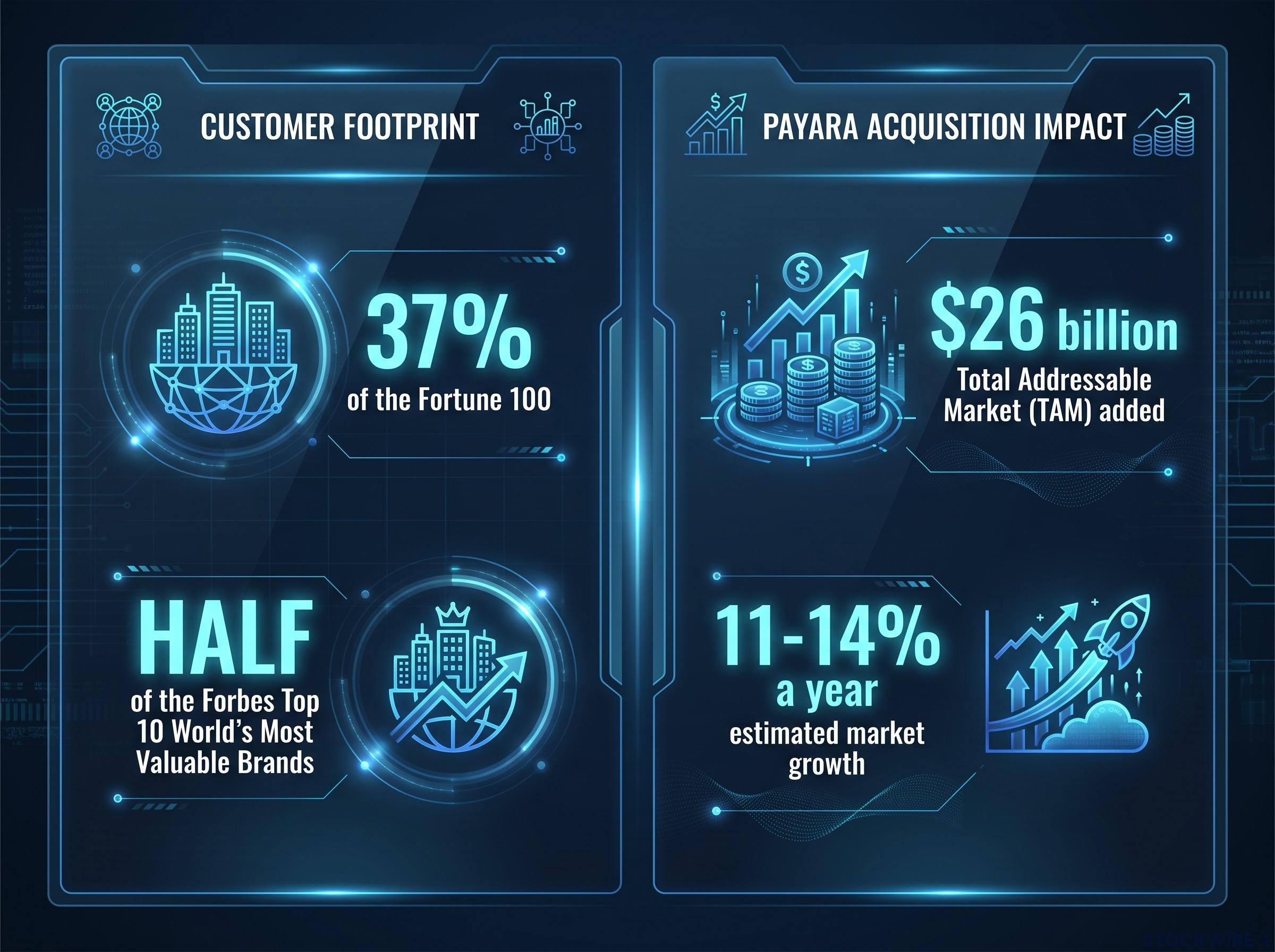
Payara widens the field. The deal, completed on 10 December 2025, adds an estimated $26 billion total addressable market (TAM), meaning the total revenue available if a company won every possible customer. Azul estimates that market is growing at 11-14% a year.
Products are being pitched on performance as well. On 1 October 2026, Azul claimed Prime delivers 2x-5x faster warm-up than standard OpenJDK, the free open-source version of Java. In February 2026, it also warned enterprises about version sprawl as several Java versions approach end of support.
The Oracle licensing backdrop
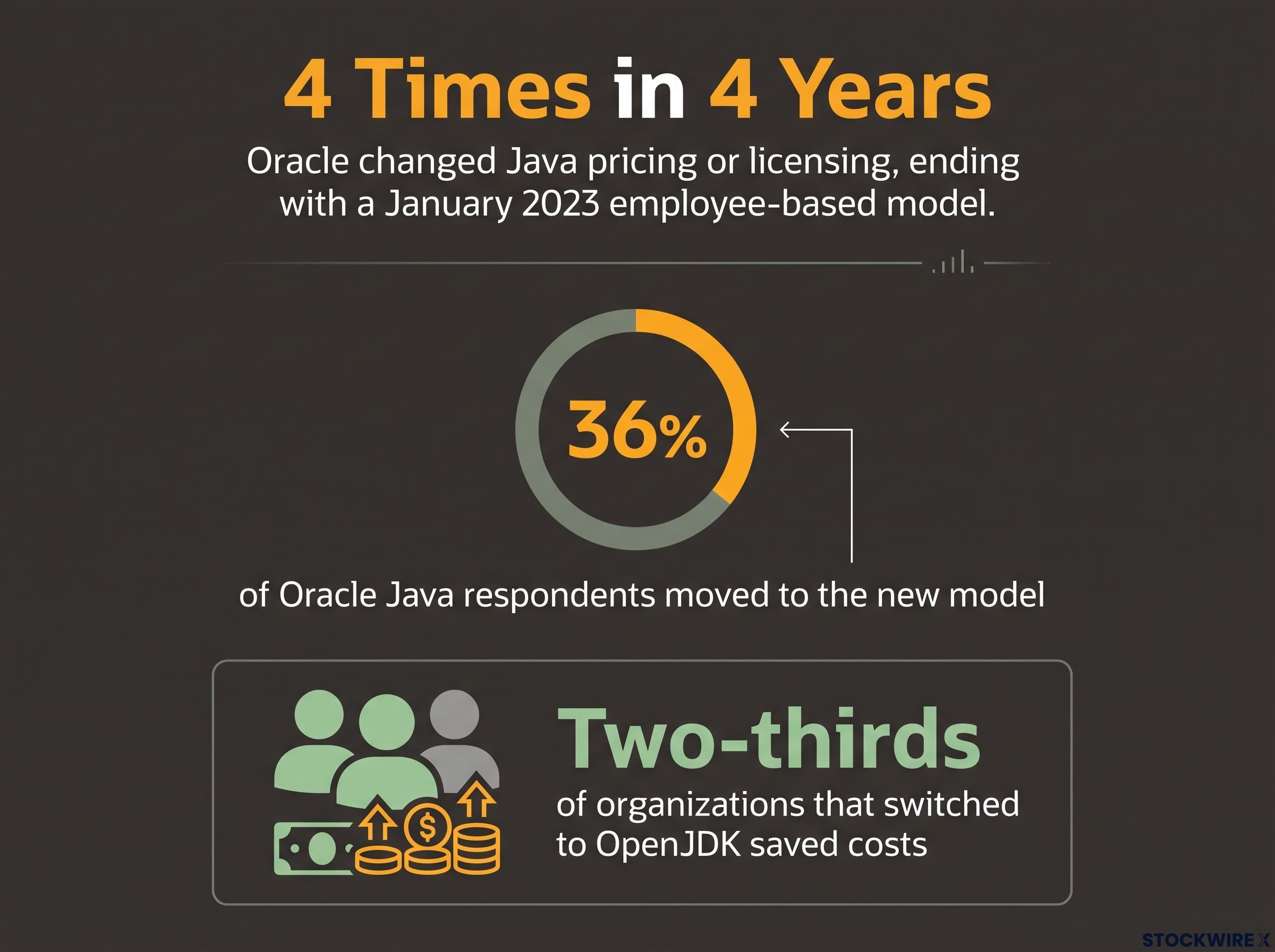
Much of the demand case runs through Oracle. Azul’s own 2024 survey found Oracle changed Java pricing or licensing four times in four years, ending with a January 2023 employee-based model. Two-thirds of organisations that switched to OpenJDK saved costs, and only 36% of Oracle Java respondents had moved to the new model.
Enterprise software cost-cutting is not limited to Java runtimes, with large buyers such as Starbucks targeting Oracle, IBM and Microsoft licences in wider savings programmes, which shows how widespread the pressure on vendor spending has become.
The takeaway for you is that these priorities mostly describe selling more to customers Azul already has. This is about monetising an installed base rather than a pivot.
What could slow this strategy down?
The constructive reading holds together. The sceptical one deserves equal weight.
Java runtimes are crowded. Amazon Corretto, Eclipse Temurin, Red Hat builds, BellSoft Liberica, cloud vendors’ own runtimes and Oracle itself all compete for the same estates. Many buyers treat their Java Development Kit (JDK), the core software used to build and run Java programmes, as a commodity bundled with cloud or support contracts.
- Margin pressure: Rivals can cut prices or bundle support.
- Channel conflict: Partner programmes need sustained investment to avoid partners and direct sales teams competing for the same deals.
- Regional build-out: Four regions each need local leadership and procurement know-how.
- Oracle dependence: If Oracle stabilises pricing or bundles Java into wider deals, switching pressure could ease.
- Buyer culture: CRO hires sometimes underdeliver where engineering teams, rather than procurement, drive purchasing.
The evidence gaps are real. Azul has disclosed no revenue or customer counts since 2024, no independent analyst has published share data against rival JDK vendors, and the licensing survey comes from Azul itself.
What to watch next
- New partner announcements or co-selling deals with cloud providers.
- Regional leadership hires in EMEA, Asia-Pacific or Latin America.
- Evidence of customers adopting several Azul products, especially Payara alongside Prime.
Treat this appointment as a signal to track follow-through, not as proof of growth already achieved.
These assessments are speculative and subject to change based on market developments and company performance.
What this hire confirms, and what only results can prove
The appointment confirms that Azul is building a global, multi-product revenue engine around a larger addressable market, with private equity ownership pushing for scale. Camassa’s mix of operating and advisory experience fits that phase.
It does not confirm revenue growth, market share gains or channel success. None of these can be checked against disclosed figures today.
The more useful signals will arrive over the coming quarters: whether customers adopt multiple products, whether partners generate real deal flow, and whether regional teams take shape. Until those appear, your read on Azul should stay provisional.
This article is for informational purposes only and should not be considered financial advice. Investors should conduct their own research and consult with financial professionals before making investment decisions.