The Reserve Bank of New Zealand’s Governor, Anna Breman, has issued a warning that sustained elevated oil prices could push near-term inflation above the levels laid out in the central bank’s September forecasts.
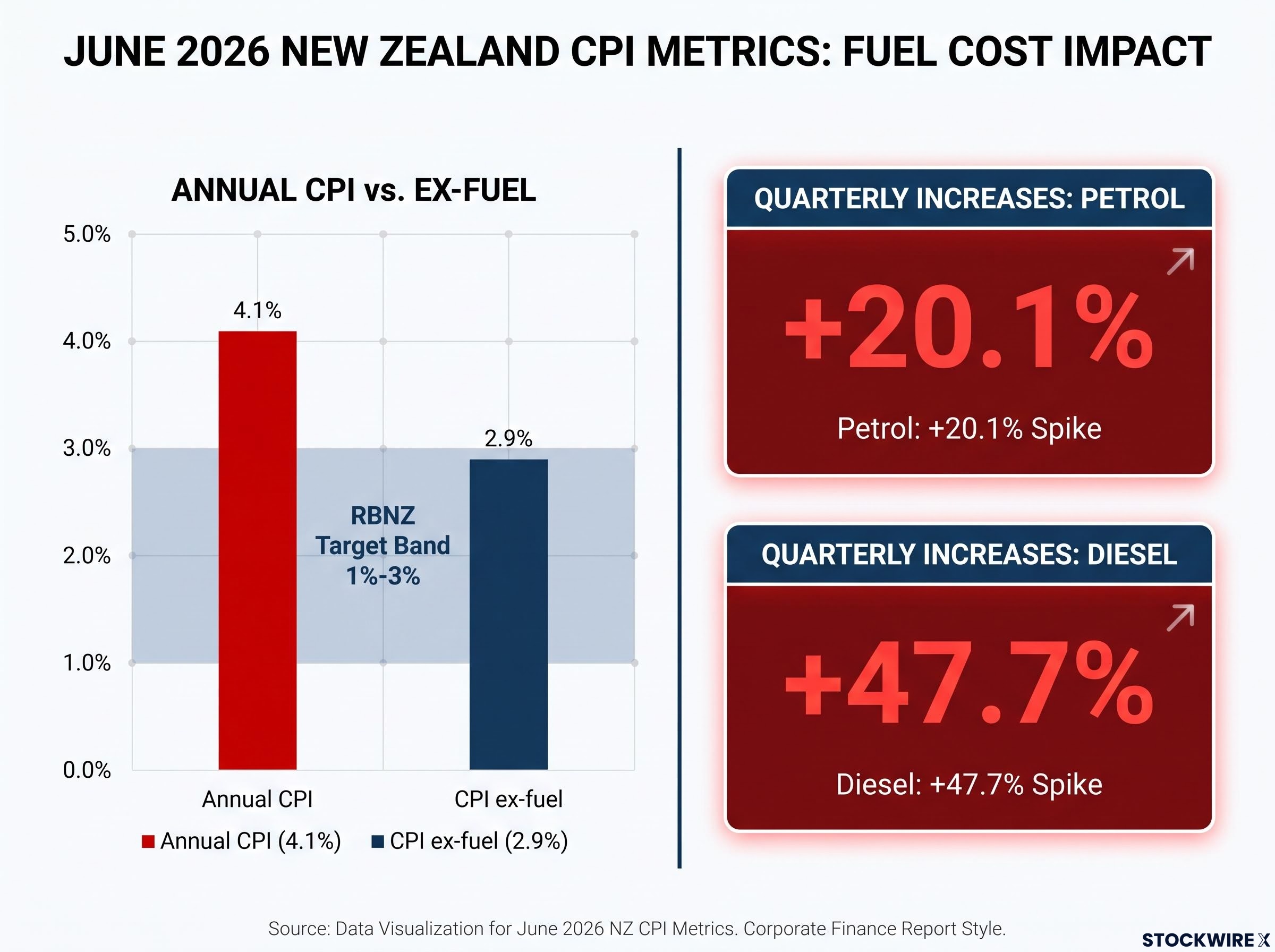
That warning matters because inflation is already running hot. Annual CPI reached 4.1% in the June 2026 quarter, well above the RBNZ’s 1%-3% target band, and fuel prices did most of the damage, accounting for roughly two-thirds of the quarterly rise.
So the Governor is not flagging a distant tail risk. She is pointing at a pressure point that is already stretching the central bank’s own numbers, with the next Official Cash Rate decision due on 28 October 2026.
Here is what the oil-price signal tells you about whether October is a live meeting or a placeholder, and what it means for the trajectory of the OCR and the New Zealand dollar over the rest of 2026.
The Governor’s warning: why oil prices are now the key inflation wildcard
Breman’s caution lands on a forecast that is already stretched. The September Monetary Policy Statement embeds an expectation that inflation stays above 3% for the remainder of 2026 before easing back into the target band in 2027. Any further push from oil would sit on top of a baseline the RBNZ already considers uncomfortably high.
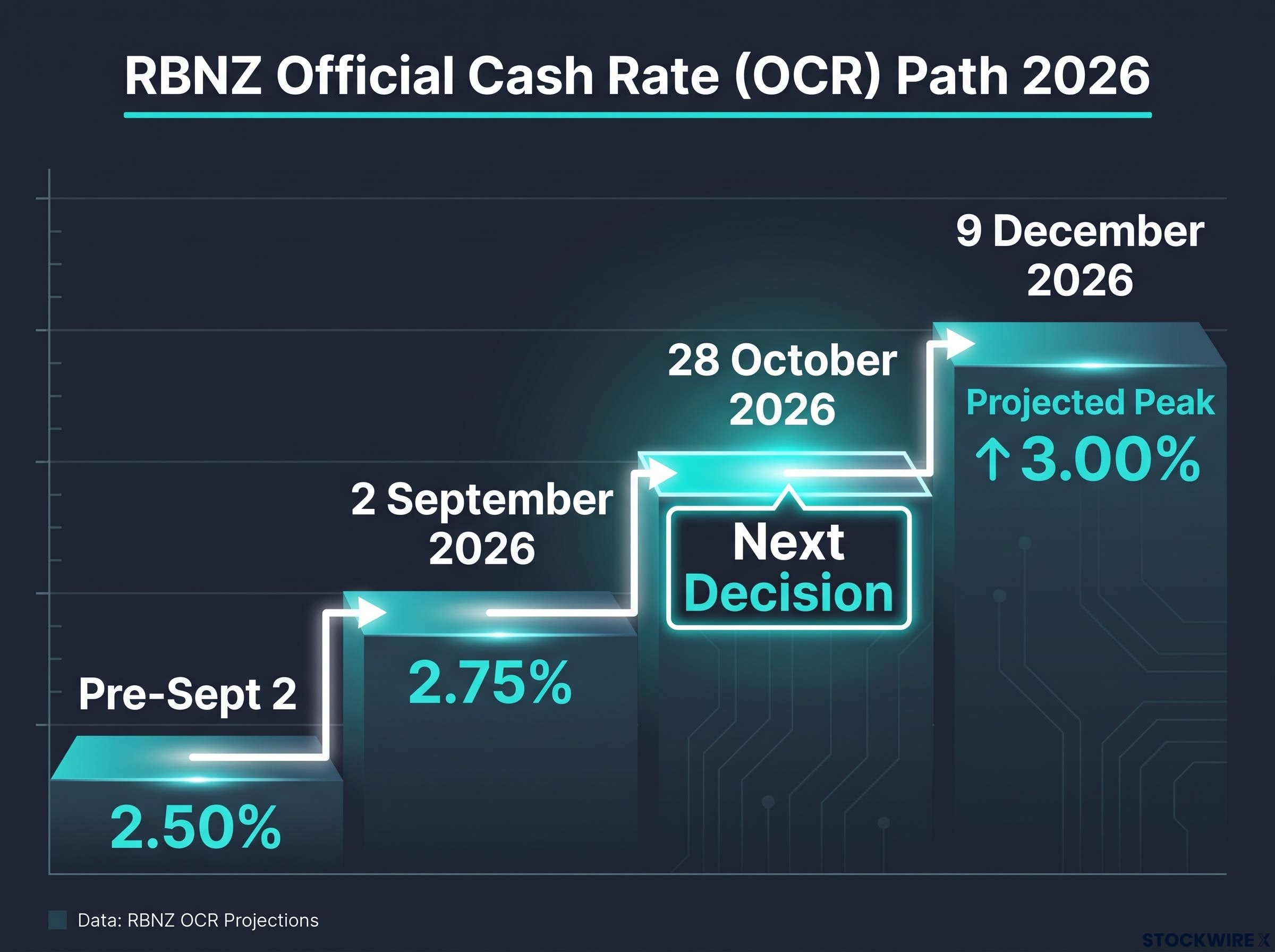
The rate decision itself was close to expectations. On 2 September 2026, the Monetary Policy Committee lifted the OCR by 25 basis points to 2.75%, the second consecutive hike, reached by consensus.
The September Monetary Policy Statement’s projected December 2026 rate path was already being scrutinised before the Governor’s oil-price warning, with analysis ahead of the September meeting identifying December and February 2027 as the meetings where stickier-than-projected price pressures would translate into a higher terminal rate.
Here is where the numbers stand:
- Current OCR: 2.75%, raised from 2.50% on 2 September 2026
- June 2026 annual CPI: 4.1%, above the target band
- June 2026 CPI excluding petrol and diesel: 2.9%, inside the band
- RBNZ inflation target band: 1%-3%
The oil-price warning RBNZ Governor Anna Breman signalled that sustained elevated oil prices could push near-term inflation above the levels projected in the September Monetary Policy Statement, according to reporting from FXStreet.
The significance of that warning is what it does to the October calculus. If oil holds high enough to lift headline inflation above the projected path, a hold at the next meeting becomes harder to defend on the RBNZ’s own logic.
For anyone tracking the NZD or New Zealand fixed income, that reframes 28 October from a likely non-event into a genuine decision point. The central bank has openly named a condition under which its projections could prove wrong to the upside, and oil is the variable holding the pen.
How oil prices feed into New Zealand inflation, and how fast
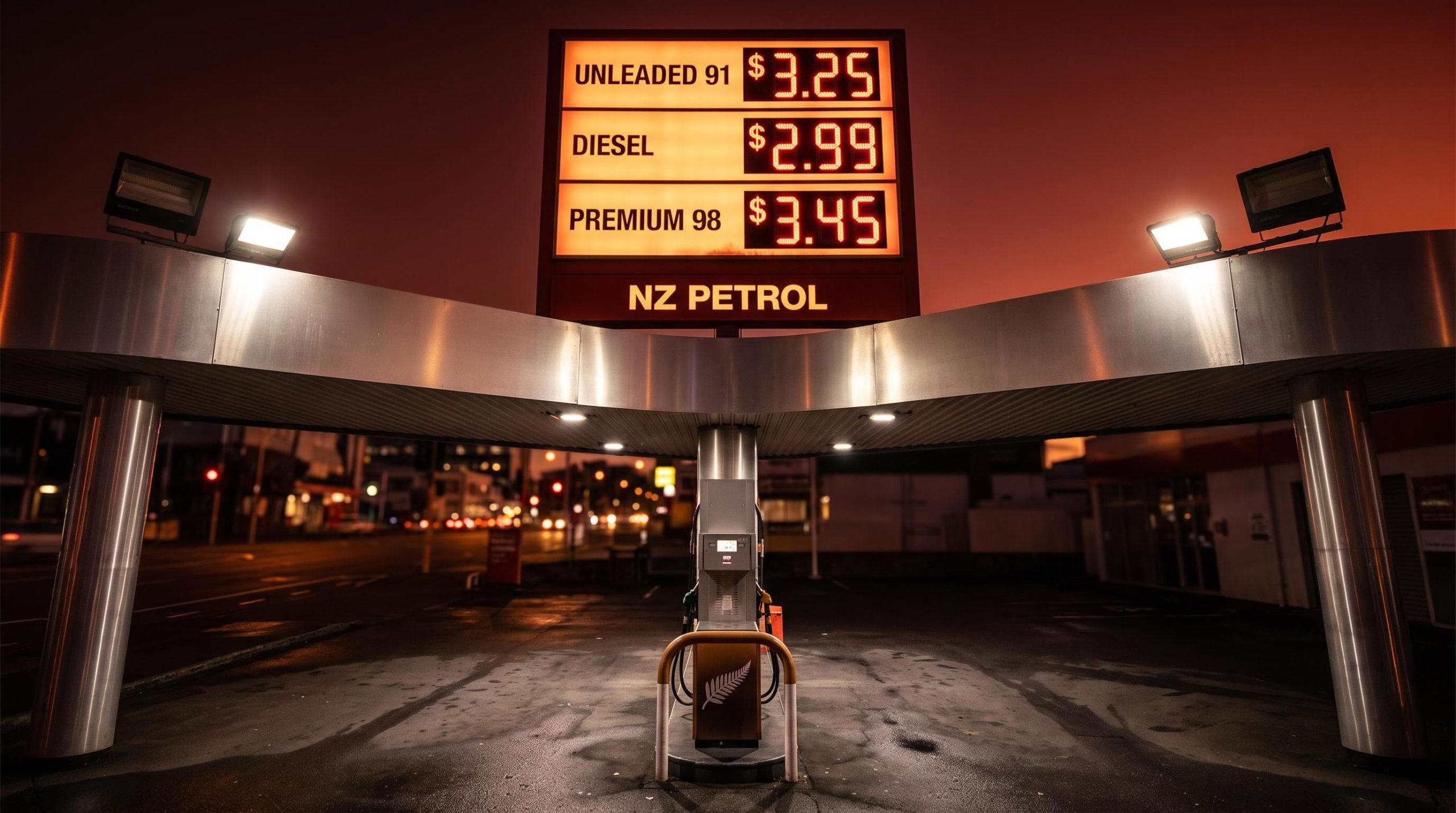
Follow the fuel and you follow most of the overshoot. Global oil prices reach New Zealand consumers primarily through petrol and diesel, which sit inside the tradeables component of CPI. Tradeables inflation covers prices shaped by international markets and the exchange rate, as opposed to non-tradeables, which are set domestically.
The June 2026 quarter shows the mechanism working in real time. According to Stats NZ, petrol rose 20.1% and other vehicle fuels, mainly diesel, jumped 47.7% over the quarter, together contributing roughly two-thirds of the entire quarterly CPI increase.
The Stats NZ June 2026 CPI release confirms petrol rose 27.5% annually and diesel surged 71.0% over the same period, with the combined fuel effect accounting for most of the gap between the 4.1% headline print and the 2.9% ex-fuel measure.
This is not a one-off. In the March 2026 quarter, a 3.5% rise in petrol prices was the single biggest contributor to the CPI rise even when annual inflation sat at 3.1%. Fuel has been doing the heavy lifting for two quarters running.
| CPI Component | June 2026 Quarter Change |
|---|---|
| Petrol | +20.1% (quarterly) |
| Other vehicle fuels / diesel | +47.7% (quarterly) |
| All-items CPI (annual) | 4.1% |
| CPI excluding petrol and diesel (annual) | 2.9% |
That 2.9% ex-fuel figure is the number to hold onto. It tells you domestic inflation is not broadly overheating and that the overshoot is almost entirely an energy story, which shapes how the RBNZ is likely to frame its October language even if it does nothing to the rate.
The CPI classification of energy costs embedded in freight and imported goods as goods price increases rather than energy inflation means the official ex-fuel figure of 2.9% may understate how much of the apparent core remains war-driven cost pass-through wearing a different label.
Second-round effects and the core inflation question
The pump is only the first stage. Direct pass-through from wholesale fuel costs to retail petrol and diesel typically plays out over weeks to a few months, which is why fuel spikes show up fast in the data.
The slower channel is second-round effects. Higher fuel costs feed into transport services, freight, and food over subsequent quarters as firms rebuild their pricing to cover the added input costs, and that is where a temporary shock risks becoming embedded.
This distinction is exactly what central banks in small open economies watch. The RBNZ, historically, has tended to focus on whether a fuel shock is leaking into wages and broader price-setting before responding with aggressive rate increases, rather than reacting to the headline number alone.
What October 28 means for the OCR path and the NZD
The default expectation for 28 October is a hold. The September Monetary Policy Statement projects at most one further 25 basis point hike by year-end, and most likely at the 9 December 2026 meeting rather than October, which puts the projected peak OCR at 3.00%.
The projected rate ceiling The RBNZ’s September projections point to a peak OCR of 3.00% by end-2026, consistent with just one further 25 basis point rise, most likely in December.
What could disturb that baseline is the oil variable. If data between now and late October show oil sustaining further upside and headline CPI tracking above the September forecast path, the argument for an October move strengthens rather than waits for December.
Pulling the other way are the domestic conditions. EBC’s account of the September hike notes it occurred despite weak domestic demand, and Squirrel’s September commentary flags rising mortgage costs squeezing household debt servicing. Both argue against accelerating the tightening.
For NZD watchers, that tension is the whole story. At the time of the September statement, NZD/USD traded around 0.5720, up roughly 0.07% on the day, supported by a relatively high policy rate but capped by fragile growth and household-sector strain.
The NZD/USD reaction to the September hike illustrated the dynamic precisely: a 25 basis point rise to 2.75% sent the Kiwi down roughly 1% because the published rate track projecting a peak of only 3.15% by end-2027 fell well short of market swap pricing near 4.25%, demonstrating that the gap between the RBNZ’s guidance and market expectations is a more powerful NZD mover than the rate decision itself.
Here is what to watch in the five weeks before the decision:
- The global oil price trajectory and whether the recent elevation holds
- Any September quarter CPI signals or partial price indicators
- RBNZ communications and speeches for shifts in tone on the oil risk
- NZD/USD reaction to offshore risk sentiment and yield differentials
The read for currency and fixed income holders is that October is less about whether the RBNZ hikes and more about what it says. The framing of the oil risk, not the rate line itself, is the signal that will move expectations.
Where the RBNZ stands when supply shocks do the tightening for it
The bind is real. A 4.1% headline print sits on top of a 2.9% ex-fuel core and a soft domestic economy, which means the RBNZ is managing an energy shock, not a broad demand boom. That split shapes how it is likely to communicate in October even if the rate stays put.
History offers a guide to how central banks in small open economies handle this. The pattern across past cycles is fairly consistent:
The parallel between Hormuz disruption and central bank signalling is visible across multiple jurisdictions: the Fed’s July 2026 minutes explicitly confirmed the standoff had materially complicated the US inflation outlook, with three regional presidents dissenting from the hold, a dynamic that gives the RBNZ Governor’s oil-price warning regional rather than purely domestic significance.
- Mid-2000s RBNZ: tolerated fuel-driven headline inflation while watching inflation expectations and wages
- 2008 RBNZ and RBA: looked past commodity spikes and cut sharply when demand collapsed, prioritising employment and stability
- 2011-2012 RBNZ: leaned on core and non-tradeables measures, signalling it would look through temporary tradeables spikes if domestic capacity pressures stayed contained
That history tells you a hold through a supply shock is not inaction. It is a deliberate choice to prioritise sustainable domestic conditions and the employment side of the RBNZ’s dual mandate over headline optics, and whether the Bank applies that same logic in October is the real story.
So the decisive signal on 28 October will not be the rate itself. It will be how the RBNZ frames the oil-price risk and whether it confirms December as the most likely timing for any further move. That is the language NZD and fixed income holders should read most closely.
This article is for informational purposes only and should not be considered financial advice. Investors should conduct their own research and consult with financial professionals before making investment decisions.
Past performance does not guarantee future results. Financial projections are subject to market conditions and various risk factors. Forward-looking statements are speculative and subject to change based on market developments.