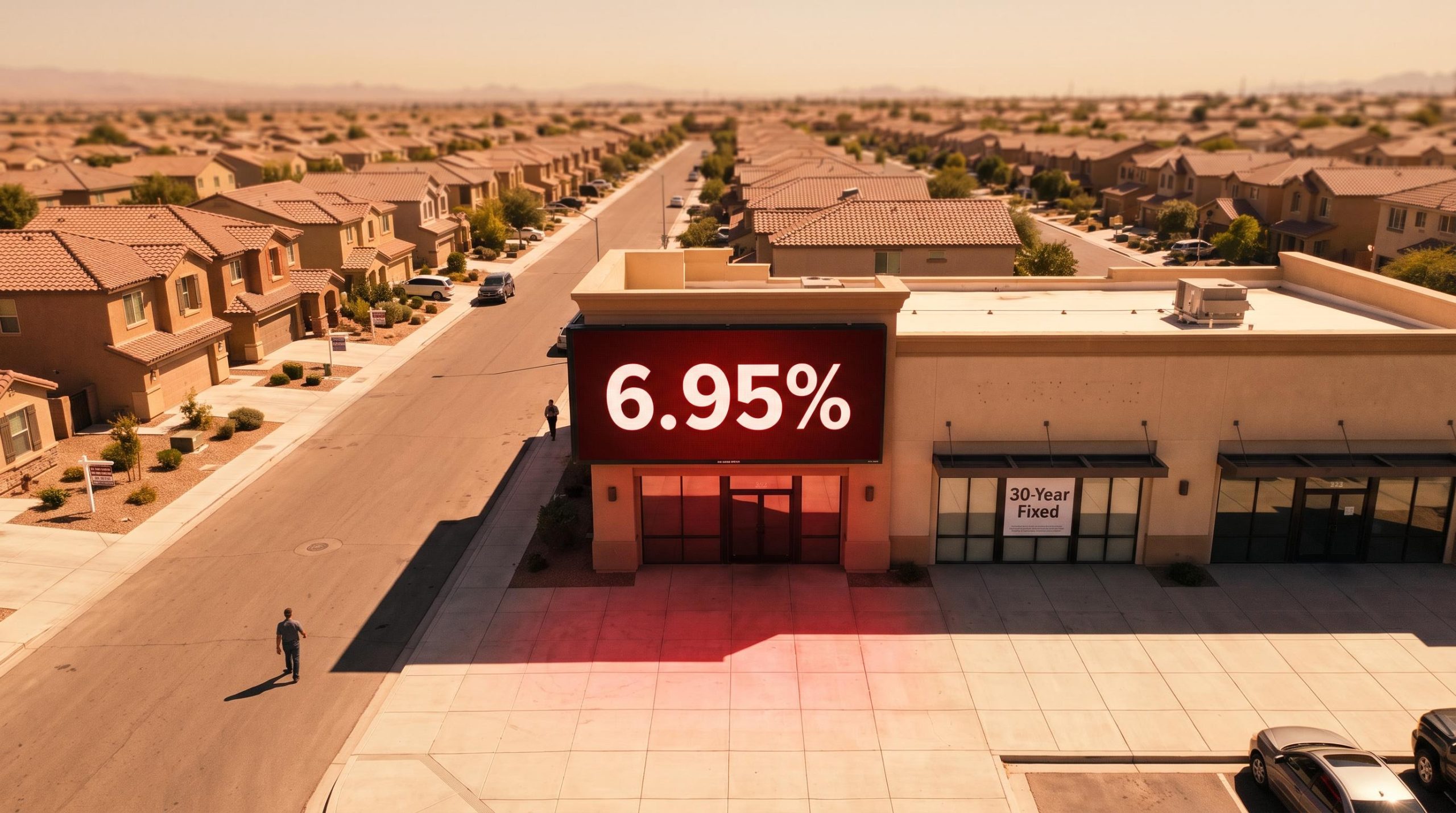
The Fed just raised rates for the first time since 2023, and the dollar did exactly what the textbooks predict: it climbed. But Standard Chartered’s analysts are making a sharper argument than a simple rates-up, dollar-up trade. They contend the move may have set off a structural, medium- to long-term dollar rally by removing the single biggest reason investors had been reluctant to buy the currency.
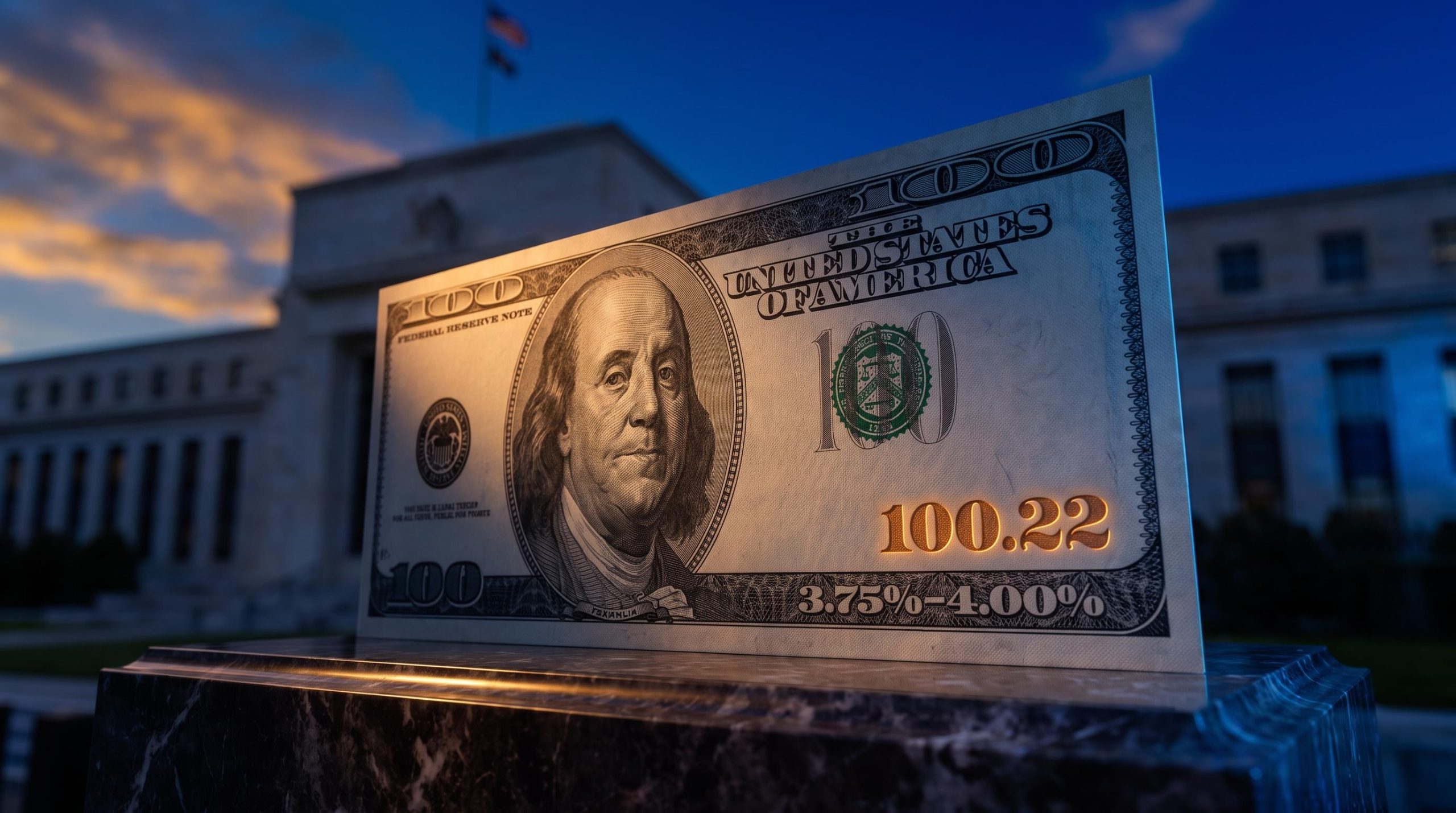
The 16 September 2026 FOMC decision lifted the federal funds rate target range to 3.75%-4.00%, unanimous across every member, while Fed Chair Kevin Warsh pushed the projected inflation-return-to-target date out to 2029. Set against White House pressure, a destabilised bond market, and a dollar index that had slipped below 100, a routine quarter-point move carried unusual weight.
This piece unpacks the three distinct forces the hike set in motion: the rate differential mechanics, the credibility signal embedded in Warsh’s defiance of political pressure, and the risk premium introduced by the Treasury buyback programme that the hike only partially reversed. Understanding how these forces interact is what separates a fleeting dollar pop from a durable directional shift.
Why 25 basis points moved the dollar more than 25 basis points should
On paper, this was a single quarter-point hike. In the market, it landed like something bigger.
The U.S. dollar index (DXY) pushed past 100 for the first time since July, and by 18 September 2026 it sat at 100.22, capping a gain of more than 1% over the prior seven days. A one-decision move of that size, from a mere 25 basis points, tells you the rate arithmetic was never the main event.
What the market had actually been pricing was uncertainty about whether Warsh would hike at all. With the White House pushing hard for lower rates, traders had discounted the dollar partly on the fear the Fed might blink. The hike resolved that binary risk in one stroke, and the currency repriced the removal of doubt as much as the change in yield.
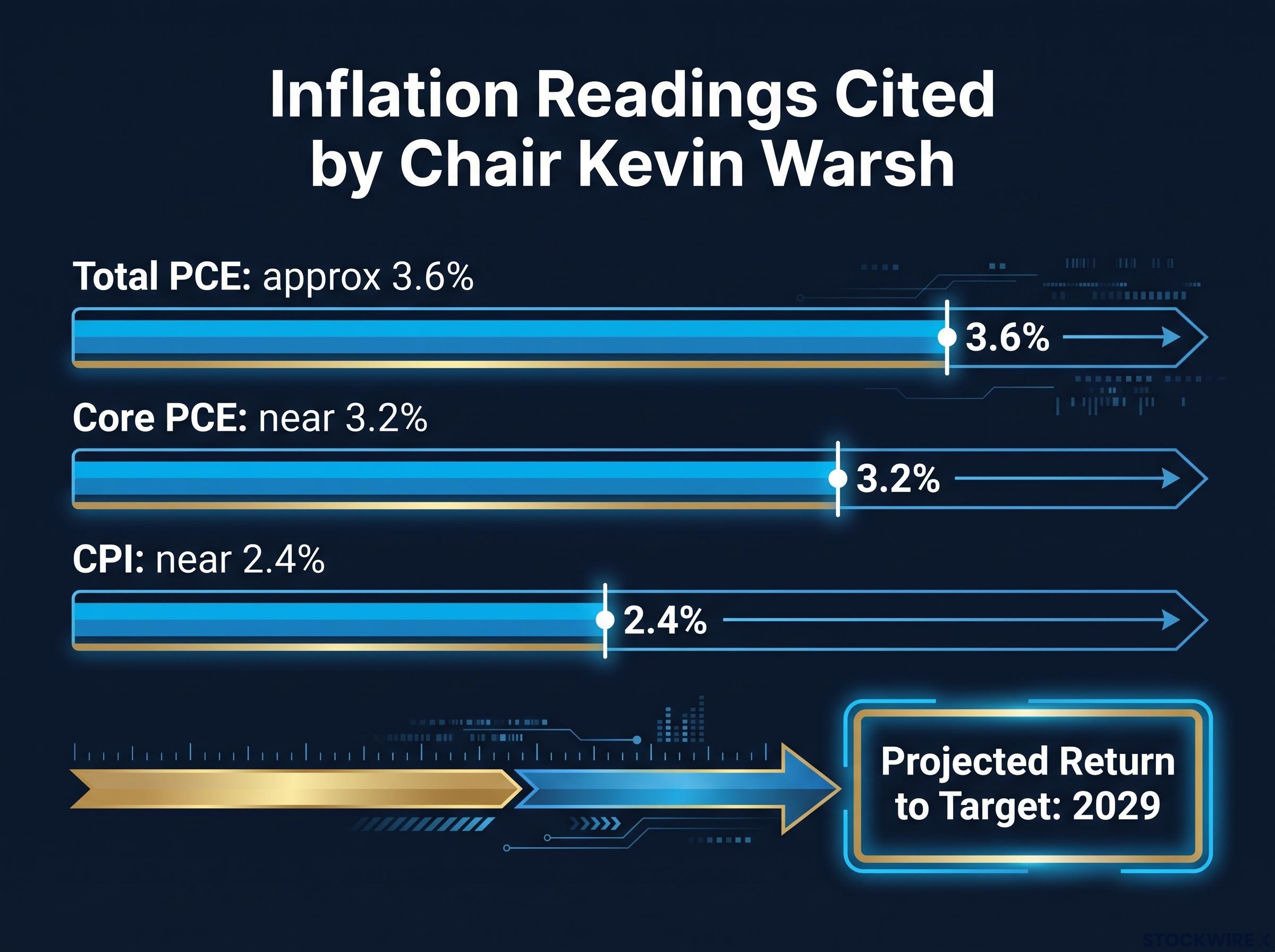
Warsh grounded the decision in inflation data that remained stubbornly above target. He cited the latest readings across the three measures the Fed watches most closely:
- Total PCE (Personal Consumption Expenditures) price inflation running at approximately 3.6%
- Core PCE, which strips out volatile food and energy prices, near 3.2%
- CPI (Consumer Price Index) near 2.4%
He was blunt about the trajectory, noting that too many categories were still climbing above 3% on both six- and twelve-month horizons.
“This Committee will deliver price stability.”
For anyone holding or weighing dollar-denominated assets, that distinction matters. A rate-differential move fades as differentials narrow. A credibility-driven move can outlast the hiking cycle entirely.
What the dot plot signals about the rate path ahead
Warsh offered no explicit numerical forward guidance. But the projection that inflation will not reach 2% until 2029, a full year later than the prior forecast, tells you the Fed’s bias sits with further tightening rather than a pause.
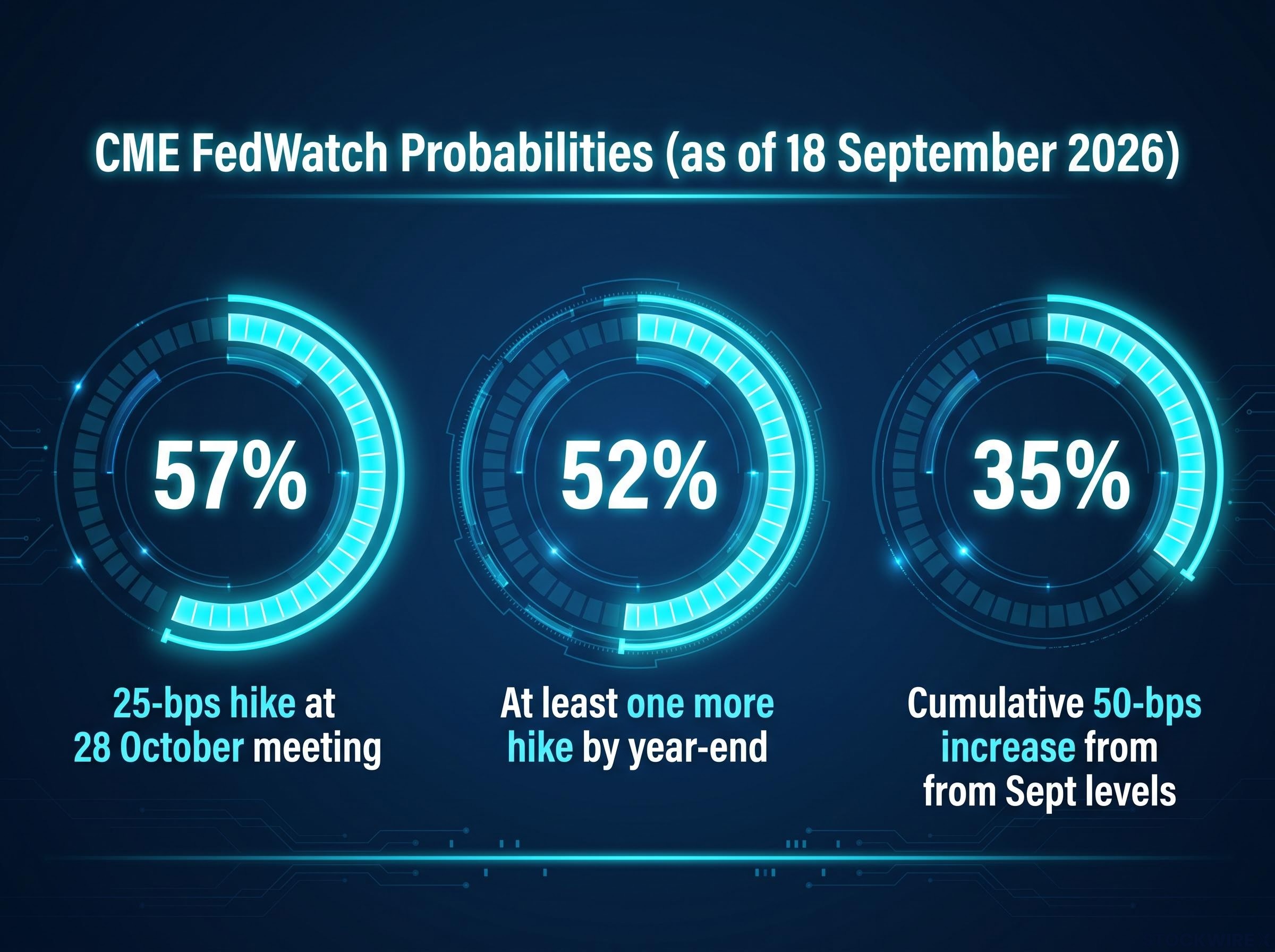
Market pricing agrees, cautiously. As of 18 September 2026, CME FedWatch data placed roughly a 57% probability on another 25-basis-point hike at the 28 October meeting, up from about 42% a week earlier. Adjacent readings put around 52% odds on at least one more hike by year-end and roughly 35% on a cumulative 50-basis-point increase from September levels. Markets, in other words, read this as a hiking cycle in early motion, not a terminal move.
When big ASX news breaks, our subscribers know first
How Fed independence became a dollar variable
Central bank independence is usually an abstraction discussed by academics. In September 2026, it became a live input into the dollar’s price.
Fed independence was already a contested variable before the September decision, with Warsh confirmed by a narrow 54-45 Senate margin into an institution facing simultaneous pressure from the executive branch and an elevated inflation backdrop that left no room for accommodative signalling.
Hours after the hike, President Trump took to Truth Social to demand rates of 1% or less, arguing the United States deserved cheaper credit than any other borrower on Earth. He was not alone. In the days before the meeting, Vice President JD Vance and other officials had publicly urged the Fed to hold. The pressure campaign was unusually broad, and unusually public.
That backdrop is what made a unanimous hike so consequential. When a central bank is seen as bending to political demands for cheap money regardless of inflation, investors respond in predictable ways:
- They price in higher future inflation from policy kept too loose
- They demand a premium for the unpredictability of decisions that shift with political cycles
- They discount the currency as a long-term store of value as institutional credibility erodes
Turkey has become the standing reference for how chronic political interference drives persistent currency weakness. The unanimity of the September vote pointed in the opposite direction.
A split decision under this much pressure would have signalled a fracturing institution. A unanimous one signalled a committee operating on economic data rather than the electoral calendar, which is precisely what global reserve managers need to see before they commit capital for years, not weeks.
Standard Chartered’s analysts argued the hike “removed one of the market’s major deterrents to buying the dollar.”
Steve Englander and his Standard Chartered team framed it in striking terms: Warsh had “converted term premium into real returns,” lifting the dollar’s investment appeal by eliminating the primary obstacle to buying it while erecting the largest barrier to selling it. Karl Schamotta, chief market strategist at Corpay, made a similar case on CNBC, saying the decisive, unanimous hike “should go a long way toward restoring confidence in the Fed’s commitment to fighting inflation, and help remove a major headwind keeping the dollar restrained.”
Here is the part that outlasts the rate cycle. If the Fed keeps demonstrating data-driven decisions in the face of political noise, the structural case for holding dollars strengthens no matter where the funds rate finally settles.
The Treasury buyback programme and what it did to dollar risk
While attention fixed on the Fed, a second policy lever was quietly reshaping the dollar’s risk profile from the Treasury side.
The buyback programme mechanics introduced a reserve-injection dynamic that rate-differential models do not capture cleanly, particularly given the near-zero Reverse Repo facility that amplifies each operation’s effect on bank reserves and funding conditions relative to earlier buyback cycles.
In mid-August 2026, Treasury Secretary Scott Bessent announced the government would at least double the maximum size of its buyback operations for longer-dated bonds, from $2 billion to at least $4 billion per operation, targeting the 10-to-20-year and 20-to-30-year sectors. The stated rationale was to support liquidity after a sharp rise in long-term yields and a buyers’ strike at the long end of the curve.
The bond market was not persuaded. A 10 September operation of up to $6 billion in 10-to-20-year bonds, three times the size of the prior long-dated operation, disappointed investors, who judged it too small for the scale of the selloff and sent yields higher rather than lower.
| Date | Action | Size | Market response |
|---|---|---|---|
| Mid-August 2026 | Buyback maximum doubled, targeting 10-to-30-year bonds | From $2B to at least $4B per operation | Yields initially eased on expectation of long-end support |
| 10 September 2026 | Long-dated buyback, 10-to-20-year bonds | Up to $6B, three times prior long-dated size | Disappointed markets; yields surged as investors judged it insufficient |
The problem for the dollar is what the programme introduced into its valuation. Standard Chartered noted the announcement had layered a fresh risk premium onto the currency before the Fed even met, and that the September hike only partially unwound it. Reuters framed the deeper worry directly: aggressive long-end repurchases, combined with large deficits, raised questions about fiscal discipline and revived debasement fears.
Reuters also flagged that the buyback may complicate the Fed’s own work by distorting the signals the yield curve sends about how tight policy really is. If Treasury actions hold long yields down or muddy the term structure, the Fed may have to hike more, or communicate more clearly, to keep financial conditions aligned with its inflation goal.
Reuters reported the programme had “renewed dollar-debasement fears,” as investors weighed large deficits against aggressive long-end repurchases.
The takeaway is uncomfortable for the bulls. The fact that the hike only partially reversed the buyback premium tells you the dollar’s recovery carries a structural ceiling. Until bond markets trust that the fiscal and monetary mix is coherent, part of that premium persists regardless of how many more times the Fed moves. For anyone assessing dollar strength beyond the near term, ignoring the buyback means working with an incomplete picture of the currency’s risk.
For investors weighing the longer-horizon implications of sustained long-end yield suppression combined with large deficits, our deep-dive into financial repression and Treasury buybacks examines the structural parallels to the 1942-1951 regime and what negative real sovereign yields historically mean for hard-asset positioning.
The structural case for the dollar and its built-in limits
Give the bulls their full argument, because it is a serious one.
Standard Chartered contends that higher U.S. yields are not merely a cyclical accident but a structural feature, driven by AI-led investment, robust corporate earnings, and strong productivity. In that reading, elevated yields born of deficit spending are not inherently bad for the dollar. They attract capital, provided inflation and default risk stay contained. Englander’s team argues Warsh’s endorsement of U.S. economic resilience strengthened both the perceived sustainability of those yields and the appeal of investment flows into the country.
Standard Chartered qualified the case sharply: higher yields support the dollar “provided that inflation and default risk are contained.”
That qualifier is where the thesis meets its limits. Three constraints, ranked by near-term relevance, keep this from being a clean directional call:
- Finite scope for further hikes. Markets price one, perhaps two more moves, not a prolonged cycle. CME FedWatch put only about 35% odds on a cumulative 50-basis-point increase from September levels by year-end, meaning rates alone offer modest incremental support from here.
- Debt sustainability. MarketWatch has warned that rising U.S. debt could eventually force foreign investors to reassess their dollar exposure, raising the spectre of a future “dollar crunch” if confidence erodes.
- Reserve diversification. If other major economies offer comparable real yields without similar fiscal and political uncertainty, reserve managers gain incremental reason to diversify, capping upside even with a hawkish Fed.
The gap between Standard Chartered’s structural optimism and the market’s more modest pricing is telling. Professional investors broadly share the direction of travel but are not yet willing to bet on the magnitude. The rally has room to extend, but a ceiling is already built into current positioning.
When the growth premium starts working against the dollar
There is a feedback loop worth watching. Each additional hike, layered onto already-elevated long-term yields, raises the odds of a sharper economic slowdown.
A material slowdown would compress expectations for the very rate path currently supporting the dollar, and the growth premium that draws capital into the United States would fade with it. This is not the base case. It is the single variable most likely to invalidate the Standard Chartered thesis quickly, which makes it the one most worth monitoring.
Where the dollar goes from here depends on three things you can track
The near-term picture is straightforward enough to state plainly: the rate decision and the independence signal together shifted the probability distribution toward dollar strength. Whether that shift holds is another question, and it is answerable with three observable variables rather than a directional guess.
- Unanimity at the October FOMC. The meeting lands on 28 October 2026, with CME FedWatch currently placing roughly a 57% probability on another hike. A split vote would signal internal Fed pressure and reintroduce the credibility premium that September’s unanimous decision had partially retired. Watch the vote count as closely as the rate.
- Long-term yield trajectory through buyback operations. If yields keep climbing despite Treasury repurchases, it tells you the market still doubts the fiscal-monetary mix, and the residual risk premium stays lodged in the dollar.
- Fiscal metric evolution into year-end. A widening deficit sharpens the debt-sustainability constraint; a narrowing one loosens it. This is the slowest-moving of the three, but it is the proxy for the constraint most likely to bite over the longer horizon Warsh implied by pushing the inflation target return out to 2029.
For anyone with dollar exposure, the October vote is not just a rate decision. It is the next data point on whether the Fed independence thesis that powered the September rally holds or begins to crack.
Having a specific, trackable framework means you can update your view as facts arrive, rather than holding a static bet in a macro environment that remains genuinely uncertain.
This article is for informational purposes only and should not be considered financial advice. Investors should conduct their own research and consult with financial professionals before making investment decisions. Past performance does not guarantee future results. Financial projections are subject to market conditions and various risk factors. These statements are speculative and subject to change based on market developments and company performance.