
RAD301 delivers positive Phase 1 imaging data in pancreatic cancer patients
Radiopharm Theranostics (ASX: RAD, Nasdaq: RADX) has announced positive data from its Phase 1 imaging trial of RAD301 in patients with Pancreatic Ductal Adenocarcinoma (PDAC), a cancer type with few effective imaging or treatment options. Three headline outcomes emerged from the trial:
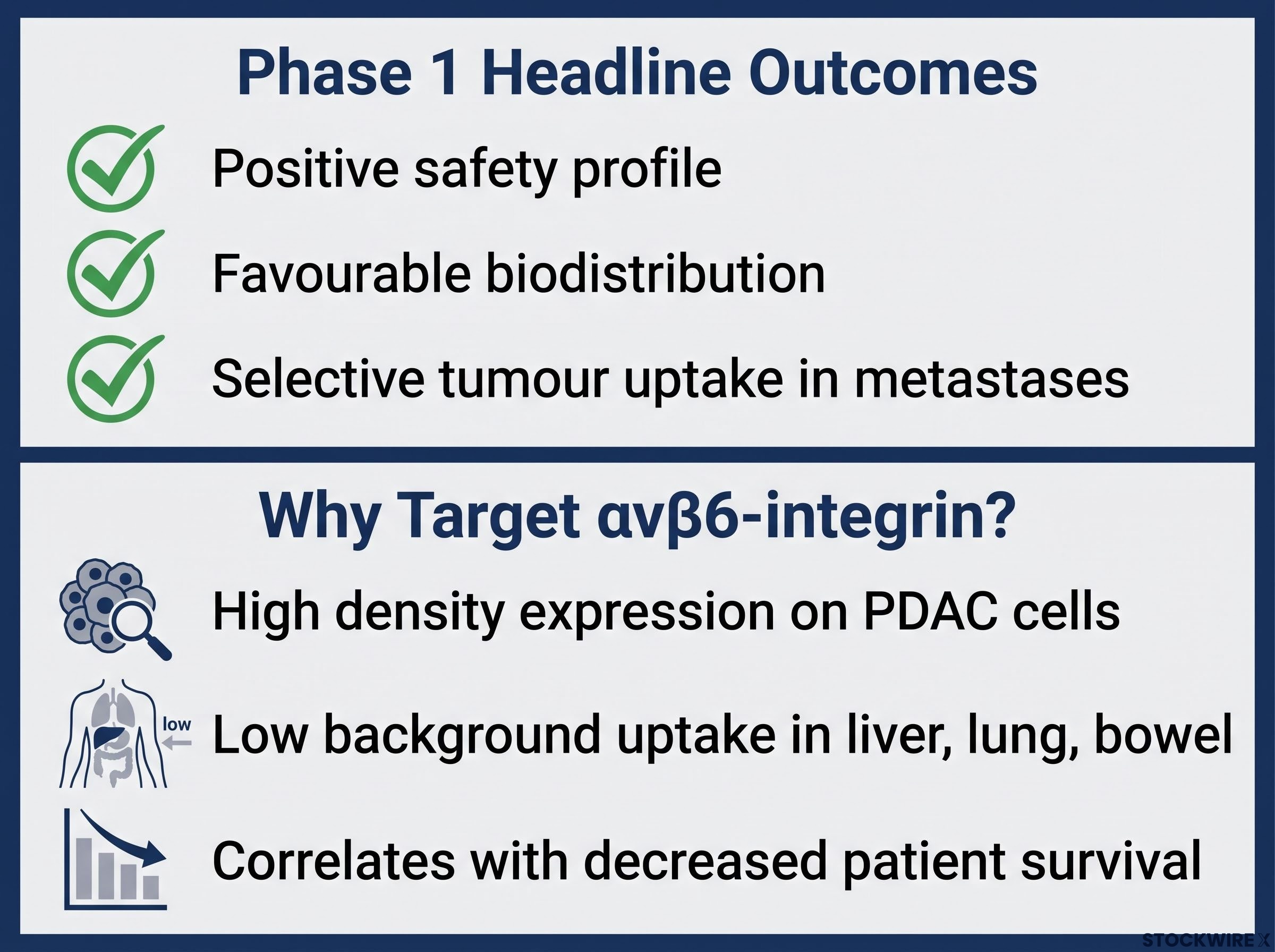
- Positive safety profile confirmed in all evaluable participants
- Favourable biodistribution observed across all dosed subjects
- Significant and selective tumour uptake demonstrated in pancreatic cancer metastases in all evaluable PDAC patients
Notably, these results are consistent with initial data from the first five patients evaluated, confirming reproducibility as the trial expanded beyond its earliest cohort.
When big ASX news breaks, our subscribers know first
What RAD301 is and why pancreatic cancer is so hard to treat
RAD301 is a peptide-based molecule bound to Gallium-68 (Ga-68) that targets a protein called αvβ6-integrin, a cellular marker for tumour invasion and metastatic growth. This receptor is expressed in high density on most pancreatic carcinoma cells and correlates with decreased patient survival, making it an attractive candidate for both imaging and therapeutic applications.
The broader platform concept is known as theranostics, which refers to using the same molecule for both diagnosis (imaging) and therapy. If a molecule can identify and bind to cancer cells for imaging purposes, the same targeting mechanism may be adapted to deliver a therapeutic payload, creating a dual commercial opportunity from a single platform.
Current standard imaging for pancreatic cancer, including FDG PET, is limited by variable tumour biology and non-specific uptake, meaning it can struggle to clearly distinguish cancerous tissue from healthy tissue. The αvβ6-integrin targeting approach used by RAD301 offers a more tumour-specific alternative.
RAD301 has previously received Orphan Drug Designation (ODD) from the US Food and Drug Administration (FDA), providing a meaningful regulatory credibility marker for the asset.
Key reasons αvβ6-integrin is an attractive target include:
- High density expression on most pancreatic carcinoma cells
- Correlation with decreased patient survival across several carcinomas
- Low background uptake at these sites, enabling distinction of metastatic lesions from surrounding normal tissue
Key findings from the Phase 1 trial
Safety and biodistribution
The Phase 1 trial of RAD301 demonstrated a favourable safety profile in all evaluable participants. Favourable biodistribution was also observed across all subjects dosed in the study.
Tumour uptake in metastatic lesions
The clinically significant finding from the trial was significant and selective tumour uptake in pancreatic cancer metastases across all evaluable PDAC patients. Importantly, low background uptake was observed in the liver, lung, and bowel, which are the primary sites of PDAC spread. This supports RAD301’s potential to distinguish metastatic lesions from surrounding normal tissue, a capability that has historically been difficult to achieve with conventional imaging approaches.
CEO commentary
Riccardo Canevari, CEO and Managing Director
“These data are an important step forward for patients suffering from advanced pancreatic cancer, as RAD301 has demonstrated significant and selective tumor uptake in metastatic lesions… Given the limited imaging and treatment options available for patients with PDAC, these findings highlight the potential role of RAD301 in improving disease detection, patient selection, and future theranostic applications. Pancreatic cancer remains a challenging disease to image, and conventional approaches such as FDG PET are limited by variable tumor biology and non-specific uptake. The results from this Phase 1 study support the potential of αvβ6-integrin-targeted imaging to provide a more tumor-specific approach to detecting pancreatic cancer, further supporting the advancement of RAD 301 into Phase 2 development.”
Path to Phase 2 and the investment case for RAD301
The Phase 1 data support the advancement of RAD301 into a Phase 2 imaging trial. The rationale for progressing is underpinned by the high mortality associated with PDAC, the limited imaging options currently available to clinicians, and the unmet medical need in earlier stages of the disease.
Beyond imaging, the results also support the potential of αvβ6-integrin as a target for future therapeutic development and potentially as a theranostic pair. This means a single platform could generate both diagnostic and therapeutic revenue streams, broadening the commercial opportunity materially beyond diagnostics alone.
RAD301’s progress adds momentum to Radiopharm’s broader clinical programme, which currently includes one Phase 2 and five Phase 1 trials across solid tumour cancers including lung, breast, prostate, and brain.
The 177Lu-RAD202 HEAT trial followed a similar early-stage trajectory, with first-in-human data presented at AACR 2026 showing meaningful tumour uptake and no dose-limiting toxicities, allowing the Data Safety Monitoring Committee to approve advancement to higher dose cohorts.
From an investment perspective, positive Phase 1 data reduce the clinical risk associated with the RAD301 asset. FDA Orphan Drug Designation provides a regulatory tailwind, and the theranostic model positions the company to pursue value across both the diagnostic and therapeutic arms of the same target.
For investors exploring what commercial infrastructure underpins a theranostic imaging programme as it moves toward registration, our detailed coverage of Radiopharm’s Siemens supply agreement and RAD101 Phase 3 pathway explains how the company has secured radiopharmacy manufacturing and distribution across the U.S. network ahead of a pivotal registrational trial.
| Asset | Target | Indication | Current Stage | Key Milestone |
|---|---|---|---|---|
| RAD301 | αvβ6-integrin (Ga-68) | Pancreatic Ductal Adenocarcinoma (PDAC) | Phase 1 (data released) | Positive safety, biodistribution, and tumour uptake; Phase 2 advancement supported |
| Pipeline (broader) | Multiple targets | Lung, breast, prostate, brain cancers | One Phase 2; five Phase 1 trials | Ongoing clinical development across solid tumour programme |
Don’t Miss the Next Healthcare Breakthrough in Your Inbox
Big News Blast delivers FREE breaking ASX healthcare news and in-depth analysis directly to your inbox within minutes of release. Join 20,000+ subscribers already getting real-time coverage the moment market-moving announcements hit. Click the “Free Alerts” button at StockWire X to stay ahead before the broader market catches on.