Two central banks are on hold. Both have hawks pushing internally for a hike. On the surface, the Bank of England and the Federal Reserve look like they are running the same playbook. They are not.
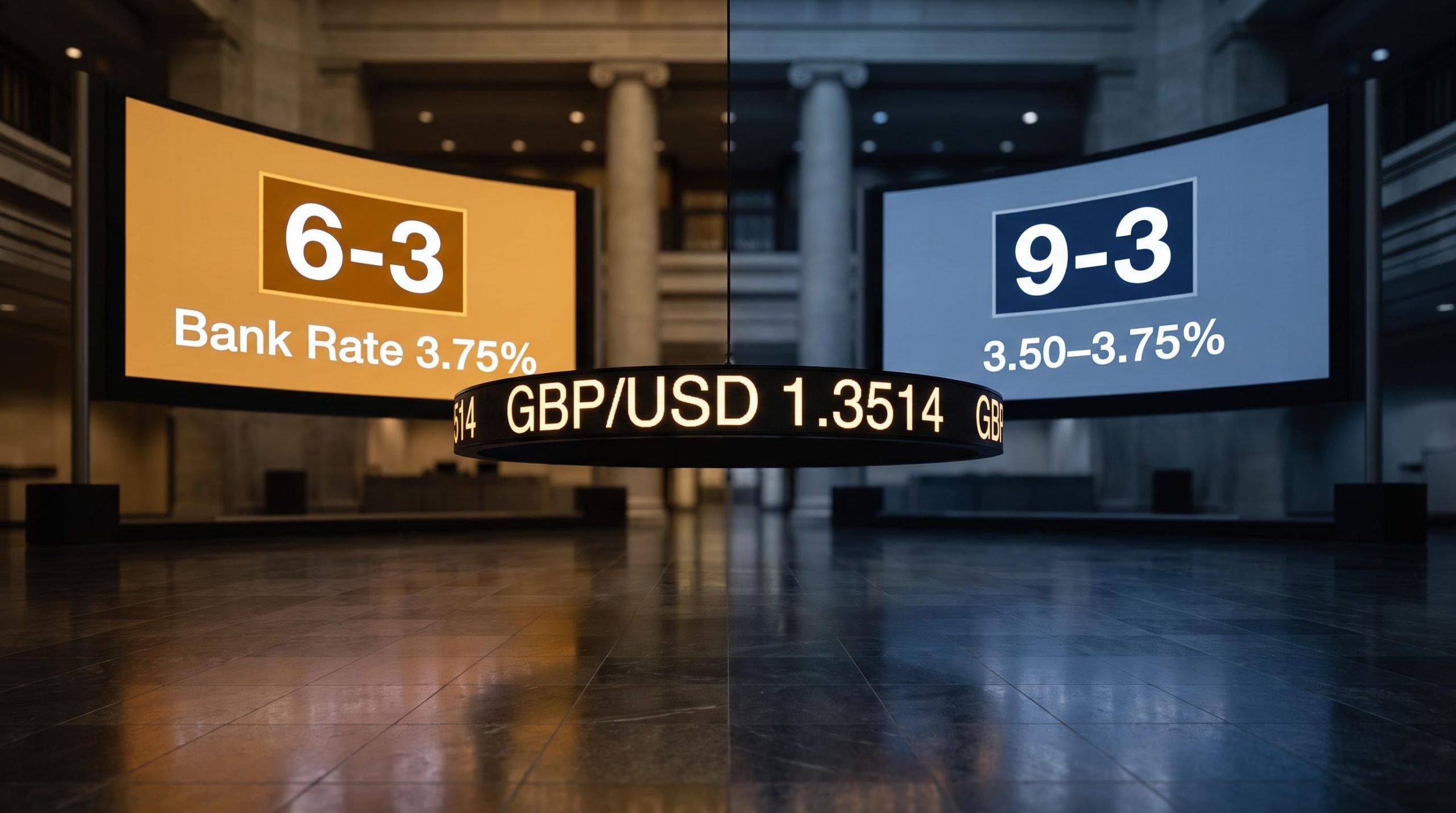
At its meeting ending 29 July 2026, the BoE voted 6-3 to keep Bank Rate at 3.75%, with three members pressing for an immediate move to 4.0%. The Fed voted 9-3 the same day to hold its target range at 3.50-3.75%, its fifth consecutive hold. Same posture, different internal pressure, and the gap is starting to matter for sterling.
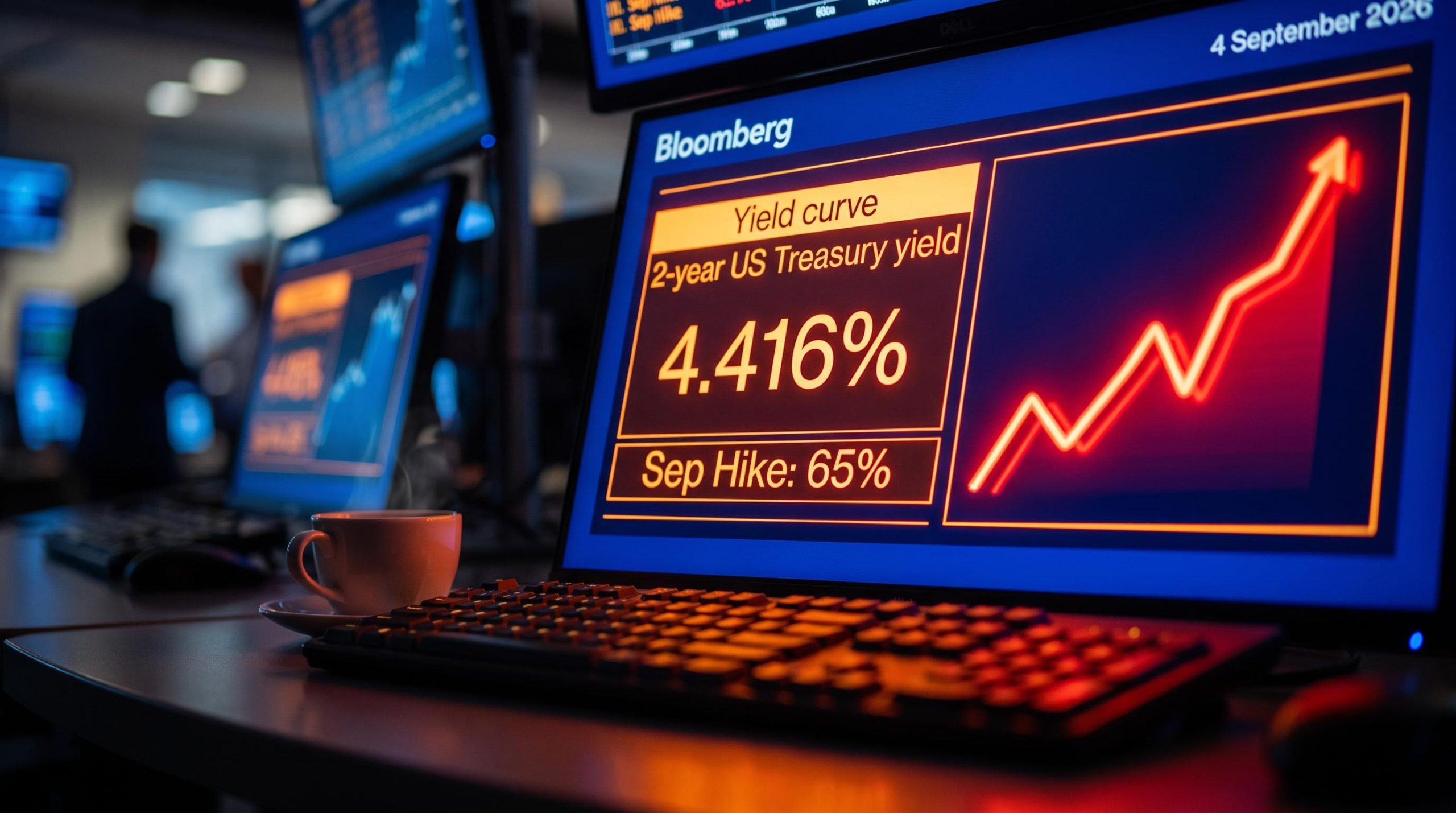
The timing sharpens the point. GBP/USD is trading near 1.3514 with the US Dollar Index (DXY) at 99.09 as of 4 September 2026, and a fortnight of high-impact data (UK CPI on 16 September, UK retail sales on 18 September, plus concurrent US inflation and sentiment prints) is about to hand markets fresh material to reprice both paths. The divergence is being priced in real time.
Here is what the data actually tells you: how to read BoE and Fed signals together, how the yield spread transmits to the pound, and which prints in the coming weeks deserve your full attention.
Where each central bank actually stands right now
Look past the shared “on hold” label and the asymmetry is immediate. The BoE’s 6-3 split is not a neutral pause; it is a live tightening debate with three members already voting for a higher rate. That is a committee one or two data surprises away from a move.
The Fed’s 9-3 hold reads differently. Three dissenters wanted a hike, but the majority is comfortable managing a cooling process rather than actively debating the next tightening step. Its higher-for-longer framing signals patience, not urgency, with US inflation still above target and domestic growth running stronger than the UK’s.
Near term, both are expected to stay put. Economists broadly expect the BoE to hold again at its 17 September 2026 meeting, and the Fed’s own projections point to stability before any divergence accelerates.
| Central Bank | Current Rate | Latest Vote Split | Consensus for Next Meeting | Inflation Forecast |
|---|---|---|---|---|
| Bank of England | 3.75% | 6-3 hold (three wanted 4.0%) | Hold on 17 September 2026 | Peaking near 3.2% in Q4 2026 |
| Federal Reserve | 3.50-3.75% | 9-3 hold (fifth consecutive) | Hold expected; higher-for-longer | Still above target |
The vote margins are the signal layer most retail analysis skips. A 6-3 committee is genuinely live in a way a 9-3 committee is not, and that distinction is the starting point for any GBP/USD trade built around policy divergence.
MPC vote split signals carry predictive weight beyond the headline rate decision: the September 2025 cycle showed that a shift from a 7-2 hold majority to a narrower margin moved gilt and sterling pricing before the formal decision was published, as OIS and SONIA curves repriced the implied path in real time.
BoE Chief Economist Huw Pill has been explicit about why the hawks are pushing. Acting sooner, he has argued, reduces the odds of having to intervene more forcefully later.
Huw Pill, BoE Chief Economist Moving earlier on rates lowers the likelihood of needing more aggressive tightening down the line, particularly with inflation pressures resurging on the back of the Middle East conflict.
When big ASX news breaks, our subscribers know first
How the divergence mechanism actually moves GBP/USD
The transmission runs through yields. When the BoE is expected to tighten more than the Fed, UK gilt yields outperform US Treasuries, capital rotates toward sterling assets chasing the better return, and GBP/USD tends to rise. When the Fed out-hawks the BoE, the flow reverses and the dollar draws the capital.
Yield differential mechanics explain why the BoE-Fed spread produces currency moves rather than simply bond-market effects: capital flows to the highest risk-adjusted return available, and a rate gap that favours UK gilts pulls sterling demand forward even before the rate change is formally delivered.
That chain is not theoretical. MPC member Megan Greene noted in a January 2026 speech that since early 2025, market pricing of looser Fed policy relative to the BoE has driven relative yields in sterling’s favour. Reuters reporting from September 2025 captured the same mechanism in action: sterling rose when markets expected Fed cuts while the BoE held steady.
But analysts do not agree on how reliably yields translate into direction. Three competing views run through the research:
- Divergence favouring the Fed weakens GBP/USD. Investing.com strategists argue that when dollar yields outperform, capital flows to the US and faster imported UK inflation follows, reinforcing the case for pound weakness.
- Divergence favouring the BoE strengthens GBP/USD. When the BoE out-hawks the Fed, the probability of future UK hikes rises, the sterling carry trade activates, and the pair lifts.
- UK-specific risks override yield support. Divergence does not operate in isolation. Domestic political or structural growth concerns can undermine sterling even when BoE policy is relatively tight.
History complicates the neat version. A CityIndex study of over 40 years of Fed rate-cutting cycles found GBP/USD loses roughly 5% in the year before the first cut and about 2% in the year after, as broad risk-aversion overwhelms simple yield logic. The mechanism works, but not unconditionally.
Why swap markets are sending conflicting signals right now
The clearest sign the market has not settled on a view sits in the swap curve. Earlier market-implied paths, drawn from the February 2026 Monetary Policy Report, expected Bank Rate to drift toward roughly 3.3% in H2 2026. Yet other market participants have priced around 60 basis points of BoE tightening by year-end.
Those two paths cannot both be right. Add the June 2026 picture, where the Fed dot plot showed a majority expecting at least one more hike while BoE hawks remained a minority, and you get a temporarily compressed divergence that leaves the pair unusually sensitive to fresh data.
This is not noise. It tells you the next two or three prints carry outsized weight, because they are what the market is waiting on to resolve the conflict.
What history says about BoE-Fed divergence episodes
The pattern repeats often enough to draw a lesson from it. Run through three episodes and the same logic surfaces each time: yield spreads drive the pound, until domestic risk takes the wheel.
- 2013-2016: Robust UK growth and a hawkish BoE created a positive UK-US yield spread and a stronger pound. When growth slowed and Brexit concerns arrived, the spread turned negative and sterling fell sharply.
- Early 1990s: Megan Greene has cited this as the rare severe-divergence benchmark, when the Bundesbank raised rates while the Fed and BoE cut. It stands as the reminder of how violent FX moves become when divergence turns extreme.
- September 2025: The most recent clean example. The Fed was expected to cut, the BoE held, and the pound rose exactly as the mechanism predicts.
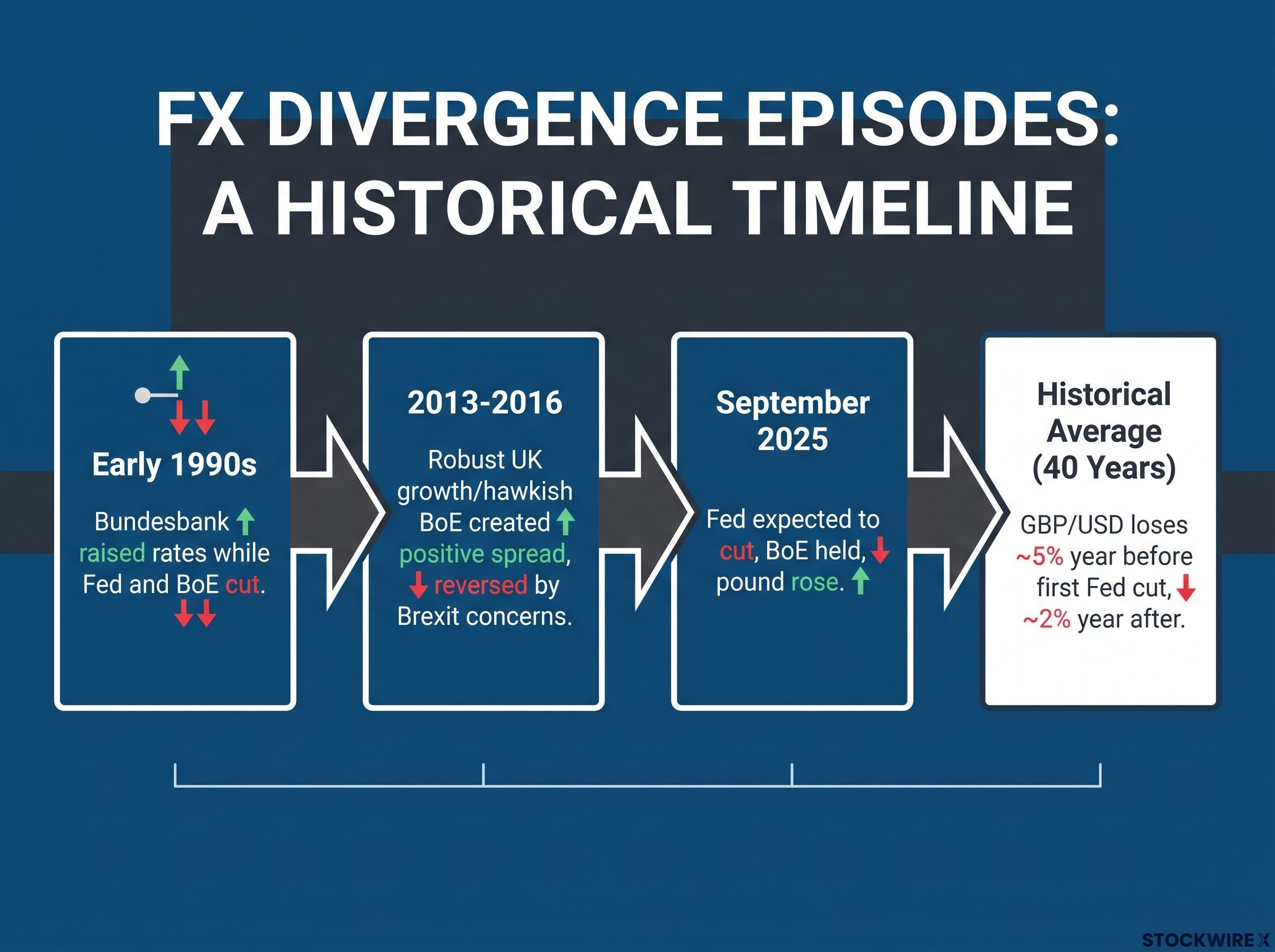
The through-line is the enabling condition. In each case, yield-spread logic drove GBP/USD only while UK domestic risks stayed contained. The moment they did not, in 2013-2016, the spread that had supported sterling reversed and dragged it down.
The current BoE-Fed dynamic did not emerge in isolation: simultaneous policy decisions from four major central banks in June 2026, including the first Warsh-led FOMC meeting, compressed the normal sequential digestion window and left GBP/USD caught between two live policy signals with no gap for markets to resolve one before the next arrived.
That is the qualifier traders skip at their cost. The divergence trade is not a permanent tailwind; it is a conditional one that unwinds fastest precisely when domestic conditions deteriorate.
Megan Greene, MPC member The 2020s have been the least-divergent decade for major central banks, which means any sudden shift toward genuine divergence could spark heightened FX volatility.
Greene’s point matters for context. If the current environment tips toward real divergence, the historical calm offers little guide to how sharply the pound could move.
The risks that could invalidate either central bank’s current path
Every element above assumes the two banks hold their trajectories. Both could break, and the ways they break are not symmetrical.
- BoE over-tightening into weakness. If UK GDP or the labour market softens further, the case for hikes evaporates fast, and any sterling position built on the tightening thesis loses its footing. The July 2026 MPR itself flagged that policy may have shifted from clearly restrictive toward neutral or slightly accommodative.
- Fed rapid rate-cut repricing. Five consecutive holds after a historic tightening cycle leave the Fed exposed to any soft US inflation print. A downside surprise could trigger swift rate-cut repricing, narrowing the dollar advantage that underpins the current GBP/USD level.
The dollar yield advantage that underpins GBP/USD at 1.3514 is itself a function of global sovereign issuance dynamics: simultaneous fiscal pressure across the US, UK, Japan, and Europe has pushed long-dated yields higher everywhere, but the Treasury market’s unmatched depth and collateral role means dollar assets absorb capital that would otherwise rotate toward higher-yielding sterling positions.
- UK fiscal ceiling. Elevated public debt constrains how long the BoE can practically keep rates high, capping how far the differential can widen in sterling’s favour.
The risks cut both ways on the US side too. TD Economics noted that dissenting regional Fed presidents favoured an immediate 25 bp hike, keeping upside rate risk alive even as the market leans toward eventual cuts.
For the BoE, the tension is genuine. In a 31 July 2026 Reuters interview, Huw Pill warned of an “insidious” build-up of longer-term inflation pressures, arguing underlying dynamics might require prolonged restrictiveness. Set against soft growth data, that leaves the MPC choosing between two plausible bad outcomes: tightening into weakness, or letting second-round effects from elevated energy prices embed. UK CPI ran at 2.9-3.1% annually in the July 2026 release, with the next print due 16 September 2026.
The asymmetry is the key read. If UK growth disappoints and the BoE pivots to an indefinite hold, the tightening-divergence thesis collapses quickly, which means any position built on it needs a defined exit before the data turns.
The fiscal constraint the rate-differential argument tends to skip
Rate-differential analysis usually treats the BoE as free to hold rates wherever inflation dictates. Elevated UK public debt says otherwise. High borrowing costs sustained over time raise the fiscal burden directly, and prior fiscal tightening lifts the political and economic cost of keeping policy restrictive.
That acts as a soft ceiling. However hawkish the MPC becomes, the practical room to widen the BoE-Fed differential in sterling’s favour is narrower than a pure inflation read implies.
The OBR Fiscal Risks and Sustainability Report, published in July 2026, quantifies how sustained higher borrowing costs feed directly into the UK’s debt-servicing burden, giving concrete fiscal dimension to the soft ceiling that constrains how aggressively the BoE can widen the rate differential in sterling’s favour.
Data watchlist: the prints that will reprice the pair this fortnight
Move from the abstract to the calendar. Three UK releases and one central bank meeting will do most of the repricing over the next two weeks, and each one maps to a specific shift in BoE rate expectations.
| Date | Release | Previous Reading | Why It Matters for GBP/USD | Surprise That Favours Sterling |
|---|---|---|---|---|
| 16 September 2026 | UK CPI | 2.9-3.1% annually | Directly reprices September BoE odds and the vote split | Hotter print (above 3.1%) |
| 17 September 2026 | BoE MPC meeting | Hold, 6-3 split | Statement and vote shift signal thesis strength | Split widens toward hawks |
| 18 September 2026 | UK retail sales (August) | July data (released 21 Aug) | Gauges domestic demand and growth resilience | Stronger consumer spending |
| 30 September 2026 | UK GDP | Q2 2026 (next data due) | Tests whether growth supports tightening | Upside growth surprise |
The US side runs concurrently. Inflation and sentiment prints land in the same window, and a soft US number could compress the divergence story rapidly even if UK data cooperates, by pulling forward Fed cut expectations and eroding the dollar’s yield edge.
A UK CPI print above 3.1% on 16 September would be the single clearest catalyst of the fortnight, forcing a repricing of the September BoE odds and likely delivering the largest single-day GBP/USD move.
The focal event: 17 September BoE meeting No rate change is expected. Watch the vote split, not the rate. A move from 6-3 toward 7-2 or wider would be the clearest near-term signal that the tightening-divergence thesis is strengthening.
What the divergence trade looks like when the calendar clears
The pieces now fit together. The BoE’s live internal debate gives sterling more rate-support than the spot price near 1.3514 may currently reflect, but that support is contingent on UK data holding up over the next six to eight weeks. The Fed, sitting at 3.50-3.75% with a comfortable 9-3 majority, is the more passive actor of the two.
The single most important variable is the swap market’s unresolved conflict: the MPR path implying rates fall toward 3.3% versus the roughly 60 bp of tightening others have priced. Whichever way that resolves will set GBP/USD direction into year-end, and the September data window is where the resolution starts.
The divergence thesis has historical support and current structural logic. It is a conditional trade, not a structural one, and the conditions are about to be tested.
Three signals would validate the sterling-positive case:
- UK CPI prints above 3.1% on 16 September
- The September vote split widens to 7-2 or more
- US data softens enough to reprice Fed cuts
Three would invalidate it:
- UK GDP disappoints
- The BoE pivots toward unanimous hold language
- US inflation reaccelerates and dollar yields widen
For anyone holding a GBP/USD view into year-end, the next three weeks are the test of whether this thesis has the support to sustain itself or is a story the market has already priced and moved past.
This article is for informational purposes only and should not be considered financial advice. Investors should conduct their own research and consult with financial professionals before making investment decisions. Past performance does not guarantee future results, and financial projections are subject to market conditions and various risk factors. These statements are speculative and subject to change based on market developments.