When measured by import volumes, the US draws on Canada for roughly 99% of its natural gas imports, 85% of its electricity imports, and around 60% of its crude oil. Yet the prevailing investor debate frames this trade conflict almost entirely around what Washington might do to Ottawa, not the reverse. That framing misses the most important variable in the equation.
As of late August 2026, with the US midterms weeks away and a January 2027 automotive tariff inflection point approaching, the US-Canada trade dispute looks more politically constructed than economically structural. The difference between theatre and structural damage, though, has direct implications for portfolio positioning across energy, automotive, and Canadian equities. That distinction is not yet visible in most investor commentary.
Here is what the supply-chain data, electoral analysis, and tariff mechanics actually tell investors about the road to 2027: where Canada’s leverage sits, what the political logic reveals about the likely resolution path, and which auto-sector signals to watch before the 2027 window closes.
Why Canada holds more cards than the tariff headlines suggest
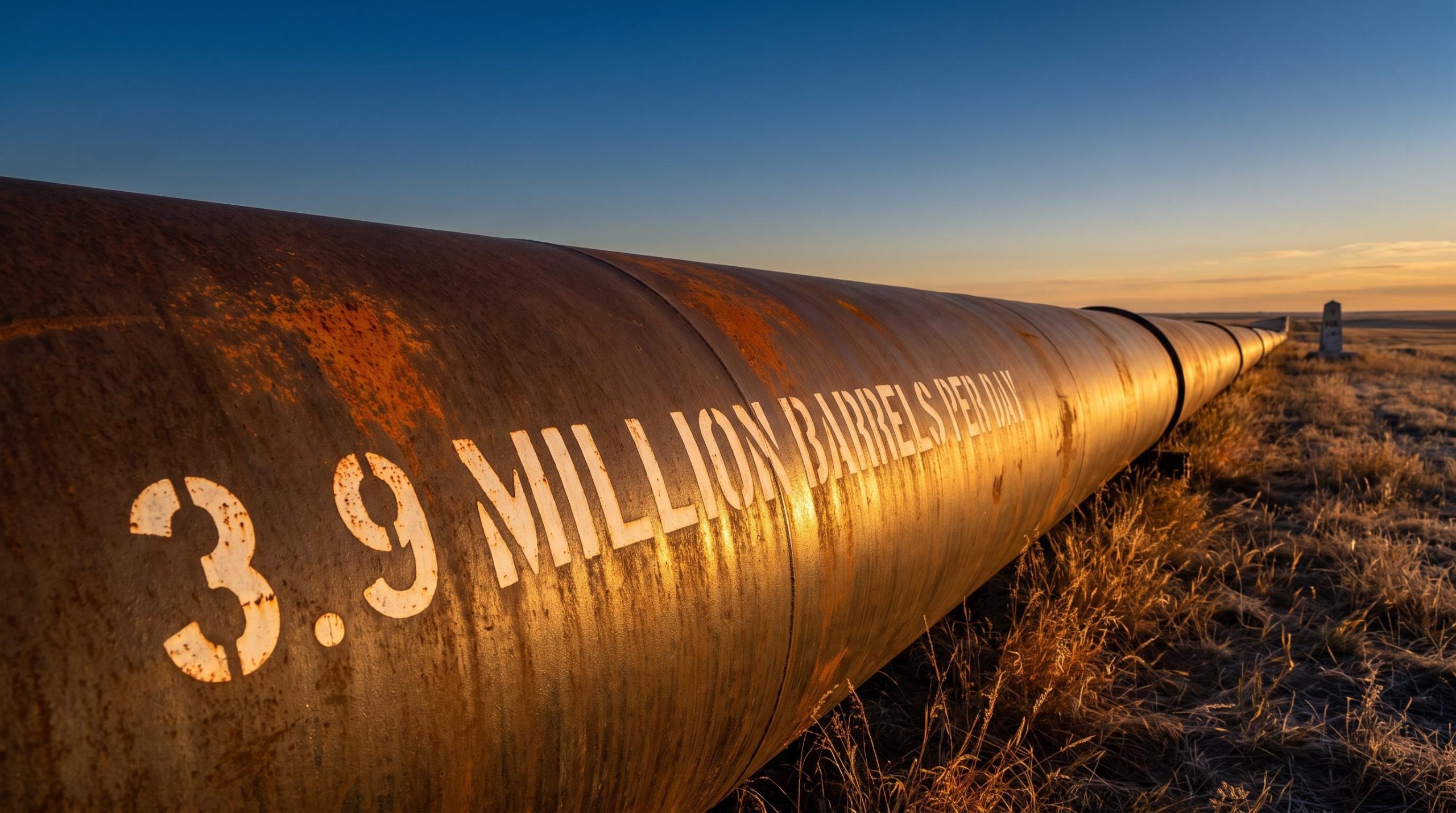
The numbers paint a picture of structural dependency that runs in one direction. In 2025, the US imported approximately 3.9 million barrels per day of crude oil from Canada, more than from all other countries combined. Crude oil accounted for 69% of the value of bilateral energy trade. Across all energy forms, the US imported over four times as much energy from Canada as it exported back.
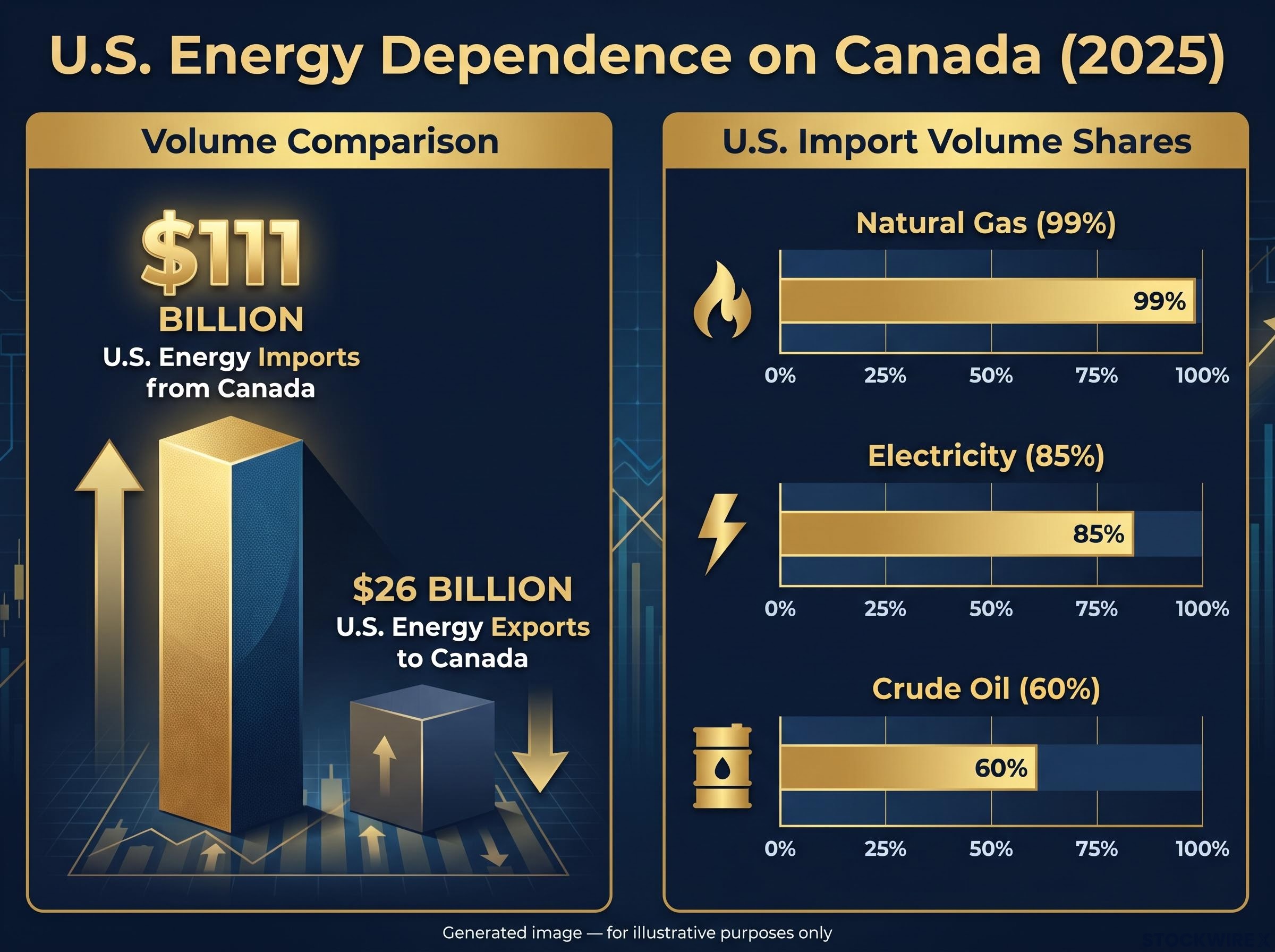
| Energy Type | Canada’s Share of US Imports | Approximate 2025 Value |
|---|---|---|
| Crude Oil | ~60% | Dominant share of $111B total |
| Natural Gas | ~99% | Included in $111B total |
| Electricity | ~85% | Included in $111B total |
In 2025, the US purchased approximately $111 billion worth of energy from Canada, while exporting only around $26 billion in energy back, a ratio exceeding four to one. That gap means the bilateral trade deficit Washington frequently cites is driven overwhelmingly by American energy consumption, rather than any systemic disadvantage across the broader trade relationship.
The deterrent that works by staying unused
Ottawa has deliberately kept energy export restrictions off its formal countermeasures list. Ontario Premier Doug Ford has publicly stated that energy restrictions remain “not off the table,” but no one in Ottawa has moved to act on them. That is precisely the point.
The energy option’s value comes from not being used. Both sides understand this. Trump has so far avoided imposing tariffs on Canadian energy and critical minerals, a pattern that reflects awareness of US dependence rather than an oversight. The more Washington relies on Canadian barrels to offset disrupted Persian Gulf flows, with the Iran conflict and Strait of Hormuz risks ongoing, the less plausible it becomes that US policymakers deliberately destabilise that supply.
The concentration of US energy dependence on a single northern neighbour tells you that Canadian energy equities carry a structural demand backstop the tariff noise does not diminish. The tail risk runs in both directions, not just toward Ottawa. Infrastructure constraints and global oil price swings linked to Iran and the Strait of Hormuz remain more relevant risk factors for Canadian producers than Canada-specific trade measures.
When big ASX news breaks, our subscribers know first
What USMCA actually protects, and what it leaves exposed
Not all bilateral trade sits in the firing line. Under the United States-Mexico-Canada Agreement (USMCA), the free trade framework Trump negotiated as his replacement for NAFTA, the great majority of cross-border commerce continues without tariff exposure. Matt Gertken, Chief Geopolitical Strategist at BCA Research, estimates that only around 15-20% of bilateral goods fall outside that protection and remain vulnerable to potential duties.
The exposed trade concentrates in three categories:
- Autos and auto parts: Subject to 25% Section 232 tariffs unless vehicles and parts meet USMCA rules of origin, specifically a 75% regional value content (RVC) threshold for passenger vehicles and light trucks
- Steel and aluminium: Subject to ongoing Section 232 duties that predate the current dispute
- Selected manufactured goods: A smaller category of goods outside USMCA preferences that face targeted tariff exposure
The 75% regional value content rule is the key compliance threshold. Vehicles and parts that meet it receive tariff relief. Auto parts meeting USMCA criteria have been explicitly relieved from the 25% tariff since May 2025.
That 80% exemption figure tells you the dispute’s structural damage is bounded. The real analytical work is identifying which specific trade flows sit in the exposed 20%, not treating the entire bilateral relationship as at risk. Firms whose production is structured around USMCA-compliant rules of origin are operationally insulated from the worst headline scenarios; those without that compliance are genuinely exposed and require different risk modelling.
The 2026 USMCA joint review as an underappreciated catalyst
The 2026 formal joint review of USMCA terms is the nearest inflection point for the agreement’s architecture. Changes to RVC thresholds or other terms would flow directly into auto supply-chain economics and OEM compliance planning. There are unverified claims that RVC thresholds may be moving toward 85-90% within the Section 232 framework, though this has not been independently confirmed. Watch it rather than price it.
Trump has repeatedly presented USMCA as a signature achievement, which makes outright dismantling of the agreement a high-bar scenario. The political durability of the framework matters as much as its technical provisions.
Reading the political calendar to separate noise from risk
Matt Gertken at BCA Research has consistently characterised US-Canada tariff flare-ups as instruments of bargaining and electoral management rather than signals of a genuine structural break in the trade relationship. His core argument is that the confrontation reflects domestic political calculation aimed at specific electoral outcomes, and the available evidence bears that reading out.
The electoral logic follows a clear sequence:
- Low approval ratings create need for a domestic target. Gertken’s analysis points to Trump’s poor polling and the difficulty of generating Republican enthusiasm at a moment when independents were drifting away, conditions that made a high-profile trade confrontation a useful tool for base mobilisation.
- Canada is a low-cost rhetorical adversary. Unlike China or Iran, where escalation carries genuine strategic risk, confrontation with Ottawa generates headlines without triggering supply-chain disruption, so long as energy stays off the table.
- Tariff threats escalate pre-election. A BCA Research note from April 2025 explicitly argued that Trump would “focus on Canada, due to its looming election, and then compromise afterwards,” linking tariff action directly to political calendars.
- Pragmatic accommodation follows post-election. The January 2027 automotive tariff “deadline” falls after the November 2026 midterms, and Gertken assessed it as unlikely to be implemented as threatened, given that its political function is front-loaded around the election cycle.
“Focus on Canada, due to its looming election, and then compromise afterwards.” BCA Research, April 2025
On the Canadian side, the dynamic reinforces itself. Prime Minister Mark Carney benefits politically from the dispute because confrontation with Washington unifies Canadian provinces, including Quebec and Alberta, which often pull in different directions. The domestic cost of holding firm is low.
The political calendar tells you that the highest-risk period for tariff escalation rhetoric is now, in the weeks surrounding the 2026 midterms. The post-midterm period is more likely to produce negotiated accommodation or offset extensions. Investors who treat each tariff headline as structurally significant are likely to systematically overreact to pre-election rhetoric and underreact to the resolution phase that has historically followed.
Auto sector mechanics and the monitoring signals that matter
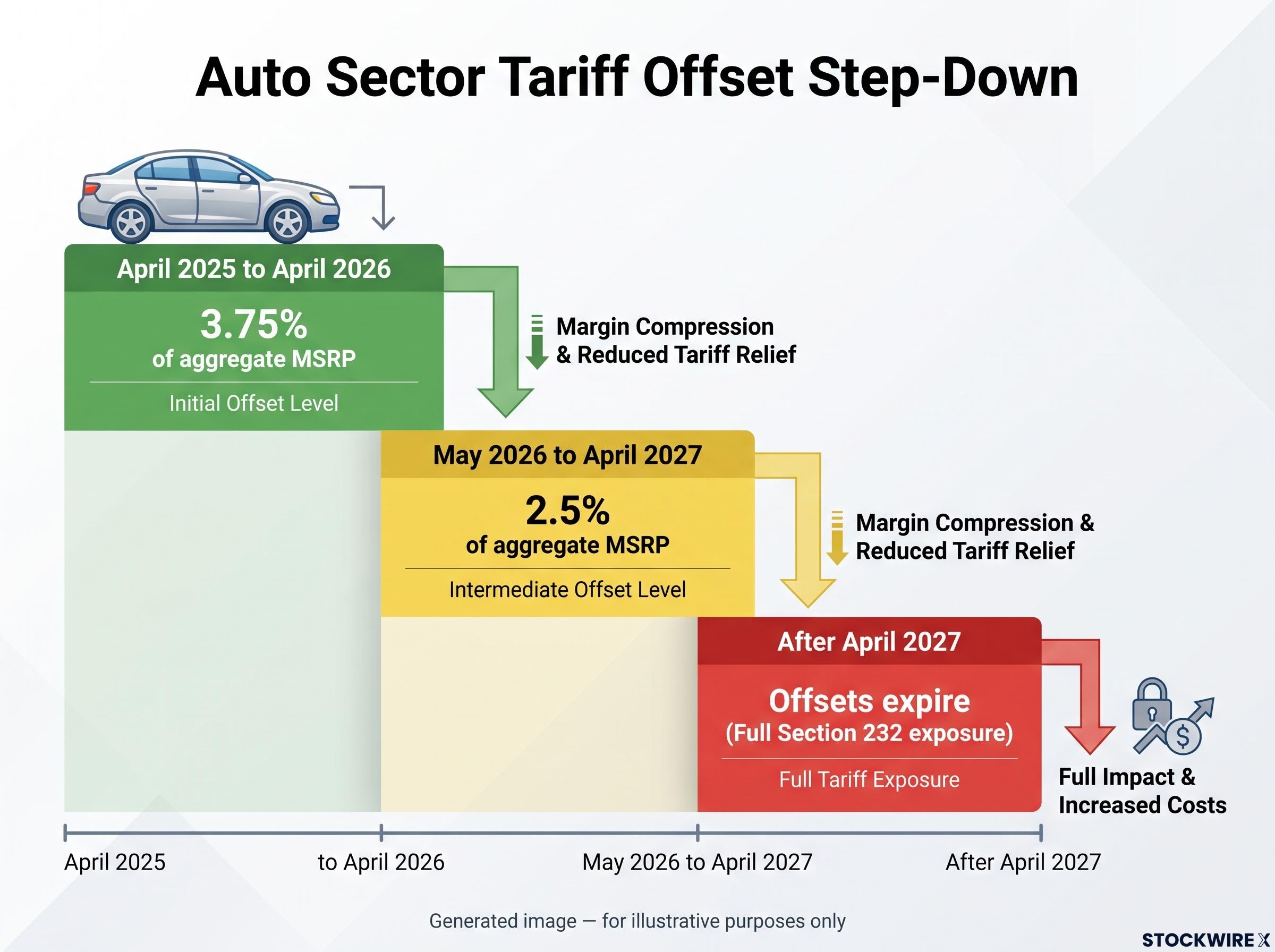
The auto sector is where the tariff dispute converts from political rhetoric into quantifiable margin risk. The mechanism is a step-down schedule in tariff offsets for US-assembled vehicles that creates a clear 2027 pressure point.
| Period | Offset Rate | Effective Exposure Change |
|---|---|---|
| April 2025 to April 2026 | 3.75% of aggregate MSRP | Maximum relief for US assemblers |
| May 2026 to April 2027 | 2.5% of aggregate MSRP | Offset narrows; net tariff burden rises |
| After April 2027 | Offsets expire (current rules) | Full Section 232 exposure on non-USMCA content |
The real auto-sector risk is not a sudden January 2027 shock. It is a gradual margin compression that becomes quantifiable over the second half of 2026 as extension decisions are made or deferred. USMCA-compliant Tier-1 and Tier-2 suppliers with diversified North American footprints are better positioned than non-compliant peers because they help OEMs meet the 75% regional value content threshold and maintain pricing power.
Five signals that tell you whether 2027 is a deadline or a negotiation
Rather than waiting for a clean resolution, track these five indicators for directional reads on escalation versus accommodation:
- Language on energy in official documents. Any shift from implicit to explicit discussion of energy restrictions by either government would be a clear escalation signal requiring immediate reassessment of the energy tail-risk scenario.
- Changes in rules of origin application. Watch how customs authorities calculate non-US content. Tightening compliance standards without headline rate changes could materially affect auto supply-chain economics.
- Whether the April 2027 offsets are extended or replaced. This is the single most consequential variable for auto-sector margins. Executive or regulatory action in the second half of 2026 will signal Washington’s intent.
- Iran and Hormuz oil market stability. Further Persian Gulf disruption strengthens Canada’s energy leverage and pushes energy tail-risk probability lower. Easing reduces that constraint.
- 2026 USMCA joint review outcomes. Changes to automotive RVC thresholds would directly affect which trade flows qualify for tariff relief and reshape OEM compliance planning.
Corporate capex guidance is a secondary confirmation signal. Accelerated North American capex or supplier reshoring announcements would indicate OEM expectations of stricter 2027 enforcement. Midwest plant closures or layoff news would carry political optics weight that could shift White House calculus.
What the risk framework actually says about positioning before 2027
Three analytical threads run through this dispute: energy leverage, USMCA architecture, and political theatre. They converge on a single conclusion. The scenario to price is drawn-out friction and selective sectoral pain, not systemic rupture.
Selective sectoral friction, rather than a wholesale breakdown of the US-Canada economic relationship, is the scenario that warrants pricing. With roughly 80% of bilateral commerce continuing tariff-free under USMCA, the ceiling on structural damage sits well beneath what the headline risk narrative implies.
The three sector-specific risk profiles are distinct:
- Canadian energy equities carry a structural demand backstop. The binding constraint is infrastructure (pipelines, power interties) and regulatory approvals, not tariff exposure. Further Persian Gulf disruption would strengthen this position.
- Auto-sector equities face genuine margin risk in the 2027 window that is quantifiable through the offset step-down schedule and monitorable through the five signals above. USMCA-compliant names are better positioned than non-compliant peers.
- Canadian equities broadly face episodic volatility driven by tariff rhetoric and negotiation breakdowns, which historically has pushed Canada-US equity and credit spreads wider while weighing on the Canadian dollar. Historically, these episodes have reversed as deals are struck or carve-outs clarified.
The most actionable near-term opportunity sits in distinguishing between Canadian dollar or Canadian equity weakness driven by tariff rhetoric from weakness driven by actual trade flow disruption. The former has historically reversed. The latter would require fundamental reassessment of the bilateral relationship.
Investors who treat the dispute as binary, either full escalation or full resolution, are mispricing the middle path that both the political logic and the USMCA framework point toward. The five monitoring signals above convert that ambiguity into a set of observable triggers, giving you a practical basis for adjusting exposure as evidence accumulates rather than reacting to each news cycle.
This article is for informational purposes only and should not be considered financial advice. Investors should conduct their own research and consult with financial professionals before making investment decisions. Forward-looking statements regarding tariff timelines, political outcomes, and trade negotiations are speculative and subject to change based on policy developments and market conditions.
—