

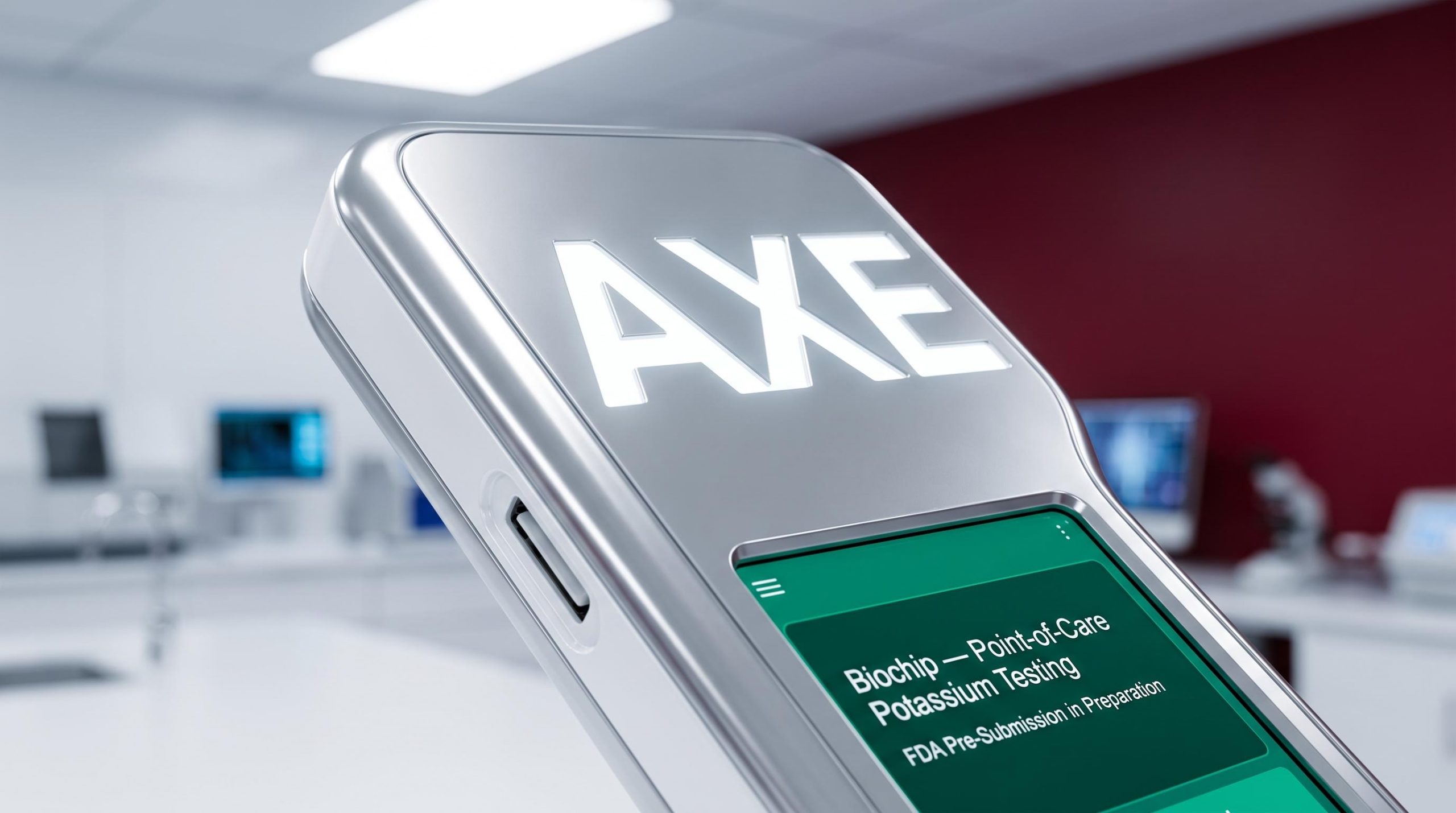
Archer moves Biochip from technology development to clinical-ready device build
Archer Materials (ASX: AXE) has commenced industrial design of a clinically deployable, manufacturable potassium testing device, advancing its Biochip program from technology development towards regulatory-ready product development.
CEO Dr. Simon Ruffell describes the shift as an “important inflection point” for the Company, marking the move from validated lab-based sensing science towards a real, submission-ready medical device.
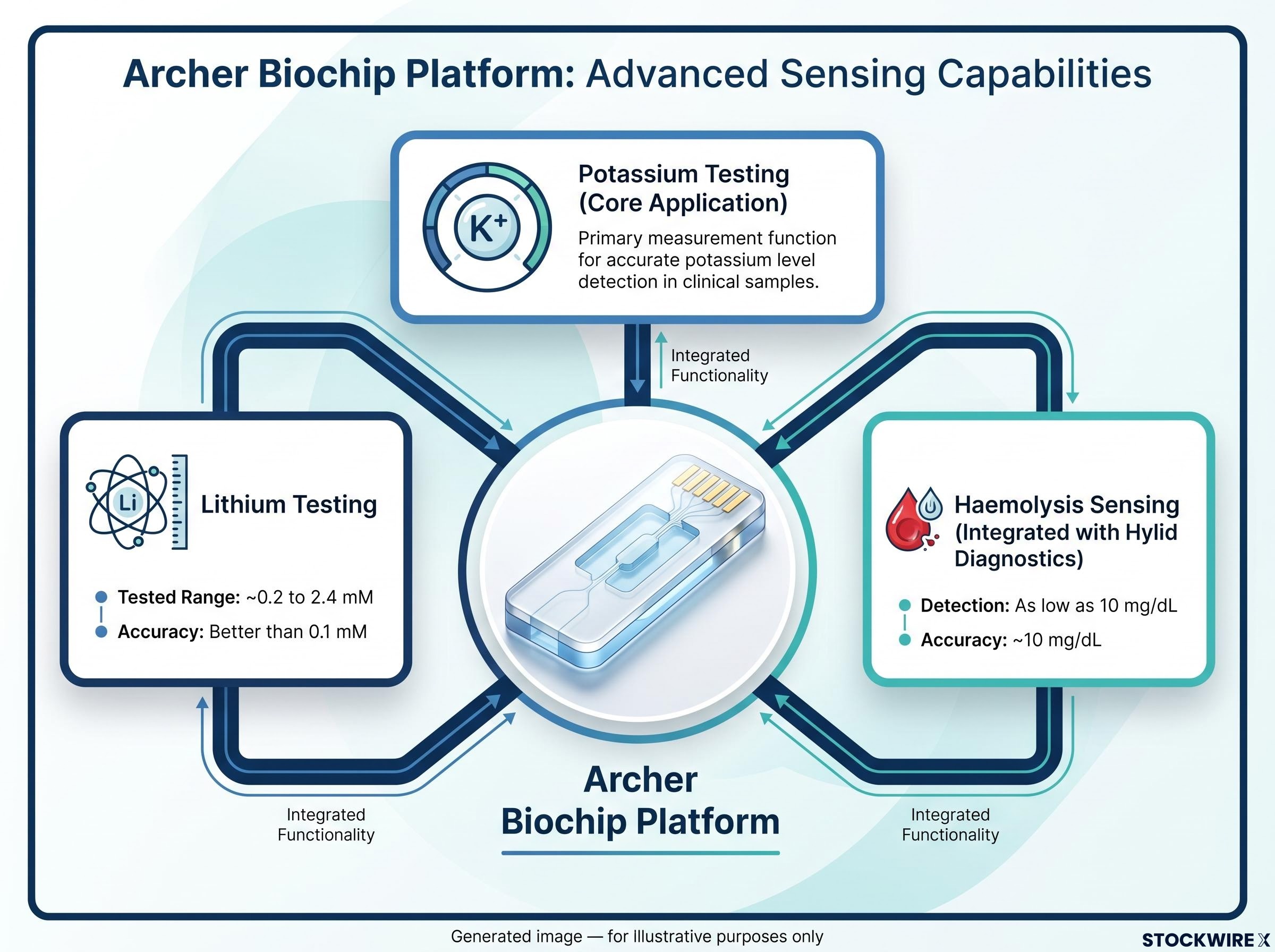
The update is supported by two technical wins: the qualification of haemolysis sensing technology from Hylid Diagnostics for integration with the Biochip, and demonstrated feasibility of lithium testing on the same platform. Together, these developments support preparation for a planned pre-submission meeting with the U.S. Food and Drug Administration (FDA).
When big ASX news breaks, our subscribers know first
Why this milestone matters for the Biochip program
The strategic significance lies in Archer now advancing qualification and product development in parallel, while continuing to reduce technical risk. Rather than treating device build as a sequential step after the science is locked in, the Company is running both workstreams together.
Importantly, the Biochip is being developed as a sensing platform with multiple end-markets and applications in mind, not a single-product play. That distinction matters for investors weighing the breadth of the commercialisation opportunity.
The foundations were laid over the past two years, during which Archer developed and validated the core sensing performance of its Biochip. The stated goal is to bring laboratory potassium testing to point-of-care settings.
The alpha prototype accuracy results established the performance baseline for this transition, with the device achieving plus or minus 0.3 mM accuracy using just 10 microliters of blood, exceeding the regulatory threshold of plus or minus 0.5 mM required for clinical-grade devices.
The Biosensor device is being designed for use by both patients and healthcare professionals, with the aim of:
-
Reducing testing time and costs
-
Supporting improved patient outcomes
-
Being manufacturable at scale
-
Being suitable for future regulatory submission
Dr. Simon Ruffell, CEO, Archer Materials
“This is an important inflection point for the Company and our Biochip program as we advance qualification and product development in parallel, while continuing to reduce technical risk.”
For investors, the parallel-track approach signals de-risking and a more credible pathway towards commercialisation than technology development alone.
Understanding the Biochip and point-of-care testing
Point-of-care testing replaces the current process of separate blood collection, laboratory analysis and follow-up appointments, consolidating testing and treatment decisions into a single clinical visit. The appeal is speed and convenience: results can inform treatment decisions during a single clinical visit, rather than across multiple appointments.
A complicating factor is haemolysis. This occurs when red blood cells are damaged during or after blood collection, which can artificially increase potassium readings and produce false positive results. Detecting haemolysis alongside potassium is important to improve confidence in results taken from finger-prick blood samples.
A rapid, less invasive point-of-care potassium test addresses a genuine clinical bottleneck, which frames the scale of the opportunity Archer is targeting.
Haemolysis sensing integration qualified
Archer has successfully completed test work to qualify Hylid Diagnostics’ haemolysis sensing technology for integration with its Biochip platform.
Key results reported from the test work include:
-
Detection of plasma free haemoglobin at concentrations as low as 10 mg/dL
-
Measurement accuracy of approximately 10 mg/dL up to the 100s mg/dL range
-
Sensitivity sitting within the range clinical laboratories typically use to flag haemolysis that could distort potassium readings
According to the Company, the result demonstrates the potential to combine Hylid’s haemolysis detection with Archer’s potassium sensing technology as part of an integrated potassium testing Biosensor system.
Archer describes this as an important technical milestone in the development of its Biochip-based potassium testing platform, supporting further integration and prototype development of a rapid, less invasive point-of-care potassium test.
Expanding the platform: lithium testing feasibility
Archer has continued to expand the capability of its Biochip platform through the development of lithium sensing, building beyond its earlier feasibility work reported on 28 July 2025. The progress demonstrates the platform’s multi-application potential using the same semiconductor sensing technology and medical device architecture.
The Company tested its current Biosensor prototype against test buffer solutions of known lithium concentration to assess measurement accuracy across the clinically relevant range.
| Metric | Result |
|---|---|
| Concentration range tested | ~0.2 to 2.4 mM |
| Measurement accuracy | Better than 0.1 mM across full range |
| Clinical relevance | Matches therapeutic lithium monitoring range |
Lithium therapy requires regular blood monitoring because lithium-based treatments have a narrow therapeutic range, where the margin between an effective dose and a toxic one is slim. A rapid point-of-care lithium test could consolidate blood collection, laboratory analysis and follow-up appointments into a single clinical visit.
The Company is also in preliminary discussions with a leading international partner regarding potential collaboration for lithium tester device development and future clinical studies. The partner has not been named.
What comes next for Archer’s device development
The next step is progressing towards a beta-prototype Biosensor built for clinical settings. The industrial design work now underway covers clinical workflows, point-of-care usability, and scalable manufacturing.
This builds on a series of prior milestones:
-
Beta-prototype development builds on integration of the sensing Biochip into a cartridge and readout electronics (announcement 15 May 2026)
-
Manufacturability builds on Archer’s development program with imec (announcements 29 October 2025 and 15 May 2026), which progressed to production of sensing chips compatible with high-volume manufacturing
-
Progress supports preparation for a planned pre-submission meeting with the U.S. FDA
For investors, the combination of FDA pre-submission preparation and progress towards scalable manufacturing signals a genuine pathway towards commercialisation, rather than technology development in isolation.
For investors exploring the full scope of the productisation pathway, our detailed coverage of Archer’s beta prototype program outlines the CDMO engagement strategy, IMEC collaboration progress, and the 2027 trial timeline that sits downstream of the industrial design work now underway.
Don’t Miss the Next MedTech Breakthrough on ASX
Big News Blast delivers FREE breaking ASX healthcare and technology news directly to your inbox within minutes of release, complete with in-depth analysis already done for you. Join 20,000+ investors who stay ahead of the market the moment announcements hit. Click the “Free Alerts” button at StockWire X to start receiving alerts today.