

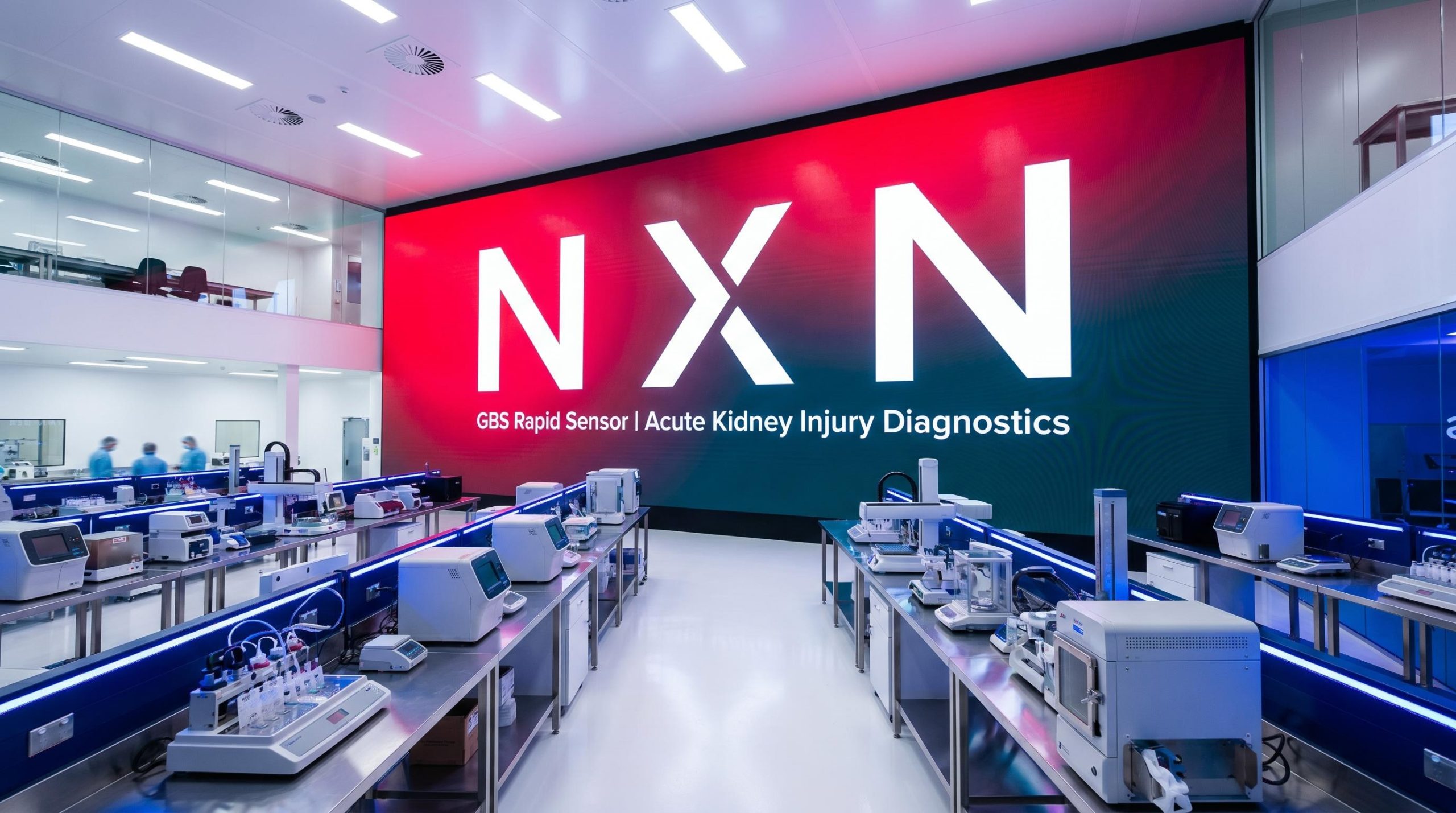
Nexsen secures $1.5M in non-dilutive funding to scale rapid diagnostics manufacturing
Nexsen (ASX:NXN) has secured over $1.5 million in non-dilutive funding support through its admission as an industry partner to SAGE-Manufacturing, an Australian Research Council (ARC) funded national research centre.
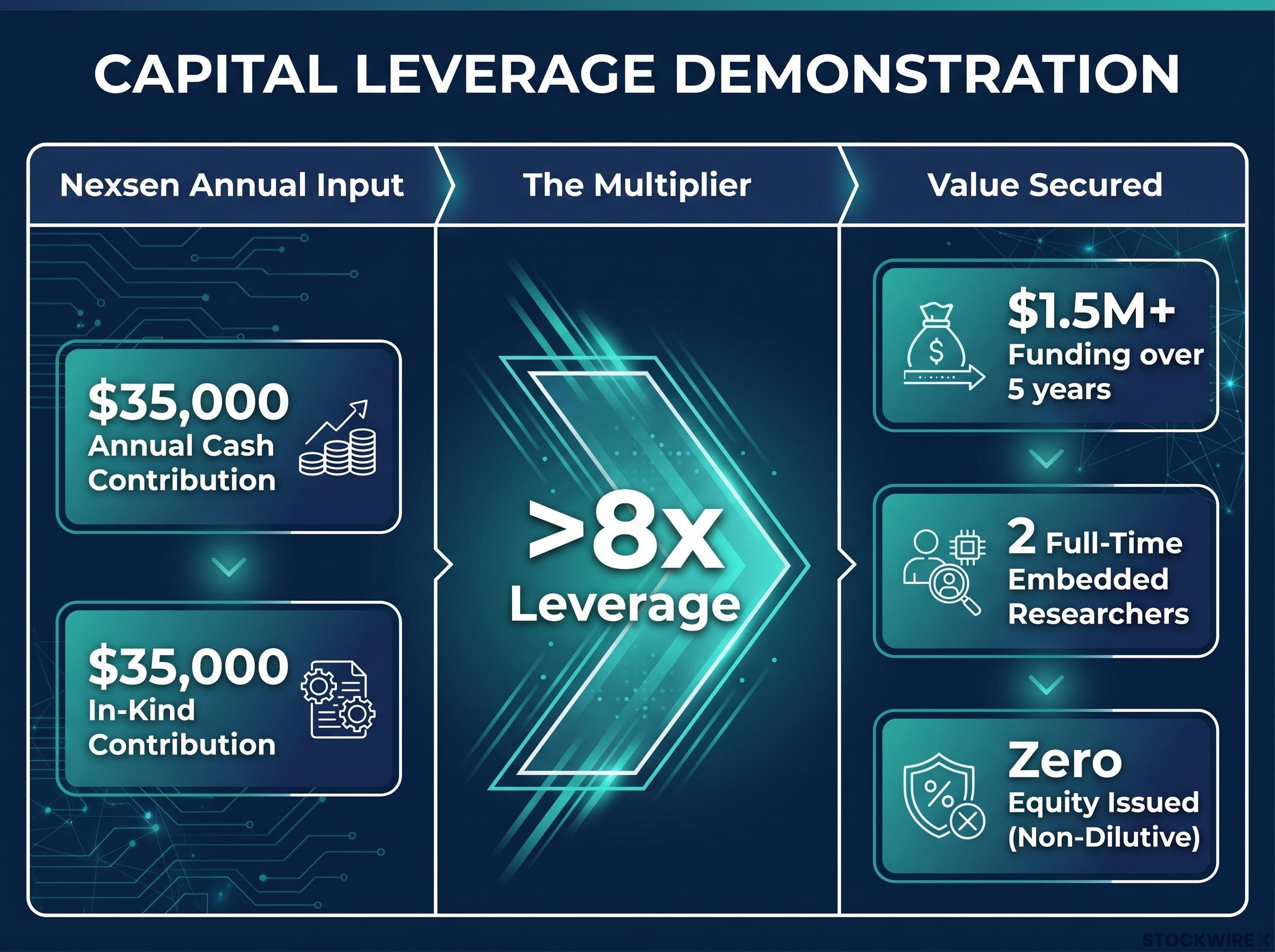
The support is directed at manufacturing scale-up and platform optimisation across the company’s rapid diagnostics platform. Critically, the funding is accessed for a $35,000 annual cash contribution, representing more than eight times leverage and allowing platform advancement without shareholder dilution.
This structure delivers material R&D and manufacturing support over a five-year program while protecting the share register.
When big ASX news breaks, our subscribers know first
Inside the SAGE-Manufacturing partnership
Nexsen’s admission as an “industry partner to SAGE-Manufacturing” gives the company access to a collaborative research framework focused on “advanced catalysis science.” The program centres on “catalytic signal enhancement and scalable diagnostic device manufacturing.”
Under the program, Nexsen will work with SAGE-Manufacturing and RMIT University to apply advanced catalysis science to its rapid diagnostics platform. The project targets potential improvements in detection sensitivity, reliability and performance consistency across the test pipeline.
A key feature of the arrangement is the embedded resource. Two full-time researchers will be embedded at Nexsen’s Australian R&D facility, working directly with the company’s scientific team to advance manufacturing and platform optimisation.
The deal mechanics are summarised below:
-
Funding support value: $1.5M+ over five years
-
Annual cash contribution: $35,000
-
In-kind contribution: $35,000
-
Leverage: more than 8x on annual cash investment
-
Embedded resources: 2 full-time researchers
What the leverage means for shareholders
The defining feature of this arrangement is capital efficiency. The partnership directly supports Nexsen’s stated 2026 priority to expand R&D capacity and manufacturing readiness through “non-dilutive, capital-efficient collaborations.”
It also supports the company’s broader strategy to build scalable production capability for future commercial launch. By funding progress on platform performance and manufacturing readiness almost entirely through external sources, Nexsen can advance its pipeline while limiting the need to issue new shares.
| Element | Detail | Investor Impact |
|---|---|---|
| Funding secured | $1.5M+ over five years | Advances the diagnostics platform at minimal cost |
| Cash contribution | $35,000 per year | Delivers more than 8x leverage on capital deployed |
| Embedded researchers | 2 full-time | In-house R&D capacity without additional hiring cost |
| Non-dilutive structure | No equity issued | Protects existing shareholders from dilution |
Reece O’Connell, Executive Chairman
“Our mission at Nexsen is to become a global leader in rapid diagnostics. Closing the gaps that exist today where clinicians are forced to make critical decisions without the tools they need. Every improvement we make to our platform brings us closer to that goal, and SAGE-Manufacturing gives us access to world-class researchers and some of Australia’s leading scientific minds to keep pushing that standard further. Doing so through non-dilutive funding, at minimal cost to shareholders, while advancing our manufacturing capability at the same time – this is exactly the kind of partnership we said we would pursue in 2026, and we are pleased to be delivering on that commitment.”
What is catalysis science — and why it matters for diagnostics
Catalysis is a process that speeds up or enhances chemical reactions. It is central to modern chemical manufacturing and is estimated to be involved in approximately 90% of commercially produced chemical products.
Applying catalysis science to diagnostics targets stronger signal detection. In practical terms, this means tests that may be more sensitive and reliable, which are two qualities essential to clinical confidence.
For investors, the relevance is direct. Better sensitivity and scalable manufacturing are the two core ingredients needed to move a diagnostic from the laboratory to a commercial-scale product.
The research is delivered through SAGE-Manufacturing, a $4.84 million, five-year ARC-funded national research centre led by Monash University in collaboration with RMIT University, the University of Melbourne, Deakin University and CSIRO.
Nexsen’s diagnostics pipeline and what comes next
Nexsen is developing a suite of rapid point-of-care diagnostics designed to deliver lab-grade results for conditions that have traditionally depended on delayed laboratory testing. The focus is on areas of significant unmet clinical need, where faster diagnosis can improve patient outcomes and reduce pressure on healthcare systems.
The company’s lead diagnostic is the GBS Rapid Sensor, a point-of-care test for detecting Group B Streptococcus, addressing a critical unmet need in maternal health. Beyond this, the pipeline extends into rapid kidney function diagnostics for Acute Kidney Injury and Chronic Kidney Disease, two conditions that affect more than 850 million people globally.
Nexsen has applied a similar leverage logic across its broader research network, with the co-funded Malaysia research facility established through a 50/50 arrangement with Universiti Malaya targeting development of a rapid dual biosensor for E. coli and Salmonella with no current commercial equivalent.
Manufacturing readiness and platform sensitivity gains from the SAGE-Manufacturing program feed directly into regulatory timelines, with the StrepSure FDA approval pathway already progressed through a successful Pre-Submission Q-Sub meeting that yielded positive feedback on Nexsen’s clinical validation approach.
The current development pipeline includes:
-
GBS Rapid Sensor — maternal health (lead diagnostic)
-
Acute Kidney Injury diagnostic
-
Chronic Kidney Disease diagnostic
-
Further programs across human health, ag-tech and biosecurity
With this partnership now in place, the company can advance manufacturing readiness and platform performance in parallel, supporting its broader strategy to build scalable production capability toward future commercial launch.
Don’t Miss the Next Healthcare Breakout
Big News Blast delivers FREE breaking ASX healthcare news to your inbox within minutes of release, with in-depth analysis included. Join 20,000+ subscribers already getting real-time alerts the moment market-moving announcements hit. Click the “Free Alerts” button at StockWire X to stay ahead of the market.