A therapy that produces a response is not the same as a therapy that sustains one. That distinction sounds academic until you watch a patient’s remission unravel three months after an initially promising CAR-T infusion. It is now the single most important design question shaping how the next generation of cell therapies are being built.
Imugene Limited crystallised that question with a concrete clinical step this year: a patient with mantle cell lymphoma at Baylor University in Texas, who had previously exhausted BTK inhibitor (BTKi) options, became the first to be dosed in a new BTKi combination cohort within the azer-cel programme. This is not a routine trial amendment. It is a deliberate test of whether a well-validated drug class can solve the durability problem that has constrained CAR-T outcomes across the field.
Here is what you need to understand: why combination therapy has moved from optional add-on to central design priority in CAR-T development, what the science behind this specific combination actually involves, and what that framework means when you are evaluating clinical-stage ASX biotech stocks with cell therapy exposure.
What azer-cel is and where it stands right now
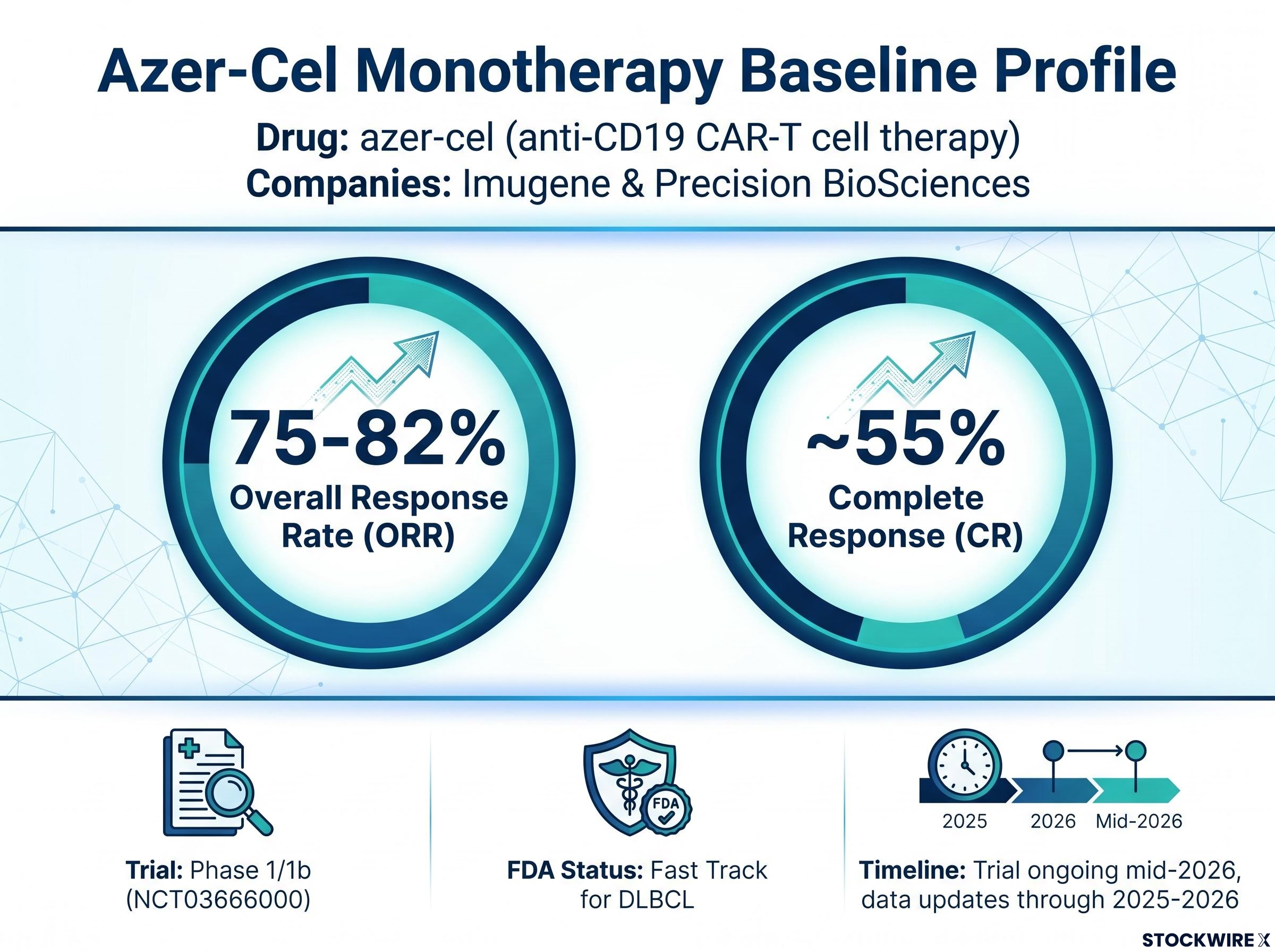
Before you can assess the BTKi combination cohort, you need a clear picture of the asset it is built on. Azer-cel is an allogeneic (off-the-shelf) anti-CD19 CAR-T cell therapy, meaning it is manufactured from donor cells rather than individually from each patient’s own cells. It was originally developed by Precision BioSciences and is now being advanced by Imugene in a Phase 1/1b programme targeting relapsed and refractory B-cell malignancies, cancers of the white blood cells that have come back or stopped responding to prior treatment.
Key programme facts for orientation:
The Phase 1b basket study results reported in March 2026 provided the monotherapy foundation the combination cohort is now built on, with 100% overall response rates in CLL/SLL patients and 80% in marginal zone lymphoma across a heavily pre-treated population enrolled at 15 sites across the US and Australia.
- Trial registration: NCT03666000 on ClinicalTrials.gov
- FDA designation: Fast Track for diffuse large B-cell lymphoma (DLBCL)
- Trial sites: US centres including Baylor University, Texas, with Australian sites planned
- Indication scope: Relapsed and refractory large B-cell lymphomas and related malignancies
The FDA Fast Track designation criteria require that a therapy address a serious condition and demonstrate potential to fill an unmet medical need, with qualifying programmes receiving more frequent agency meetings, rolling review eligibility, and an expedited path toward priority review consideration.
Monotherapy data summary
The monotherapy signal is what makes the combination cohort credible rather than speculative:
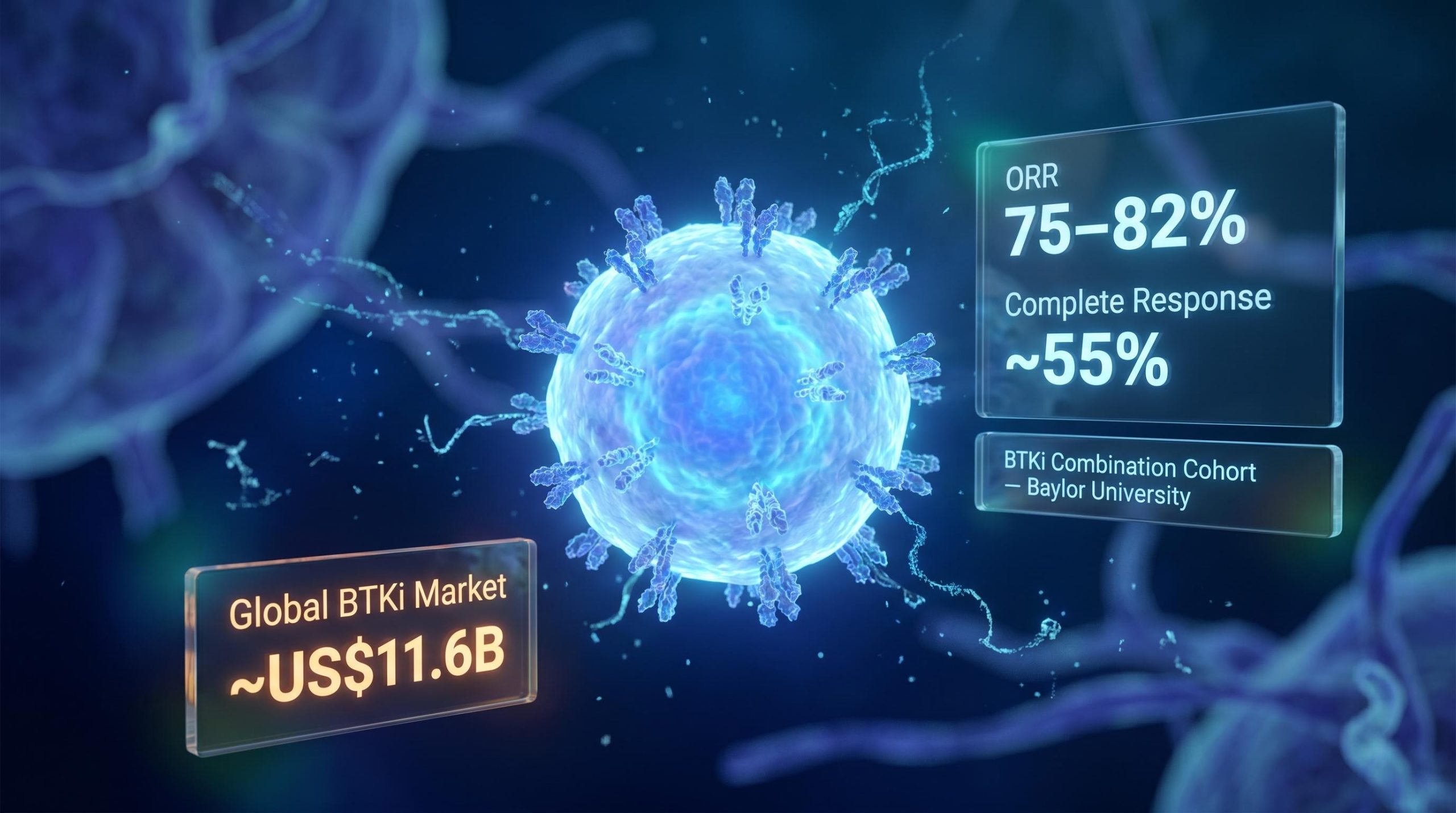
- Overall response rates (ORR) across Phase 1b data cuts have run at approximately 75-82%, with complete response rates around 55% in some cohorts
- These results come from heavily pre-treated patients, many of whom had already failed multiple prior lines of therapy, including autologous CAR-T
- Data updates continue through 2025-2026, with the trial ongoing as of mid-2026
For investors wanting the original news context around this clinical milestone, our dedicated guide to the azer-cel BTKi combination cohort covers the trial design, the addressable patient population across mantle cell lymphoma, follicular lymphoma, and CLL, and the commercial framing around the BTKi-relapsed market that Imugene has cited.
The most recent data cut, reported ahead of the ASCO 2026 oral presentation in May, showed an 81% overall response rate across six subtypes in CAR T-naive patients, with four indications including MZL, CLL, follicular lymphoma, and Waldenstrom macroglobulinemia each reaching 100% response rates in evaluable patients.
That baseline matters. A combination arm built on a weak single-agent signal would be a red flag for you as an investor. One built on 75-82% ORR in refractory patients is a materially different proposition; it tells you the BTKi addition is being tested to enhance an already functioning therapy, not to rescue a struggling one.
When big ASX news breaks, our subscribers know first
The problem CAR-T still has not fully solved: T-cell exhaustion
The pattern has repeated across the cell therapy field for years. A CAR-T programme reports impressive early response rates. Patients who had run out of options are achieving complete remissions. The data look strong.
Then the follow-up data arrive, and a meaningful proportion of those remissions have not held. The therapy engaged the target. It produced a response. But it did not maintain it.
The explanation, in most cases, is T-cell exhaustion: the progressive loss of functional potency in engineered CAR-T cells over time. Your infused cells gradually lose their ability to find, attack, and destroy cancer cells. The therapy that worked in month one may be functionally spent by month six.
The field’s defining challenge is no longer whether CAR-T can produce a response. It is whether CAR-T can be engineered to sustain one.
What researchers have identified is that the type of T cell matters as much as the T cell’s initial activity. CAR-T cells that maintain a stem-like or memory phenotype (a more youthful, self-renewing state) tend to persist longer and maintain function. Exhausted effector cells (cells that have been heavily activated and are burning out) lose potency relatively quickly.
For you, this reframes how to read interim clinical data. A high ORR at an early data cut is encouraging, but it is a partial answer. The question that determines long-term commercial value is whether those responses hold, and T-cell exhaustion is the primary reason many do not.
How BTK inhibitors may change the biology in azer-cel’s favour
The scientific rationale for adding a BTK inhibitor to azer-cel rests on two overlapping mechanisms. Understanding both gives you the framework to assess whether this combination is grounded in real biology or is simply a trial design aimed at generating attention.
BTK inhibitors, a class of drugs including ibrutinib, acalabrutinib, and zanubrutinib, are best known for blocking a signalling pathway (Bruton’s tyrosine kinase) that malignant B cells rely on to survive. But their effects extend beyond the tumour itself.
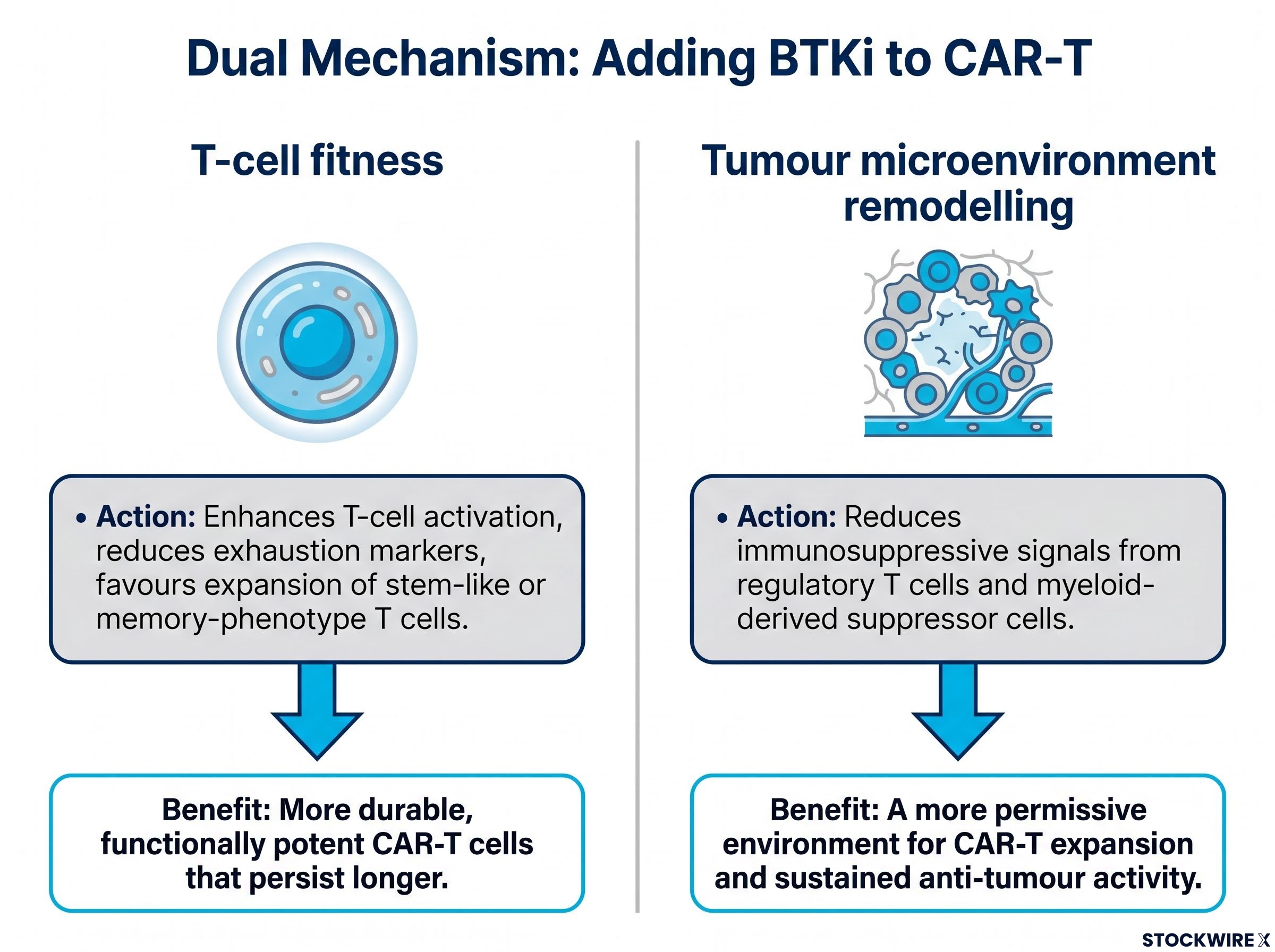
| Mechanism | What BTKi does | Expected CAR-T benefit |
|---|---|---|
| T-cell fitness | Enhances T-cell activation, reduces exhaustion markers, favours expansion of stem-like or memory-phenotype T cells | More durable, functionally potent CAR-T cells that persist longer in the body |
| Tumour microenvironment remodelling | Reduces immunosuppressive signals from regulatory T cells and myeloid-derived suppressor cells | A more permissive environment for CAR-T expansion and sustained anti-tumour activity |
The two mechanisms work simultaneously. The BTKi is not just improving the CAR-T cells themselves; it is also improving the biological environment those cells operate in. The combined effect is therefore expected to produce responses that are both deeper and more sustained, going beyond what a straightforward additive interaction would predict.
What early clinical data suggests
Field-level evidence supports the rationale, even though azer-cel-specific combination data has not yet been reported:
- In relapsed/refractory chronic lymphocytic leukaemia (CLL), anti-CD19 CAR-T given alongside a BTKi was well tolerated and associated with improved survival and lower progression rates compared with historical expectations
- In DLBCL, analyses of prolonged BTKi bridging before CAR-T infusion suggest BTKi exposure may improve overall CAR-T response despite patients having higher baseline risk
- An ASH (American Society of Hematology) report described BTK inhibition as a way to enhance expansion of naive, potent T cells and potentiate CAR-T activity
These are field-level findings, not azer-cel results. But they are what make the combination hypothesis scientifically credible rather than speculative, and that distinction matters when you are assessing whether a clinical programme’s design is grounded in evidence or reaching for headlines.
Why BTKi-resistant patients are the right starting population
Here is the detail that might seem counterintuitive at first. The first patient in the combination cohort is someone whose cancer already failed to respond to BTK inhibitor therapy. Why would you add a drug that already did not work?
The answer is that the cohort is not testing whether the BTKi can kill the tumour. It is testing something more specific and more valuable.
BTKi resistance, driven primarily by BTK C481S mutations or alternative pathway activation, is a growing clinical problem. Patients with CLL, mantle cell lymphoma, and related diseases who progress through sequential BTKi lines face poor outcomes and limited treatment alternatives.
The logical sequence makes the design choice clear:
- The patient’s cancer has developed resistance to BTK inhibitors through genetic mutation or pathway adaptation
- The BTKi’s direct anti-tumour effect is therefore gone in this patient
- Any clinical benefit observed from the combination must be coming from the BTKi’s immunological effects on the CAR-T cells and the tumour microenvironment
- The test of the immunological hypothesis is therefore clean and unambiguous
For you as an investor, this patient selection is a signal of scientific rigour, not commercial conservatism. It sets up the most interpretable possible dataset. Clean tests produce the data that regulators, potential partners, and the broader field can act on with confidence.
It also opens two addressable populations rather than one. If the combination works in patients who have already failed BTKi, the logical next step is testing it in earlier treatment lines where BTKi is standard of care and patient volumes are substantially higher.
BTK inhibitors as an established market for combination therapy
The commercial context for this combination is not hypothetical. BTK inhibitors already occupy entrenched standard-of-care positions across multiple blood cancer indications:
- Chronic lymphocytic leukaemia (CLL): ibrutinib, acalabrutinib, zanubrutinib
- Mantle cell lymphoma (MCL): ibrutinib, acalabrutinib, zanubrutinib
- Waldenström macroglobulinemia: ibrutinib, zanubrutinib
- Marginal zone lymphoma: zanubrutinib
The global BTKi market is estimated at approximately US$11.6 billion in 2026, though this figure should be treated as an industry estimate rather than a confirmed valuation.
That market figure matters less as a revenue projection and more as a signal of where patient flows already exist. A CAR-T that can be safely combined with BTKi, or used effectively after BTKi failure, plugs into existing treatment pathways and clinical infrastructure. It does not need to create a new market from scratch.
For ASX investors evaluating clinical-stage biotech exposure, that distinction is a material risk factor. The difference between a therapy building toward an established commercial channel and one requiring de novo market creation shapes your timeline, your downside, and the probability of partnership interest. Imugene’s approach, establishing monotherapy safety and activity before adding a carefully chosen combination arm alongside one of oncology’s most commercially active drug classes, keeps the regulatory pathway clean and positions the asset within a large, well-defined addressable market.
The ASX CAR-T development landscape extends beyond B-cell malignancies: AdAlta’s BZDS1901 programme reported a 50% overall response rate in advanced mesothelioma at its highest doses in March 2026, with a manufacturing process under two days and no viral vectors required, illustrating how different design priorities are shaping distinct niches within the same asset class.
What the data will and will not tell investors when it arrives
No safety or efficacy data from the BTKi combination cohort has been reported yet. This cohort is at an early, exploratory stage, and describing it in stronger terms would go beyond what the current evidence supports. Characterising the programme this way is not a limitation; it reflects the kind of honest scientific communication that builds credibility with investors who can distinguish genuine rigour from promotional framing. The programme is structured to yield data that can bear scrutiny, rather than to generate headline claims ahead of the evidence.
When the first combination readouts arrive, here are the three variables that will tell you the most:
- Response depth in BTKi-resistant patients: Are patients whose cancers failed BTKi therapy achieving meaningful responses when azer-cel is combined with a BTKi agent? If so, the immunological modulation hypothesis has direct clinical support.
- Combination tolerability: Is the safety profile of azer-cel plus BTKi acceptable, and does it introduce any new toxicity signals not seen in the monotherapy arm?
- Persistence signals relative to monotherapy: Are there early indications that CAR-T cells persist longer or maintain function more effectively in the combination setting compared with monotherapy historical data?
The risk structure here is asymmetric, and that matters for how you position your expectations. If the combination cohort shows limited benefit, the monotherapy data remain intact. Azer-cel’s path in salvage large B-cell lymphoma and related indications does not depend on the combination hypothesis proving out. The monotherapy programme continues regardless.
The absence of combination data right now is not a gap you need to fill with speculation. It is an opportunity to build your understanding of the programme’s architecture, so that when the next readout arrives, you know exactly what questions it is answering.
This article is for informational purposes only and should not be considered financial advice. Investors should conduct their own research and consult with financial professionals before making investment decisions. These statements regarding future clinical outcomes are speculative and subject to change based on trial results and company performance.