

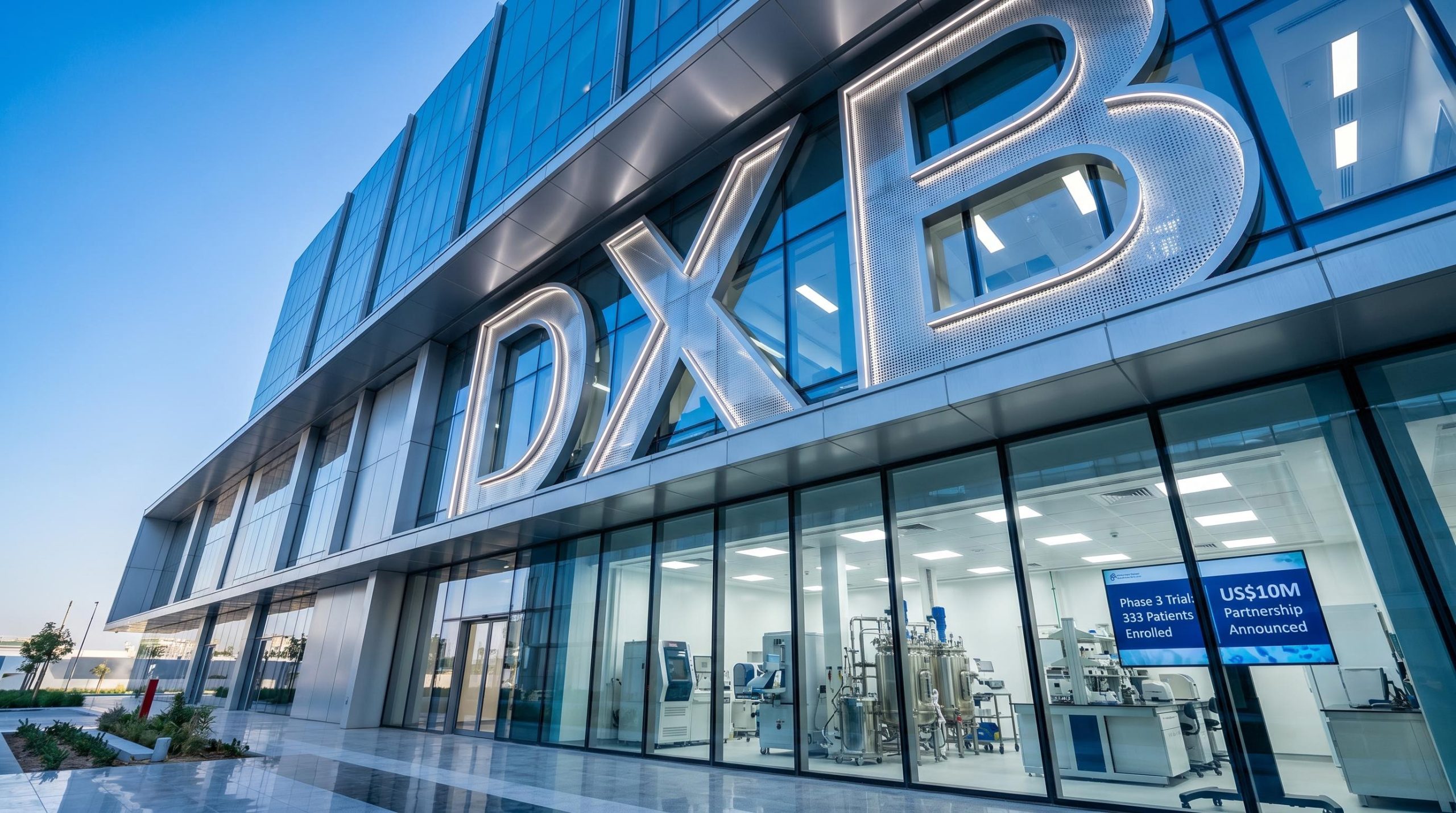
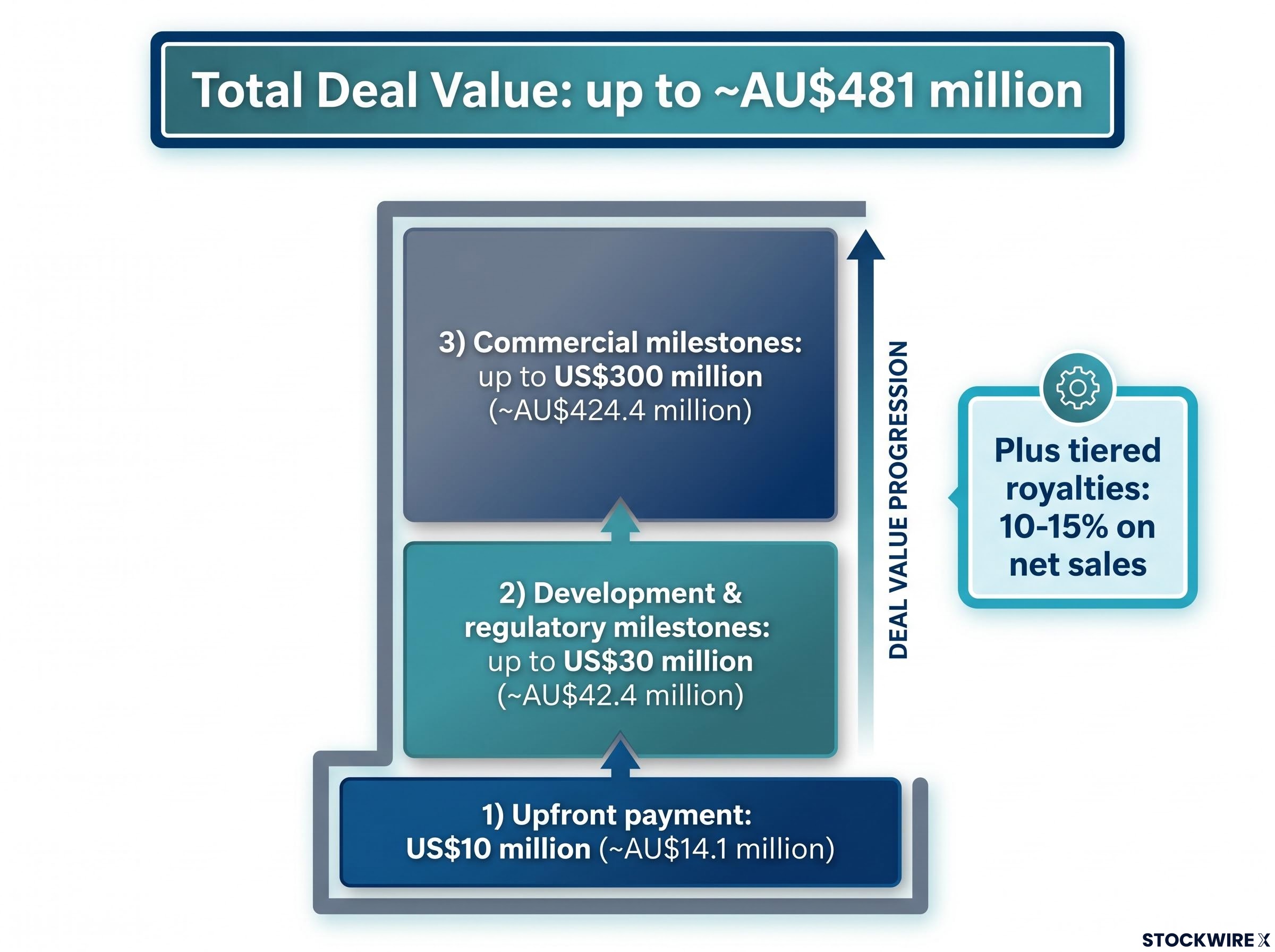
Dimerix has granted exclusive commercialisation rights for DMX-200 in Greater China, South Korea and Southeast Asia to Everest Medicines. The company will receive US$10 million (~AU$14.1 million) upfront within 45 business days, with total deal value reaching up to ~AU$481 million in upfront and potential milestone payments, plus tiered royalties of 10-15% on net sales. This marks Dimerix’s fifth regional licensing deal for its Phase 3 FSGS therapy, covering territories where an estimated 500,000-1 million people are living with FSGS in China alone.
What is FSGS and why does it represent a significant commercial opportunity?
FSGS (Focal Segmental Glomerulosclerosis) is a serious kidney disorder characterised by progressive scarring in the glomeruli—the kidney’s filtering units. This scarring leads to protein leakage into the urine (proteinuria) and progressive loss of kidney function.
There are currently no approved therapies for FSGS in the licensed territories. In patients with progressive or treatment-resistant FSGS, the disease can advance to end-stage kidney disease within as little as five years from diagnosis. Among FSGS patients who undergo kidney transplantation, disease recurrence occurs in up to 60% of cases, underscoring the severity of the condition.
Current management relies on non-specific immunosuppressive and supportive therapies. The absence of approved targeted treatments creates a significant first-mover opportunity for DMX-200 if approved, particularly given the size of the patient population across the licensed territories.
When big ASX news breaks, our subscribers know first
Cumulative licensing deals now position Dimerix for potential AU$1.9 billion in milestone payments
Dimerix has now executed five regional licensing agreements for DMX-200, establishing a global commercialisation framework across major pharmaceutical markets.
| Partner | Territory | Announcement Date |
|---|---|---|
| Advanz Pharma | Europe, UK, Israel | October 2023 |
| Taiba Rare | Middle East, North Africa | May 2024 |
| Fuso Pharmaceutical Industries | Japan | January 2025 |
| Amicus Therapeutics (now BioMarin) | United States | May 2025 |
| Everest Medicines | Greater China, South Korea, Southeast Asia | June 2026 |
Across all five transactions, Dimerix may be eligible to receive up to ~AU$1.9 billion in aggregate upfront and potential milestone payments, plus royalties on net sales. The company has already received over AU$65 million prior to the Everest transaction. Dimerix retains all rights to DMX-200 in unlicensed territories, preserving optionality for future regional deals.
The licensing strategy de-risks commercialisation by partnering with established regional operators whilst generating milestone revenue and maintaining upside exposure in remaining territories.
Everest transaction financial terms
The Everest Medicines agreement includes the following deal economics:
- Upfront payment: US$10 million (~AU$14.1 million)
- Development and regulatory milestones: up to US$30 million (~AU$42.4 million)
- Commercial milestones: up to US$300 million (~AU$424.4 million)
- Tiered royalties: 10-15% on net sales
All contracted financial terms are denominated in U.S. dollars. The specific breakdown of milestone triggers has not been disclosed, as Dimerix noted that revealing this detail could influence ongoing negotiations in other territories currently under discussion.
ACTION3 Phase 3 trial update supports near-term catalyst
The ACTION3 trial adult cohort is fully recruited with 333 patients enrolled across 21 countries, including Chinese mainland, Hong Kong SAR, Taiwan region, Thailand and Malaysia—territories directly relevant to the Everest agreement.
In early 2024, Dimerix reported positive interim results from the ACTION3 trial, showing DMX-200 was performing better than placebo in reducing proteinuria at that time. The independent data monitoring committee has conducted 8 reviews of trial safety data with no concerns raised to date, with the most recent review completed in June 2026.
In April 2026, an external statistical blinded review of ACTION3 data confirmed the study remains appropriately statistically powered (>90%) to demonstrate a treatment effect for the primary study endpoint of proteinuria. This means that if DMX-200 continues to reduce proteinuria in trial patients as anticipated, there is a greater than 90% chance the study will successfully show a statistically significant proteinuria treatment effect at the trial’s conclusion.
The Phase 3 trial is de-risked by positive interim data and confirmed statistical power, with top-line results representing the next major catalyst for the company and its licensing partners.
For investors exploring the regulatory pathway in greater depth, our full explainer on the ACTION3 statistical review covers the FDA endpoint confirmation, the 505(b)(1) approval route, and why Dimerix and its partners ruled out the accelerated approval pathway.
Why Everest Medicines as a partner
Established commercial platform in licensed regions
Everest Medicines is a biopharmaceutical company with specialty kidney disease expertise and a proven track record in commercialising across Greater China, South Korea and Southeast Asia. Under the licensing agreement, Everest will be responsible for supporting submission and maintenance of the regulatory dossier in the licensed territories, as well as all costs of commercialisation activities.
Dimerix will continue to fund and execute the ACTION3 study globally. Everest and Dimerix will form a Joint Steering Committee to align the development and commercialisation of DMX-200 in FSGS in the licensed territories, ensuring coordinated strategy across clinical development and market access planning.
Dr Nina Webster, CEO & Managing Director, Dimerix
“We are delighted to establish this partnership with Everest Medicines, a company with strong rare renal disease expertise and a proven track record in commercialising in Greater China, South Korea and certain Southeast Asian countries. Importantly, this collaboration significantly expands the potential reach of DMX-200 into a large and underserved patient population. Everest is well positioned to maximise the opportunity in the licensed regions, while allowing Dimerix to retain focus on progressing our global registrational program, delivering value for shareholders and providing real hope for patients with FSGS across the globe in need of treatment options.”
Everest’s regional infrastructure and rare renal disease focus positions the partnership to maximise patient access across markets where FSGS remains an area of significant unmet medical need.
DMX-200 patent protection and orphan drug status
DMX-200 is protected by granted patents in various territories until 2032, with patent applications submitted globally that may extend patent protection to 2042. The extended patent runway provides commercial protection across the drug’s potential commercial lifecycle.
DMX-200 has been granted Orphan Drug Designation in the following jurisdictions:
- United States
- Europe
- United Kingdom
- Japan
Orphan Drug Designation typically confers market exclusivity periods upon approval, in addition to patent protection, providing layered commercial protections in major markets.
Strategic outlook and retained territories
Dimerix retains all rights to DMX-200 in unlicensed territories, preserving flexibility for future regional partnerships or direct commercialisation strategies. Management stated the Everest deal allows Dimerix to “retain focus on progressing our global registrational program” whilst leveraging Everest’s commercial capabilities in Asia.
Everest indicated the partnership marks “an important step in advancing our strategic focus in kidney disease” and noted the company is committed to “exploring other glomerulopathies” beyond FSGS, suggesting potential for expanded collaboration if DMX-200 demonstrates efficacy in additional indications.
Yifang Wu, Chairman of the Board, Everest Medicines
“Patients with FSGS in China have long faced significant unmet medical needs due to the lack of targeted treatment options. The positive interim results from the global pivotal Phase 3 study of DMX-200 underscore its potential to offer a meaningful new therapy for these patients.”
The partnership model allows Dimerix to capture value from regional experts with established market access whilst retaining optionality for future deals in remaining territories. With five regional licensing agreements now executed and ACTION3 trial results anticipated, Dimerix has constructed a global commercialisation framework de-risked across regulatory, commercial execution and capital requirements.
Want the Next Biotech Breakthrough in Your Inbox?
Join 20,000+ investors receiving FREE breaking ASX healthcare news within minutes of release, complete with in-depth analysis. Click the “Free Alerts” button at Big News Blast to get market-moving biotech announcements delivered straight to your inbox before the market reacts.