
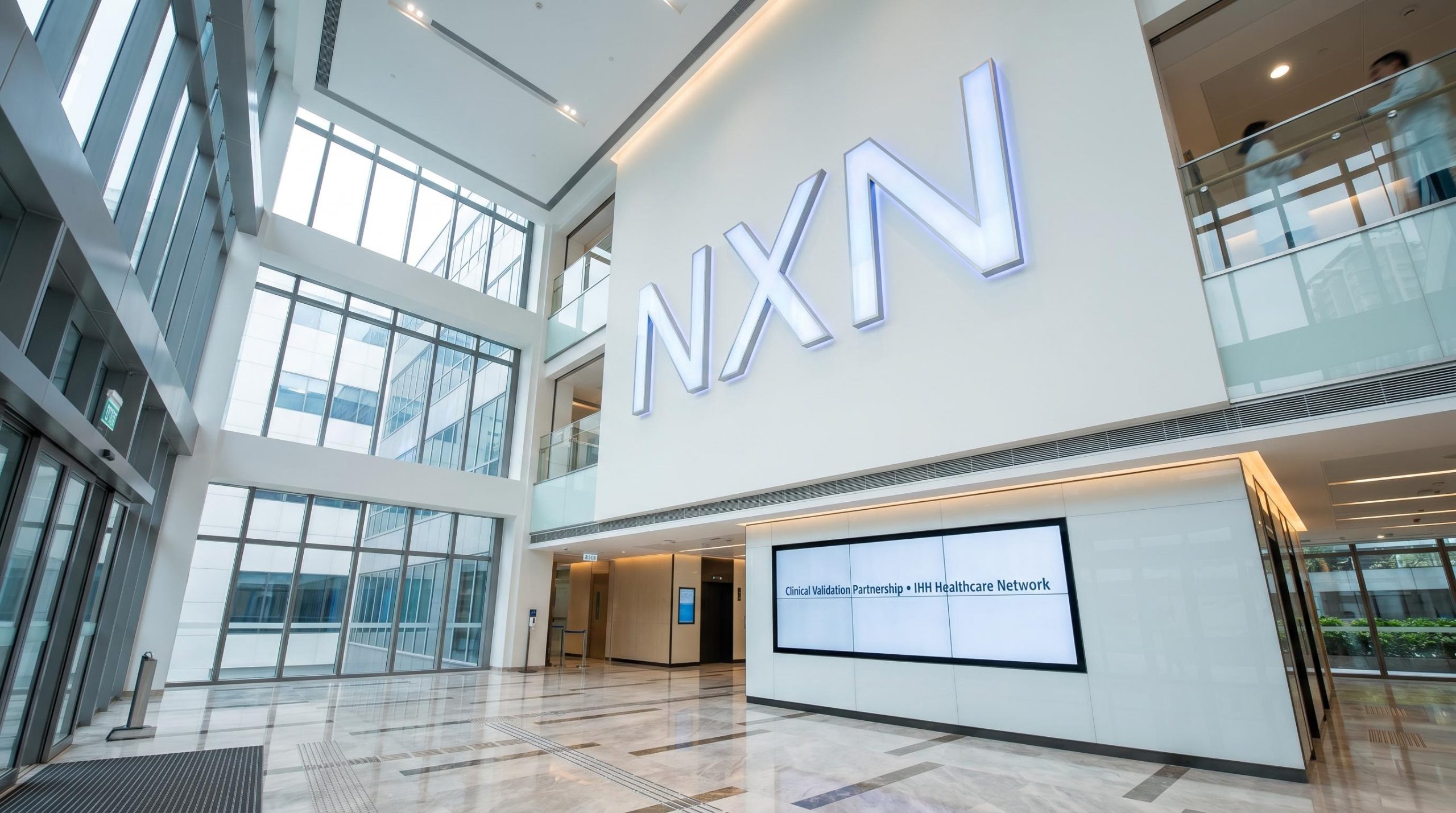
Nexsen secures first hospital partner in Asia through GHK collaboration
Nexsen has signed a binding term sheet with GHK Hospital Limited, the operator of Gleneagles Hospital Hong Kong, establishing the company’s first hospital partnership in Asia. The collaboration framework covers clinical validation, real-world data generation and commercialisation of Nexsen’s rapid point-of-care diagnostic platform. GHK is a subsidiary of IHH Healthcare Berhad (MYX: IHH, SGX: Q0F).
The agreement provides Nexsen with access to a 500-bed multi-specialty private tertiary hospital. GHK operates as a private teaching hospital with The University of Hong Kong as its exclusive partner. The signing ceremony took place at the Asia Summit on Global Health on 12 May 2026, witnessed by H.E. Mr Scott Dewar, Australian Ambassador to the People’s Republic of China.
This partnership transitions Nexsen from development-stage activities into hospital-based validation. For diagnostic companies, hospital partnerships provide the clinical evidence, pricing data and clinician familiarity required before widespread adoption and reimbursement pathways can be established.
When big ASX news breaks, our subscribers know first
IHH Healthcare backing provides scale across 10 countries
The strategic significance of this collaboration extends beyond the immediate hospital partnership. GHK’s parent entity, IHH Healthcare, operates one of the world’s largest healthcare networks. The collaboration framework explicitly extends to GHK’s affiliated IHH entities in North Asia, potentially providing Nexsen with multi-market access through a single partnership structure.
IHH Healthcare’s global footprint includes:
- Approximate market capitalisation of AU$27 billion
- 190 healthcare facilities across 10 countries
- 89 hospitals, clinics and ambulatory care centres
- 76,000 team members
- Operations in Malaysia, Singapore, Türkiye, India and Greater China
Rather than negotiating individual agreements country-by-country, Nexsen has secured a framework that could facilitate validation and potential adoption across multiple IHH-affiliated entities. This approach materially accelerates the pathway from clinical development to real-world hospital deployment.
What the partnership framework covers
The binding term sheet outlines a progression from clinical validation through to potential future adoption. The parties have structured the collaboration to address the full spectrum of requirements diagnostic companies face when transitioning from laboratory development to hospital implementation.
The framework encompasses:
- Clinical validation in relevant patient populations
- Real-world data generation to inform clinical workflows and care pathways
- Assessment of price points and reimbursement feasibility in Hong Kong and North Asia markets
- Joint educational and training activities for clinicians
- Joint R&D and grant collaborations, including Hong Kong Government, regional and international grants
- Co-development of future diagnostic products beyond Nexsen’s current pipeline
The parties intend to progress to one or more definitive agreements within six months.
What is a binding term sheet and why it matters for diagnostic companies
A binding term sheet represents a formal commitment between parties to progress toward definitive commercial agreements. Unlike non-binding memoranda of understanding, binding term sheets create enforceable obligations to negotiate in good faith toward final agreements. This provides a higher degree of certainty that the collaboration will proceed.
The distinction between a term sheet and a definitive agreement is primarily one of detail. Term sheets establish the framework, commercial principles and key terms. Definitive agreements translate these principles into comprehensive legal contracts covering specific workstreams, intellectual property arrangements, data sharing protocols and commercial terms.
For diagnostic platform companies seeking regulatory approval and commercial adoption, hospital validation partnerships serve several critical functions. They provide access to relevant patient populations under real-world conditions, generating the clinical evidence regulators require. They establish workflows that demonstrate how a diagnostic integrates into existing care pathways. They provide pricing and reimbursement insights specific to each market. Perhaps most importantly, they build clinician familiarity and confidence in the technology before commercial launch.
Third pillar of Nexsen’s Asia-Pacific strategy delivered with non-dilutive funding
The GHK Hospital partnership represents the third foundational entry in Nexsen’s Asia-Pacific commercialisation strategy. Notably, all three initiatives have been secured without shareholder dilution, instead leveraging partner funding, institutional co-investment and government grants.
| Initiative | Location | Partner/Funding | Focus |
|---|---|---|---|
| IGNITE Grant | Hong Kong | HK$6 million government grant | R&D facilities, StrepSure clinical validation |
| UM-Nexsen Joint Research Facility | Malaysia | Co-funded by Universiti Malaya | R&D hub, food safety diagnostics expansion |
| GHK Hospital Partnership | Hong Kong/North Asia | IHH Healthcare network | Clinical validation, real-world adoption pathway |
The IGNITE Grant, awarded in March 2026, supports clinical validation of StrepSure through established Hong Kong hospital networks whilst funding the establishment of in-region research, development and manufacturing capability. The UM-Nexsen Joint Research Facility at Universiti Malaya extends the platform’s applicability into food safety diagnostics, co-funded by the university.
Together, these three pillars create an integrated Asia-Pacific platform spanning research, clinical validation, grant-supported development, manufacturing readiness and adoption pathways. By securing partner funding and institutional support rather than diluting shareholders, Nexsen has advanced its commercial infrastructure whilst preserving equity value.
Director commentary
Mark Muzzin, Managing Director
“This partnership materially strengthens Nexsen’s ability to execute its Asia-Pacific strategy, providing a critical bridge between product development and real-world adoption across one of the world’s most important healthcare regions.”
Dr Kenneth Tsang, IHH Healthcare North Asia Regional CEO
“The ability to deliver accurate diagnostic insights closer to the patient has the potential to improve workflows, support clinicians and address gaps in care that can impact treatment timing.”
Next steps and regulatory progress
The parties will now progress discussions toward one or more definitive agreements within the six-month timeframe contemplated by the term sheet. Initial activities are expected to focus on Nexsen’s lead diagnostics for Group B Streptococcus and Kidney Function.
Planned next steps include:
- Definitive agreements expected within six months
- Initial focus on Group B Streptococcus (StrepSure) and Kidney Function diagnostics
- GHK and affiliated IHH entities in North Asia as validation sites
- US clinical site activation progressing toward FDA 510(k) submission continues in parallel
- Additional partnership and collaboration opportunities across Asia being progressed
The GHK collaboration advances independently of Nexsen’s US regulatory pathway. Clinical site activation for FDA 510(k) submission continues as previously disclosed. This creates multiple concurrent workstreams toward both regulatory clearance and commercial partnerships, reducing reliance on any single pathway.
Nexsen’s diagnostic pipeline
Nexsen’s lead diagnostic is the GBS Rapid Sensor for Group B Streptococcus detection in maternal health settings. The company is also developing rapid kidney function diagnostics targeting Acute Kidney Injury and Chronic Kidney Disease. Over 850 million people globally are affected by kidney conditions, yet remain underserved by slow, laboratory-based diagnostics.
Additional diagnostics are in development across human health, ag-tech and biosecurity applications. The GHK collaboration framework explicitly contemplates co-development of future diagnostic products beyond the current pipeline, creating a pathway for ongoing partnership as Nexsen’s platform expands.
Want to follow Nexsen’s clinical validation progress in Asia?
This hospital partnership establishes Nexsen’s validation pathway across IHH Healthcare’s 190-facility network in 10 countries, advancing the company from development stage to real-world hospital deployment. The collaboration framework covers everything from clinical validation through to potential multi-market adoption across North Asia.
For comprehensive coverage of Nexsen’s regulatory milestones, partnership developments and Asia-Pacific commercialisation strategy, visit the Nexsen investor centre. Access detailed analysis of the company’s diagnostic pipeline, non-dilutive funding initiatives and pathway to FDA 510(k) submission.