
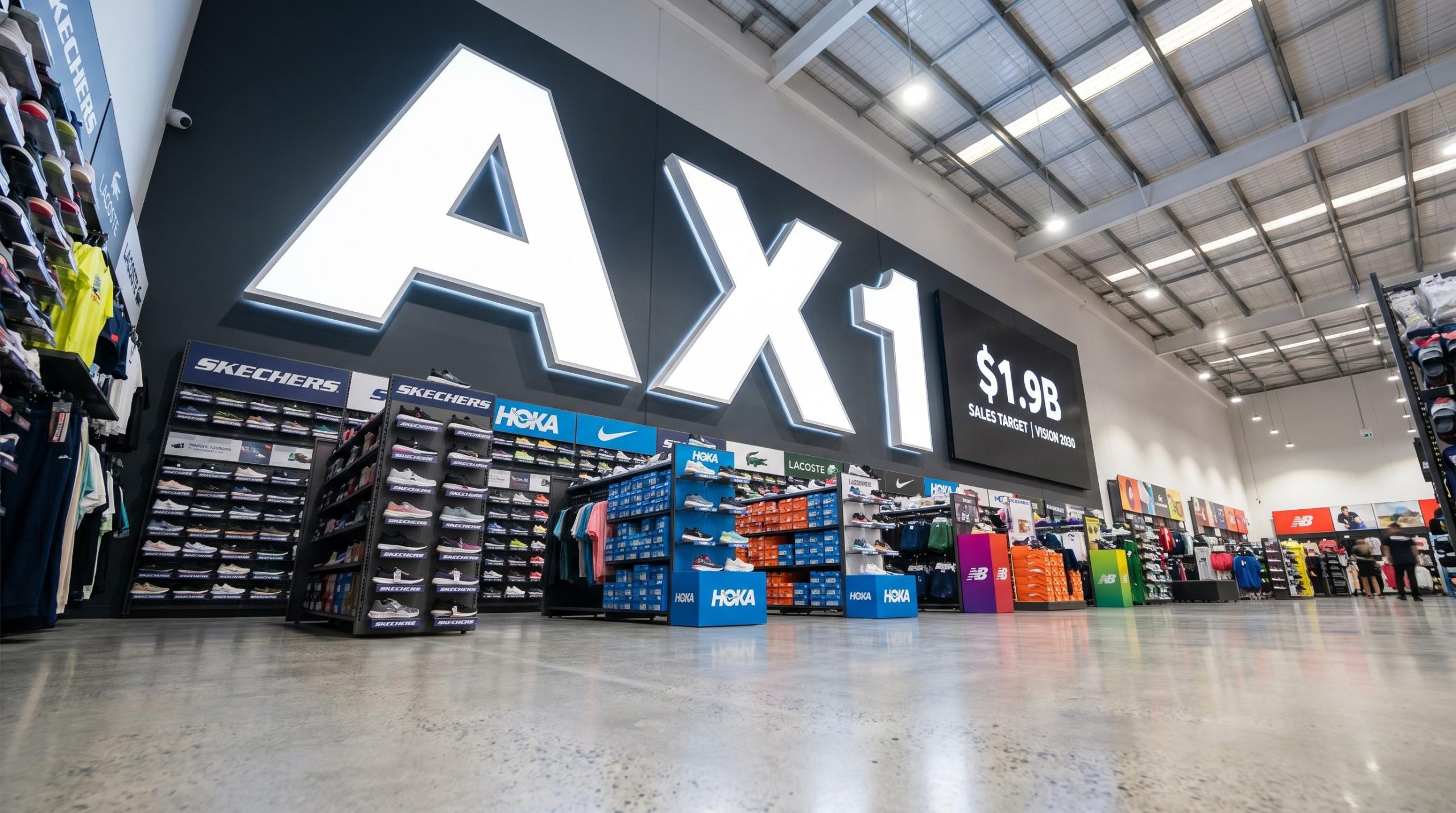
Accent Group maps out a path to $1.9 billion in sales and 9%+ EBIT margin by 2030
In its May 2026 Investor Strategy Day presentation, Accent Group (ASX: AX1) outlined a strategic roadmap targeting $1.9 billion+ in sales, a 9%+ EBIT margin, and approximately 950 stores by 2030. The Accent Group Vision 2030 strategy is structured around three pillars — Efficiency, Evolution, and Expansion — with management articulating a clear near-term profit growth pathway beginning in FY27. The company enters this plan from a position of operational scale, with approximately 900 stores, $1.5 billion in FY25 sales, and $110 million in FY25 EBIT.
When big ASX news breaks, our subscribers know first
The three pillars driving Accent’s Vision 2030
Management presented the three pillars as an integrated strategic framework designed to leverage the group’s scaled retail platform and leading brand portfolio. Each pillar targets distinct sources of earnings improvement across the planning period.
Efficiency — cutting costs and optimising the store portfolio
The Efficiency pillar centres on delivering gross cost of doing business (CODB) savings of approximately $40 million in total, with ~$30 million actioned for FY27 and a further ~$10 million targeted through to FY28. Net cost savings, after accounting for inflation and comparable sales growth, are forecast at $15–20 million through to FY28.
Store portfolio optimisation is expected to deliver at least $7 million in EBIT uplift by FY30, driven by lease renewal negotiations, avoided losses, and store performance improvement initiatives. The presentation noted that 102 stores are currently under review as leases approach renewal. Additionally, the closure of loss-making businesses including Glue Store, OZSALE, Herschel, and SUPERGA is forecast to deliver a $16.2 million EBIT uplift in FY27.
Evolution — The Athlete’s Foot franchise reacquisitions
The Evolution pillar is anchored by a structured plan to reacquire 30 remaining The Athlete’s Foot (TAF) franchises between FY27 and FY30. Management outlined a forecast EBIT uplift of approximately $14 million by FY30 from these reacquisitions, with total forecast investment of approximately $50 million over the period (inclusive of reacquisition payments and stock). Historical TAF franchise buyback return on investment has been approximately 20%.
The presentation highlighted TAF’s strong customer metrics as underpinning the opportunity: a +86 Net Promoter Score (NPS), 84% of customers using the fitting service, and an average transaction value of $170 (approximately 1.5x other footwear banners in the group).
Expansion — Sports Direct and new brand growth
Sports Direct was presented as the flagship expansion vehicle, described as one of the largest UK and European sports retail brands, now being established across Australia and New Zealand. The current run-rate stands at 2 stores plus online generating $15 million+ in annualised sales. The rollout plan targets 8 stores by December 2026, 30 stores within three years, and 50–100 stores over the longer term.
Target store economics include sales of approximately $6,000+ per square metre, trading space of 700–2,000 square metres, and a target EBIT margin of approximately 7–10%. Management also outlined a target vertical, distributed, and Frasers Group brand penetration of approximately 35–40% within Sports Direct stores. Separately, the presentation detailed plans for up to 20 new stores per annum across Skechers, Hoka, Lacoste, Nude Lucy, and ODE.
| Pillar | Key Initiative | EBIT Contribution | Timeline |
|---|---|---|---|
| Efficiency | Gross cost savings; store portfolio optimisation; closure of loss-making businesses | $15–20m net cost savings; $7m+ store uplift; $16.2m from closures | FY27–FY28 |
| Evolution | TAF franchise reacquisitions (30 stores) | ~$14m incremental EBIT | FY27–FY30 |
| Expansion | Sports Direct ANZ rollout; 20 new stores p.a. across core and growth brands | 7–10% target EBIT margin (Sports Direct) | FY27–FY30+ |
What Accent Group looks like today — and why the foundation is strong
The presentation provided detailed context on the group’s current scale and competitive position. Accent is Oceania’s largest footwear store network, with approximately 820 physical stores — more than double the next largest competitor, which operates 400+ stores.
The group operates an integrated brand model, drawing sales from three distinct brand categories: distributed brands (such as Skechers, Hoka, Vans, Dr. Martens, and Lacoste) account for approximately 49% of sales; third-party brands (Nike, Adidas, New Balance) account for approximately 42%; and vertical-owned brands (Nude Lucy, ODE, Stylerunner the Label) contribute approximately 9%. Distributed brands are global brands for which Accent acts as the Oceania/ANZ distributor, while vertical brands are brands the company owns from design through to retail.
Accent’s digital footprint spans 31 websites, generating $300 million+ in digital sales and approximately 2.9 million orders per annum. The group holds 10 million known customer profiles, with 5 million active in the last twelve months.
Key credentials highlighted in the presentation include:
- Largest footwear store network in ANZ, with more than double the physical footprint of the nearest competitor
- Proven ability to grow and steward global distributed brands across Oceania, with partnership tenures of up to 38 years
- Scaled omnichannel infrastructure spanning retail, wholesale, and digital
- Consistent sales growth above the AU clothing, footwear and accessories market in every year since FY17
- Approximately 140 years of combined retail management experience across the senior management team
FY27 profit inflection and the path to 2030 targets
The presentation articulated a clear, catalyst-driven pathway to near-term profitability improvement, with FY27 positioned as the year of profit inflection before broader sales-led growth takes hold from FY28 onwards.
Four near-term EBIT catalysts for FY27
Management outlined the following four earnings catalysts for FY27:
- Targeted net cost efficiency initiatives: $10–15 million EBIT (post-inflation and comparable sales growth)
- Closure of loss-making businesses: $16 million EBIT uplift
- TAF franchise reacquisitions: Up to $6 million EBIT
- FX tailwind: AUD/USD at 0.70+ supporting gross margins
From FY25 to FY30 — the numbers at a glance
| Metric | FY25 Actual | FY30 Target |
|---|---|---|
| Total sales | $1.5 billion | $1.9 billion+ |
| Store footprint | ~900 | ~950 |
| Gross margin (% of sales) | 55% | ~55% |
| CODB (% of sales, incl. AASB16 occupancy) | 46% | ~44% |
| EBIT margin | 7.6% | 9%+ |
Capital position and shareholder returns
Management stated in the presentation that the company has sufficient capital and projected future cash flows to fund the full growth strategy to 2030, encompassing the Sports Direct rollout, TAF franchise reacquisitions, and base business growth. The capital allocation philosophy prioritises high-return-on-investment opportunities, with TAF franchise buybacks returning approximately 20% and Sports Direct expansion targeting approximately 21%.
The group’s dividend track record underscores the board’s commitment to shareholder returns, with more than $500 million in dividends paid over the past 10 years. Management noted that the board retains flexibility to pursue capital management as circumstances evolve.
CEO Daniel Agostinelli
“The Company is well positioned for growth, backed by highly experienced management and more than 9,000 team members in our stores and support office. The entire team is focused on serving our customers and delivering the growth plan to drive long term shareholder value.”
Stay Ahead on ASX Consumer Retail News
Big News Blast delivers FREE breaking ASX announcements straight to your inbox within minutes of release, complete with in-depth analysis already done. Join 20,000+ subscribers who never miss a market-moving update. Click the “Free Alerts” button at Big News Blast to get the next consumer sector story before the market has time to react.