

Adisyn appoints former Iron Dome commander to Advisory Board
Adisyn has appointed Mr Tamir Zimber, a former Colonel in the Israeli Air Defense Array responsible for operational execution of Iron Dome, Arrow, David’s Sling and Patriot Systems, as the first member of its newly constituted Advisory Board. Mr Zimber currently serves as Senior Director for Air Defense Systems (India) at Israel Aerospace Industries (IAI), where he oversees multi-billion USD programmes at the state-owned aerospace and defence group generating multi-billion dollar annual revenues globally.
The appointment signals Adisyn’s intent to bridge its radar absorption technology development with defence industry commercialisation pathways. As the first Advisory Board member, Mr Zimber’s role establishes a formal structure for incorporating operational and commercial defence expertise into the company’s strategic direction as it advances its radar signature reduction programme.
The move provides Adisyn with direct access to procurement pathway knowledge and end-user requirements through an executive actively managing large-scale defence programmes whilst carrying operational command experience from one of the world’s most advanced air defence systems.
When big ASX news breaks, our subscribers know first
What is radar signature reduction and why does it matter?
Radar signature reduction refers to the ability to make aircraft, drones, or defence platforms harder to detect by radar systems. When a radar signal hits an object, some of that energy reflects back to the radar receiver. Reducing the radar signature means less energy is reflected, making the object more difficult to detect and track.
The effectiveness of radar signature reduction is measured in decibels (dB). A 20dB reduction means approximately 99% less radar energy is reflected back to the detection system. This reduction can significantly decrease the range at which a platform can be detected, providing a critical survivability advantage in contested environments.
As radar and detection systems continue to improve globally, the market for materials that reduce detectability is expanding rapidly. The growing deployment of UAVs and autonomous platforms in defence applications makes radar signature management increasingly central to system design, particularly where survivability depends on avoiding early detection.
Adisyn’s radar absorption progress to date
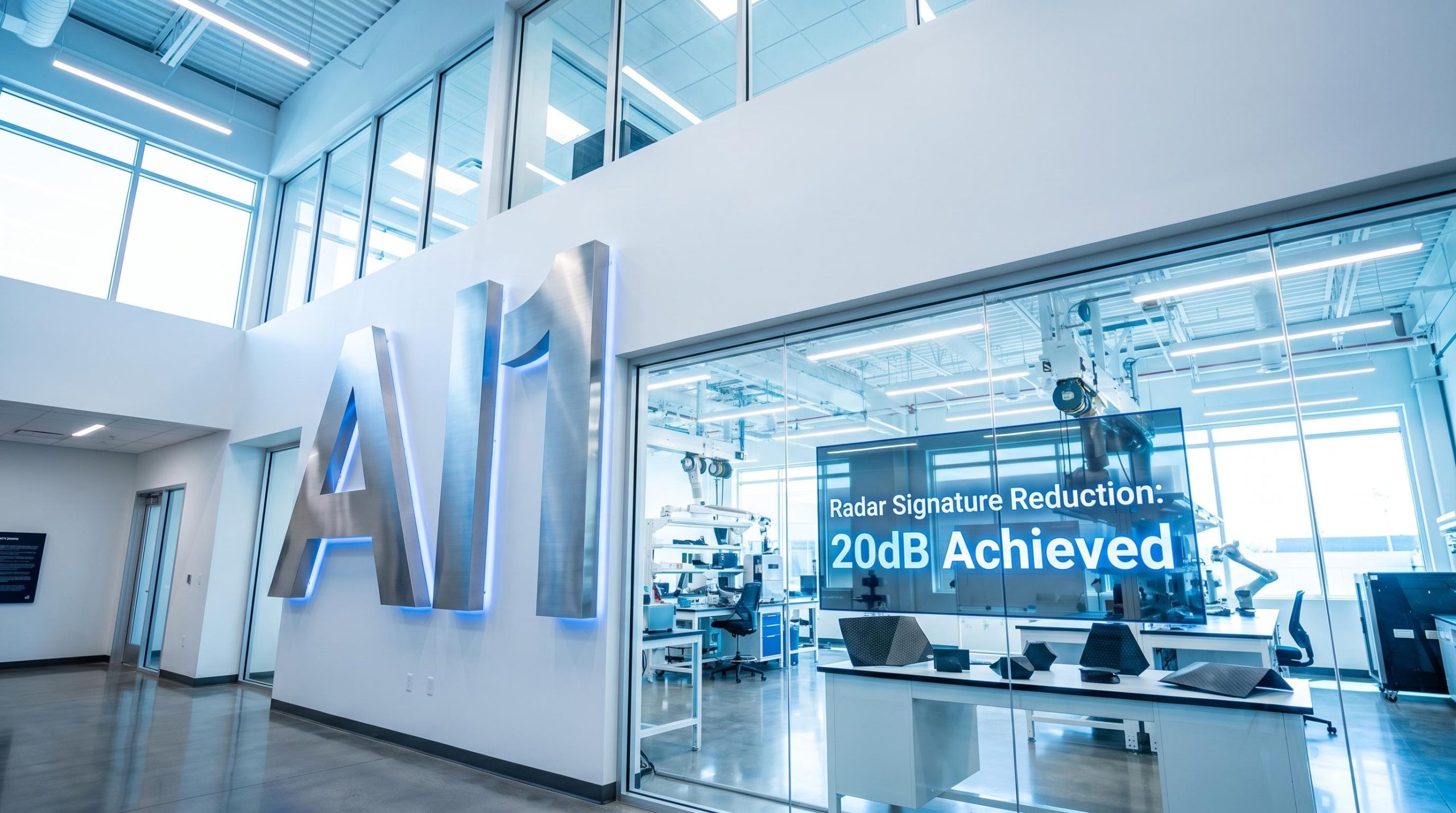
Adisyn reported in February 2026 that laboratory testing achieved up to 20dB radar signature reduction using graphene-enhanced composite materials. The company is working towards a development track aimed at rapid transfer to serial production.
In March 2026, Adisyn established 2D Radar Absorbers Ltd to provide a structured platform for advancing this technology. The subsidiary is held 81% by 2D Generation Ltd (a fully owned Adisyn subsidiary) and 19% by Ramot, the commercialisation arm of Tel Aviv University, following a collaboration agreement announced in April 2026.
| Date | Milestone | Significance |
|---|---|---|
| February 2026 | Laboratory testing achieves up to 20dB radar signature reduction | Demonstrates technical capability of graphene-enhanced composites to materially reduce platform detectability |
| March 2026 | Establishment of 2D Radar Absorbers Ltd (81% Adisyn, 19% Ramot) | Creates dedicated commercial vehicle for radar absorption technology development |
| April 2026 | Collaboration with Tel Aviv University formalised | Secures access to research capability and institutional commercialisation expertise via Ramot |
| May 2026 | Advisory Board established with appointment of Mr Tamir Zimber | Integrates operational defence experience and IAI commercial programme expertise into strategic direction |
Mr Zimber’s experience spans command and commercialisation
Mr Zimber brings more than two decades of leadership experience across operational command, defence systems integration and international programme delivery. He commanded large-scale, nationwide operations involving thousands of personnel in the Israeli Air Force Air Defense Array, with responsibility for the readiness and execution of Israel’s key air defence systems.
His current role at IAI involves managing complex, resource-intensive defence programmes and leading business development across international markets, including engagement with government agencies, defence organisations and industry partners.
Key experience areas include:
- Operational command in high-pressure, mission-critical environments
- Integration and deployment of advanced defence technologies
- Strategic planning and capability development
- International collaboration with allied defence forces
- Execution of large-scale, multi-stakeholder programmes
The combination of operational deployment experience and current commercial programme management at a major defence contractor provides Adisyn with insight into both what defence customers require and how to structure engagement with them. This dual perspective is particularly relevant as the company works towards transitioning laboratory capability into operationally relevant solutions.
Advisory Board structure and expected contribution
The Advisory Board has been established to complement Adisyn’s technical and scientific capabilities with operational and commercial defence expertise. The Board will work alongside management and the Board of Directors as the company continues to refine its approach to radar signature reduction commercialisation.
Expected functions of the Advisory Board are:
- Provide strategic input into the direction and prioritisation of radar-related activities
- Support the translation of technical capability into operationally relevant solutions
- Assist in identifying and engaging with appropriate commercial and government stakeholders
- Facilitate access to global defence networks and partnership opportunities
- Enhance the company’s credibility and positioning within the defence sector
The formal structure creates an institutional mechanism for incorporating defence industry insight into Adisyn’s strategy, potentially accelerating commercial engagement as the company progresses from laboratory results towards production-ready solutions.
Adviser compensation structure
Mr Zimber will receive options to purchase ordinary shares in 2D Radar Absorbers Ltd representing 1% of the subsidiary’s issued and outstanding share capital as of incorporation. The exercise price is NIS 0.01 per share. No cash consideration is payable under the Advisory Agreement.
The options vest over a 24-month period commencing on the effective date of the Advisory Agreement. 25% vest after an initial six-month cliff period, with the remainder vesting in equal monthly instalments over the following 18 months, subject to Mr Zimber remaining engaged as an adviser at each applicable vesting date.
Vested options expire five years following termination of the Advisory Agreement. Either party may terminate the agreement upon 10 days’ prior written notice. The agreement is governed by the laws of the State of Israel.
The equity-aligned compensation structure aligns the adviser’s interests with subsidiary value creation. The 24-month vesting schedule suggests a meaningful ongoing engagement rather than a one-time arrangement, with the initial six-month cliff providing a mutual assessment period before the majority of options vest.
What comes next for Adisyn’s defence strategy
The company will continue to progress its radar signature absorption programme alongside its broader graphene technology platform. The focus remains on advancing development activities and preparation for rapid transfer to serial production.
The Advisory Board is expected to play an ongoing role as Adisyn refines its strategic direction and evaluates commercial opportunities within this emerging vertical. Managing Director Arye Kohavi noted that the appointment represents “the first step in building an Advisory Board that reflects the scale of the opportunity we are pursuing,” indicating potential for further advisory appointments.
Managing Director Arye Kohavi
“The appointment of Tamir is a significant step in the development of our defense strategy. His direct experience operating and deploying some of the world’s most advanced air defence systems, combined with his current role managing major international defence programs, provides Adisyn with unique insight into both the operational requirements and commercial pathways in this sector.”
The reference to this being the “first step” suggests Adisyn is building institutional capability to support its defence commercialisation pathway. As radar and detection systems continue to improve, the market for advanced materials capable of reducing detection range is positioned to expand, particularly for UAV and autonomous platform applications where survivability depends on avoiding early detection.
Want the Next Defence Tech Breakthrough in Your Inbox?
Join 20,000+ investors receiving FREE breaking ASX news within minutes of release, complete with in-depth analysis. Click the “Free Alerts” button at Big News Blast to get tech sector announcements delivered straight to your inbox the moment they hit the market.