
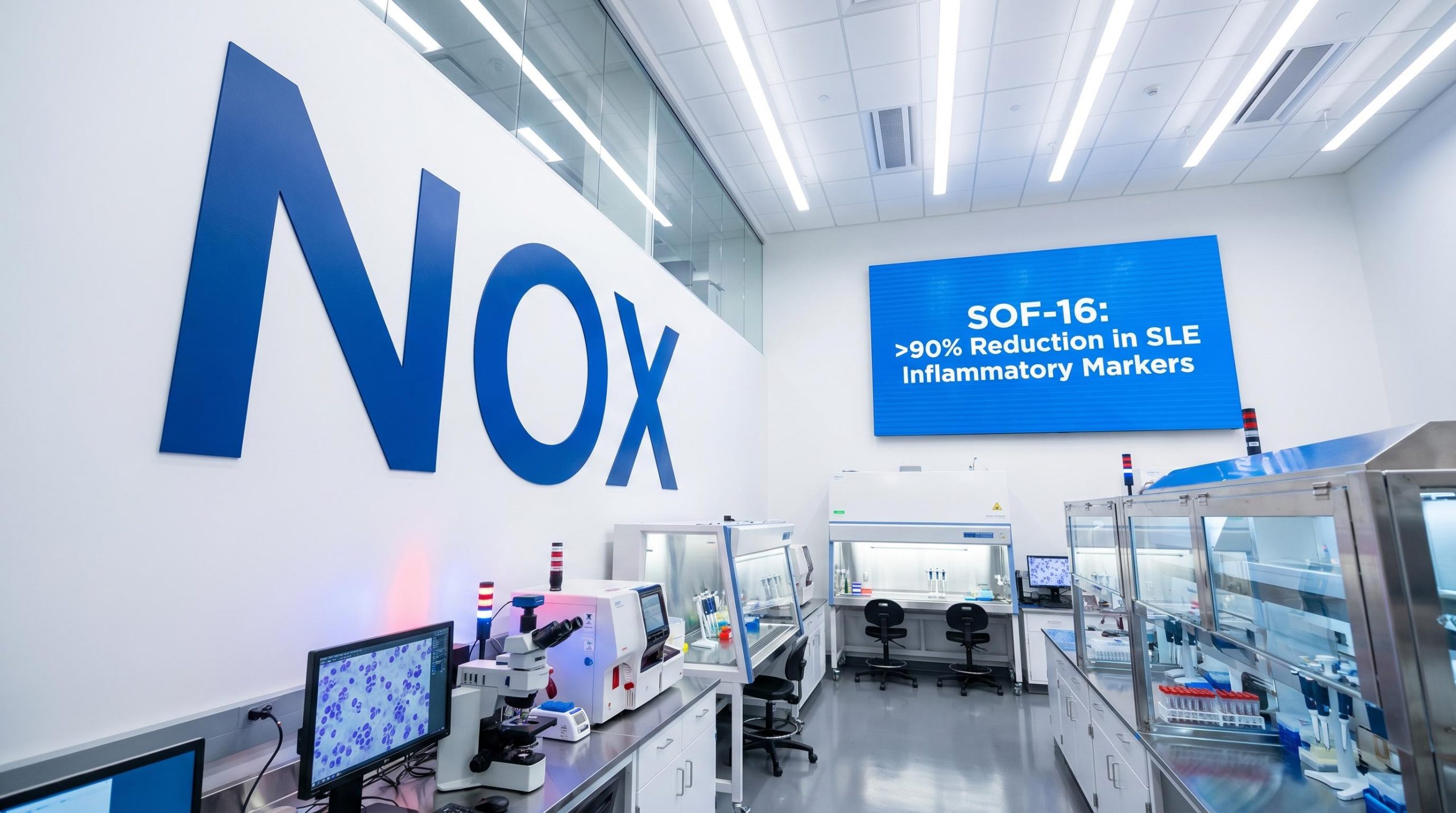
Noxopharm reports SOF-SKN lupus efficacy in patient samples
Noxopharm has reported efficacy data demonstrating that SOF-16, the active ingredient in its SOF-SKN cutaneous lupus drug candidate, successfully reduced inflammatory markers in blood samples from systemic lupus erythematosus (SLE) patients and synovial fluid from rheumatoid arthritis patients. This represents the first time SOF-16 has been tested on samples derived from patients with autoimmune diseases, marking a significant translational milestone for the company’s Sofra platform.
The data comes from a new bioRxiv preprint authored by Professor Michael Gantier of Hudson Institute of Medical Research, Noxopharm’s exclusive strategic partner in developing the technology. The preprint follows Professor Gantier’s recent Nature Immunology paper, which has been accessed over 12,000 times online. The research team included collaborators from Tezcat Biosciences and InhaTarget Therapeutics, plus three Noxopharm employees.
Two independent in vitro studies were conducted. In the SLE study, blood samples from two patients carrying a genetic mutation causing Toll-like receptor 7 (TLR7) hypersensitivity were stimulated using a TLR7 agonist. SOF-16 treatment reduced inflammatory markers by more than 90% on average. In the rheumatoid arthritis study, synovial fluid collected from patient joints triggered a TLR7-mediated inflammatory response in HEK TLR7 cells. SOF-16 almost eliminated this inflammatory signal with statistical significance (p<0.0001).
This patient-derived efficacy data strengthens the regulatory submission package for SOF-SKN and provides evidence that the Nature Immunology discovery is being successfully translated into therapeutic development.
When big ASX news breaks, our subscribers know first
Understanding Toll-like receptor 7 and why blocking it matters
Toll-like receptor 7 (TLR7) is an immune sensor protein that detects viral genetic material and triggers inflammatory responses as part of the body’s defence system. When this sensor becomes overactive, either through genetic mutations or disease processes, it drives chronic inflammation characteristic of autoimmune conditions.
SOF-16 works by blocking TLR7 activity at the source of the inflammatory pathway. Patients with genetic mutations causing TLR7 hypersensitivity, such as those included in the SLE study, show significantly stronger inflammatory responses when TLR7 is activated. By inhibiting this receptor, SOF-16 addresses the underlying mechanism driving inflammation rather than simply masking symptoms.
The approach represents a targeted intervention in immune system dysregulation. TLR7 is a validated therapeutic target across multiple autoimmune conditions, giving the Sofra platform potential applications beyond cutaneous lupus erythematosus, including rheumatoid arthritis, diabetes, and other diseases linked to immune system dysfunction.

SLE and rheumatoid arthritis study results
Systemic lupus erythematosus findings
The SLE study used blood samples from two patients carrying a genetic mutation that causes TLR7 hypersensitivity. The research design involved:
- Collecting blood cells from SLE patients and healthy donors
- Stimulating the cells in vitro using a TLR7 agonist (R837)
- Measuring levels of inflammatory markers produced
- Testing SOF-16’s ability to reduce these markers
Blood cells from the SLE patients exhibited significantly higher inflammatory responses compared to healthy donor blood when exposed to the TLR7 agonist, confirming the hypersensitivity effect of their genetic mutation. Treatment with SOF-16 reduced the levels of inflammatory markers by more than 90% on average, demonstrating potent anti-inflammatory activity in samples from patients with active autoimmune disease.
Rheumatoid arthritis findings
The rheumatoid arthritis study examined synovial fluid collected from the inflamed joints of patients with the disease. This fluid naturally contains nucleic acid fragments and other molecules that activate TLR7 and drive the inflammatory environment within affected joints.
Researchers used this patient-derived synovial fluid to stimulate HEK TLR7 cells, a cell-based assay system that responds to TLR7 activation by producing measurable inflammatory markers. The synovial fluid induced a significant inflammatory response in these cells, reflecting the TLR7-mediated inflammation present in rheumatoid arthritis joints. SOF-16 treatment almost completely eliminated this inflammatory signal, with the reduction achieving high statistical significance (p<0.0001).
| Study | Patient Source | Inflammatory Trigger | SOF-16 Result | Statistical Significance |
|---|---|---|---|---|
| SLE | Blood samples | TLR7 agonist (R837) | >90% reduction in inflammatory markers | Not stated |
| Rheumatoid Arthritis | Synovial fluid | Endogenous nucleic acids | Near-complete elimination | p<0.0001 |
The results from both independent studies bolster the data package Noxopharm is preparing for future regulatory submissions while providing evidence of SOF-16’s potential across different autoimmune disease contexts.
SOF-SKN development pathway and market opportunity
SOF-SKN is the topical cream formulation of SOF-16, initially being developed for cutaneous lupus erythematosus (CLE), a chronic autoimmune condition affecting the skin. The drug candidate targets the inflammatory mechanisms underlying CLE lesions and could potentially be developed for other autoimmune-related skin diseases.
Potential follow-on indications include:
- Psoriasis
- Dermatomyositis
- Other inflammatory skin conditions driven by immune dysregulation
The broader Sofra platform, which includes several assets beyond SOF-16, could be utilised for systemic autoimmune diseases such as rheumatoid arthritis and diabetes, plus other diseases linked to immune system dysfunction. The platform is based on short nucleic acid sequences (oligonucleotides) that act on specific immune sensors to regulate inflammation at its source.
The global CLE market is worth more than US$3.3 billion and is expected to grow significantly over coming years. The wider autoimmune disease therapeutics market was valued at US$163.2 billion in 2024 and is projected to reach US$219.6 billion by 2035, reflecting substantial commercial opportunity for effective new treatments.
CEO Dr Olivier Laczka
“Professor Gantier and the team have done an outstanding job rapidly progressing the development of this technology. They are clearly demonstrating how the findings of the Nature Immunology paper can be translated into studies that provide real momentum to our SOF-16 project and evidence the wide range of indications our Sofra platform can be developed towards, beyond topical applications for cutaneous lupus erythematosus.”
What comes next for Noxopharm
The patient-derived efficacy data strengthens Noxopharm’s regulatory submission package for SOF-SKN by demonstrating that the compound performs effectively in samples from patients with autoimmune diseases, not just in standard laboratory models. This represents successful translation of the fundamental discovery published in Nature Immunology into preclinical evidence supporting clinical development.
Noxopharm operates a dual platform approach through Sofra (targeting inflammation, autoimmunity, mRNA enhancement, and oncology) and Chroma (focused on oncology). The Sofra technology has potential applications across multiple disease areas related to immune system function, with SOF-16 serving as the lead drug candidate advancing toward regulatory filings.
In vitro efficacy in patient samples is a key preclinical milestone that de-risks the clinical development pathway by demonstrating proof-of-concept in human disease biology before initiating formal clinical trials. The data positions SOF-SKN for progression toward regulatory submissions and potential advancement into human testing for cutaneous lupus erythematosus.
Want the Next Biotech Breakthrough in Your Inbox?
Join 20,000+ investors getting FREE breaking ASX news delivered within minutes of release, complete with in-depth analysis. Click the “Free Alerts” button at Big News Blast to start receiving alerts the moment market-moving announcements hit the ASX.