
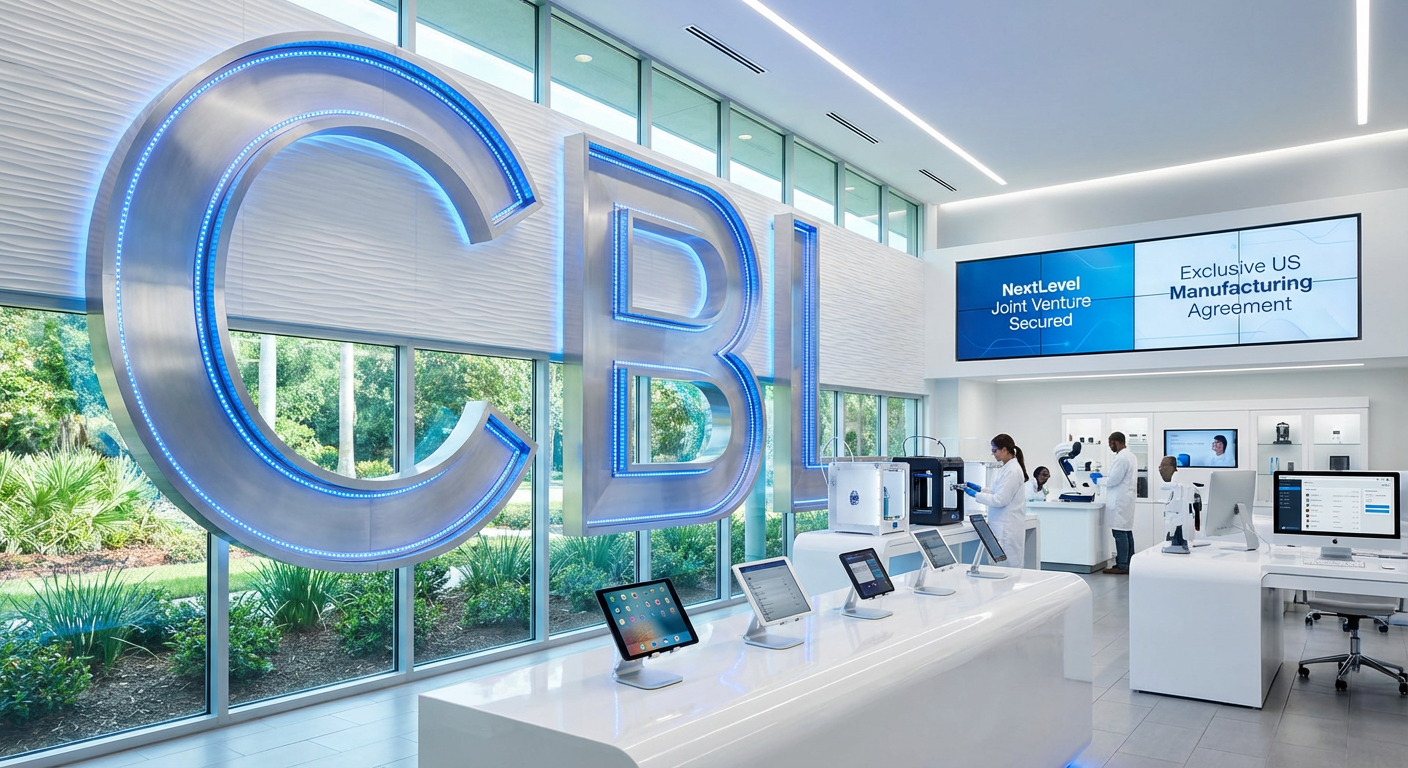
Control Bionics (ASX: CBL) secures exclusive US joint venture to tap $100-150 million iOS speech device market
Control Bionics has entered into an exclusive manufacturing and distribution agreement with NextLevel Assistive Technology to commercialise iOS-based speech generating devices across the United States. The Control Bionics NextLevel joint venture positions the neurotechnology firm to participate in a market segment worth US$100-150 million annually, without requiring capital investment or manufacturing risk.
Under the capital-light structure, NextLevel funds all device tooling and manufacturing, whilst Control Bionics acts as FDA Manufacturer of Record and distributor. The company receives a fixed per-device contribution margin, creating what management describes as revenue, profit and cashflow accretive arrangements with positive working capital dynamics.
The partnership introduces the UnoTouch Omni and Active product lines to complement Control Bionics’ existing NeuroNode neural interface platform, broadening the company’s offering within the Augmentative and Assistive Communication (AAC) market.
How the partnership works
The Control Bionics NextLevel joint venture divides responsibilities to leverage each party’s strengths. NextLevel designs and manufactures device chassis and components, retaining ownership of device intellectual property. Control Bionics performs final assembly, ensures regulatory compliance, and manages distribution through its established US partner channels.
Devices are marketed under the UnoTouch Omni and Active brands, targeting the tablet-based segment of the speech generating device market. Control Bionics operates as the FDA Manufacturer of Record, a regulatory designation that enables commercialisation whilst NextLevel bears the manufacturing capital burden.
| Responsibility | NextLevel Assistive Technology | Control Bionics |
|---|---|---|
| Device Design & Manufacturing | Designs and manufactures chassis and components | Performs final assembly |
| Capital Investment | Funds all device tooling and manufacturing | No capital investment required |
| Regulatory & Compliance | Retains device IP ownership | Acts as FDA Manufacturer of Record |
| Commercial Operations | Supplies components to Control Bionics | Distribution through established US partners |
| Revenue Model | Component supply arrangement | Receives fixed per-device contribution margin |
This structure allows Control Bionics to expand its addressable market without diluting focus on its proprietary neural interface technology development.
When big ASX news breaks, our subscribers know first
Understanding the US speech-generating device market
The United States represents the largest global market for Augmentative and Assistive Communication technology. Speech generating devices serve individuals with complex communication needs, encompassing conditions such as amyotrophic lateral sclerosis (ALS), cerebral palsy, and stroke-related speech impairments.
The sector has undergone a structural shift toward tablet-based platforms, with iOS devices capturing the majority of new prescriptions. This transition reflects changing prescriber preferences and patient familiarity with consumer technology interfaces.
Key market characteristics include:
- 2.5-3.5 million individuals in the US with complex communication needs requiring speech-generating solutions
- 60-70% of new US speech generating device prescriptions are now tablet-based
- Annual US speech generating device unit volumes of approximately 55,000-65,000 devices
- iOS-based speech generating device segment representing US$100-150 million in annual market value
The market benefits from established reimbursement pathways. Medicare and private insurers provide coverage for medically necessary speech generating devices, supporting consistent demand across diverse patient populations. This reimbursement framework underpins the commercial viability of the segment and provides revenue visibility for device manufacturers and distributors.
What’s driving the iOS shift
Four structural factors have accelerated the transition to iOS-based speech generating devices:
- Familiarity of consumer tablet interfaces reduces training requirements for patients and caregivers, enabling faster adoption and reducing support costs
- Broad AAC software ecosystem availability on the iOS platform provides prescribers with extensive application options tailored to specific patient needs
- Lower hardware costs compared to proprietary dedicated devices improve accessibility whilst maintaining reimbursement eligibility
- Medicare and private insurer reimbursement coverage extends to tablet-based platforms, removing a historical barrier to adoption
These dynamics position iOS devices as the dominant platform for future speech generating device prescriptions, creating a predictable growth trajectory for the segment.

Near-term commercial potential
Control Bionics is in advanced negotiations with multiple US distributors under non-binding Letters of Intent. These arrangements contemplate potential annual volumes in the range of approximately 1,000-1,500 iOS devices, subject to execution of definitive agreements, regulatory and reimbursement processes, and market rollout.
The company emphasises there is no certainty that these negotiations will result in binding agreements or that contemplated volumes will be realised. However, the discussions leverage Control Bionics’ existing US distribution network, which already supports the NeuroNode platform across established partner channels.
The iOS device portfolio is positioned as complementary rather than competitive to the NeuroNode neural interface platform. Whilst NeuroNode targets patients requiring higher-complexity assistive technology solutions, the UnoTouch Omni and Active lines address the broader tablet-based segment, enabling distribution partners to serve a wider patient population through a single supplier relationship.
Strategic fit with existing business
The partnership broadens Control Bionics’ product offering without diverting resources from neural interface innovation. The NeuroNode platform, which integrates three modalities (touch, eye gaze, and EMG control), serves patients with more severe mobility limitations. The iOS-based devices target individuals who benefit from tablet interfaces but do not require the advanced capabilities of neural interface technology.
This dual-platform strategy strengthens Control Bionics’ position with US distribution partners, who can address multiple patient segments through a consolidated supplier relationship whilst maintaining focus on the AAC category.
CEO Jeremy Steele
“This partnership allows Control Bionics to participate at scale in the largest segment of the US AAC market through our existing distributor channels, without capital investment or manufacturing risk. It is revenue, profit and cashflow accretive. It complements our NeuroNode neural-interface platform by adding a high volume iOS device portfolio, strengthening our position as a leading AAC technology supplier to distribution partners across the United States.”
What this means for investors
The Control Bionics NextLevel joint venture provides exposure to a high-volume market segment through a capital-efficient structure. Key investment considerations include:
- Fixed per-device contribution margin provides earnings visibility and predictable unit economics
- Capital-light structure preserves balance sheet capacity for ongoing NeuroNode development and commercialisation
- Leverages existing US distribution network reduces go-to-market risk and accelerates potential revenue realisation
- Positive working capital dynamics support cashflow generation without inventory or manufacturing capital requirements
The arrangement addresses a structural challenge for medical device companies entering high-volume, price-competitive segments. By outsourcing manufacturing capital to NextLevel whilst retaining regulatory standing and distribution control, Control Bionics participates in the US$100-150 million iOS speech generating device market without the typical working capital burden associated with device manufacturing.
The partnership is described by management as revenue, profit and cashflow accretive, suggesting positive contribution economics at the device level. However, investors should note that contemplated volumes of 1,000-1,500 devices annually remain subject to finalisation of distributor agreements and successful market rollout. The company has explicitly stated there is no certainty these negotiations will result in binding agreements or that projected volumes will materialise.
For existing shareholders, the structure allows Control Bionics to diversify revenue sources whilst maintaining strategic focus on proprietary neural interface technology, where the company holds patents and differentiated technical capabilities across touch, eye gaze, and EMG modalities.
Get Healthcare News Before the Market Reacts
Join 20,000+ investors receiving FREE breaking ASX healthcare announcements delivered within minutes of release, complete with in-depth analysis. Click the “Free Alerts” button at StockWire X to get market-moving news in your inbox the moment it breaks.