Neel Kashkari walked into the Council on Foreign Relations on Wednesday and delivered a message markets have been bracing for: rates are staying higher, and the Fed may not be as restrictive as anyone assumed.
The timing matters. The FXS Speechtracker scored his remarks at 7.1 against a historical baseline of 6.2, and futures are already pricing a roughly 90% probability of another hike before year-end.
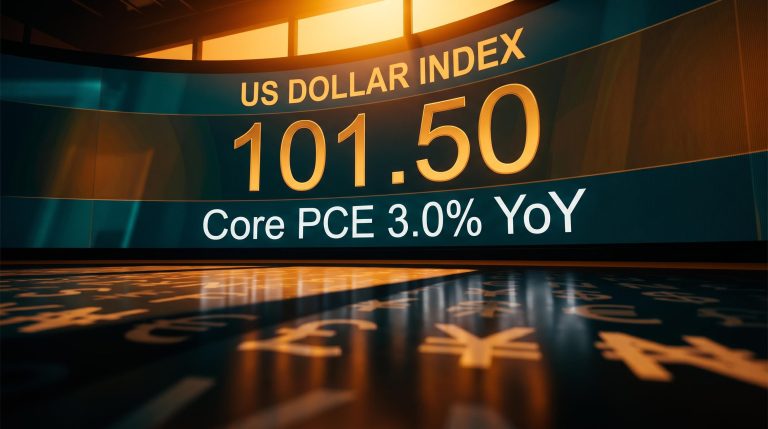
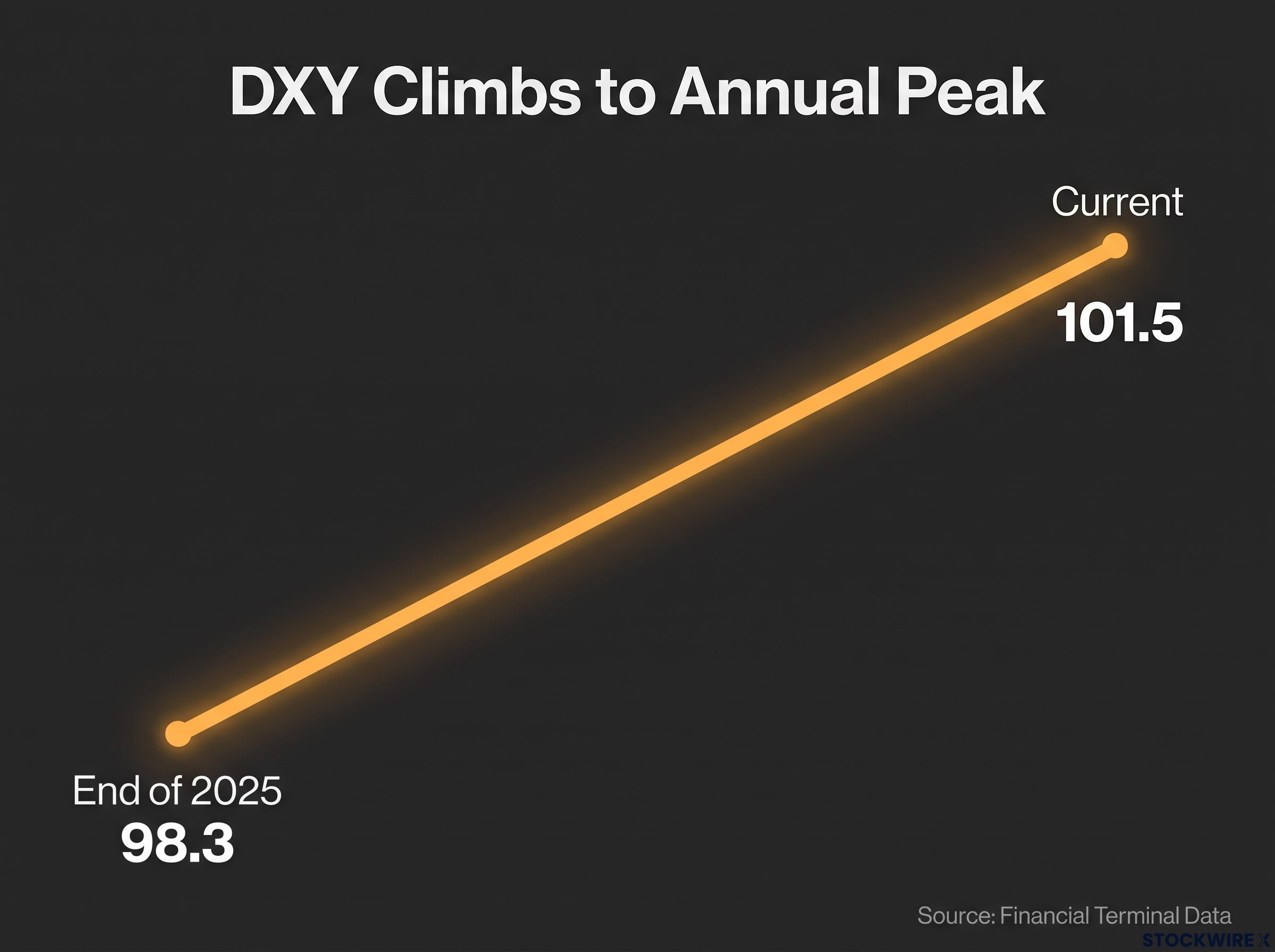
The dollar is sitting near its annual peak, with the DXY around 101.5, up from a weak 2025 close near 98.3. The repricing from cuts to hikes is still working through the market.
Here is what the data actually tells you: what Kashkari said, where the Fed’s collective stance sits right now, and what a structurally higher neutral rate means for USD positioning heading into this week’s data releases. This is the signal, stripped of the noise.
What Kashkari said at the CFR, and why the market registered it
Kashkari used the Council on Foreign Relations Q&A on 30 September 2026 to reinforce a position he has held for more than a year. Inflation hovering near 3% is still too high, he argued, and a robust economic expansion suggests policy may be less restrictive than the Fed previously assumed.
His three core points were clear:
- Inflation near 3% remains elevated and needs further restraint.
- Strong growth hints that current policy is closer to neutral than restrictive, pointing toward a higher neutral rate over an extended period.
- Any additional disinflation should come through limited tightening rather than aggressive rate increases.
Embedded in those remarks was forward guidance that gives the stance teeth: one more rate increase projected for the current year, and one further hike anticipated in 2027. The hawkishness showed up in the scoring.
FXS Speechtracker: 7.1 (baseline 6.2) Kashkari’s remarks scored roughly 15% above the historical average for Fed communications, placing this firmly in the hawkish end of the distribution.
Here is the read that matters for anyone positioned in USD. A hawkishness score 15% above baseline, landing on a day when the FXS Fed Sentiment Index barely moved, tells you this was a reinforcing signal rather than a course change. The index slipped just 0.42 points to 143.28, still comfortably above its 100-point neutral benchmark.
That distinction changes how you weight the speech. A genuine pivot would have shifted the index meaningfully. A restatement of an established bias nudges it. Kashkari’s remarks fall into the latter category, and they still provided upward support for the dollar on the day.
The practical takeaway: even a restatement carries directional weight when the USD is already near annual highs. You are not watching for new information so much as confirmation that the existing lean is intact.
When big ASX news breaks, our subscribers know first
From rate-cut expectations to hike probabilities: how the repricing unfolded
The higher-for-longer environment did not arrive overnight. It accumulated across the calendar, and Kashkari’s remarks are simply the latest data point on a trajectory that has been running for months.
The trajectory that brought futures to a 90% year-end hike probability did not start in September: the hawkish dissent in July, when Kashkari, Hammack, and Logan all voted for an immediate 25 basis point increase in a 9-3 split, was the first concrete signal that the committee’s centre of gravity was shifting.
Rewind to the start of 2026. Markets were confidently pricing rate cuts. The Fed held its target range at 3.50-3.75% through June, and by September the picture had inverted entirely: traders were pricing at least one additional hike.
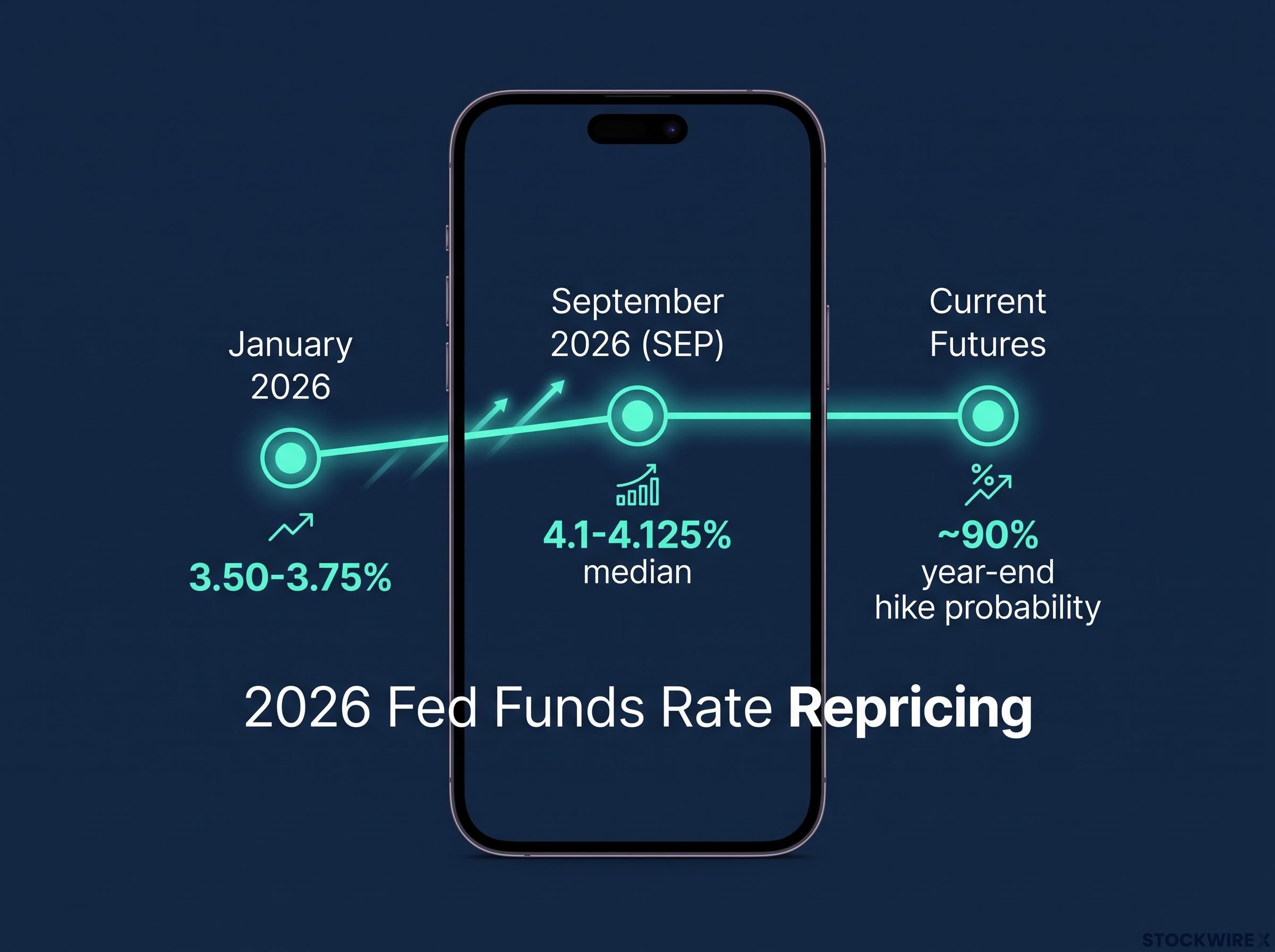
The September Summary of Economic Projections (SEP) made the shift official. According to Commerzbank’s 17 September 2026 analysis, the median end-2026 fed funds projection rose to 4.1-4.125%, with between 12 and 16 of the 18 FOMC participants expecting at least one more increase before year-end.
The Federal Reserve’s September SEP projections show the median end-2026 fed funds rate rising to 4.1-4.125%, with the dot plot reflecting a broad internal consensus that current policy remains below the level needed to fully extinguish residual inflation.
| Period | Fed Funds Range | Hike Probability | Market Positioning |
|---|---|---|---|
| January 2026 | 3.50-3.75% | Near zero (cuts priced) | Easing expected through the year |
| September 2026 (SEP) | 4.1-4.125% median | ~51% October | At least one more hike expected |
| Current futures | Toward 4.00-4.25% | ~90% year-end | Hawkish, data-dependent |
Per Reuters reporting on 15 September 2026, CME Group’s FedWatch tool placed the odds of a follow-up quarter-point hike by year-end at roughly 90%.
~90% year-end hike probability (CME FedWatch) Traders are approaching consensus that the Fed moves at least once more before December.
For USD watchers, that near-consensus is the signal. The rate support underpinning the dollar is not speculative positioning; it is priced into futures. Looking further out, markets are pricing one or two additional hikes in 2027, pointing toward a 4.25-4.50% target, according to the iShares Fed outlook published 17 September 2026.
That forward path sits neatly alongside Kashkari’s upward revision of the neutral rate, or r-star, to 3.1%, up 25 basis points from his prior estimate. The shift from cut expectations to hike probabilities across a single year is the structural story beneath the dollar’s climb. Knowing where the market sits in that arc helps you calibrate how much of the move is already in the price.
What a higher neutral rate means for the dollar from here
Kashkari’s r-star revision to 3.1% opens a genuine debate, and the two interpretations sit in direct tension.
- The near-neutral camp: If the neutral rate really is closer to 3.1%, then a fed funds rate in the mid-3s to low-4s is barely restrictive. That limits how much incremental USD support current policy can generate, because growth and risk appetite stay relatively supported.
- The genuinely-restrictive camp: Real rates still sit above the new neutral, the SEP leans hawkish, and the 90% year-end hike probability signals real policy restriction. That configuration should sustain yield differentials and keep the USD carry trade attractive.
Both views are defensible on the current data. The resolution will not come from declaring a winner; it will come from which specific numbers the Fed’s own releases confirm in the weeks ahead.
Real yield dynamics complicate the near-neutral versus genuinely-restrictive debate: when roughly 80% of the nominal yield surge is attributable to the real component rather than inflation expectations, the Fed’s policy rate sits above neutral in real terms even if the nominal gap looks modest, which is what sustains the USD carry trade.
Why the dollar’s upside may already be priced
Even in a higher-for-longer environment, there are structural brakes on USD strength. The Reuters FX survey from December 2025 found that strategists largely expected a weaker dollar in 2026 despite the rate repricing, citing US fiscal dynamics and continued global diversification away from the dollar.
The price action supports that caution. The DXY has already climbed from roughly 98.3 at the end of 2025 to around 101.5 now, which means a significant chunk of the repricing is baked in. The FXS Fed Sentiment Index at 143.28, well above its 100-point neutral line, confirms the restrictive lean, but a lean is not the same as a launchpad.
For USD-focused readers, the r-star debate is not academic. It determines whether today’s policy rate is a sustained tailwind for the dollar or merely holds it near fair value, and that difference decides how long the near-peak position can hold.
What to watch before the week’s data releases settle the debate
Kashkari’s remarks are now in the market. The FXS data has registered them. What happens next depends on the data flow arriving today and tomorrow, which makes this a live setup rather than a settled story.
Three variables will confirm or challenge the higher-for-longer thesis this week:
- Inflation readings relative to the 3% level Kashkari flagged. A print above that benchmark strengthens the hawkish case; a cooler reading complicates it.
- Labour market data that either supports the robust-expansion narrative or undercuts it. A softening labour picture would reopen the pivot debate.
- The Fed speaker calendar before the next FOMC window, where any additional commentary could shift the tone around Kashkari’s signal.
~51% October hike probability This is the pivot number for the week. It is close enough to a coin flip that a single data surprise can move it sharply.
The FXS Fed Sentiment Index telling detail is the modest 0.42-point decline to 143.28. That signals a market in calibrated-adjustment mode, not a conviction move. When the market is adjusting incrementally, incoming data carries outsized weight.
Here is why that matters for you. With the October hike probability sitting at 51%, a single strong inflation or employment print this week has a direct read-through to USD direction. That is a tighter feedback loop than most weeks offer, and the direction of the next move is genuinely undecided.
This article is for informational purposes only and should not be considered financial advice. Investors should conduct their own research and consult with financial professionals before making investment decisions. Past performance does not guarantee future results, and financial projections are subject to market conditions and various risk factors.
The dollar’s higher-for-longer position holds, for now
Pull the threads together and a coherent read emerges. The FXS scoring confirms a hawkish but reinforcing signal, the repricing arc from cuts to hikes is measurable and largely priced, and the r-star debate remains genuinely open. The higher-for-longer narrative is intact, but it is not yet a runaway conviction trade.
The constraints are worth respecting. The modest 0.42-point FXS decline, the Reuters survey’s structural caution on USD upside, and the unresolved r-star question all point to a dollar whose current level near 101.5 is a defensible position rather than the base for a sharp further rally.
The DXY technical levels that institutional analysts monitor, particularly the 20-day EMA near 99.71 and the RSI reading that was approaching but had not crossed the 70 exhaustion threshold in late September, help define where a conditional hold near 101.5 transitions into a failed breakout rather than a springboard.
Kashkari’s guidance of one more hike this year and another in 2027 gives the setup its structural anchor. His remarks provided a floor for the dollar on Wednesday. Whether that floor becomes a springboard or simply confirms what is already priced depends on the data arriving today and tomorrow.
Treat the USD near its annual peak, with a 51% October hike probability, as a conditional hold rather than a confirmed breakout. This week’s numbers still have work to do.