Uber’s $1B European Expansion Shrinks to Two Markets
14 mins ago

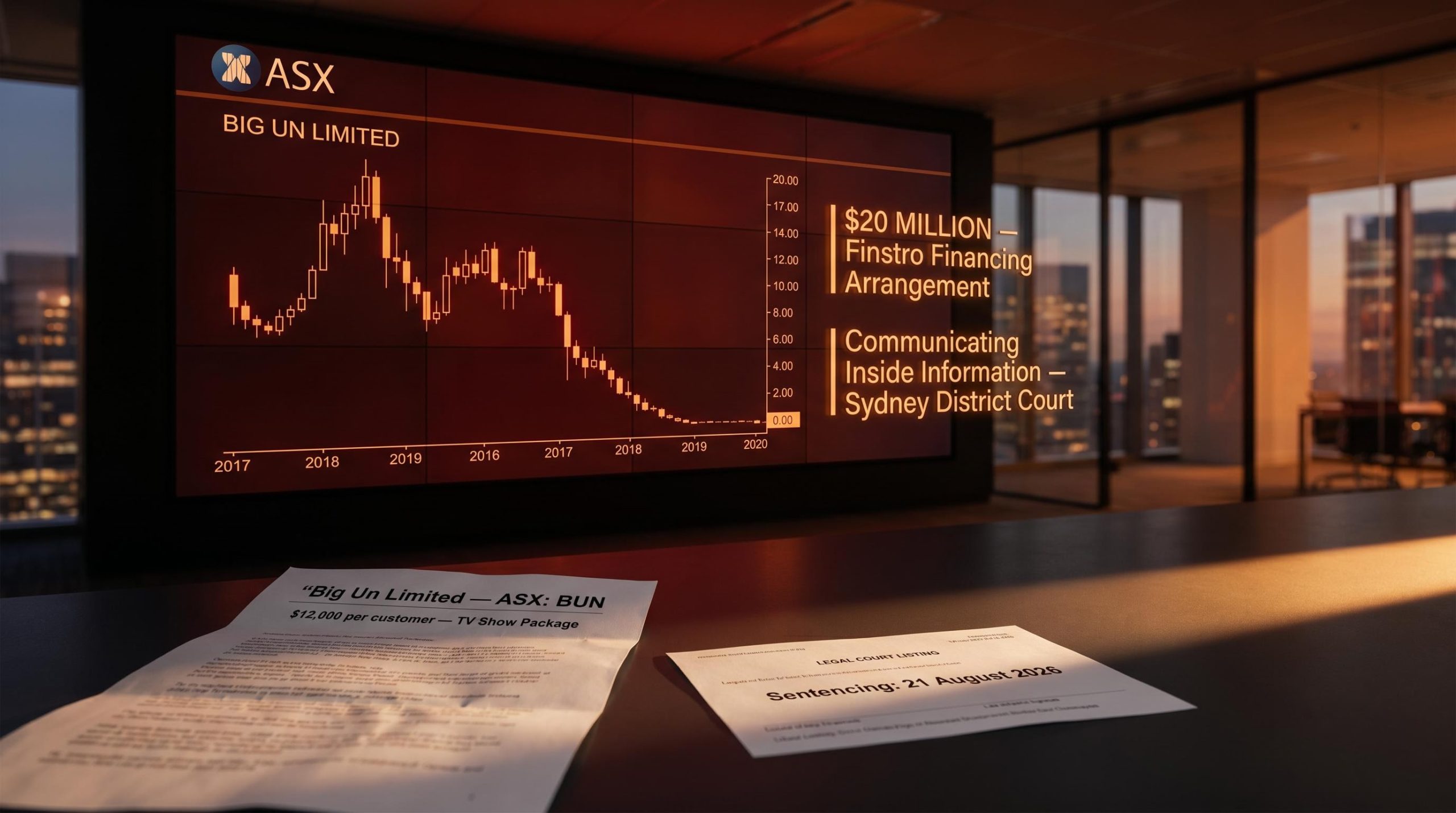
Richard Evans, the former CEO of collapsed ASX-listed technology company Big Un Limited, has entered a guilty plea to a single criminal charge of communicating inside information. Court proceedings in the Sydney District Court, announced by ASIC in April 2026, established that Evans shared confidential details about the company with a shareholder in January 2017 at a point when he had clear reason to expect that shareholder would use the information to trade.
The case closes one of the longest-running corporate misconduct investigations on the ASX. Nearly a decade separates the conduct from the scheduled sentencing hearing on 21 August 2026, a timeline that tells you something about the complexity of these prosecutions and about ASIC’s willingness to see them through regardless of how long they take or whether the company at the centre of them still exists.
ASIC’s enforcement posture on insider trading has hardened materially since late 2024, when the regulator established a dedicated specialist team and carried insider trading forward as a named priority into both 2025 and 2026, compressing the investigation-to-prosecution pipeline in ways that directly affect how long corporate misconduct from this era will take to reach a courtroom.
Here is what Evans actually disclosed, why that disclosure constitutes a criminal act under Australian law, and what the guilty plea means for how corporate officers should think about sharing sensitive company information. If you follow ASX governance or market integrity enforcement, this is the case to understand.
Evans entered his guilty plea to one count of communicating inside information, a criminal charge brought by the Commonwealth Director of Public Prosecutions (CDPP) following a referral from ASIC. The plea was announced via ASIC media release 26-069MR in April 2026.
The Big Un prosecution produced two distinct legal outcomes in early 2026: Evans pleaded guilty to communicating inside information, while former CFO Andrew Corner’s trial ended in a hung jury on 30 March 2026, leaving charges relating to the alleged sale of 1.7 million shares worth more than $5 million still unresolved.
With the guilty plea in place, the scheduled trial was stood down, and proceedings will now move straight to a sentencing hearing on 21 August 2026 in the Sydney District Court. Evans, formerly known as Richard Evertz, served as CEO of Big Un Limited, an ASX-listed technology and media company that became one of the market’s most dramatic collapses.
The key case facts:
The guilty plea removes any ambiguity about whether the conduct occurred. What remains is a question of consequences, not culpability, and the sentencing hearing will determine what those consequences look like.
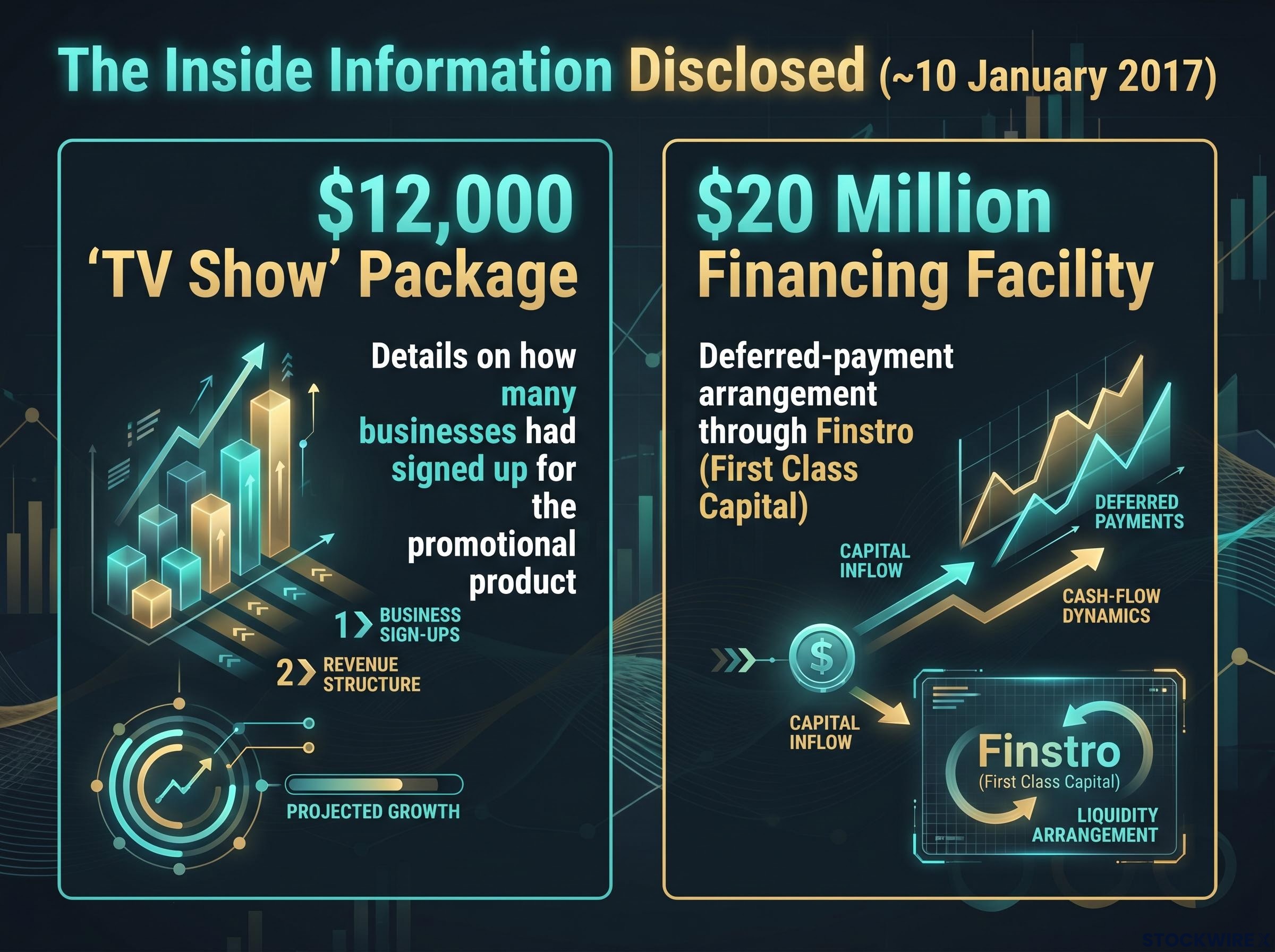
The inside information had two components, and together they gave one shareholder a view of Big Un’s commercial position that the rest of the market did not have.
The disclosures were made to a Big Un shareholder at around the 10 January 2017 mark, with Evans conveying the following:
The legal standard applied is significant. ASIC’s position is that Evans carried a reasonable obligation to recognise the recipient would in all likelihood deal in Big Un securities on the strength of what he was told.
The legal threshold: Evans “ought reasonably to have known” the recipient would likely trade Big Un securities based on the information disclosed. This is the standard that defines the criminal exposure in communication-based insider trading cases.
A headline customer uptake figure combined with details of an undisclosed $20 million financing arrangement gave a single shareholder a picture of Big Un’s revenue structure and cash-flow dynamics that no one else in the market possessed. That is precisely the informational asymmetry insider trading law exists to prevent. At the time, Big Un was one of the ASX’s hottest performers, which means any material insight into its commercial scaffolding carried outsized trading value.
Most people understand that trading on inside information is illegal. What is less widely appreciated is that you do not have to trade a single share to commit an insider trading offence in Australia. The act of telling someone is enough.
Australian insider trading law distinguishes between two limbs of liability: the trading limb, which attaches to the person who deals in securities on the strength of inside information, and the communication limb, which attaches to the person who passes that information to someone else who is likely to trade on it.
Under Australian law, “inside information” must meet two criteria:
The information Evans disclosed, customer uptake numbers and a $20 million financing facility, met both tests. Neither had been announced to the ASX. Both would have been expected to affect Big Un’s share price, particularly at a time when the company’s rapid growth was driving investor enthusiasm.
The offence is classified as an indictable criminal offence and was prosecuted by the CDPP, not pursued as a civil penalty by ASIC. That distinction matters: this is a criminal prosecution with the full weight of the criminal justice system behind it.
Evans did not need to buy or sell Big Un shares himself to face criminal charges. The communication offence attaches liability to the person who shares the information, provided they knew or ought reasonably to have known that the recipient would likely trade on it.
The standard is foreseeability, not personal profit. Evans passed the information to a Big Un shareholder, not a random acquaintance with no connection to the market. When you hand market-moving intelligence to someone who holds shares in that company, the likelihood of trading is straightforward to establish.
ASIC Regulatory Guide 223 addresses insider trading and the obligations of those who possess market-sensitive information, providing the formal regulatory framework that underpins how the foreseeability standard for communication offences is applied in practice.
For any corporate officer, director, or executive who has ever discussed company news informally with a shareholder or investor, this is the part of the case that should concentrate the mind. The criminal liability sits with the act of sharing, not the act of profiting.
Big Un marketed online video and promotional content to small and medium-sized businesses, and during 2017 it was among the highest-performing stocks on the ASX. The share price climbed rapidly as investor enthusiasm built around its growth story.
The $20 million deferred-payment arrangement with First Class Capital and its Finstro product sat beneath that growth story. It allowed customers to take on the $12,000 package without paying upfront, and prosecutors view the facility as having masked significant cash-flow issues that the market could not see from the outside.
Once the financing arrangement became public, the company unravelled quickly.
| Date | Event | Market signal | Outcome |
|---|---|---|---|
| ~10 January 2017 | Evans communicates inside information to a shareholder | Not visible to market | Criminal conduct now confirmed by guilty plea |
| February 2018 | Big Un shares suspended from trading | Financing arrangement with First Class Capital disclosed | Investor confidence collapsed |
| August 2018 | Voluntary administration entered | Delisted from ASX | Company removed from public markets |
| July 2026 | Remains in liquidation | No prospect of recovery | Legal proceedings continue independently |
The collapse timeline makes the nature of the inside information Evans disclosed viscerally clear. This was not peripheral detail. It was intelligence about the financial scaffolding holding Big Un’s revenue story together, the kind of information whose public disclosure triggered the company’s implosion.
Communicating inside information is an indictable offence under Australian market misconduct laws. It attracts both substantial fines and potential imprisonment.
The sentencing judge will weigh several factors at the 21 August 2026 hearing:
Sentencing outcomes in insider trading cases provide the clearest available benchmark for what 21 August 2026 might produce; the Rodney Forrest matter, in which the Full Federal Court confirmed general deterrence as the primary sentencing consideration and upheld a term of five years and three months, represents the most directly comparable custodial precedent currently on record.
This is a criminal prosecution by the CDPP, not a civil ASIC action. The distinction matters. Civil penalties typically involve fines and bans. Criminal prosecution carries the possibility of imprisonment.
Following the hearing, ASIC and the CDPP are expected to issue public statements summarising the sentence imposed and any judicial remarks relevant to market integrity.
For anyone in a corporate officer or executive role, the combination of criminal prosecution and the possibility of imprisonment should clarify the stakes. Selective disclosure of inside information carries consequences that go well beyond regulatory fines or director bans. The sentencing hearing will set a visible public benchmark for how seriously this category of offence is treated.
This article is for informational purposes only and should not be considered financial advice. Investors should conduct their own research and consult with financial professionals before making investment decisions.
The guilty plea is entered. The scheduled trial has been stood down and a sentencing date of 21 August 2026 is now confirmed. The legal question of whether Evans communicated inside information is settled; only the sentence remains.
The core takeaway from this case is direct: Australian insider trading law is as concerned with who hears the information as with who trades on it. A CEO who shares material details with a shareholder, knowing that shareholder is likely to act on them, has committed a criminal offence regardless of whether the CEO personally traded.
ASIC and CDPP statements following the 21 August hearing will give the market its final signal on the consequences. That hearing is now the next date that matters.
—
Communicating inside information is a criminal offence that attaches liability to a person who shares material, non-public information with someone they knew or ought reasonably to have known would likely trade on it. You do not have to buy or sell a single share yourself to be guilty; the act of sharing the information is sufficient.
Evans disclosed two things to a Big Un shareholder around 10 January 2017: the number of businesses that had signed up to the company's $12,000 promotional TV Show package, and the existence of a $20 million deferred-payment financing arrangement through Finstro and First Class Capital, neither of which had been announced to the ASX.
Communicating inside information is an indictable criminal offence in Australia and carries potential fines and imprisonment. The Rodney Forrest precedent, in which the Full Federal Court upheld a five-year, three-month custodial term and confirmed general deterrence as the primary sentencing consideration, is the most directly comparable benchmark currently on record.
The $20 million financing arrangement Evans disclosed was precisely the financial scaffolding holding Big Un's revenue story together. When that arrangement became public in February 2018, trading in Big Un shares was suspended, investor confidence collapsed, and the company entered voluntary administration in August 2018 before being delisted from the ASX.
Andrew Corner's trial, relating to the alleged sale of 1.7 million shares worth more than $5 million, ended in a hung jury on 30 March 2026, meaning those charges remain unresolved while Evans proceeds to sentencing.