Crude Oil Crashes 9.4% to $82 as Iran Risk Premium Evaporates

Key Takeaways
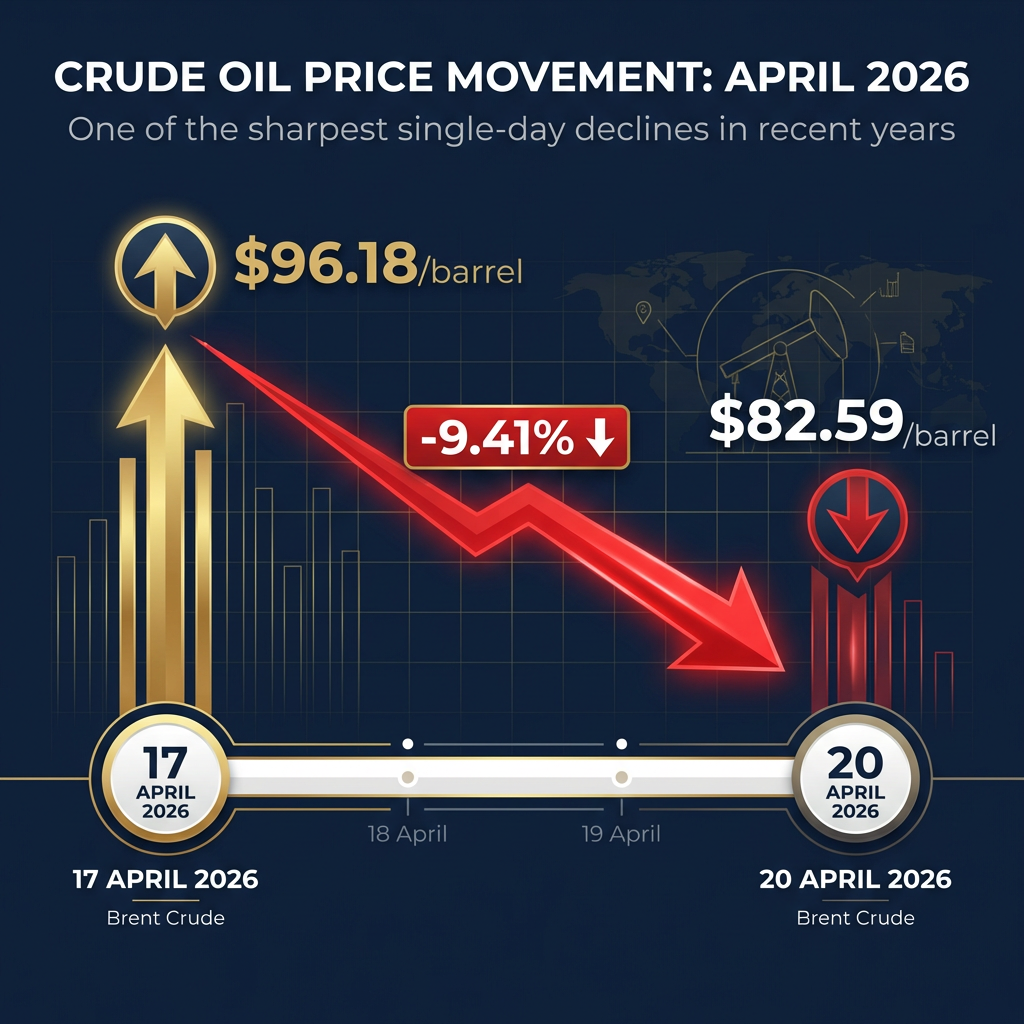
- Crude oil crashed 9.41% to $82.59 per barrel on 20 April 2026, one of the sharpest single-day declines in recent years, reversing a run that had pushed Brent to $96.18 just three days earlier.
- The selloff was driven by traders removing the supply disruption risk premium linked to Iran's Strait of Hormuz restrictions, as expectations for acute near-term disruption declined rather than worsened.
- The crude oil price drop triggered a coordinated risk-off move across asset classes, with US equity futures, gold, silver, and Bitcoin all declining simultaneously on 20 April.
- Despite the sharp decline, crude prices remain approximately $28 higher than April 2025 levels, and energy companies face significant planning challenges from rapid price swings affecting hedging and capital expenditure decisions.
- Key catalysts to monitor include further developments around the Strait of Hormuz, any OPEC+ production response, and global demand signals from major economies.
Crude oil crashed 9.41% to $82.59 per barrel on 20 April 2026, erasing a week of gains as markets recalibrated geopolitical risk around Iran and the Strait of Hormuz. The selloff marked one of the sharpest single-day declines in recent years, reversing sentiment that had pushed Brent crude to $96.18 just three days earlier on 17 April.
The plunge came as traders removed the supply disruption premium built into prices following Iran’s restrictions on Strait of Hormuz access and concerns over a ceasefire nearing expiration. US equity futures fell in tandem, signalling diminished expectations for near-term de-escalation and prompting a broader reassessment of risk across asset classes.
What Drives Sudden Oil Price Movements
Oil prices reflect not just current supply and demand but also expectations about future conditions. When geopolitical tensions rise, traders add a risk premium, pricing in potential supply disruptions. When those tensions appear to ease or shift, that premium can evaporate rapidly, triggering sharp selloffs.
Several primary factors influence oil price volatility:
- Geopolitical developments in oil-producing regions or near strategic shipping routes
- OPEC+ production decisions that control a significant portion of global supply
- Global demand signals from major economies including China, the US, and Europe
- Speculative positioning as traders react to news and adjust futures contracts
Markets price forward scenarios, not just present realities. A single shift in geopolitical expectations can trigger billion-dollar revaluations across energy portfolios in hours.
When big ASX news breaks, our subscribers know first
Iran and the Strait of Hormuz: The Geopolitical Catalyst
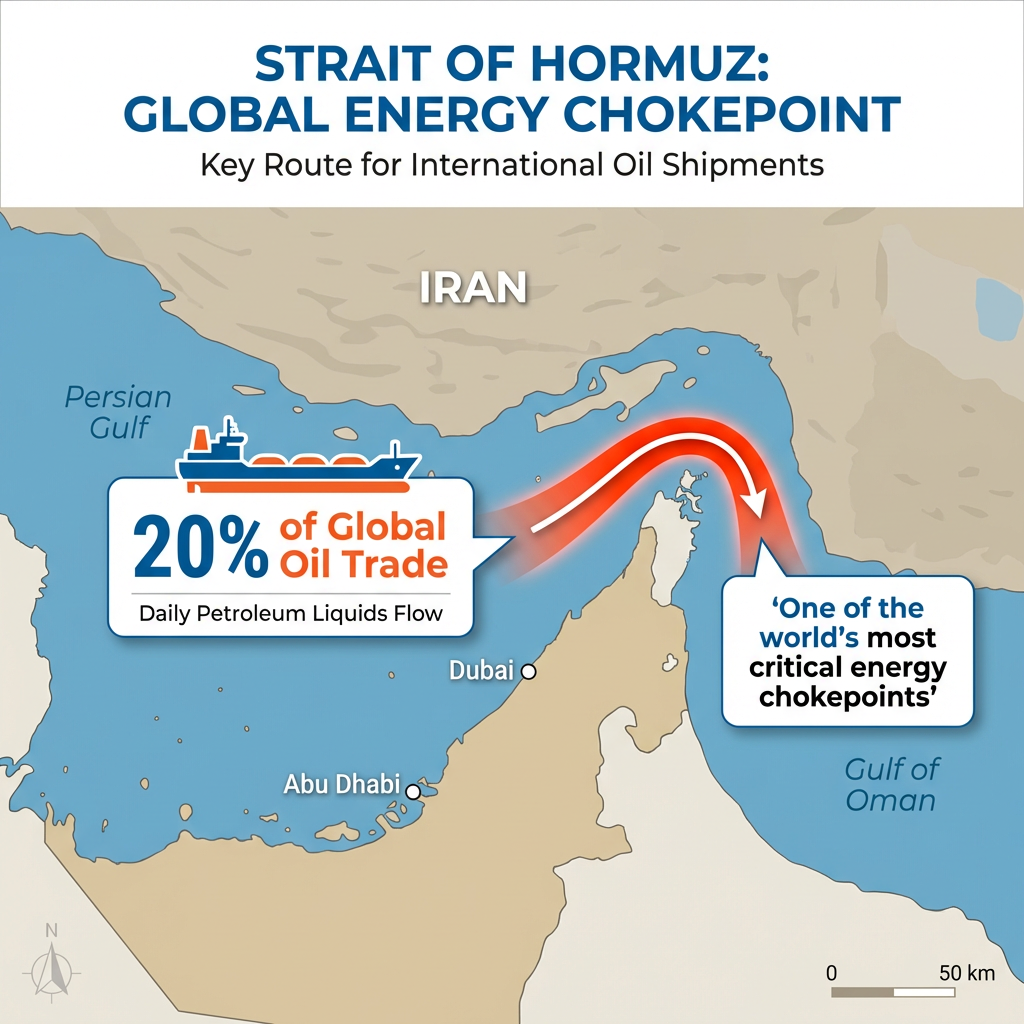
Oil prices had climbed earlier in April following Iran’s restriction of Strait of Hormuz access, a critical shipping route for roughly 20% of global oil trade. A ceasefire nearing expiration added supply disruption fears, pushing Brent crude above $96 per barrel.
The Strait of Hormuz crisis timeline shows Iran re-closed the waterway on 18 April 2026 after brief reopening signals, extending the standoff into its seventh week and complicating market attempts to price a resolution path.
The reversal came as US stock futures began falling and expectations for Iran de-escalation diminished. Markets are now pricing in a scenario where the immediate crisis may resolve differently than feared, removing the acute supply disruption premium rather than indicating worsening conditions. The shift suggests traders believe the risk of sustained Hormuz disruption has declined, at least for the near term.
The Strait of Hormuz remains one of the world’s most critical energy chokepoints, and any disruption there has immediate global economic consequences.
Broader Market Reaction Signals Risk-Off Sentiment
The oil crash did not occur in isolation. Broad-based declines across US equity futures, precious metals, and cryptocurrencies suggested a coordinated risk-off move across markets. Small-cap Russell 2000 futures showed the steepest equity decline at 1.17%, outpacing broader indices.
The equity market resilience during the run-up to $96 crude created the backdrop for 20 April’s coordinated selloff, as investors who had maintained risk exposure despite geopolitical escalation reassessed positioning when the oil premium reversed rather than extended.
| Asset | Level | Change |
|---|---|---|
| S&P 500 Futures | 6,988.50 | -0.77% |
| Dow Futures | 42,185.00 | -0.95% |
| Nasdaq Futures | 20,145.25 | -0.63% |
| Russell 2000 Futures | 2,245.30 | -1.17% |
| Gold Futures | $4,767.40 | -2.30% |
| Silver Futures | $32.15 | -3.69% |
| Bitcoin | $68,420 | -2.43% |
Precious metals also declined, with gold futures falling 2.30% to $4,767.40 and silver dropping 3.69%. Even cryptocurrencies sold off, with Bitcoin declining 2.43%. The VIX volatility index declined 2.56% to 17.48, suggesting the market may be pricing reduced near-term uncertainty despite the selloff.
The next major ASX story will hit our subscribers first
Implications for Consumers and the Energy Sector
Sharp crude oil declines typically signal eventual relief at the gas pump, though the translation to consumer prices takes time. Energy Secretary Wright recently indicated that gasoline prices might not fall below $3 per gallon until next year, tempering expectations for immediate consumer benefit.
Despite this decline, crude prices remain elevated on a year-over-year basis, approximately $28 higher than April 2025 levels. For energy companies, sharp price volatility creates planning challenges and may affect capital expenditure decisions on exploration and production. The swing from $96 to $82 in three days complicates forward hedging strategies and cash flow projections.
The $96-to-$82 swing in three days illustrates why positioning strategies across energy equities now differentiate between diversified majors with hedging programs and leveraged producers whose cash flows move point-for-point with spot prices.
What to Watch in the Days Ahead
The coming days will reveal whether this represents a temporary correction or the beginning of a more sustained price decline. Markets will closely monitor developments around Iran and the Strait of Hormuz for signals of further escalation or resolution.
Key factors to watch:
- Iran developments and any resolution or escalation of Strait of Hormuz restrictions
- OPEC+ response to sharp price movements, including potential production adjustments
- Global demand indicators from major economies signalling economic health
- Broader market sentiment as reflected in equity futures and safe-haven flows
Volatility is likely to persist as long as geopolitical uncertainty remains elevated and markets continue repricing supply disruption scenarios.
This article is for informational purposes only and should not be considered financial advice. Investors should conduct their own research and consult with financial professionals before making investment decisions.
Frequently Asked Questions
Why did the crude oil price drop so sharply on 20 April 2026?
The crude oil price drop of 9.41% on 20 April 2026 occurred because traders removed the supply disruption risk premium that had been priced in following Iran's restrictions on Strait of Hormuz access, as expectations for near-term de-escalation diminished and markets repriced the probability of sustained disruption.
What is a geopolitical risk premium in oil prices?
A geopolitical risk premium is the additional cost built into oil prices when traders anticipate potential supply disruptions from events such as conflicts, sanctions, or blockades of critical shipping routes; when those risks appear to ease, the premium can evaporate quickly, causing sharp price declines.
How does the Strait of Hormuz affect global oil prices?
The Strait of Hormuz is one of the world's most critical energy chokepoints, handling roughly 20% of global oil trade, so any restriction or closure by Iran or other regional actors can immediately trigger significant price spikes in global crude markets.
Which markets were affected by the oil price crash on 20 April 2026?
The oil crash triggered a broad risk-off move across multiple asset classes, with US equity futures falling (Russell 2000 down 1.17%, S&P 500 futures down 0.77%), gold dropping 2.30%, silver declining 3.69%, and Bitcoin falling 2.43%.
What should energy investors watch following a sudden crude oil price drop?
Investors should monitor developments around Iran and the Strait of Hormuz for further escalation or resolution, track any OPEC+ production response, and assess whether diversified energy majors with hedging programs offer more stability than leveraged producers whose cash flows move directly with spot prices.