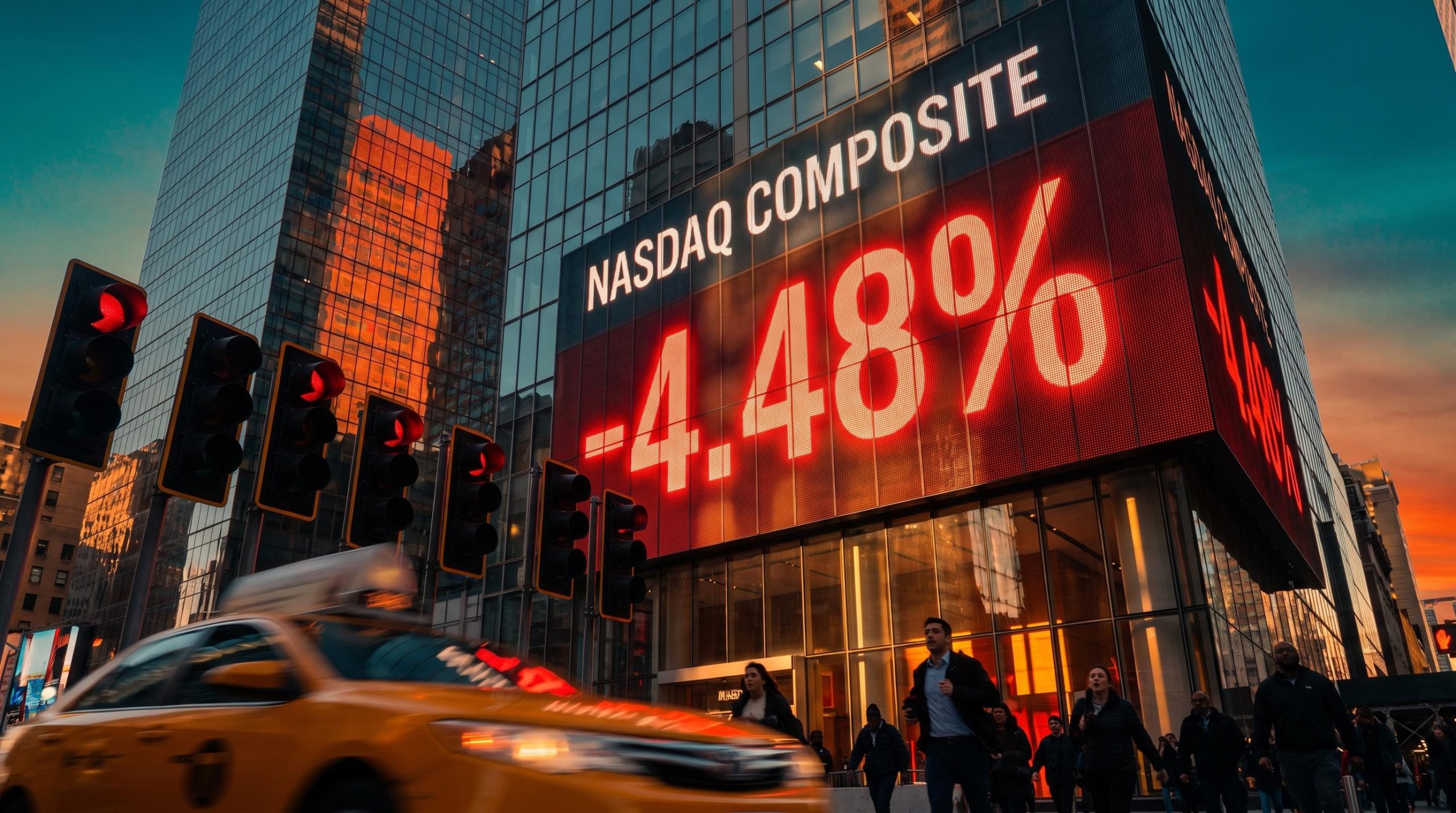
The Nasdaq Composite fell 4.48% this week to close at 26,140.03 on Friday 16 October 2026, its worst week since late June. Over the same five days, the Dow Jones Industrial Average gained 0.67% as money rotated out of high-growth technology and into steadier names.
Three pressures hit at once: fears about how AI infrastructure is funded and how much competition it faces, hotter-than-expected inflation, and climbing oil prices. The Philadelphia Semiconductor Index (SOX), a benchmark that tracks the largest chipmakers, dropped 11.4% over the week.
If you hold a tech-heavy portfolio, this Nasdaq weekly selloff matters for one reason in particular. It tested the core assumptions behind the AI trade: that chip profits stay high, that borrowing stays cheap, and that interest rates stop rising.
Here is what drove the week, which of those assumptions came under the most strain, and what to watch before the Federal Reserve’s 27-28 October meeting.
Why did chip and AI stocks fall so hard this week?
The damage was concentrated. The SOX closed Friday at 11,137.29, down 3.83% on the day and 11.4% for the week, its worst weekly result since early April 2025. Measured from its last up day on 6 October, the index has now fallen 14.2%.
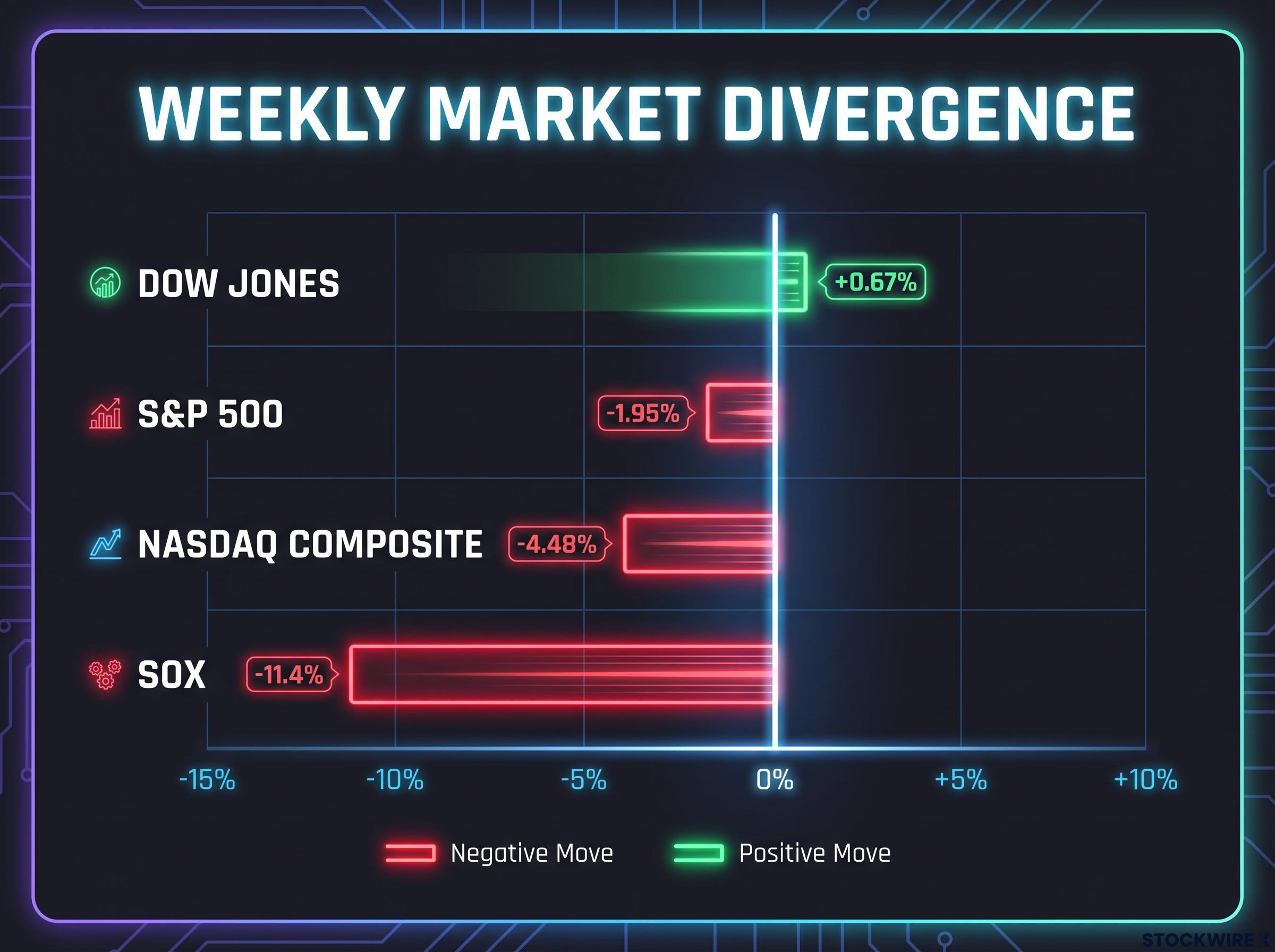
| Index | Friday close | Friday move | Weekly move |
|---|---|---|---|
| S&P 500 | 7,659.44 | About -1.1% | -1.95% |
| Nasdaq Composite | 26,140.03 | About -2.1% | -4.48% |
| Dow Jones | 52,002.41 | About -0.3% | +0.67% |
| SOX | 11,137.29 | -3.83% | -11.4% |
Memory makers took the heaviest losses. Micron Technology shed 14.6%, SK Hynix lost 24.3% and Samsung Electronics gave up 17.8%. The weakness spread beyond chips, with Tesla finishing Friday about 2.1% lower.
Two separate causes sat behind those numbers. One concerned profits; the other concerned funding.
The CXMT threat to memory pricing
The profit worry came from China. ChangXin Memory Technologies (CXMT) said it had made progress on a denser DRAM design known as 4F², and plans a server-memory product built on it by the end of 2026. DRAM is the short-term working memory used in servers and computers. An HSBC note cited by CNBC put CXMT’s share of global DRAM output at about 10%, up from roughly 4% a year earlier.
The market reaction began on 12 October, when the 4F² DRAM design was presented at a conference without specifications or qualification results, leaving investors to price a signal rather than a shipping product.
The logic runs in three steps: more supply, softer prices, thinner margins. That last step matters because Micron’s adjusted gross margin has climbed to about 87%, against 45.7% a year ago, a level that only makes sense while memory remains scarce.
The threat is still largely anticipatory. One report put CXMT’s cost per bit more than 30% above its larger rivals, and bulls treat the news as an execution risk rather than a structural break. Still, if scarcity fades, the profits that have carried AI-linked earnings this year could shrink quickly, and that flows straight into any index fund heavy in these names.
When big ASX news breaks, our subscribers know first
How worried should investors be about AI debt and valuations?
The funding worry centred on neoclouds, companies that rent out graphics-chip computing power for training and running AI models. CoreWeave and Nebius each fell 25.2% this week. The credit market told a harsher story than the share price.
- The 2032 bond yield rose to about 15.77%
- Five-year credit default swaps (insurance against default) widened to about 1,140 basis points
- Unsecured notes traded near 79.15 cents on the dollar
- Total debt stands above $51 billion
- Bonds originally issued below 10% now trade around 15%
Credit stress, by the numbers Insuring CoreWeave’s debt now costs about 11.4% a year, a level that signals far more strain than an ordinary share-price pullback.
That matters because the neocloud model is a loop: customers commit, capacity gets built, revenue arrives, and that revenue supports more borrowing. Higher yields raise the cost of every new data centre. The message for you is that the cost of growth, not just demand for it, now decides whether these companies deliver the earnings investors expect.
The neocloud model also illustrates the circular financing loops that the Bank for International Settlements has flagged, where internally recognised revenue can mask true independent end-user demand.
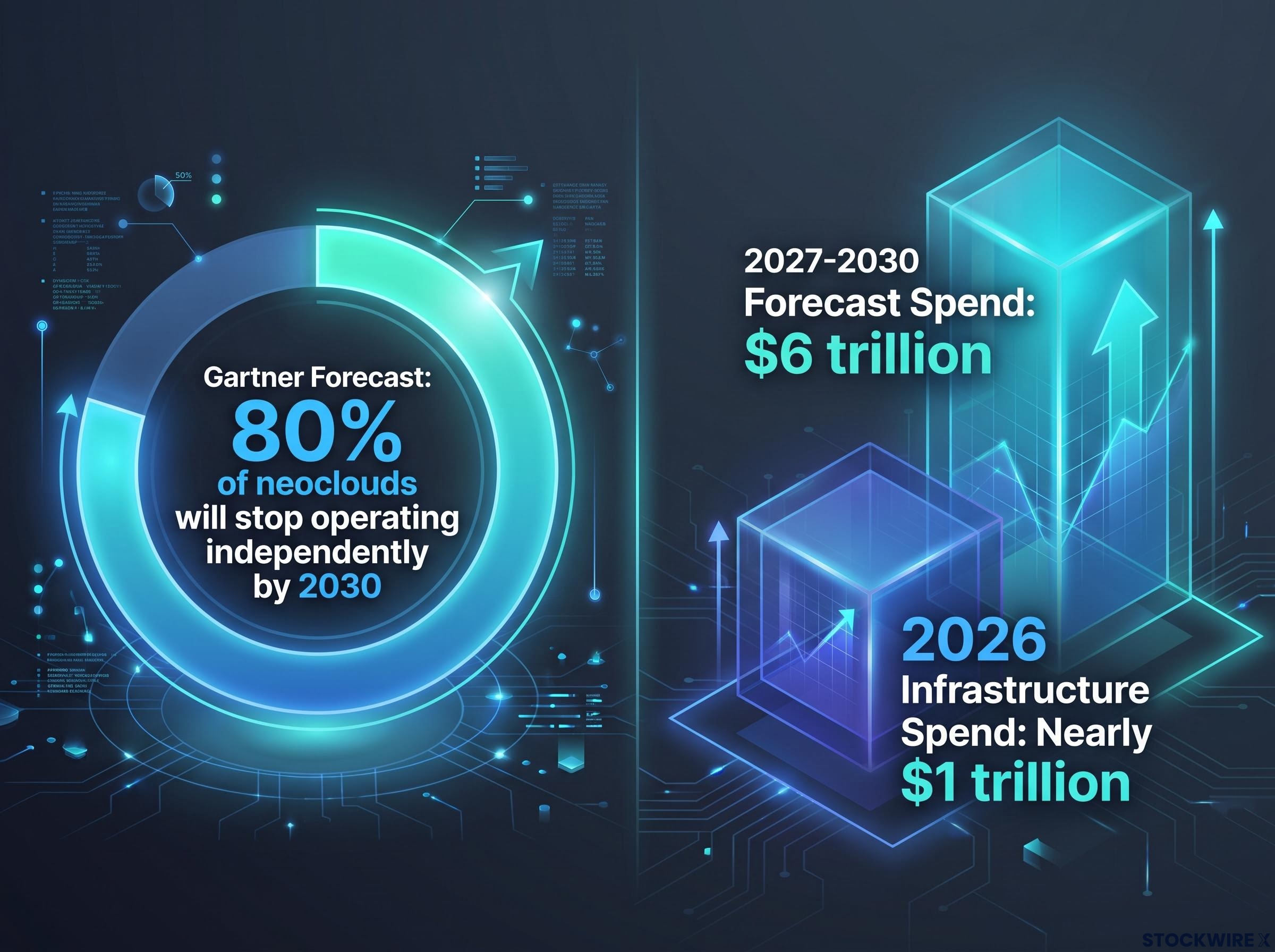
Gartner added pressure, forecasting that 80% of neoclouds will stop operating independently by 2030. Gartner analyst Will Sommer expects AI providers to spend nearly $1 trillion on infrastructure in 2026, with another $6 trillion forecast for 2027-2030.
Anthropic and the spending debate
Reuters reported that some Anthropic investors trimmed valuation hopes for a possible November IPO to about $1.5 trillion, from $2 trillion, following the company’s 14 October investor day. Anthropic reportedly told investors third-quarter revenue rose 45% to $16.8 billion, a slower pace than the prior quarter.
Nvidia CEO Jensen Huang, whose company is CoreWeave’s second-largest shareholder, voiced confidence and said no backstop was needed. Whether he is right remains the open question.
Did hot inflation and Warsh’s remarks change the Fed outlook?
The jolt came midweek. September’s consumer price index (CPI) rose 0.6% for the month and 3.7% year on year, while core CPI, which strips out food and energy, rose 0.3% and 2.6%. Producer prices (PPI) jumped 1.3% for the month and 6.3% annually; core PPI figures were not available.
| Event | Hike probability | Prior reading | Source |
|---|---|---|---|
| After CPI | 51.5% | 23.8% | CME FedWatch |
| After PPI | 33.8% | 29.3% | CME FedWatch, single report |
| After Warsh remarks | About 17% | Nearly 28% | Market report, latest available |
Sources differ on these readings, which is itself telling. Fed Chair Kevin Warsh, speaking in Bangkok on Friday, said he did not “prejudge” decisions, gave no signal on October and noted the Fed removed some accommodation in September. Deutsche Bank’s Jim Reid said Warsh declined to push back on expectations and sounded upbeat on AI productivity.
Fed hike probability has swung sharply on single speeches and data prints this autumn, which helps explain why the readings above differ by source and moved so far in a single week.
- Hawkish case: hot CPI and PPI, with producer prices hinting at further pass-through to consumers
- Caveats: energy drove the readings, core CPI was a more moderate 0.3%, and the Fed may look through a supply shock
A hike would lift financing costs and discount rates for the same AI stocks already under pressure. That makes the 27-28 October decision a direct risk to your tech exposure, with no clear call yet.
What is driving oil higher, and what comes next for earnings season?
Oil fed the inflation scare. One market report had Brent up 4.7% and WTI up 10.7% for the week, while Reuters showed intraday prices of $109.34 and $100.67; figures vary by cutoff. Reuters put Strait of Hormuz flows at about 11.62 million barrels per day, roughly 68% of the 17.15 million baseline, though another source described Middle East flows as near pre-war levels.
Iranian attacks on ships, Houthi fighting near the Red Sea and a US inventory draw added fuel. Separately, Donald Trump announced a diesel supply deal with Vladimir Putin, Ukraine vowed to resume strikes on Russian energy sites, and 18 US Representatives introduced a bill to block the deal.
The peak earnings growth worry
Michael O’Rourke of Jones Trading said the market fears 2026 may mark peak earnings growth, with Nvidia, Micron and Google expected to generate about a third of this year’s growth. The concern is slowing growth, not falling earnings. He added that hot inflation points to higher-for-longer rates and defensive repositioning, visible in Alcoa’s 2.6% gain and Truist Financial’s rise on earnings beats.
With growth that concentrated, a stumble at a few companies could weigh on the whole market, so this Q3 season matters more for your portfolio than most. Precedents such as the January 2025 DeepSeek shock show how quickly AI assumptions can be repriced.
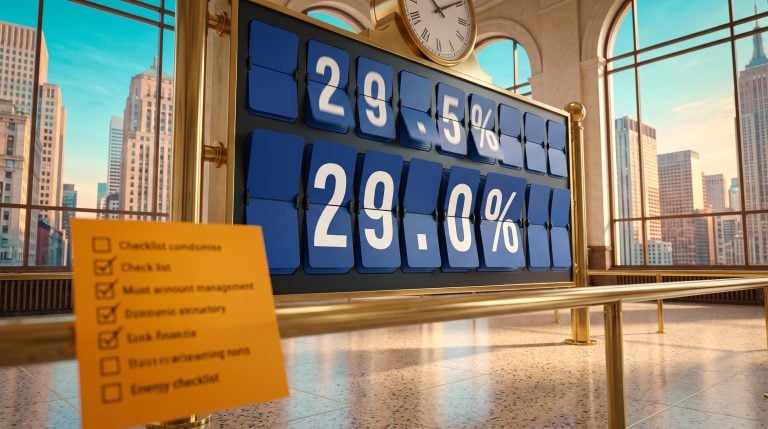
The Q3 earnings season carries extra weight because FactSet’s S&P 500 profit growth estimate has already slipped to 29.0%, and guidance and capex plans may move shares more than headline beats.
- Q3 results from AI-linked chip names
- CoreWeave bond yields and credit spreads
- Oil prices and Hormuz flows
- The 27-28 October FOMC decision
What to watch before the October 27-28 FOMC meeting
This week, three separate stresses converged on one trade: Chinese competition in memory, credit strain at leveraged AI builders, and inflation reviving the prospect of a rate hike. None has resolved. The question is which proves most durable.
Three markers will help answer it. Q3 reports from Nvidia, Micron and Google will show whether memory pricing and AI demand are holding. CoreWeave’s bond levels will reveal whether funding pressure is easing or spreading. Oil and the Fed’s decision will determine whether rates add another layer of pressure.
This article is for informational purposes only and should not be considered financial advice. Investors should conduct their own research and consult with financial professionals before making investment decisions. Past performance does not guarantee future results. Financial projections are subject to market conditions and various risk factors.