A few million dollars, placed into a venture fund more than 15 years ago, quietly compounded into a position worth over $2 billion. When SpaceX went public in June 2026 in the largest IPO in U.S. history, the University of North Carolina’s endowment did not simply enjoy a good quarter.
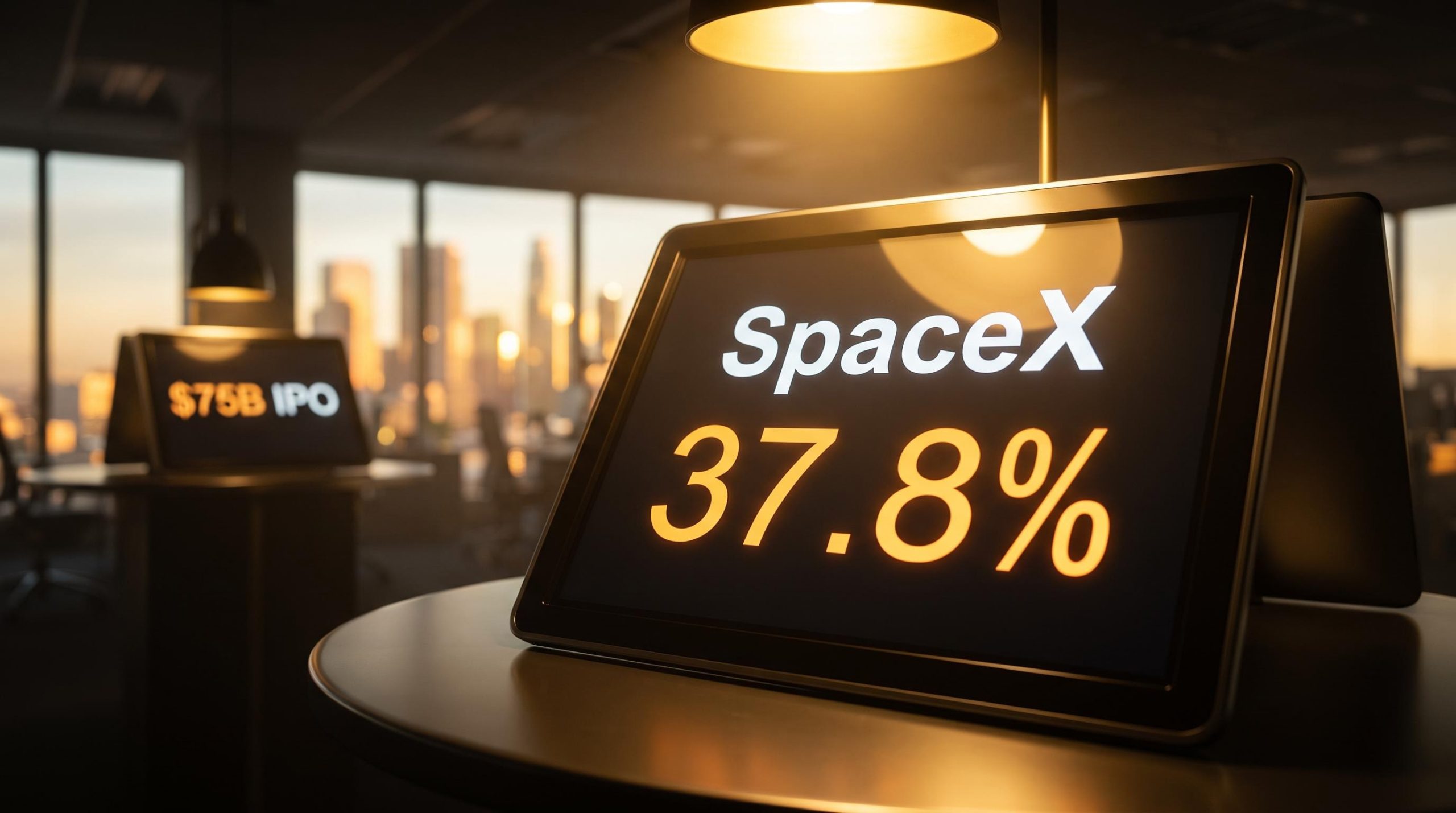
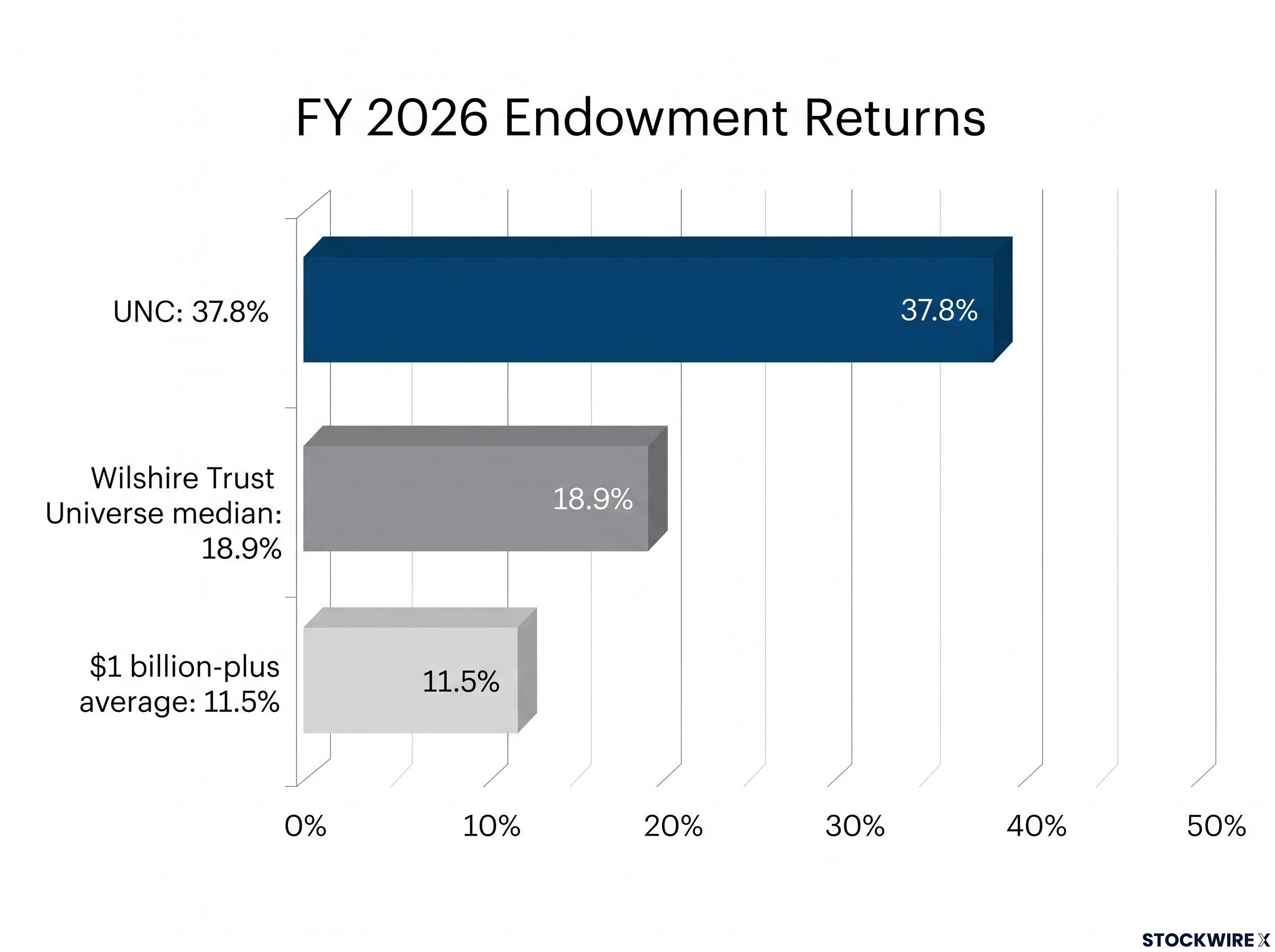
It reported a 37.8% return for the fiscal year ending 30 June 2026, nearly double the 18.9% median for endowments of comparable size and more than three times the roughly 11.5% average across the broader $1 billion-plus endowment universe.
The number raises an obvious question: how did a public university in North Carolina end up holding a multi-billion-dollar stake in one of the most valuable private companies ever to list? The answer is not luck. It is a specific investment structure, a very long holding period, and a tolerance for illiquidity that most institutions talk about but rarely sustain.
Understanding how UNC got there also reveals what other universities with early stakes in private AI companies like OpenAI and Anthropic may be positioned to experience, and what stands between an early venture bet and a once-in-a-generation return.
Here is how the mechanics of this endowment investment outcome actually worked, from the fund vehicle UNC used to enter SpaceX to the concentration risk of holding nearly a tenth of a $17 billion portfolio in a single private company. This also maps what the result means for the wider endowment picture, and whether institutions without a SpaceX-scale win can take anything actionable from it.
The investment UNC made more than 15 years before that nobody talked about until 2026
UNC never bought SpaceX shares directly. That is the first thing to understand, and it changes how you read everything that followed.
Instead, UNC Management Company entered as a limited partner in Founders Fund, the venture capital firm founded by Peter Thiel in 2005. A limited partner commits money to a fund and lets the fund’s managers choose and hold the investments. Through Founders Fund’s own stake, UNC gained indirect exposure to SpaceX.
The initial commitment was small. UNC put in only a few million dollars, more than 15 years before the FY 2026 result landed. At the time, it was one line item among many in a portfolio that would grow to nearly $17 billion in assets by 30 June 2026.
Each decision looked unremarkable on its own. A modest commitment to a respected venture manager. A frontier space company that had not yet proven its economics. A holding period measured in years, then in more than a decade.
Then SpaceX became one of the most valuable companies on the planet, and the small line item became a governance problem in its own right.
How the exit unfolded
Ahead of the public debut, UNC did not hold on for the full ride. Sources cited by Bloomberg indicate it sold approximately $1 billion of SpaceX shares before the IPO, trimming a position that had grown outsized relative to the rest of the portfolio.
That pre-IPO sale is worth pausing on. Selling into a private secondary market before a listing is how endowments manage position sizing when a single holding has swelled beyond what any prudent policy would target, taking gains off the table before public-market volatility can touch them.
Even after that sale, UNC Management Company retained SpaceX equity valued at more than $1 billion once the shares listed. The windfall was not one transaction; it was a staged exit that left the endowment with continued upside.
The IPO itself set records. The figures below tell the scale of the event UNC’s stake was riding.
The SpaceX IPO valuation carried its own analytical complexity long before the first share traded, with a 250x EBITDA multiple at the $2 trillion mark pricing in decades of future growth and prompting multiple analyst assessments flagging approximately 30% overvaluation risk.
- IPO price: $135.00 per share for 555,555,555 Class A common shares
- Total raise: $75 billion, described by Reuters as the biggest-ever U.S. initial public offering
- First-day open: $150.00, with an intraday high of $168.75
- First-day close: $160.95, a gain of roughly 19% on the IPO price
- First-day market cap: more than $2 trillion (approximately $2.1-$2.2 trillion per Capital.com)
The scale of the listing Reuters described SpaceX’s debut on 12 June 2026 as “the biggest-ever U.S. initial public offering,” raising $75 billion.
The takeaway is stark. A few million dollars in a single fund commitment, left alone for 15 years, produced a stake so large that selling roughly $1 billion still left more than $1 billion behind. That is not a return you manage on a spreadsheet; it is one that reshapes how the entire portfolio is run.
When big ASX news breaks, our subscribers know first
Why endowments use venture fund vehicles instead of buying shares directly
You might assume a large endowment simply calls a company it believes in and buys a stake. Early-stage private companies almost never work that way, and understanding why explains the structure that made UNC’s outcome possible.
Companies like SpaceX in its early years do not take direct institutional cheques. Access runs through venture funds. The endowment commits capital as a limited partner (the LP), the fund’s manager acts as general partner (the GP), and the GP does the sourcing, selecting, and monitoring of each company in the portfolio. Returns flow back to the endowment through fund distributions, not direct ownership.
That structure buys access UNC could never have negotiated on its own. Founders Fund was already inside SpaceX’s early rounds; UNC’s LP commitment carried it along for the ride.
Access comes at a cost. Venture funds typically charge on a “2 and 20” basis, meaning a 2% annual management fee on committed capital plus 20% of the gains, known as carried interest. UNC paid those fees across the fund’s life and still walked away with a multi-billion-dollar result, which tells you how extraordinary the underlying asset performance had to be to swamp the fee drag entirely.
Venture fund fee structures like the ‘2 and 20’ model are not unique to early-stage vehicles; the same carried-interest logic that swallowed a portion of UNC’s SpaceX gains underlies the fee earnings compounding that has made large alternative asset managers among the fastest-growing businesses in finance.
The other cost is control. As an LP, UNC had no direct say over which companies Founders Fund backed, no seat at SpaceX’s table, and limited ability to respond quickly if a portfolio company became a reputational or governance concern. That distance can protect a university from controversy, but it removes the option to act.
The table below lays out the core trade-offs of the LP model.
| Feature | What the LP gains | What the LP gives up |
|---|---|---|
| Access to early-stage companies | No direct equity negotiation needed | No control over which companies the fund backs |
| Fees and economics | Diversification across the fund portfolio | “2 and 20” fee drag on returns |
| Governance | GP handles selection and monitoring | Limited ability to respond to single-company ESG or reputational issues |
| Liquidity | Exposure to illiquid upside | Capital locked for the fund’s life, often 10 or more years |
Liquidity is the defining constraint. UNC’s SpaceX exposure was locked up for over a decade, with meaningful liquidity emerging only around the IPO, through pre-IPO secondary sales and post-listing distributions. Endowments cannot pick their exit dates; they take clustered liquidity when the market provides it.
Concentration is where the story turns uncomfortable. The SpaceX position grew to roughly 10% of the UNC system endowment before the IPO, a level Axios Raleigh described as “an unusually large amount for an endowment.”
Not everyone was comfortable with it at the time. According to The Assembly NC, a former UNC-Chapel Hill chancellor said he had advised against the investment, citing the risk of concentrated single-name exposure.
Governance skepticism, on the record A former UNC-Chapel Hill chancellor stated he advised against the SpaceX investment, reflecting long-standing concern about holding so much of the endowment in one company (The Assembly NC, 23 July 2026).
That 10% figure is the honest heart of the matter. UNC’s outcome required accepting a level of single-name risk that most endowment investment policies would not permit today, which is precisely why the result is remarkable rather than reproducible.
How UNC’s return compares with peers, and what the SpaceX effect explains
The cleanest way to see how far UNC stood apart is to put the numbers side by side and let them speak.
UNC’s 37.8% return, reported by Bloomberg on 19 September 2026, sat against a Wilshire Trust Universe Comparison Service median of 18.9% for endowments above $500 million, and against a broader FY 2026 average of roughly 11.5% for $1 billion-plus endowments. UNC did not beat its peers by a margin; it beat them by a category.
The NACUBO-Commonfund Study of Endowments, which tracks aggregate annual returns across hundreds of U.S. university endowments, recorded a one-year return of 10.9% for FY 2025 and a 10-year average annual return of 7.7%, providing the long-run baseline against which a 37.8% single-year result looks even more exceptional.
| Institution | FY Return | AUM (approx.) | SpaceX Exposure |
|---|---|---|---|
| UNC | 37.8% (FY 2026) | $17B | Indirect via Founders Fund LP |
| University of Colorado Foundation | Above 20% (FY 2026) | $3.5B | Early investment from 2009 |
| Wilshire benchmark median | 18.9% (FY 2026) | Various | Not specified |
| $1B+ endowment average | Approx. 11.5% (FY 2026) | Various | Not specified |
Note: figures cited in commentary for Harvard (11.9%), Stanford (14.3%), Yale (11.1%), and Princeton (11.0%) reflect FY 2025 results. Official FY 2026 figures for these institutions have not yet been published, so any direct comparison against UNC’s FY 2026 number should be treated with caution.
The University of Colorado’s experience makes the pattern unmistakable. According to Institutional Investor, the $3.5 billion Colorado Foundation put $150,000 into SpaceX back in 2009, a stake that eventually returned nearly 57 times its original value and helped lift the foundation’s latest fiscal-year return above 20%.
Sit with that Colorado figure for a moment. A $150,000 cheque, returning 57 times over, tells you the decisive factor was not the size of the initial investment but the willingness to write any cheque at all when SpaceX was still unproven.
So how much of UNC’s outperformance can genuinely be pinned on SpaceX rather than on all-round skill? The evidence points in one direction.
- The SpaceX position grew to roughly 10% of the endowment before the IPO, a concentration no other holding matched.
- UNC sold approximately $1 billion pre-IPO and retained more than $1 billion afterward, a single asset delivering results the rest of the portfolio could not.
- The peer median was already 18.9% in a year when international equity markets performed well, meaning the gap between UNC and everyone else reflects the SpaceX contribution specifically, not a broadly superior process.
What this tells you is that UNC’s number is best read as one extraordinary position bolted onto a solid-but-normal year. Strip out SpaceX, and the endowment likely lands near the strong median rather than far above it.
What the AI stakes at other universities could, and could not, reproduce
If you run an endowment with an early stake in a hot private AI company, this is the moment you allow yourself a little optimism. UNC just turned a modest venture bet into billions. Why not you?
The University of Michigan is the most clearly documented comparable case. Bloomberg’s 7 August 2026 coverage grouped Michigan’s OpenAI exposure alongside UNC’s SpaceX stake as early-stage tech bets lifting endowment returns, and other U.S. universities are believed to hold positions in OpenAI and Anthropic, though no specific named Anthropic stakes at major endowments were confirmed in available reporting.
Anthropic exposure presents the same structural challenge that early SpaceX access did: shares are unavailable to retail investors directly, with board-level transfer restrictions blocking secondary market activity even for accredited investors, making fund vehicles the primary route to participation.
Then the structure of UNC’s win complicates the optimism. Three conditions had to align for the SpaceX outcome, and each is harder to guarantee than it looks.
The first was early access through a specialist GP relationship formed more than 15 years ago. The second was a holding period long enough, and free enough of liquidity pressure, to let the position compound uninterrupted. The third was a definitive, record-breaking IPO that turned paper gains into cash.
AI holdings currently differ on every one of those conditions.
- No confirmed IPO timeline exists for OpenAI or Anthropic as of now, so the liquidity catalyst that crystallised UNC’s gains has no equivalent date on the calendar.
- Multiple well-funded competitors are fighting for the AI market, creating valuation uncertainty that SpaceX did not face during its dominant phase.
- Regulatory risk sits over the AI sector at a scale SpaceX largely avoided, adding a variable to any future liquidity event.
The most authoritative caution comes from the coverage that has watched these outcomes closely.
The idiosyncrasy warning Institutional Investor framed UNC and Colorado’s SpaceX gains as “idiosyncratic successes,” dependent on early access, exceptional concentration, and a record-breaking IPO rather than a repeatable model (10 September 2026).
For a reader whose institution holds OpenAI or Anthropic exposure, the honest takeaway is not “prepare for a UNC-style windfall.” It is this: the liquidity catalyst, the timing, and the concentration level that produced UNC’s result are conditions you cannot assume will line up for you.
The headwinds that make concentration risk more consequential
The backdrop makes the gamble sharper still. U.S. universities are absorbing reductions in federal research funding, a shrinking applicant pool, and weaker private equity distributions all at once.
In that environment, a concentrated illiquid bet that fails does its damage at the worst possible moment, draining budget capacity precisely when institutions have the least room to absorb the hit. As AInvest put it on 7 September 2026, the SpaceX position alone generated roughly $1 billion in gains for UNC, but leaning on a few illiquid tech bets is not a general solution to structural budget pressure.
That framing is what makes UNC’s result not just impressive but structurally unusual. It required carrying a risk most institutions could not afford to lose, and winning anyway.
What the UNC result actually changes for endowment investment thinking
The clearest lesson is also the most measured. Endowments genuinely do hold advantages other investors lack for early-stage private markets: long time horizons, tolerance for illiquidity, and established relationships with specialist venture managers. UNC’s outcome is the high-water mark of those advantages working exactly as designed.
Private capital markets now act as a two-sided filter on the public equity universe: the best growth companies stay private longer, extracting the compounding returns that once accrued to public market investors, and the endowments that secured LP access to venture funds holding those companies captured value that index investors could not reach.
The patient-capital arithmetic is the proof. A few million dollars in, more than 15 years of holding, and over $2 billion out across the pre-IPO sale and the retained stake. That is the model at its absolute best, a 37.8% year against an 18.9% benchmark median.
What the result cannot do is serve as a blueprint. Three conditions had to align, and none can be engineered on demand.
- Entry through an established GP relationship formed more than 15 years before the liquidity event.
- Tolerance for a single position growing to a size described as unusually large even by endowment standards.
- A record-breaking IPO delivering a clear, immediate liquidity mechanism.
Even the retained stake carries ongoing risk. SpaceX most recently closed at $152.71 on 18 September 2026, below its first-day close of $160.95, with a market cap near $2.1 trillion. A successful exit does not end market exposure; it converts it.
Tellingly, UNC Management Company itself characterised FY 2026 as an extraordinary year, crediting worldwide equity markets alongside the SpaceX position rather than presenting it as evidence of a superior ongoing process. When the biggest winner declines to call its own result a repeatable strategy, that is your signal to treat it the same way.
As private AI companies edge toward the scale and scrutiny that precede major liquidity events, the endowments that entered early through established GP relationships are the ones watching with real stakes. The decisive variable now is no longer investment quality; it is timing and market structure at the moment liquidity finally arrives.
This article is for informational purposes only and should not be considered financial advice. Investors should conduct their own research and consult with financial professionals before making investment decisions. Past performance does not guarantee future results, and financial projections are subject to market conditions and various risk factors.