
Acusensus secures statewide Kentucky work zone enforcement deal worth up to US$20 million
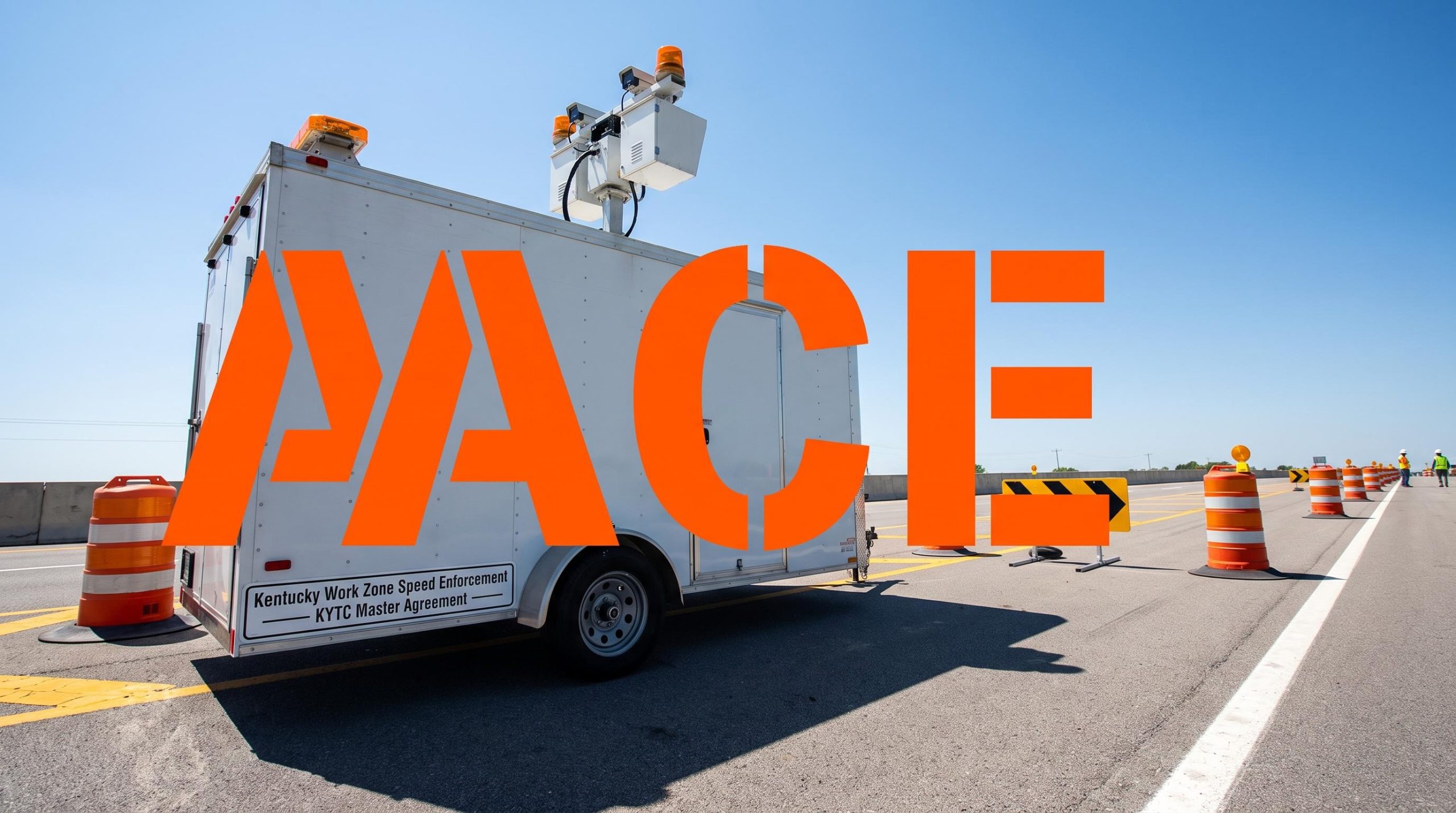
Acusensus (ASX:ACE) has been awarded a Master Agreement by the Kentucky Transportation Cabinet (KYTC) to supply a statewide real-time speed enforcement program at highway work zones across the US state.
An initial order of approximately US$2.1m over one year is expected under the agreement, with total contract value reaching up to US$20 million should all options to expand the fleet and extend the term be exercised.
The initial term runs from 1 August 2026 to 31 July 2028, extendable for three further one-year periods to 31 July 2031. The award adds a third concurrent statewide US program for Acusensus, deepening its recurring revenue base in the US market.
When big ASX news breaks, our subscribers know first
Inside the Kentucky Master Agreement
Under the agreement, KYTC can place orders for enforcement camera services that would see Acusensus supply, deploy, operate and maintain a fleet of camera trailers. Critically, Acusensus retains ownership of the camera assets and remains responsible for their deployment and maintenance.
The trailers operate in both enforcement and data-collection modes, relaying detected violations to a downstream peace officer in real time.
The program is enabled by the Jared Lee Helton Act of 2025 (KRS 189.2326), which authorises automated speed enforcement cameras in Kentucky at work zones where a worker is present. The contract was awarded through a competitive tender process that commenced earlier in 2026, following a pilot program Acusensus has operated in Kentucky since September 2025.
The contract also includes commercial protections for Acusensus in the event of early termination for convenience by KYTC.
| Contract Element | Detail |
|---|---|
| Counterparty | Kentucky Transportation Cabinet (KYTC) |
| Expected initial order | Approximately US$2.1m over one year |
| Total potential value | Up to US$20 million (if all options exercised) |
| Initial term | 1 August 2026 – 31 July 2028 |
| Maximum term | To 31 July 2031 |
Why recurring revenue makes this contract matter
A defining feature of the model is the revenue structure. As is standard for these programs, revenue comes from a fixed monthly fee per trailer and is not linked to citation volumes. This distinction matters for investors assessing revenue quality.
Because fees are charged per trailer rather than per citation, the income is stable and forecastable, independent of how many violations are detected or enforcement outcomes achieved. That creates a predictable recurring revenue base rather than one that fluctuates with roadside activity.
The underlying model is straightforward. Camera trailers are deployed at highway work zones to detect speeding vehicles where road workers are present, generating evidence for enforcement. As more US states legislate to authorise this type of automated enforcement, the delivery model becomes proven and replicable across new jurisdictions, a growing market opportunity.
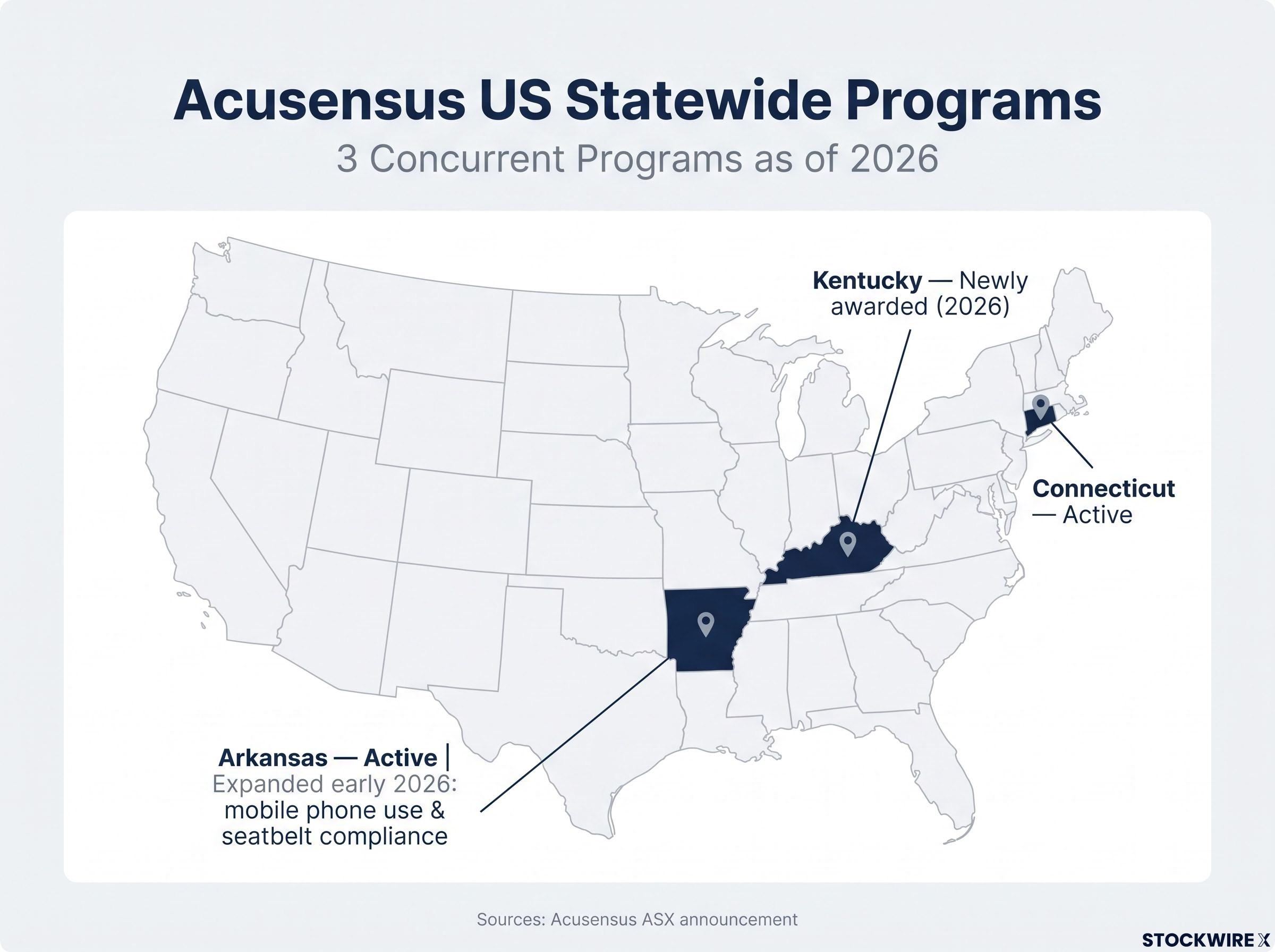
Kentucky now sits alongside two other concurrent statewide US programs supplied by Acusensus:
-
Kentucky (newly awarded)
-
Connecticut
-
Arkansas (expanded in early 2026 to also enforce mobile phone use and seatbelt compliance)
Fleet rollout and next steps
Some of the assets required for the initial fleet are already available in Kentucky, with the balance due progressively before the start of 2Q FY27. This supports the expected timeline for the first year of operation under the initial order.
The pathway to the US$20 million ceiling runs through the options available to KYTC, which can choose to expand the fleet and extend the term. These options remain contingent and are not committed, meaning the headline figure represents a potential maximum rather than guaranteed revenue.
Fleet expansion within a single jurisdiction has been a recurring pattern for Acusensus, most visibly in Western Australia where the company doubled its deployed units under a $13 million contract extension, validating the scalability of the asset-ownership model.
The Kentucky work zone enforcement method follows the model demonstrated in Arkansas. Notably, the Arkansas program was expanded in early 2026 to also enforce mobile phone use and seatbelt compliance, illustrating how such programs can broaden in scope over time. This precedent applies to Arkansas and has not been confirmed for Kentucky.
Alexander Jannink, Founder & Managing Director, Acusensus
“Kentucky is one of three concurrent state-wide work zone programs Acusensus supplies in the United States, alongside Connecticut and Arkansas. These programs provide a recurring revenue base and a proven delivery model which we can replicate as further states legislate.”
What it means for Acusensus investors
The award expands the company’s US footprint, deepens its relationship with the Kentucky Transportation Cabinet, and adds to a recurring revenue base built on fixed per-trailer fees. With a third concurrent statewide program now in place, Acusensus demonstrates a replicable delivery model positioned to scale as further US states legislate for automated work zone enforcement.
Converting incumbent relationships into extended contracts has become a consistent feature of the Acusensus commercial model, with Transport for NSW renewing a $16 million mobile speed camera arrangement in mid-2026 while a longer-term tender process runs in parallel.
Don’t Miss the Next ASX Tech Winner
Big News Blast delivers FREE breaking ASX tech news to your inbox within minutes of release, complete with in-depth analysis. Join 20,000+ subscribers already ahead of the market and click the “Free Alerts” button at StockWire X to start receiving alerts the moment market-moving announcements drop.