
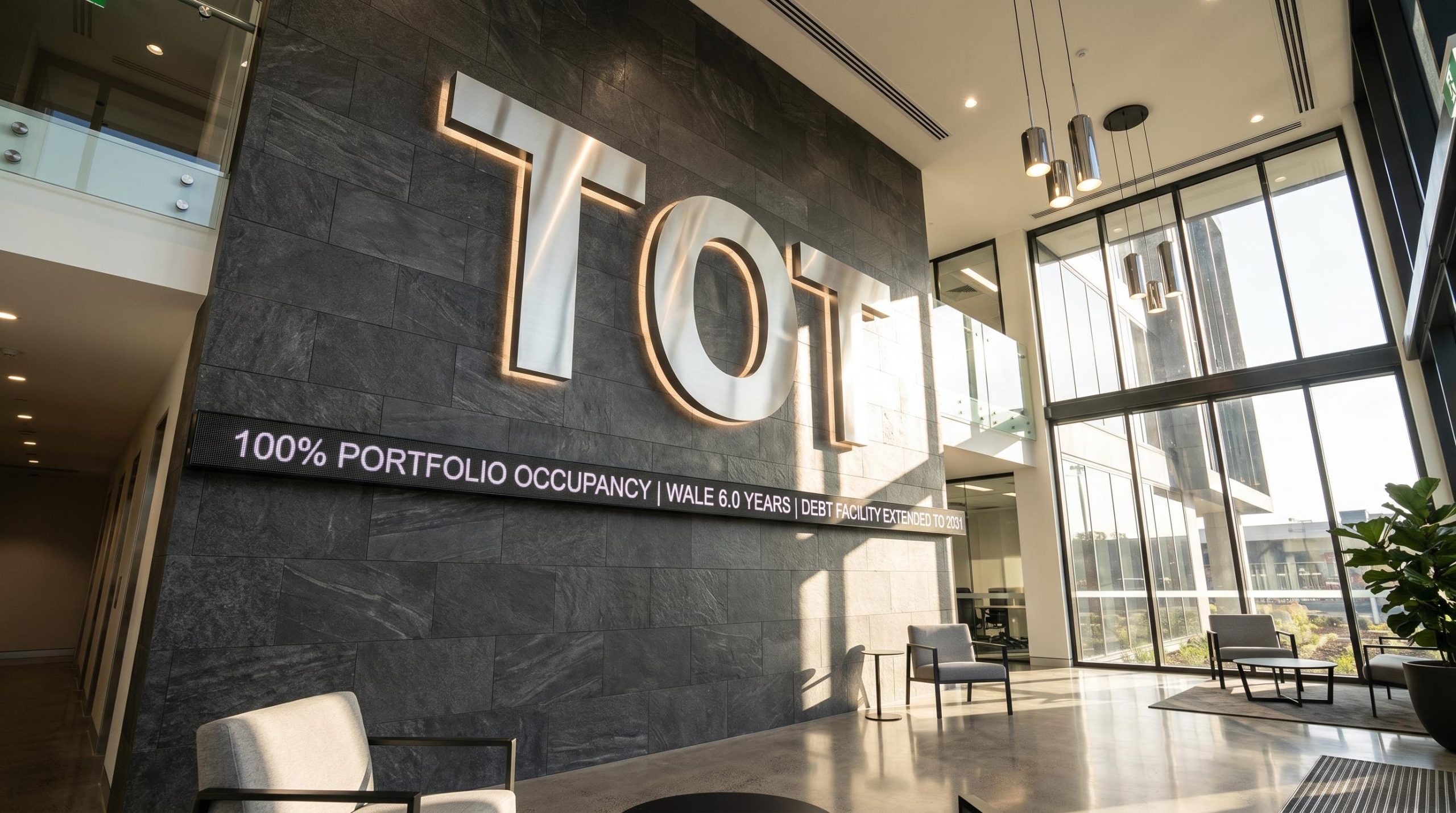
360 Capital REIT secures debt extension to 2031 and locks in 100% occupancy
360 Capital REIT has announced a dual portfolio strengthening, securing a 4-year extension of its debt facility to August 2031 whilst simultaneously achieving 100% portfolio occupancy. The refinancing delivered a reduced interest margin, attributed by management to the Fund’s strong tenancy profile and extended lease expiry timeline. The combination positions the REIT to deliver predictable cashflows and stable distribution growth through high tax-deferred distributions to securityholders. The Fund’s FY26 results are scheduled for release in early August 2026.
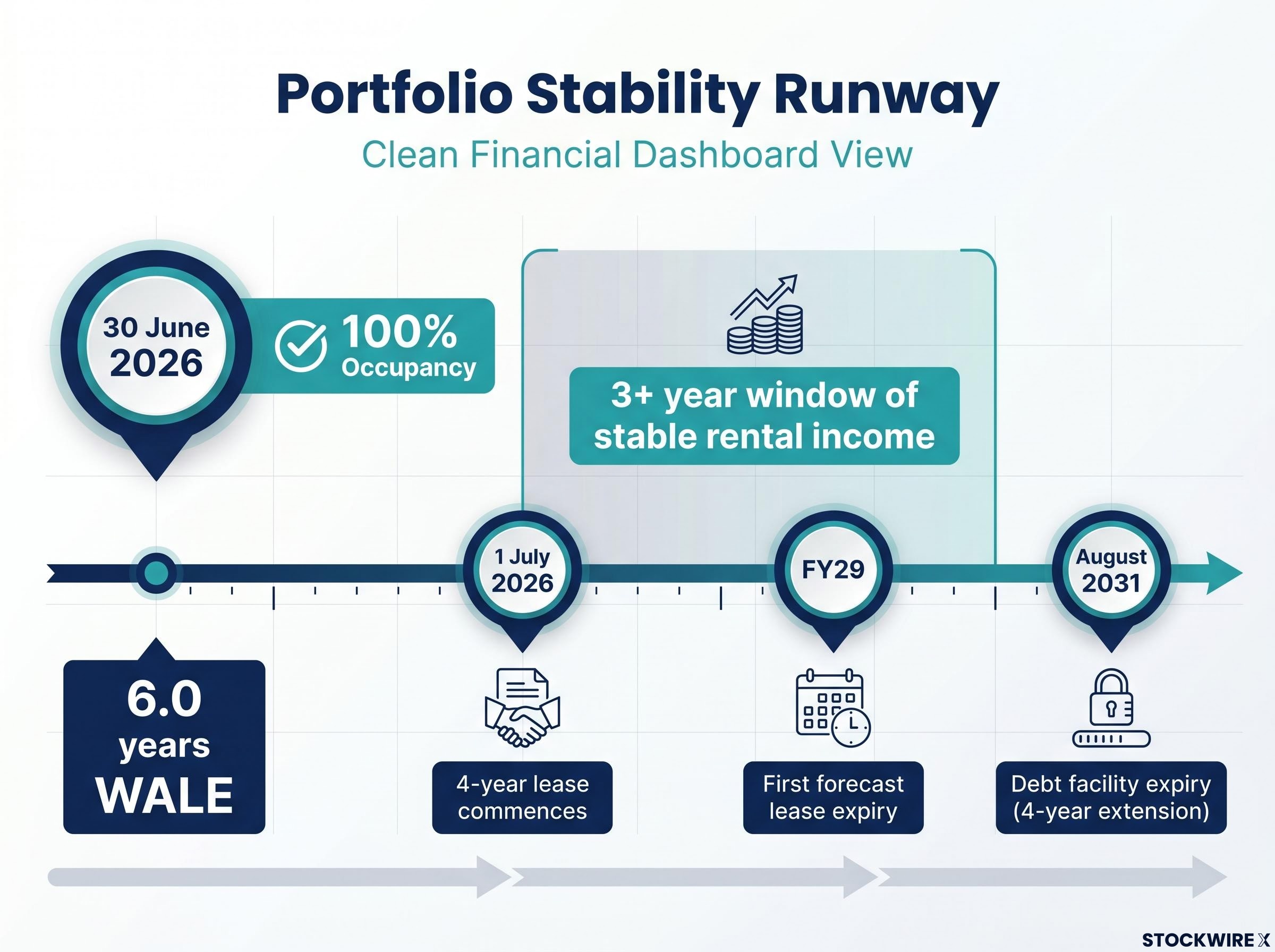
The debt facility extension removes near-term refinancing risk and provides long-term funding certainty. Management stated the improved margin terms reflect lender confidence in the portfolio’s quality, with the Fund now carrying a weighted average lease expiry (WALE) of 6.0 years by income as at 30 June 2026. No lease expiries are forecast until FY29, creating a 3+ year window of stable rental income.
The announcement follows the completion of a non-binding Heads of Agreement (HOA) with an ASX top 100 company to lease the final vacant space at the Fund’s Cremorne asset. This leasing outcome eliminates remaining portfolio vacancy and supports the reduced debt margin achieved through the refinancing.
When big ASX news breaks, our subscribers know first
What is WALE and why does it matter for REIT investors?
Weighted Average Lease Expiry (WALE) measures the average time until all leases in a property portfolio expire, weighted by each lease’s contribution to total rental income. A 6.0-year WALE means the Fund’s rental income stream is secured, on average, for the next six years.
For income-focused investors, a longer WALE reduces re-leasing risk and provides visibility on future cashflows. Properties with short WALEs face frequent lease rollovers, requiring capital expenditure for tenant incentives and exposing the portfolio to market rental volatility. A 6.0-year WALE combined with 100% occupancy means 360 Capital REIT faces minimal near-term leasing activity, reducing operational uncertainty.
Institutional investors typically favour REITs with longer WALEs as it signals lower vacancy risk and stable distribution capacity. With no lease expiries until FY29, the Fund has removed a key source of cashflow volatility for the next three financial years. This structural stability underpins management’s guidance for “stable distribution growth in the form of high tax deferred distributions.”
ASX top 100 tenant fills final vacancy at Cremorne asset
The Fund has entered into a non-binding Heads of Agreement with an ASX top 100 company (name not disclosed) to lease the remaining 1,332sqm on Level 2 at 510 Church Street, Cremorne VIC. The 4-year lease is scheduled to commence on 1 July 2026. Critically, the agreement required no additional capital expenditure, ensuring the Fund maintains minimal forecast capex commitments.
This leasing outcome follows an earlier announcement on 10 April 2026 regarding tenant activity at the Cremorne property. The completion of this HOA brings the Fund’s portfolio to 100% occupancy, eliminating vacancy-related income drag.
Key lease terms:
- Area leased: 1,332sqm
- Location: Level 2, 510 Church Street, Cremorne VIC
- Lease term: 4 years
- Commencement date: 1 July 2026
- Capital expenditure required: None
The absence of capex requirements for this lease is significant. REITs often incur material tenant fit-out costs and lease incentives to secure occupancy, which can compress near-term cashflows. The Fund avoided this capital call whilst securing a creditworthy tenant from the ASX top 100 index, improving both income quality and portfolio stability.
Debt refinancing strengthens balance sheet position
The 4-year extension of the Fund’s debt facility to August 2031 removes refinancing risk and provides long-term funding certainty. The announcement noted a reduction in the interest margin, though the specific basis point decrease was not disclosed. Management attributed the improved terms to the portfolio’s strong tenancy profile and long lease expiry timeline.
For newer investors, locking in debt facilities at reduced margins during uncertain interest rate environments benefits securityholders by lowering financing costs and improving distributable income. The refinancing occurred at a time when the Fund had materially strengthened its leasing position, allowing it to negotiate from a position of operational stability.
The debt maturity structure now provides significant structural stability. With the debt facility expiring in August 2031 and no lease expiries until FY29, the Fund faces no near-term capital structure or tenancy rollover events. This alignment of debt and lease maturity profiles reduces execution risk and supports predictable cashflow generation.
Cashflow predictability underpins distribution outlook
The Fund now has minimal forecast capital expenditure following the completion of the Cremorne HOA. The combination of 100% occupancy, no lease expiries until FY29, and minimal capex requirements creates highly predictable cashflows over the near to medium term.
Management stated this positioning provides “stable distribution growth in the form of high tax deferred distributions.” For investors, tax-deferred distributions allow securityholders to defer tax obligations, effectively enhancing after-tax returns. This structure is achieved when the REIT’s taxable income is lower than its distributable cashflow due to non-cash deductions such as depreciation and amortisation.
The removal of vacancy risk and capital expenditure volatility means the Fund’s distributable income is now largely a function of contracted rental income. With 6.0 years WALE and 3+ years until the first lease expiry event, the portfolio generates cashflow certainty rarely seen in smaller REIT structures.
“With no expiries until FY29 and minimal forecast capital expenditure, cashflows from the portfolio are now very predictable providing securityholders with stable distribution growth in the form of high tax deferred distributions.”
Key metrics at a glance
| Metric | Current Position | Prior Position | Change |
|---|---|---|---|
| Occupancy | 100% | Vacancy existed | Full occupancy achieved |
| WALE (by income) | 6.0 years | Not stated | — |
| Debt Facility Expiry | August 2031 | Prior to extension | 4-year extension |
| Next Lease Expiry | FY29 | — | No expiries for 3+ years |
What to watch for in the FY26 results
The Fund is scheduled to release its FY26 results in early August 2026. Investors should watch for distribution guidance, any valuation movements on the Cremorne asset following the completion of the HOA, and confirmation of the HOA converting to a binding lease. The results will provide the first full picture of the Fund’s financial performance with the improved portfolio settings now locked in.
Want Real Estate News Before the Market Reacts?
Join 20,000+ investors receiving FREE ASX property and REIT alerts delivered within minutes of release, complete with expert analysis. Click the “Free Alerts” button at Big News Blast to get breaking real estate news in your inbox the moment announcements drop.