
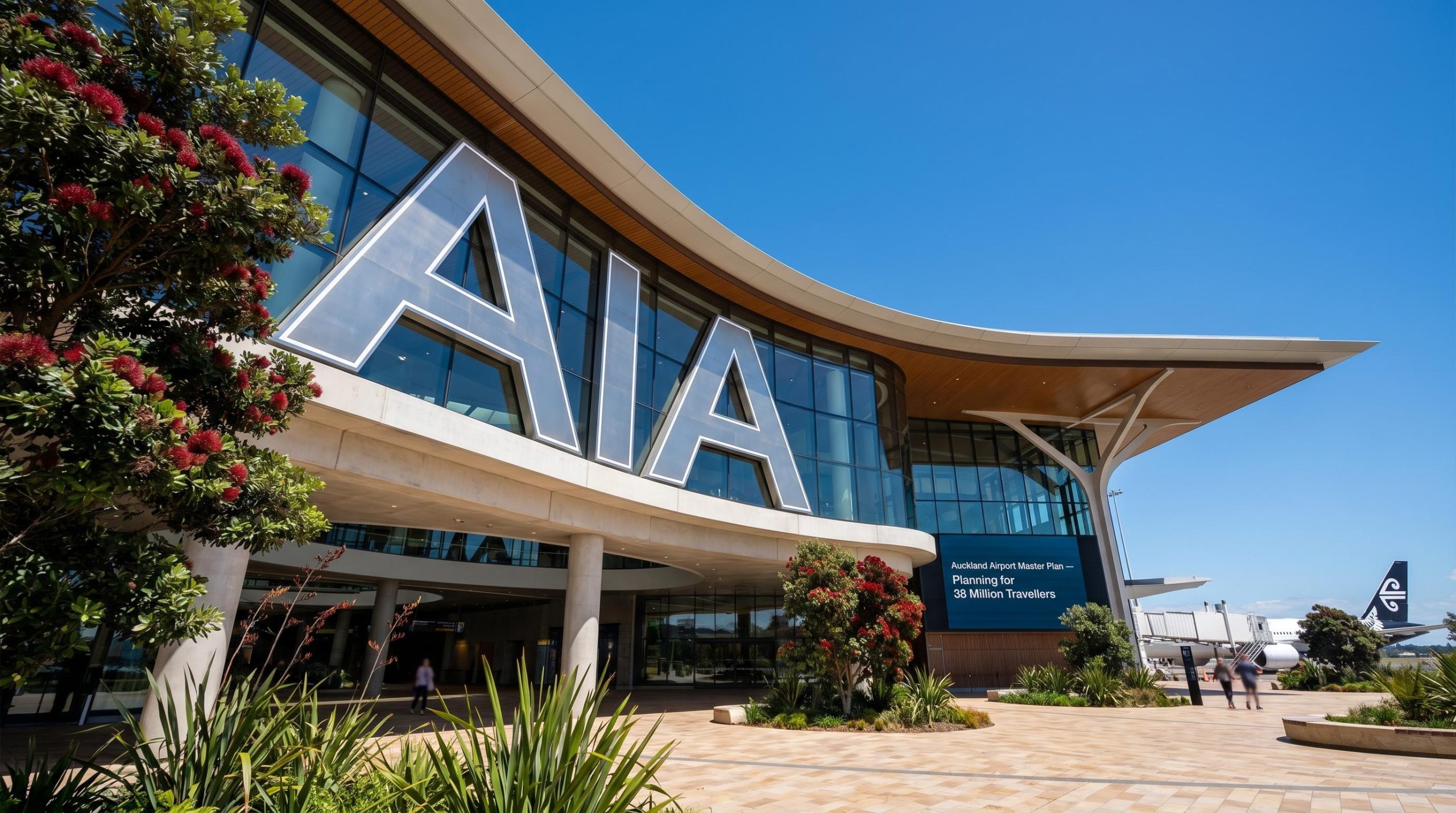
Auckland Airport unveils Master Plan built on efficiency and staged investment
Auckland Airport has released its finalised Master Plan on 30 June 2026, setting out how New Zealand’s gateway airport could grow and evolve into the late 2040s. The plan ties future investment decisions to demand, resilience, operational performance and affordability, with a clear emphasis on running existing infrastructure as efficiently as possible before committing capital to new construction.
Critically, the plan sets no construction date for a second runway. It does not commit the company to specific projects or timing, but instead identifies the land, development corridors and infrastructure options that may need to be safeguarded as travel and trade demand changes.
The finalised document builds on feedback from airlines, government agencies, stakeholders and the community following consultation on the draft released in 2025. A consistent theme from that feedback was the need to balance growth with affordability, flexibility and making the best use of existing infrastructure before major new projects are required.
When big ASX news breaks, our subscribers know first
A gateway anchoring trade, tourism and jobs
The Master Plan recognises Auckland Airport’s role in supporting New Zealand’s economic prosperity by connecting people, trade and tourism, enabling thousands of jobs across the precinct and operating the country’s third largest port by value. Around 25,000 people work across the airport precinct today.
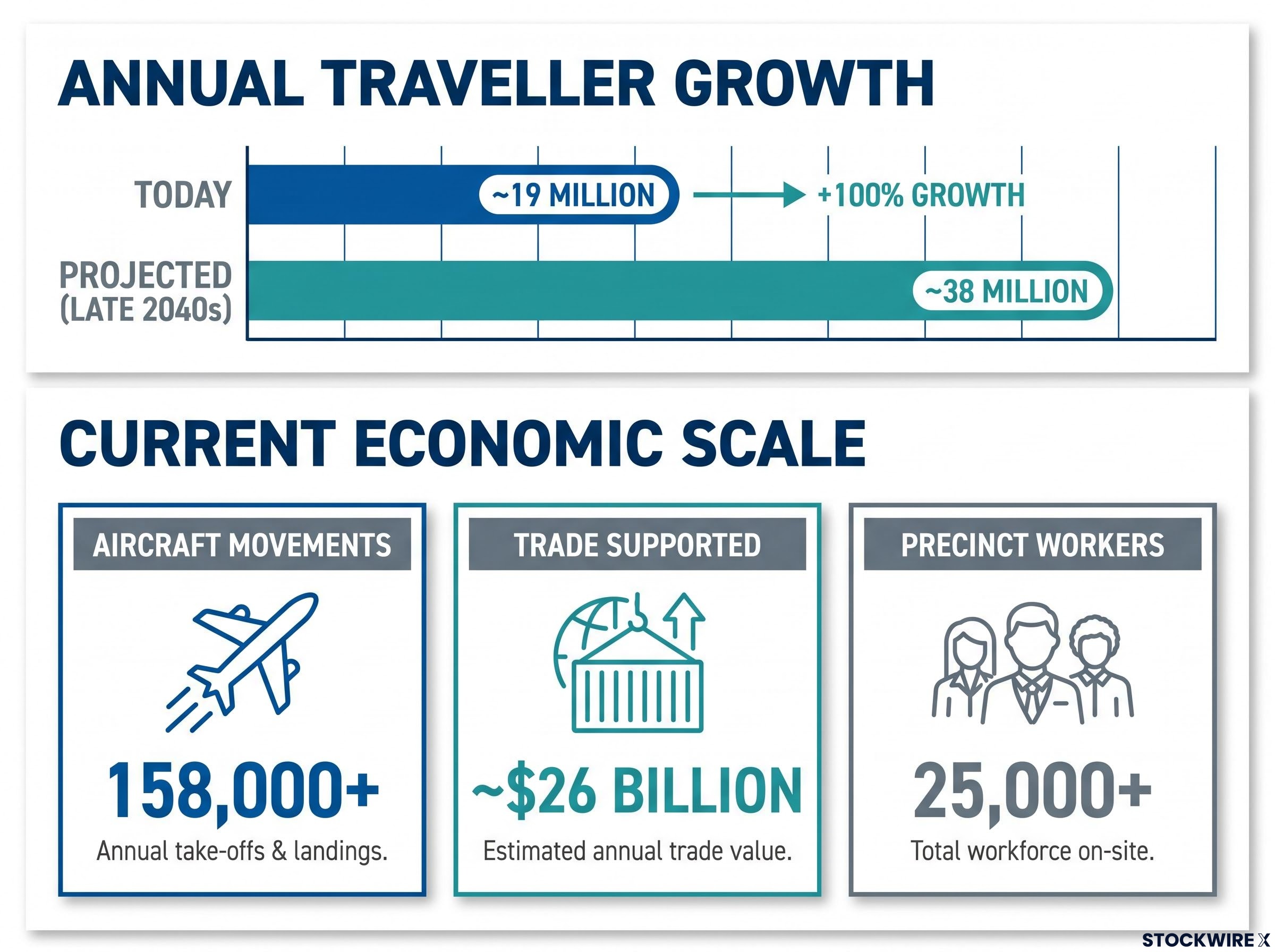
The table below sets out the airport’s current scale against its projected growth.
| Metric | Today | Projected (late 2040s) |
|---|---|---|
| Travellers per year | ~19 million | ~38 million (expected) |
| Aircraft movements | 158,000+ | Not disclosed |
| Trade supported | ~$26 billion | Not disclosed |
| People working across the precinct | 25,000+ | Not disclosed |
Carrie Hurihanganui, Chief Executive
“We are planning for a future where the airport is more connected, more efficient, more resilient and easier to use. That means making every part of the precinct work harder not just for travellers and airlines, but for workers, freight operators and the wider region.”
Optimising existing capacity before expanding
The Master Plan sets out a staged-investment philosophy. Before additional runway capacity is required, Auckland Airport intends to improve performance through operational improvements, smarter technology and more efficient use of existing airfield infrastructure.
The option of a future second runway remains safeguarded. Since the early 2000s, the company’s long-term planning has made provision for a second runway located approximately 2km north of the existing runway.
Further detailed analysis of existing runway capacity will be undertaken to identify the appropriate timing for any expansion. That analysis will factor in demand, airline fleet mix, aviation technology and the operational efficiency of the existing runway. No timing has been committed.
Carrie Hurihanganui, Chief Executive
“The question is not simply when to build more infrastructure,” Ms Hurihanganui said. “It’s how we continue to improve the performance from the infrastructure we already have and ensure major investments are made at the right time.”
Key long-term elements of the Master Plan include:
-
An ongoing move towards an integrated domestic and international jet terminal
-
Enhanced regional operations
-
More efficient airfield and apron operations
-
A consolidated cargo precinct
-
Improved surface access
-
Infrastructure capable of adapting to future aviation technology, low-emission transport and climate resilience requirements
Stronger connections to and from the precinct
Beyond the domestic jet terminal currently under construction, surface access has been identified as one of the most visible early areas of focus. Millions of travellers rely on the precinct’s road, public transport, parking, walking and cycling connections each year.
The plan sets out a staged approach to surface access that includes:
-
Better use of the existing road network
-
Dynamic lane changes on Pūkaki Bridge
-
Improved walking and cycling links
-
Protection of rapid transit corridors
-
Continued work with Auckland Transport, Auckland Council, the New Zealand Transport Agency and central government
This work draws on opportunities identified through the recent Auckland Deal, an agreement between the Government and Auckland Council that recognises Auckland Airport as nationally significant infrastructure requiring better transport connections to support growth.
Carrie Hurihanganui, Chief Executive
“As the airport and wider Auckland region grow, we need a transport network that gives people more choice, improves reliability and supports safe, efficient journeys to and from the precinct.”
What comes next
The Master Plan protects options for growth while maintaining flexibility over how and when infrastructure is delivered. It does not lock the company into specific projects, timelines or capital figures.
In the near term, the most visible focus remains the domestic jet terminal currently under construction, alongside the staged surface access improvements outlined in the plan. With investment decisions kept tied to demand, affordability and changing circumstances, the document frames a disciplined, demand-led path for New Zealand’s gateway airport into the late 2040s.
Don’t Miss the Next Infrastructure Breakout on the ASX
Big News Blast delivers FREE breaking ASX announcements straight to your inbox within minutes of release, complete with in-depth analysis already done for you. Join 20,000+ subscribers who stay ahead of the market the moment news breaks. Click the “Free Alerts” button at StockWire X to get started today.