

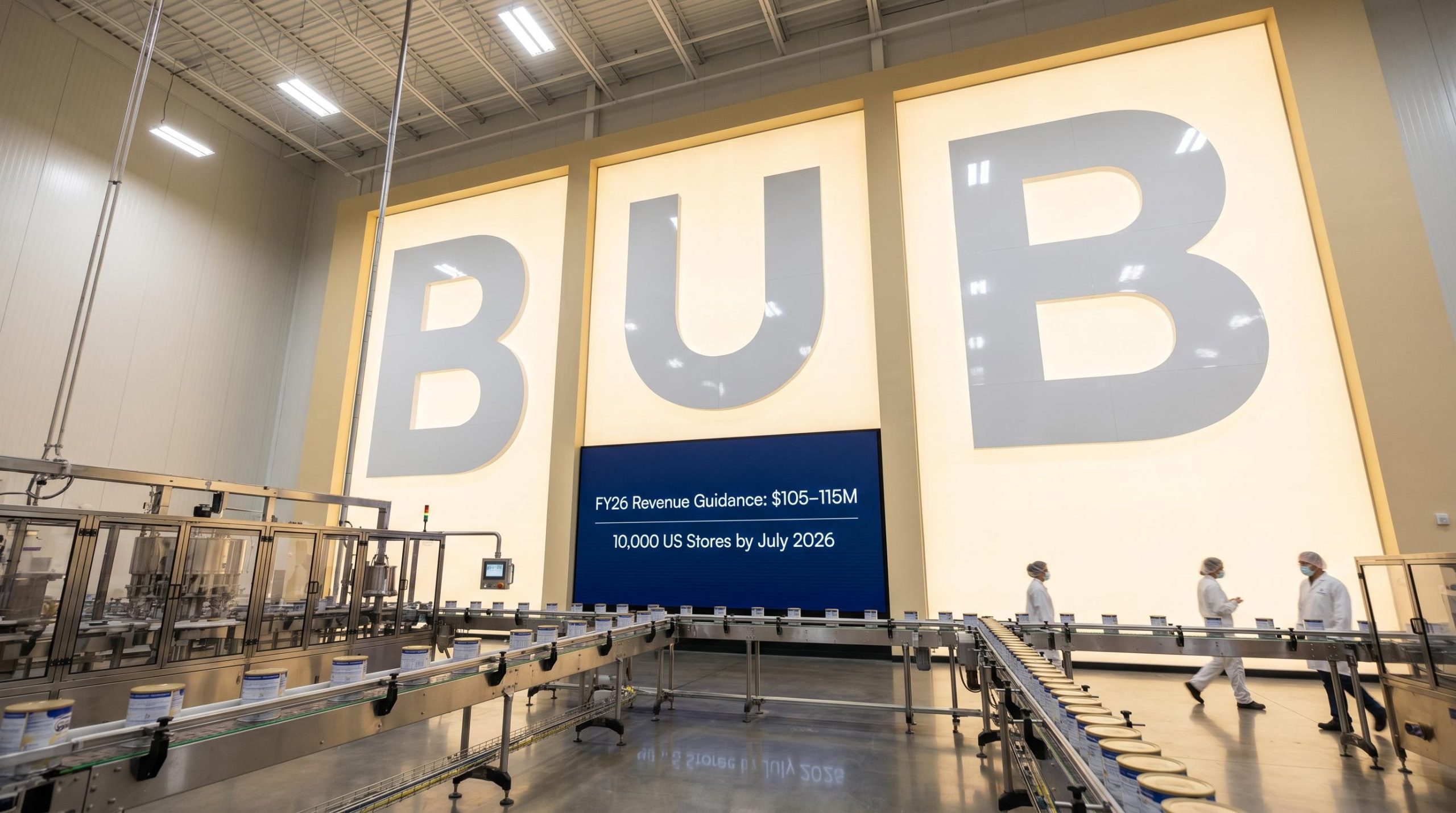
Bubs Australia sets $105–115 million revenue target for FY26
Bubs Australia (ASX: BUB) has issued its FY26 trading update, guiding full-year revenue to $105–115 million on an unaudited basis, reflecting underlying growth despite a challenging external environment. Reported EBITDA is expected to come in at approximately –$2 million to +$2 million, while underlying EBITDA is guided to approximately $4–8 million, with the gap between the two figures reflecting transitional costs absorbed during the year.
When big ASX news breaks, our subscribers know first
What’s weighing on results — and what Bubs is doing about it
External headwinds in play
Several external factors weighed on Bubs’ sales and earnings performance during FY26:
- Evolving regulatory requirements
- Product availability constraints
- Geopolitical disruption in the Middle East
- Increased use of air freight to support re-stocking
- Competitive pressures
Management response
Rather than treating these pressures as permanent features, management has framed them as a short-term cost of operating with discipline in a more complex environment. Notably, the elevated air freight costs incurred to support US re-stocking are described as concluding, pointing to a normalising cost base into FY27.
FDA engagement is also progressing positively, with the review now in its final stages. Chief Executive Officer and Managing Director Joe Coote commented:
Joe Coote, Chief Executive Officer and Managing Director
“We have taken a careful and disciplined approach to managing our supply chain in a more complex external environment… That has meant carrying additional costs in the short term, but it has also allowed us to move quickly and position the business to meet our growth ambitions.”
Understanding EBITDA guidance — what the numbers mean for investors
Bubs has provided two EBITDA figures in its FY26 update: reported EBITDA and underlying EBITDA. For investors less familiar with this distinction, it is worth understanding what separates the two.
Reported EBITDA captures the full earnings result as it will appear in the financial statements, including all costs incurred during the period. Underlying EBITDA strips out items considered non-recurring or transitional, such as the emergency air freight costs Bubs absorbed to support US re-stocking. The result is a cleaner read on the operational earning capacity of the business.
In Bubs’ case, the underlying EBITDA range of $4–8 million signals the business is generating positive operational returns, even while the reported figure absorbs those short-term freight costs. Investors assessing the company’s trajectory may find the underlying figure more informative when evaluating whether the core business is improving.
| Metric | Guidance Range | Nature | Context |
|---|---|---|---|
| Revenue | $105–115M | Full year FY26 | Unaudited; underlying growth |
| Reported EBITDA | –$2M to +$2M | Reported | Includes air freight and one-off costs |
| Underlying EBITDA | $4–8M | Adjusted | Strips transitional cost items |
US growth remains the centrepiece — 10,000 stores by July 2026
The United States is Bubs’ most significant growth market and the focal point of its near-term expansion strategy. With air freight costs for US re-stocking now concluding, the company’s cost base is expected to normalise, which should be reflected in improving reported results as FY27 progresses.
The most concrete forward-looking milestone in the update is the targeted ranging in over 10,000 stores by July 2026. Key points from the update on the US outlook include:
- The US is the primary growth driver and a central pillar of Bubs’ strategy
- Air freight to support US re-stocking is concluding, normalising the cost base
- The company is on track for ranging in over 10,000 stores in July 2026
- FDA review is progressing to its final stages, with engagement described as positive
- A strong balance sheet and appropriate liquidity are maintained, providing financial flexibility
Joe Coote, Chief Executive Officer and Managing Director
“The United States remains our strongest growth market and a key part of our strategy. The use of air freight to support re-stocking in the USA is concluding as we continue to prioritise customer service. We remain on track to achieve ranging in over 10,000 stores in July 2026.”
The 10,000-store milestone and continued FDA progression represent the two most closely watched catalysts for investors heading into FY27. Management’s emphasis on balance sheet strength suggests the company retains the flexibility to continue executing its strategic priorities without being forced into reactive decision-making by near-term financial pressure.
Don’t Miss the Next Consumer Sector Breakout
Big News Blast delivers FREE breaking ASX consumer sector news directly to your inbox within minutes of release, with in-depth analysis already done. Join 20,000+ subscribers who stay ahead of market-moving announcements. Click the “Free Alerts” button at StockWire X to start receiving alerts the moment news breaks.