

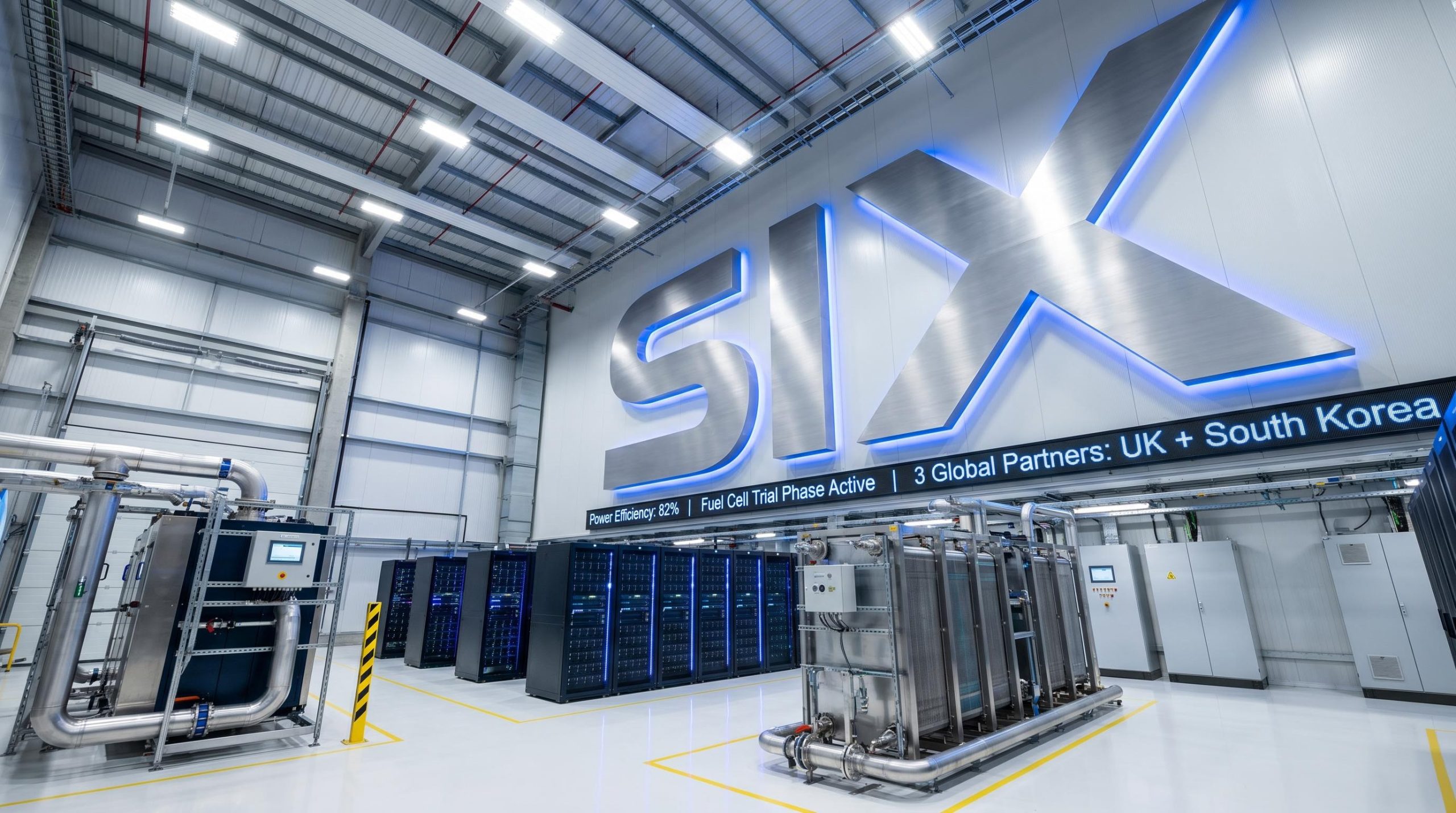
Sprintex fuel cell compressors are now in active trials and sample supply programmes with three leading fuel cell developers targeting data centre power applications. The company’s technology is being evaluated by Intelligent Energy in the UK, K-Fuel Cell in South Korea, and Doosan Mobility Innovation in South Korea. This positions Sprintex within the AI infrastructure value chain through compressor technology developed over four years since 2021.
Sprintex compressors enter data centre power trials with three global fuel cell developers
Three independent developers across two continents are evaluating Sprintex technology for the same high-growth application. The trial partners span the UK and South Korea, representing market validation from geographically diverse fuel cell manufacturers.
Intelligent Energy is conducting trials focused on stationary and micro-grid fuel cell systems, including potential data centre backup power applications. K-Fuel Cell is evaluating the compressors on data centre SOFC platforms with stacks up to 50 kW and multi-stack scalability. Doosan Mobility Innovation has commenced sample supply for 50 kW fuel cell systems intended for data centre applications.
These are trials and sample supply programmes, not commercial production arrangements. Any future sales, revenue or material contracts will depend on successful technical evaluation, customer qualification, commercial negotiations and, where applicable, execution of binding agreements.
When big ASX news breaks, our subscribers know first
Why data centres need alternative power solutions
Traditional electricity grids cannot expand fast enough to meet AI-driven data centre demand. Building new generation, transmission and distribution infrastructure can take many years. Planning authorities are increasingly requiring data centre developers to demonstrate reliable on-site power solutions as a condition of approval.
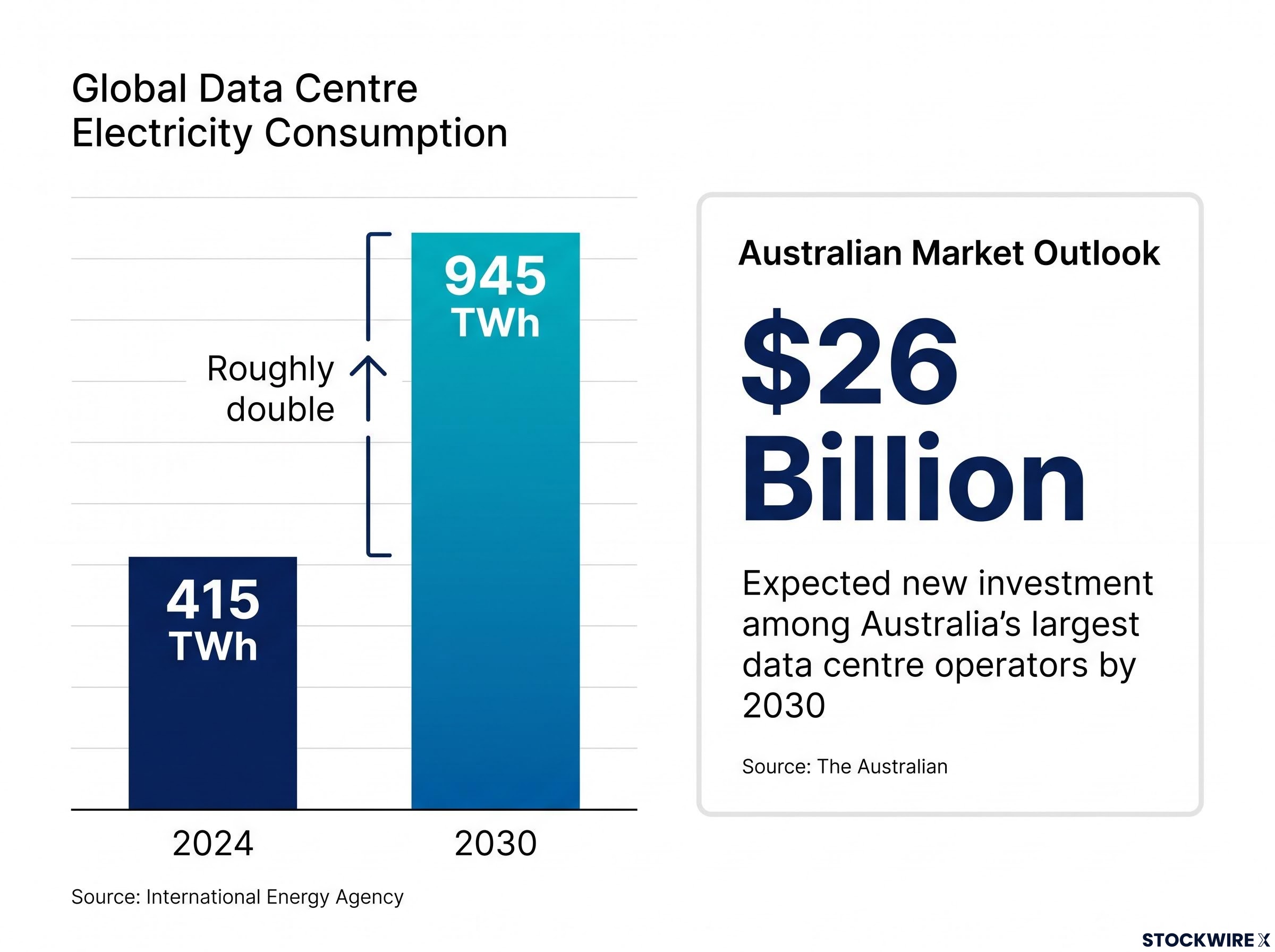
Global data centre electricity consumption is projected to roughly double from 415 TWh in 2024 to around 945 TWh by 2030, according to the International Energy Agency. In Australia, new investment among the country’s largest data centre operators is expected to top $26 billion by 2030, according to The Australian.
The structural supply-demand imbalance creates a near-term addressable market. This is not speculative future demand — planning constraints are driving evaluation of alternatives now.
What fuel cell compressors do and why they matter
A fuel cell is an electrochemical device that generates electricity through the reaction of fuel (such as hydrogen) and oxygen, producing only water and heat as by-products. The compressor supplies and regulates the flow of air (oxygen) into the fuel cell stack at the required pressure and efficiency.
Compressor performance directly impacts the overall efficiency, power output and durability of the fuel cell system. Each fuel cell stack requires a dedicated compressor.
Sprintex compressors are high-speed, oil-free and energy-efficient. The company’s compressor platforms offer efficiency up to 82% and compact designs suited to both stationary and mobility applications.
A 100 MW data centre installation could require several hundred fuel cell stacks depending on individual stack ratings of 50–325 kW per stack. This creates unit volume leverage for compressor suppliers. Even modest adoption of fuel cell technology in this market would represent a substantial addressable opportunity for high-performance components.
Trial partner breakdown
The three trial relationships provide detail on how Sprintex technology is being evaluated across different fuel cell platforms and capacity configurations.
| Partner | Location | Application focus | Stack capacity |
|---|---|---|---|
| Intelligent Energy | UK | Stationary and micro-grid systems, including backup power | Not specified |
| K-Fuel Cell | South Korea | SOFC platforms for data centres | Up to 50 kW stacks, multi-stack scalability |
| Doosan Mobility Innovation | South Korea | 50 kW fuel cell systems | 50 kW |
Progression to commercial arrangements would represent a material catalyst. Investors should monitor for updates on trial outcomes and any binding agreements.
South Korea hydrogen distribution is a separately established commercial channel for Sprintex, with the company having signed an exclusive agreement with Seoul-based ChoisTechnics Corp. covering mobility and stationary power markets alongside its direct trial relationships with K-Fuel Cell and Doosan Mobility Innovation.
The efficiency advantage over diesel generators
Fuel cells are being evaluated over traditional diesel backup generators for several reasons:
- Higher efficiency than diesel generators
- Clean exhaust enables superior waste heat recovery from both the fuel cell itself and from data centre cooling systems
- Faster deployment than new grid infrastructure
- Low emissions profile
Data centre operators are commercially motivated to reduce operating costs. Fuel cells offer significantly higher efficiency than diesel generators and produce clean exhaust, enabling substantially higher waste heat recovery. This improves overall energy efficiency and helps offset fuel production and storage costs, which supports adoption.
Management view on market opportunity
Jay Upton, Managing Director & CEO
“Data centres are now critical infrastructure for artificial intelligence. Power grids cannot expand quickly enough to meet data centre demand, and developers are increasingly required to provide their own reliable, on site power solutions to gain planning approval. Fuel cells offer a compelling option in these situations. Fuel cells can be deployed faster than new grid infrastructure, are significantly more efficient than diesel generators, and their clean exhaust enables superior waste heat recovery from both the fuel cell and data centre cooling systems. Our compressors play an important role in these systems, and we are seeing strong interest from leading developers working on data centre applications.”
Sprintex remains focused on being a supplier of high-performance air compressors across multiple industries. Data centre power represents a growing focus across all three current trial partners.
UK water utility procurement represents a parallel commercial path for Sprintex’s compressor technology, with the company advancing through the selection stage of a major procurement process targeting the £104 billion capital investment cycle running from 2025 to 2030, where its turbo blowers demonstrated a verified 20.5% energy efficiency improvement at a Delhi wastewater treatment plant.
What comes next
Further updates will be provided as trials progress and commercial opportunities develop. The four-year development timeline since 2021 demonstrates sustained commitment to the fuel cell compressor market.
Trials with established developers represent the qualification stage. Any future commercial arrangements will depend on successful technical evaluation and execution of binding agreements.
Want the Next AI Infrastructure Play in Your Inbox?
Join 20,000+ investors getting FREE breaking ASX news delivered within minutes of release, complete with in-depth analysis. Click the “Free Alerts” button at StockWire X to start receiving alerts the moment market-moving consumer discretionary and technology news breaks.