

Paradigm reports significant pain relief in rest-of-world Phase 3 analysis
Paradigm Biopharmaceuticals Limited (Administrators Appointed) (ASX: PAR), known as Paradigm Biopharma, reported that a regional analysis of its iPPS knee osteoarthritis Phase 3 PARAOA012 trial showed statistically significant pain relief at Day 112. The analysis covered 16 sites across Australia (12), Moldova (3) and Hong Kong (1), collectively the “rest of world” (ROW).
For weekly average daily pain (wADP) on a 0-10 scale, iPPS delivered 1.1 points greater pain reduction than placebo (p=0.0007), with a reported standardised effect-size magnitude of 0.708 in favour of iPPS.
The overall interim futility outcome remains unchanged and, as previously announced, the trial will not proceed. Administrators were appointed on 29 September 2026, and the Company’s securities remain suspended from trading.
The interim futility outcome was triggered when the independent DSMB found the pre-specified criterion had been met after 538 participants were treated, which led to the trading suspension and the review of the full unblinded dataset.
The findings come from an internal, post hoc regional analysis of observed data extracted from the electronic data capture (EDC) system as at 30 September 2026. The Administrators have not independently verified the data or the analysis. The Board considers the findings support pursuing a funded path for further development of iPPS, according to the Administrators’ understanding.
Four endpoints favour iPPS at Day 112
At Day 112, the ROW group showed statistically significant differences favouring iPPS on all four measures. The table below reproduces the reported results.
| Endpoint | iPPS / placebo n | Adjusted difference | p-value | Reported effect size |
|---|---|---|---|---|
| wADP | 45 / 50 | **-1.105** | **0.0007** | **-0.708** |
| WOMAC function | 39 / 46 | **-1.017** | **0.0026** | **-0.659** |
| WOMAC pain | 39 / 46 | **-0.821** | **0.0147** | **-0.532** |
| PGIC | 39 / 46 | **+1.077** | **0.0032** | **+0.646** |
Negative differences favour iPPS for pain and function, while a positive difference favours iPPS for the Patient Global Impression of Change (PGIC). The participant numbers are observed assessments at the visit.
For the wADP primary measure at Day 112:
- Adjusted pain reductions were 2.098 points with iPPS and 0.993 points with placebo.
- The difference was 1.105 points in favour of iPPS (95% CI 0.476 to 1.733).
The ROW results show a sustained pattern. Every plotted timepoint favoured iPPS, with statistically significant differences from Day 25 through Day 140, including the primary assessment at Day 112.
At Day 168, the analysis included only 25 observed assessments, compared with 95 at Day 112. The difference continued to numerically favour iPPS but narrowed, with a wider confidence interval that included zero. The announcement notes the smaller number of observations limits the precision of this later estimate, and further analysis is needed to establish the reasons for the narrowing.
When big ASX news breaks, our subscribers know first
What a “p-value” and “effect size” mean for investors
Weekly average daily pain (wADP) measures patients’ day-to-day pain on a 0-10 scale. A p-value indicates how likely a result would be if there were no genuine treatment difference. A result this extreme would be very unusual if there were no genuine treatment difference, according to the announcement.
Effect size measures the size of the treatment benefit relative to variability in patient outcomes. The reported ROW effect size for wADP was 0.708.
A post hoc analysis is conducted after the main trial analysis has been completed, rather than being pre-specified. Because this regional cut was internal and post hoc, it is best read as hypothesis-generating rather than confirmatory. The Administrators have also not verified it.
On market context, a 2023 study in The Lancet Rheumatology projects nearly one billion people living with osteoarthritis (OA) by 2050 if current trends continue.
The announcement also compares the ROW data with earlier studies. In PARAOA008, the WOMAC pain effect size was -0.66 at Day 56, -0.46 at Day 112 and -0.74 at Day 365. That study randomised 19 participants to twice-weekly iPPS and 22 to placebo, a total of 41. The ROW analysis has Day 112 pain assessments from 95 participants, more than twice that earlier comparison population.
Why the US result differs
At the interim analysis, 97 of 277 participants had missing Day 112 wADP data. Of those, 91 were in the US and six in ROW.
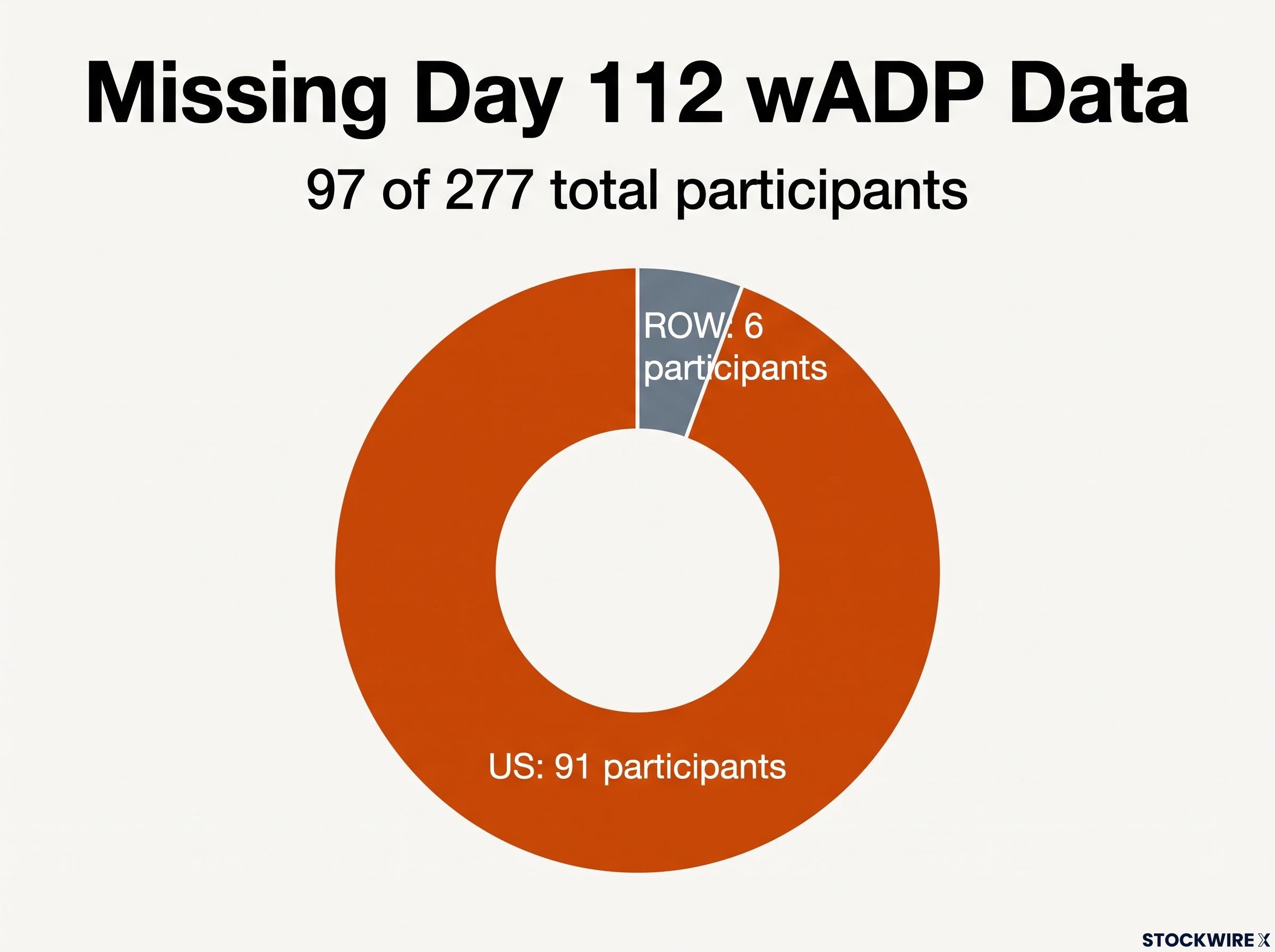
The announcement states that specialist laboratory delays appear to have contributed to missed US doses. Missing assessments required statistical imputation, and carrying baseline forward assigns no improvement.
US observed-data results at Day 112 did not show an iPPS advantage:
- wADP: p=0.1933
- Function: p=0.1188
- WOMAC pain: p=0.0728
- PGIC: p=0.8216
The US Day 112 pain and function results favoured placebo. The reviews examined the following areas:
- Laboratory delays
- Dosing
- Diary completion
- Site follow-up
- Monitoring
- Sponsor oversight
Imputation alone cannot be assumed to explain the regional difference. The review is assessing whether operational factors may also have contributed.
Former Board proposal and next steps
The Administrators have received notice that the former Board is preparing a proposal to preserve the program and establish a funded path for continued development of iPPS. No proposal has yet been received or assessed.
Any proposal received will be assessed by the Administrators in the interests of creditors as a whole, alongside other options available in the administration.
Board view, as understood by the Administrators
The Administrators understand that the Board considers that the ROW findings support the case for pursuing a funded path for further development of iPPS, subject to the matters described in the announcement.
There is no certainty that any proposal will be received or accepted, that funding will be obtained or that further development of iPPS will proceed. Progress will depend on the proposal being finalised, funding, applicable approvals and the administration process.
The Company expects to update the market on the data in the coming weeks and provide further details of the Board proposal when available.
Get Healthcare News Before the Market Moves
Join 20,000+ investors receiving FREE breaking ASX news within minutes of release, complete with in-depth analysis already done. Click the “Free Alerts” button at Big News Blast to get the next healthcare and biotech announcement in your inbox the moment it breaks.