
Entropy Neurodynamics Completes Cohort 1 Dosing Ahead of July 2026 Data
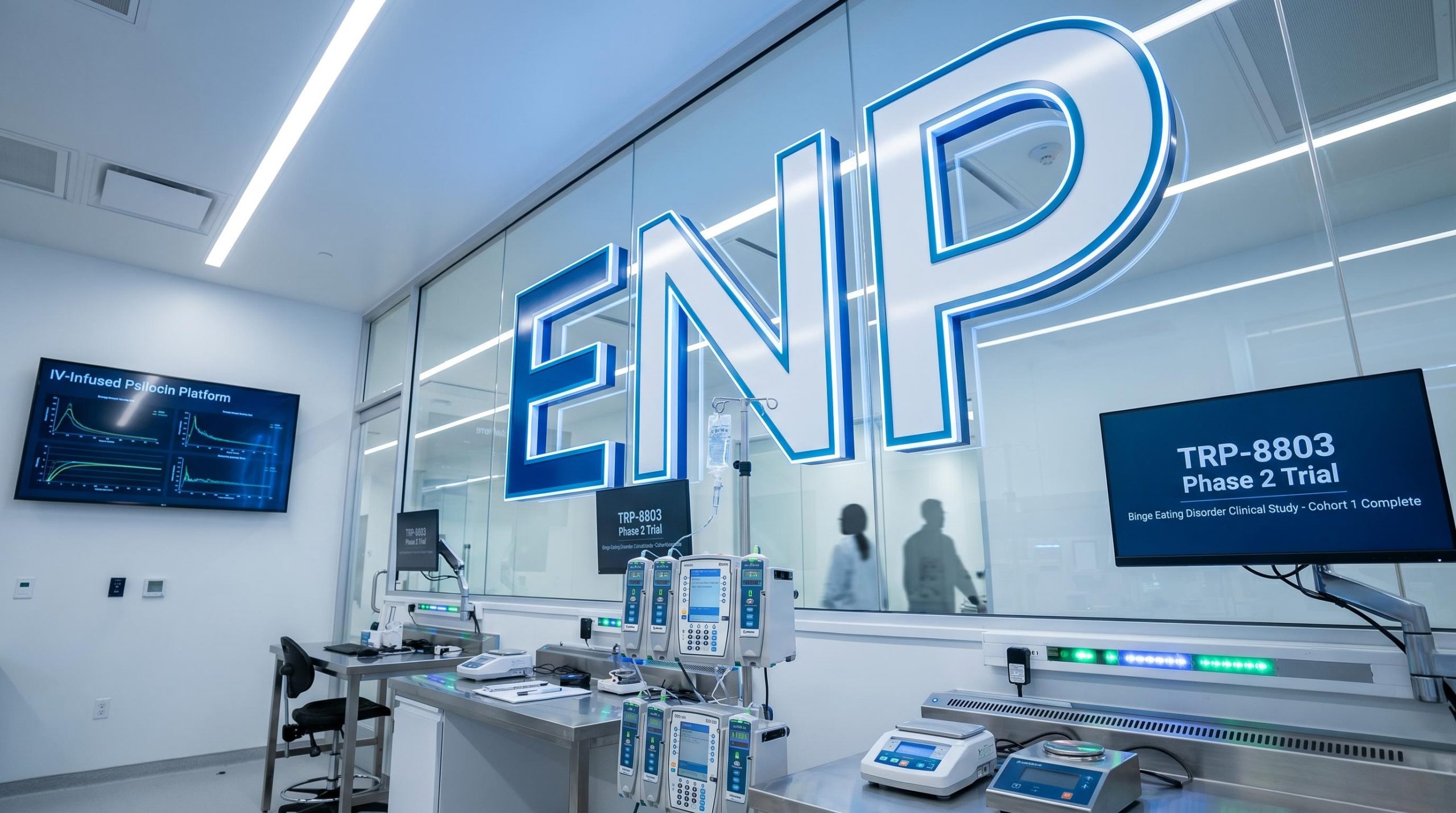
Entropy Neurodynamics has completed first-cohort dosing in its Phase 2 clinical study evaluating TRP-8803, its proprietary IV-infused psilocin formulation, for the treatment of Binge Eating Disorder. All six participants in Cohort 1 achieved a controlled and reproducible psychedelic response across two administrations delivered 14 days apart, supporting the company’s thesis that intravenous delivery offers significant advantages over conventional oral psychedelic therapies.
Entropy Neurodynamics completes first patient cohort in TRP-8803 binge eating disorder trial
The Phase 2 study targets enrolment of 12 patients across two cohorts of six participants each. Each participant receives two administrations of TRP-8803, delivered 14 days apart in conjunction with supportive therapy. The trial is being conducted in collaboration with Swinburne University and is designed to evaluate safety and feasibility whilst generating insights into treatment optimisation.
Cohort 1 received a mid-range therapeutic dose, whilst the dosing regimen for Cohort 2 will be informed by Cohort 1 outcomes. The Data Safety and Monitoring Board is expected to review Cohort 1 safety data in the coming weeks prior to commencement of Cohort 2 dosing. Topline efficacy results from Cohort 1 are expected in July 2026.
Investment significance: Phase 2 clinical milestones in psychedelic-assisted therapy represent critical de-risking events. Reproducible patient responses validate the drug delivery platform ahead of efficacy data.
When big ASX news breaks, our subscribers know first
What is TRP-8803 and how does IV-infused psilocin differ from oral psychedelics?
TRP-8803 is a proprietary formulation of IV-infused psilocin, the active metabolite of psilocybin. When psilocybin is taken orally, the body must convert it to psilocin before it becomes active. This conversion process creates variability in when the effects begin, how intense they are, and how long they last.
By delivering psilocin directly into the bloodstream through intravenous infusion, Entropy’s platform aims to bypass this conversion step entirely. The company claims this approach enables rapid onset, predictable pharmacokinetics (how the drug moves through the body), precise control over treatment intensity and duration, rapid reversibility, and shorter treatment sessions.
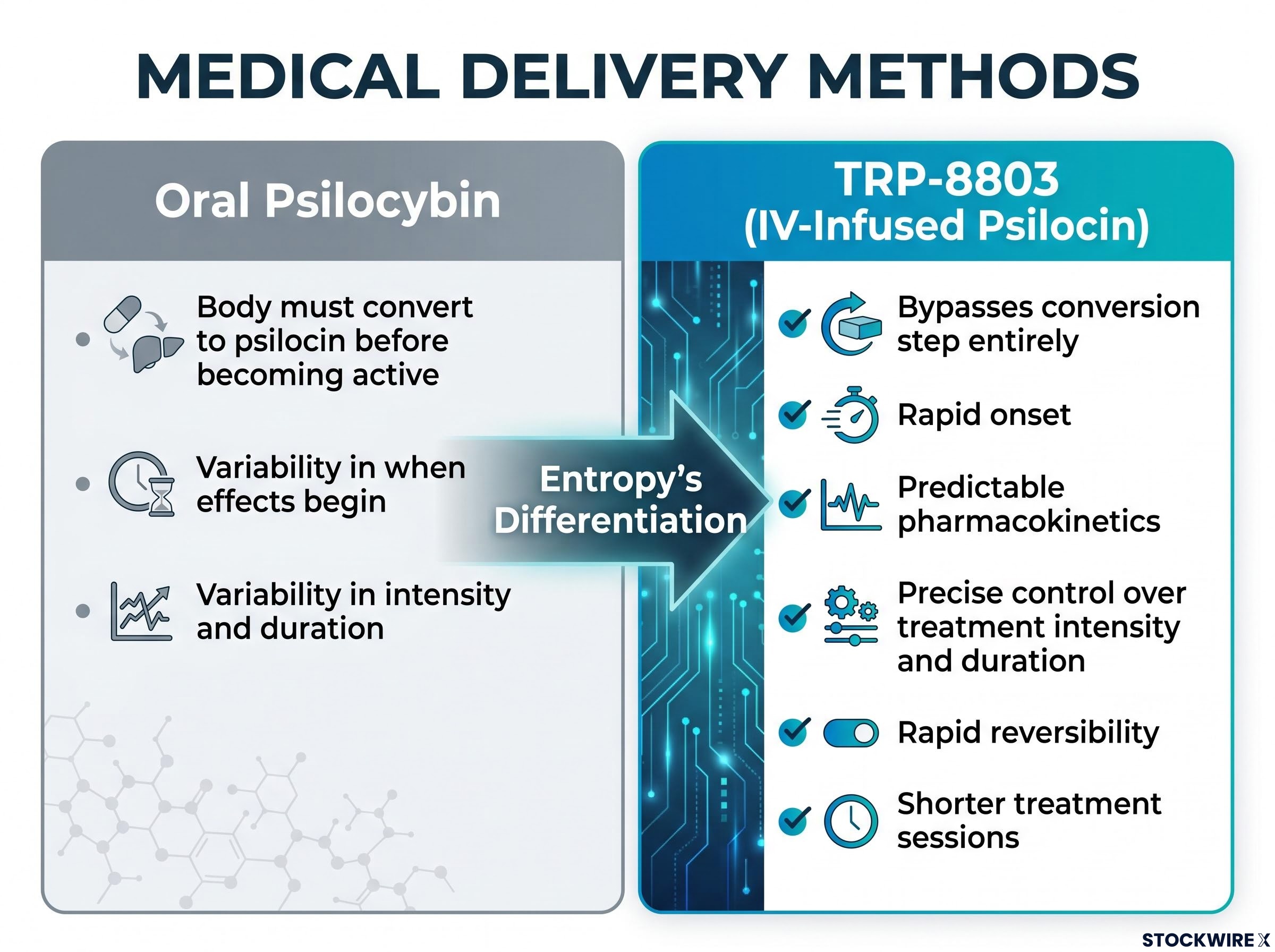
From a commercial perspective, shorter treatment sessions could enable healthcare facilities to treat more patients per day, addressing a key barrier to scaling psychedelic-assisted therapy in clinical settings.
The IV psilocin platform delivers onset in approximately 15 minutes and confines treatment sessions to 1-2 hours, compared to 1-3 hour onset times and 8-10 hour sessions typical of oral psilocybin, a contrast that directly shapes how many patients a clinic can treat in a single day.
Investment significance: The differentiation from oral psychedelics is central to Entropy’s commercial thesis. Predictability and shorter treatment times address key barriers to scaling psychedelic-assisted therapy in healthcare systems.
Cohort 1 results support Entropy’s IV delivery thesis
All six participants in Cohort 1 achieved a controlled and reproducible psychedelic response, with all six participants in Cohort 1 achieving a controlled and reproducible psychedelic response across all participants. The company noted that all patients achieved responses with high intensity, supporting its hypothesis that IV delivery offers advantages over oral therapies in terms of predictability and control.
The mid-range therapeutic dose used for Cohort 1 will inform dosing decisions for Cohort 2, allowing the study team to optimise treatment parameters based on observed outcomes.
Jason Carroll, CEO
“Given that all patients achieved a controlled and reproducible response to treatment and all at with a high intensity, we are very confident that topline will highlight positive clinical outcomes for BED patients.”
Investment significance: Reproducibility across all patients is a positive signal for the platform’s reliability. Consistency de-risks the path to larger trials where predictable dosing is essential.
Next steps and pathway to Cohort 2
The Data Safety and Monitoring Board will review Cohort 1 safety data in the coming weeks. Five of the six participants required for Cohort 2 have already been enrolled, with the sixth in final interview. Topline efficacy results from Cohort 1 are expected in July 2026, and these data will inform dosing optimisation for Cohort 2.
The upcoming milestones are:
- DSMB safety review (coming weeks)
- Final Cohort 2 enrolment (sixth participant in final interview)
- Topline Cohort 1 efficacy results (July 2026)
- Cohort 2 dosing commencement (post-DSMB review)
Investment significance: Near-term catalysts are clearly defined. July 2026 topline data represents the next major inflection point for the investment thesis.
Binge Eating Disorder represents a significant unmet medical need
Binge Eating Disorder is the most common eating disorder, characterised by recurrent episodes of eating large quantities of food accompanied by loss of control. Current treatment options are limited, with few approved pharmacological therapies available to patients.
Psychedelic-assisted therapy is being explored as a potential new treatment modality addressing underlying psychological drivers of the condition. Entropy has prior Phase 2a clinical experience with oral psilocybin in BED, providing a foundation for the current TRP-8803 programme. The company has also conducted Phase 2a trials using oral psilocybin for Irritable Bowel Syndrome and Fibromyalgia, with results from each demonstrating clinical benefits that will inform TRP-8803 development.
TRP-8802 IBS results from the Phase 2a study recorded a 75% response rate in treatment-resistant patients, a benchmark that exceeded every currently approved IBS therapy tested in non-refractory populations, and it is this clinical foundation that informs the TRP-8803 development programme.
Investment significance: Large patient populations with limited treatment options represent attractive commercial opportunities. Prior clinical experience in BED provides Entropy with a foundation for this indication.
The next major ASX story will hit our subscribers first
Investment outlook following Cohort 1 completion
The completion of Cohort 1 dosing represents validation of the TRP-8803 platform in a clinical setting, with the July 2026 topline data release serving as the key upcoming catalyst for investors to monitor.
| Metric | Status |
|---|---|
| Phase 2 study status | Ongoing |
| Topline Cohort 1 results | July 2026 |
| Cohort 2 recruitment progress | 83% complete (5 of 6 enrolled) |
CEO Jason Carroll highlighted the platform’s commercial potential in his comments on the milestone.
Jason Carroll, CEO
“Delivering a predictable and controllable psychedelic experience is an important step towards developing a therapy that can be integrated into real-world clinical settings, where treatment efficiency, reproducibility and scalability will be key drivers of commercial success.”
Investment significance: Clinical-stage biotechs are valued on pipeline progression. Completion of Cohort 1 dosing with reproducible results represents meaningful de-risking ahead of efficacy data.
Ready to Follow the TRP-8803 Clinical Programme Through to Efficacy Data?
Entropy Neurodynamics has completed first-cohort dosing with reproducible psychedelic responses across all six participants, positioning the company ahead of its July 2026 topline data release. The IV psilocin platform is now being evaluated in a second cohort following Data Safety and Monitoring Board review.
For investors tracking the progression of TRP-8803 and the broader IV psilocin development programme, visit the Entropy Neurodynamics investor centre for detailed trial updates, commercial strategy, and regulatory pathway documentation. The company’s clinical milestones represent key inflection points for shareholders monitoring the psychedelic-assisted therapy sector.