


SCENESSE® vitiligo data takes centre stage in Vienna
CLINUVEL Pharmaceuticals announced on 1 October 2026 that new patient case data from its CUV105 clinical trial is being presented to the European Academy of Dermatology and Venereology (EADV) conference in Vienna. The presentation features three adult patient cases demonstrating the clinical response to SCENESSE® (afamelanotide) combined with adjunct narrowband ultraviolet B (NB-UVB) phototherapy in vitiligo patients.
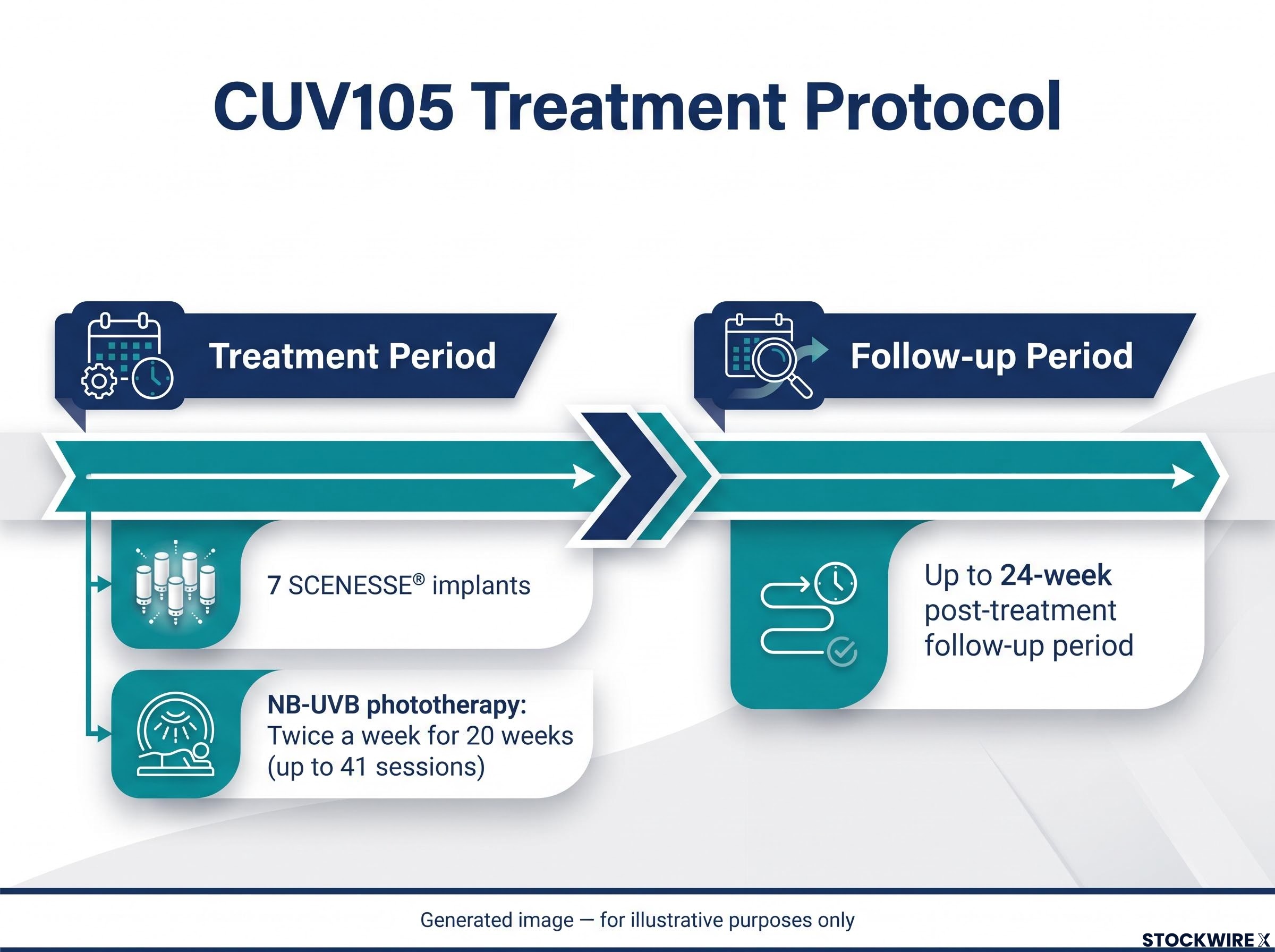
The three cases comprise two new study participants, from sites in Kenya and the U.S.A., alongside one previously presented case from Kenya. The treatment protocol administered across all participants was:
- Seven SCENESSE® implants
- NB-UVB phototherapy twice a week for 20 weeks (up to 41 sessions)
- An up to 24-week post-treatment follow-up period after cessation of therapy
All three participants carried Fitzpatrick skin types V and VI, representing darker skin tones that have historically been underserved in dermatology clinical research. Notably, all three responded to treatment.
Topline results from the CUV105 study are scheduled for December 2026, making this EADV presentation a meaningful preview ahead of that milestone.
When big ASX news breaks, our subscribers know first
What the three patient cases showed
Repigmentation observed across all participants
The clinical response across all three participants followed a recognisable two-stage pattern:
- Follicular repigmentation (the initial response), observed within lesions during the treatment period
- Progression toward confluence (advanced repigmentation) or homogeneity (complete blending of pigmentation) by end of treatment
- Spontaneous repigmentation continuing for up to 24 weeks after therapy ceased, without further intervention
That third stage is a particularly notable finding. The fact that pigmentation continued to improve after treatment stopped, and was maintained through to the final study visit, represents an encouraging durability signal for the therapy. Treatment was reported as well tolerated across all three participants.
Earlier CUV105 case data presented at the 2026 AAD meeting showed pigmentation maintained six months post-withdrawal in Fitzpatrick IV-VI skin types, a durability profile that stands in contrast to JAK inhibitors, which carry high relapse rates upon cessation.
Case-by-case snapshot
The table below summarises the key characteristics and outcomes for each participant. Images from the three patient cases, as presented to the EADV, are courtesy of the patients and treating physicians.
| Case | Age / Sex | Country | Fitzpatrick Skin Type | Key Outcome |
|---|---|---|---|---|
| Case 1 | 52-year-old female | U.S.A. | Type VI | Follicular response with some confluence on anterior arms, thighs, and abdomen; spontaneous repigmentation after cessation; progressively returning to baseline skin colour |
| Case 2 | 38-year-old female | Kenya | Type V | Follicular response with initial confluence on face, anterior arm and legs; returned to baseline skin colour by end of study |
| Case 3 | 38-year-old female | Kenya | Type V | Extensive repigmentation on face, torso, legs, and arms; repigmentation maintained with return to baseline skin colour by end of study |
Understanding vitiligo and why this trial matters
Vitiligo is a chronic autoimmune skin condition in which the immune system attacks melanocytes, the cells responsible for producing skin pigment. This causes patches of the skin to lose colour. Historically, approved treatment options have been limited.
NB-UVB phototherapy, which uses a specific wavelength of ultraviolet light to stimulate pigment-producing cells, is an established standard of care for vitiligo. Combining it with afamelanotide, a synthetic melanocortin peptide that directly stimulates melanocyte activity, represents a novel therapeutic approach designed to amplify the repigmentation response.
The inclusion of participants with Fitzpatrick skin types V and VI carries both clinical and commercial significance. Darker skin tones have been consistently underrepresented in dermatology research, meaning data generated in these populations addresses a genuine gap in the evidence base and expands the potential reach of any future approved therapy.
December topline results in focus
Dr Emilie Rodenburger, Director Global Clinical Affairs, CLINUVEL
“Across all cases from CUV105 shared publicly to date we see progressive repigmentation over 20 weeks in response to treatment with afamelanotide and adjunctive NB-UVB… In these three patients, despite different degrees of responses at the end of the treatment, it is encouraging to observe spontaneous repigmentation up to the last study visit, six months after completing the therapy.”
Full topline results from CUV105 are scheduled for December 2026. The EADV presentation serves as an important step in building international expert engagement ahead of that data release, with Dr Rodenburger noting it is seeking “feedback from the EADV meeting to understand expert responses to these latest cases.”
SCENESSE® currently holds regulatory approval in Europe, the USA, Canada, Israel, and Australia for the prevention of phototoxicity in adult patients with erythropoietic protoporphyria (EPP). Vitiligo represents a potential label extension that the company is actively pursuing through the CUV105 programme. Whether that extension ultimately proceeds will depend on the topline data and subsequent regulatory assessments, which remain pending.
For readers interested in the regulatory framework sitting behind this programme, our full explainer on the CUV107 Phase III design and EMA pathway covers the 300-patient trial structure, the totality-of-evidence evaluation approach, and the priority population guidance the EMA issued for darker skin tones.
Don’t Miss the Next Healthcare Breakthrough
Big News Blast delivers FREE breaking ASX healthcare news straight to your inbox within minutes of release, complete with in-depth analysis already done for you. Join 20,000+ subscribers who stay ahead of the market the moment announcements drop. Click the “Free Alerts” button to start receiving real-time coverage today.