
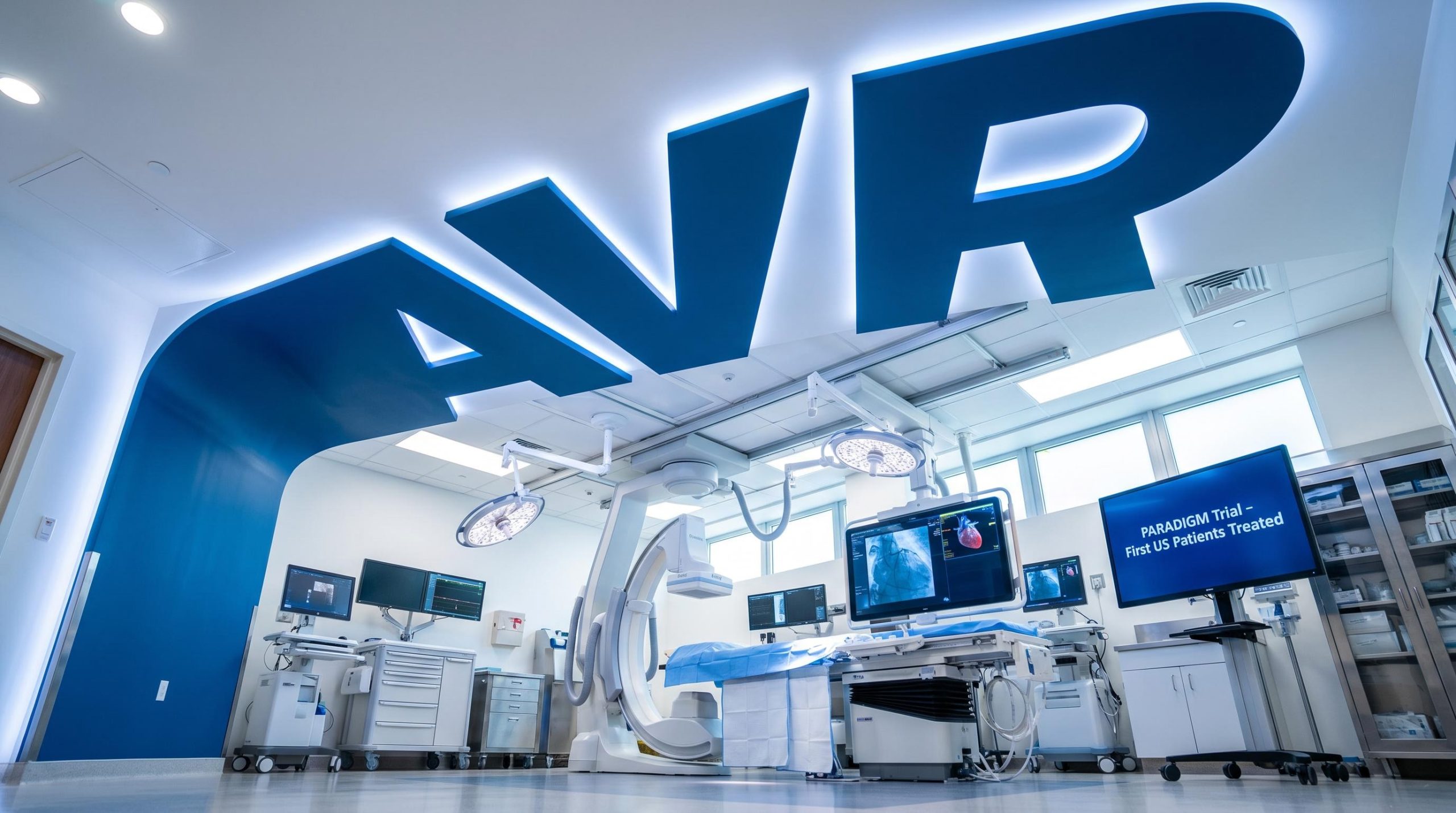
Anteris Technologies has enrolled and successfully treated the first US patients in its global PARADIGM pivotal trial, marking a critical milestone for the DurAVR Transcatheter Heart Valve system. The procedures were performed at Montefiore Medical Center, New York, by Dr Azeem Latib, Director of Interventional Cardiology and Director of Structural Heart Interventions. US enrollment was achieved within one week of receiving CMS approval.
Anteris treats first US patients in global DurAVR pivotal trial
The PARADIGM Trial is evaluating the DurAVR THV in approximately 1,000 patients across its All Comers Randomised Cohort, with 1:1 randomisation between DurAVR and commercially available transcatheter aortic valve replacements (TAVRs). The trial is registered under ClinicalTrials.gov identifier NCT07194265.
Dr Latib described the early procedural experience as “highly encouraging” and emphasised that PARADIGM is designed to address clinically meaningful questions beyond standard safety assessments. The trial protocol extends measurement into areas typically not captured in TAVR studies, including left ventricular recovery patterns and the impact of blood flow characteristics on cardiac function.
Vice Chairman and Chief Executive Officer Wayne Paterson stated that the Anteris team and physician partners worked closely to achieve first patient enrolments within the week following CMS approval. US study sites are now coming online to expand recruitment capability.
Enrolling US patients converts regulatory clearance into active clinical progress. Pivotal trial enrollment is the rate-limiting step for FDA approval, and achieving first treatments within a week of CMS approval demonstrates operational execution capability. The speed of US site activation will determine the timeline to trial completion and subsequent regulatory submission.
When big ASX news breaks, our subscribers know first
What is a pivotal trial and why does PARADIGM matter?
A pivotal trial is the final-stage clinical study required before FDA approval of a medical device. PARADIGM is structured as a prospective randomised controlled trial, which represents the gold standard for generating regulatory-grade evidence. This is a head-to-head comparison against existing approved TAVRs, not a single-arm study where DurAVR would be tested in isolation.
The primary composite endpoint measures all-cause mortality, all stroke, and cardiovascular hospitalisation at one year post-procedure. The trial will assess whether DurAVR demonstrates non-inferiority to commercially available TAVRs on this endpoint, meaning outcomes must be at least as good as existing approved devices.
PARADIGM extends beyond typical TAVR studies by also measuring left ventricular recovery patterns and the impact of blood flow characteristics on cardiac function. These secondary measures aim to establish whether DurAVR’s biomimetic design translates into measurable differences in heart function restoration.
Head-to-head trials against approved competitors are the most rigorous pathway to clinical differentiation claims. Positive data could position DurAVR as clinically superior to existing TAVRs, not just non-inferior on safety metrics. This structure creates the potential for differentiated labelling and commercial positioning if secondary endpoints demonstrate advantages.
Trial design and enrollment structure
The All Comers Randomised Cohort enrolls patients with severe calcific aortic stenosis who are candidates for transcatheter aortic valve replacement. Patients are randomised 1:1 to receive either the DurAVR THV or a commercially available TAVR using approved devices already on the market.
The primary endpoint is designed as a non-inferiority comparison. DurAVR must demonstrate that outcomes on the composite measure of all-cause mortality, all stroke, and cardiovascular hospitalisation at one year are at least as good as those achieved with existing TAVRs.
US sites are now coming online to expand recruitment capability. Multiple sites are anticipated to participate in enrollment, which will determine the speed at which the ~1,000 patient target is reached.
| Parameter | Detail |
|---|---|
| Trial Name | PARADIGM |
| Target Enrollment | ~1,000 patients |
| Randomisation | 1:1 DurAVR vs commercial TAVR |
| Primary Endpoint | Composite: mortality, stroke, CV hospitalisation at 1 year |
Principal Investigator commentary
Dr Latib stated that initiating enrollment represents “a critical step toward generating the evidence needed to inform future patient care.” He emphasised that PARADIGM is structured to go beyond the usual safety metrics captured in TAVR studies.
Dr Azeem Latib, Principal Investigator and Director of Interventional Cardiology and Director of Structural Heart Interventions, Montefiore Medical Center
“PARADIGM is specifically designed to answer clinically meaningful questions and go beyond the usual safety metrics and hemodynamics by also looking at the impact of flow patterns on left ventricular recovery.”
The trial design reflects a focus on functional cardiac outcomes rather than solely procedural safety endpoints. This approach positions PARADIGM to generate data on whether the biomimetic valve design translates into measurable differences in heart function restoration.
DurAVR’s differentiated technology platform
The DurAVR THV is described as the first biomimetic valve, shaped to mimic the performance of a healthy human aortic valve. The valve is constructed using a single piece of moulded ADAPT tissue, Anteris’ patented anti-calcification tissue technology. The system comprises the DurAVR valve, ADAPT tissue, and the balloon-expandable ComASUR Delivery System.
ADAPT tissue is FDA-cleared and has been used clinically for over 10 years, with distribution for use in more than 55,000 patients worldwide. This clinical track record provides durability evidence for the tissue component of the DurAVR system.
The biomimetic design aims to replicate normal aortic blood flow patterns. This design claim is the core intellectual property underpinning Anteris’ differentiation thesis against existing TAVRs, which use different valve geometries and tissue preservation techniques. The PARADIGM Trial’s secondary endpoints measuring flow patterns and left ventricular recovery are designed to test whether this design translates into measurable clinical advantages.
What is aortic stenosis?
Aortic stenosis is the narrowing of the aortic valve, which restricts blood flow from the heart. The condition is described as potentially life-threatening when severe. Transcatheter aortic valve replacement (TAVR) is the minimally invasive treatment alternative to open-heart surgery, allowing valve replacement through catheter-based delivery rather than surgical chest opening.
DurAVR is designed to restore normal aortic blood flow patterns by mimicking the geometry and function of a healthy human aortic valve. The PARADIGM Trial will measure whether this design approach results in different cardiac functional outcomes compared to existing TAVRs.
Path forward and strategic context
Vice Chairman and CEO Wayne Paterson stated that the team and physician partners worked closely together to achieve first patient enrolments within the week of CMS approval. US sites are expanding recruitment capability, which suggests accelerating enrollment potential as additional centres come online.
The US represents the largest TAVR market globally. Enrollment in US sites is critical for the commercial pathway, as FDA approval and subsequent US market access depend on data generated from the PARADIGM Trial. The speed of US enrollment will determine the timeline to trial completion, one-year follow-up data readout, and regulatory submission.
Key milestones to track:
- Continued US site activation and enrollment ramp
- Trial enrollment completion (target ~1,000 patients)
- One-year follow-up data readout
- FDA submission based on pivotal data
Speed of patient recruitment will determine how quickly Anteris progresses through these stages. The one-week turnaround from CMS approval to first treatments demonstrates operational execution capability, but sustained enrollment across multiple sites will determine whether the trial remains on the anticipated timeline. Investors should monitor enrollment progress updates and site activation announcements as indicators of trial momentum.
Want the Next MedTech Breakthrough in Your Inbox?
Join 20,000+ investors receiving FREE breaking ASX healthcare news delivered within minutes of release, complete with in-depth analysis. Click the “Free Alerts” button at Big News Blast to get market-moving announcements the moment they drop, with expert coverage already done for you.