AdAlta extends survival signal across EW-001 mesothelioma cohort
AdAlta (ASX:1AD) has reported that all five patients on study at its March 2026 clinical update remain alive and in follow-up as at July 2026, extending the survival signal seen with its lead CAR-T cell therapy, EW-001, in an Investigator Initiated Trial (IIT) in advanced mesothelioma.
The update points to an emerging trend of longer survival at higher doses. Among higher-dose patients, 3 of 10 (30%) have now survived at least 12 months, with three more patients alive and yet to reach that milestone.
Together with the durability of a previously reported two-year complete response, the data strengthen the rationale for evaluating higher EW-001 dosing in the company’s planned Australian Phase 1 study.
When big ASX news breaks, our subscribers know first
Continued survival and response signals build across the cohort
The July 2026 update marks a continuation of AdAlta’s previous follow-up, with all patients who remained on study in March still alive and in the trial three months later. The results also confirm the response profile observed across the higher-dose cohort.
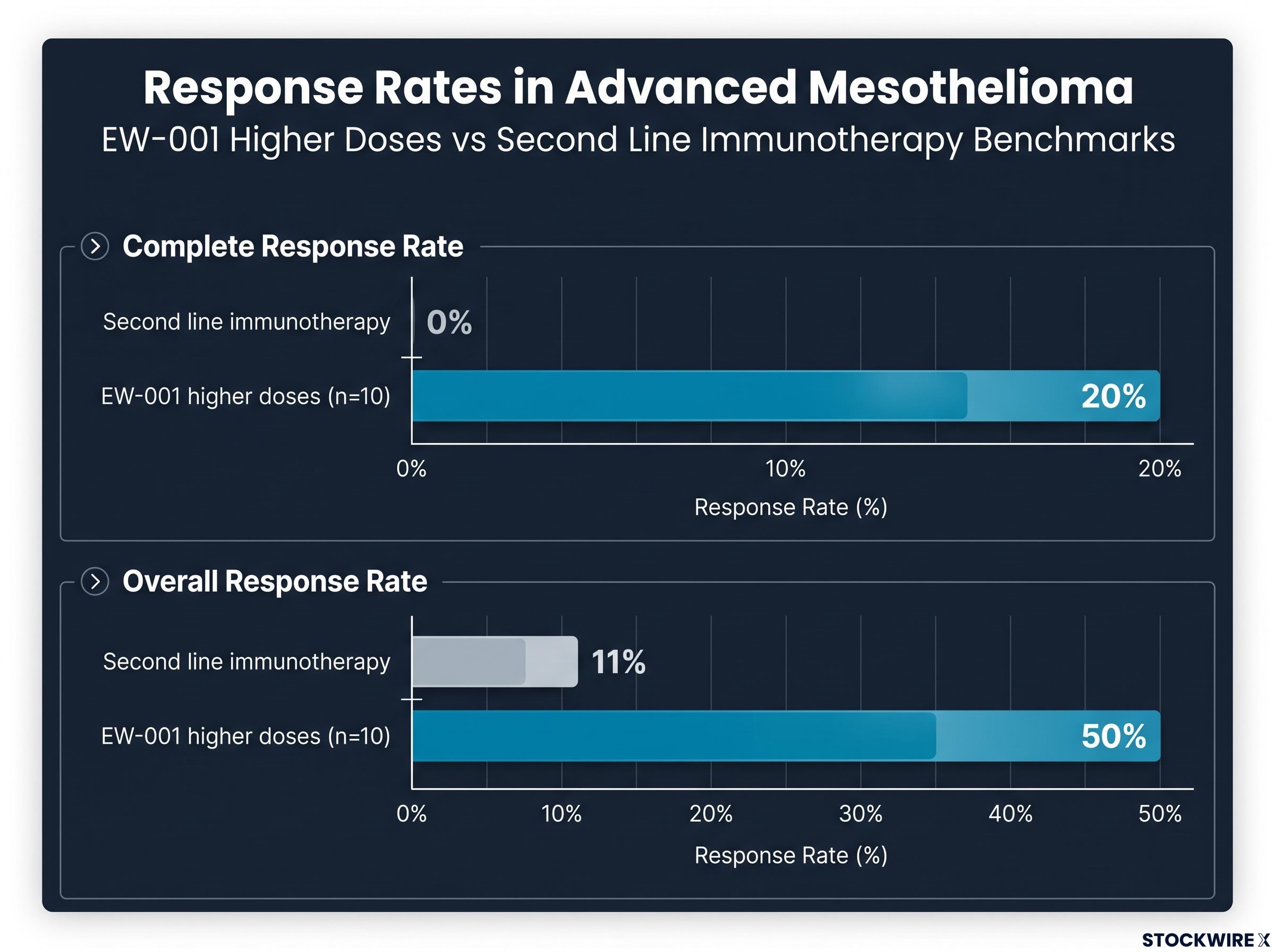
The March 2026 clinical results reported a 50% Overall Response Rate and a 20% Complete Response Rate at higher EW-001 doses across ten advanced mesothelioma patients, establishing the baseline from which the July update extends.
Key figures from the update include:
- All 5 patients on study in March 2026 remain alive and on study as at July 2026.
- 3 of 10 (30%) higher-dose patients have survived at least 12 months, with 3 more patients alive and yet to reach that point.
- 2 Complete Responses (CR) and 3 Partial Responses (PR) were recorded, giving an Overall Response Rate of 50% to EW-001 therapy.
A Complete Response (CR) means no tumour can be detected after treatment, while a Partial Response (PR) reflects tumour shrinkage greater than 30%.
Dr Tim Oldham, CEO and Managing Director
“Every one of the five patients still on study in March remains alive, and the higher the EW-001 dose, the better patients have done. Combined with two patients achieving complete tumour clearance also at these higher doses, something almost never seen in advanced mesothelioma, this supports our plan to – evaluate even higher doses in our Australian Phase 1 study. For patients with advanced mesothelioma, who today have very few options, EW-001 offers real new hope – and for our shareholders it strengthens the value we are building in this program.”
EW-001 response rates measured against treatment benchmarks
Mesothelioma is a rare but rapidly fatal cancer usually linked to asbestos exposure. Once the disease progresses following first line chemotherapy or immunotherapy, second line options are limited and clinical outcomes are generally poor.
In advanced (second line and later) mesothelioma, a Complete Response is almost never achieved with current therapies, with major published studies reporting Complete Response rates of 0%. This comparative context is why the EW-001 Complete Response results reported on 5 August 2026 stand out.
The table below summarises key response and survival rates to date. According to AdAlta, Complete and Overall Response rates to EW-001 compare favourably with current first and second line options, while survival rates are trending towards current second line survival benchmarks with a significant number of patients still alive.
| Outcome measure | First line chemotherapy | First line immunotherapy | Second line placebo | Second line immunotherapy | EW-001 all patients (n=14) | EW-001 higher doses (n=10) |
|---|---|---|---|---|---|---|
| Complete Response Rate | 0% | 2.6% | 0% | 0% | 14% | 20% |
| Overall Response Rate | 44.0% | 39.6% | 1% | 11%^ | 43% | 50% |
| 1-year survival rate | 58% | 68% | ~30% | ~45% | 21% so far | 30% so far |
| 2-year survival rate | 27% | 41% | 18% | 25% | 7% so far | 10% so far |
^ Overall response rates of up to 29% have been reported in some other second line studies.
Survival figures are presented on a “so far” basis, with a further 21% of all patients (30% of higher-dose patients) alive and yet to reach the 12-month milestone, and a further 36% of all patients (50% of higher-dose patients) alive and yet to reach 24 months. Patient numbers remain small.
How CAR-T therapy works and why mesothelioma is so hard to treat
CAR-T (chimeric antigen receptor-T cell) therapy is a living drug manufactured from a patient’s own immune cells. These cells are engineered in a laboratory to incorporate a receptor that binds to a molecule on the surface of a cancer, enabling the immune cells to find and kill it. A single dose of CAR-T therapy has the potential for durable effects and could be potentially curative.
Mesothelioma affects the membranes surrounding the lungs, heart and gastrointestinal organs. Patients are typically treated first line with chemotherapy or immunotherapy, but once the disease returns or progresses, therapeutic options become limited and outcomes deteriorate.
This context matters for investors, regulators and prospective partners. Achieving a Complete Response in advanced mesothelioma, an outcome almost never seen with current therapies, is clinically significant and underpins the potential differentiation of EW-001.
Stronger responses at higher doses point to Phase 1 strategy
Measurements of how much EW-001 is present in patients’ blood after treatment, known as pharmacokinetics, analysed alongside the tumour responses, show a consistent trend: patients who received higher doses tended to respond better.
This is notable because the highest dose given so far remains modest by CAR-T standards. Adverse events seen with EW-001 have been well-managed since the adoption of best practice CAR-T safety protocols.
These data support AdAlta’s strategy to test higher doses in its planned Australian Phase 1 study, seeking stronger and more frequent responses.
Next steps: manufacturing transfer and FDA engagement
AdAlta will continue to follow all patients remaining on study and anticipates reporting additional survival and durability data periodically as it becomes available. In parallel, the company is progressing two development milestones for EW-001, both anticipated in H2 CY2026:
- Australian manufacturing transfer: AdAlta is transferring the EW-001 manufacturing process to Cell Therapies Pty Ltd in Australia, with the first Australian manufacturing runs expected during the second half of calendar 2026.
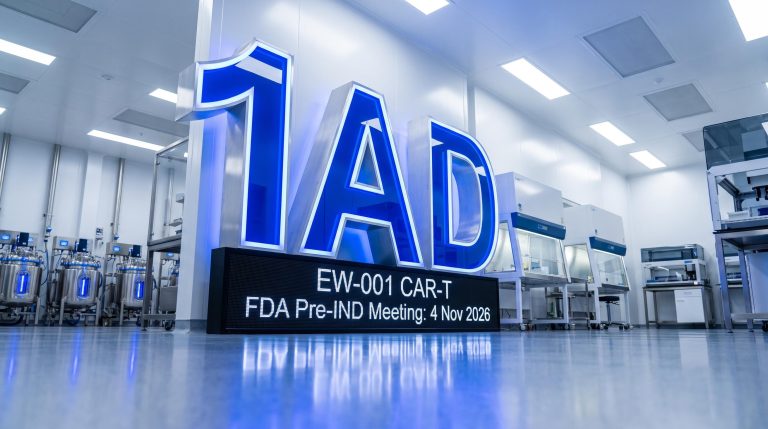
- US regulatory engagement: The company is preparing for a pre-Investigational New Drug (pre-IND) meeting with the US Food and Drug Administration, anticipated in the second half of calendar 2026.
These steps are intended to establish an Australian manufacturing platform, obtain regulatory guidance and support the planned Australian Phase 1 clinical study, consistent with AdAlta’s “East to West” strategy.
Investors tracking the FDA regulatory timeline will find our detailed coverage of AdAlta’s final milestone payment to SHcell useful, as that payment unlocked FDA-submission-ready safety data and CAR-T cell persistence records from five additional patients, directly strengthening the pre-IND data package going into the H2 2026 meeting.
Why this update matters for shareholders
For shareholders, the value of the update lies in the durability of responders and the broader clinical trend observed across the higher-dose cohort. AdAlta framed the significance around three pillars:
- Durability: All five patients on study in March survived a further three months, and a single dose of EW-001 has now kept one patient free of an aggressive cancer for two years (previously announced).
- Direction: The stronger responses observed among higher-dose patients provide data-driven support for evaluating higher EW-001 doses in the planned Australian Phase 1 study.
- Evidence development: Each additional month of patient survival and follow-up strengthens the clinical evidence and the information package AdAlta can present to regulators and prospective development or commercialisation partners.
AdAlta noted that Investigator Initiated Trials involve small numbers of patients and are not a substitute for controlled clinical studies. Even so, the company stated that a signal of this kind in a disease with so few options continues to support its confidence in EW-001.
The company’s “East to West” strategy seeks to connect Eastern innovation in cellular immunotherapies with Western regulated markets, with the two H2 CY2026 milestones representing the near-term catalysts investors will be watching.
Don’t Miss the Next Healthcare Breakthrough on ASX
Big News Blast delivers FREE breaking ASX healthcare news directly to your inbox within minutes of release, complete with in-depth analysis already done. Join 20,000+ subscribers staying ahead of market-moving announcements the moment they drop. Click the “Free Alerts” button at StockWire X to start receiving alerts today.