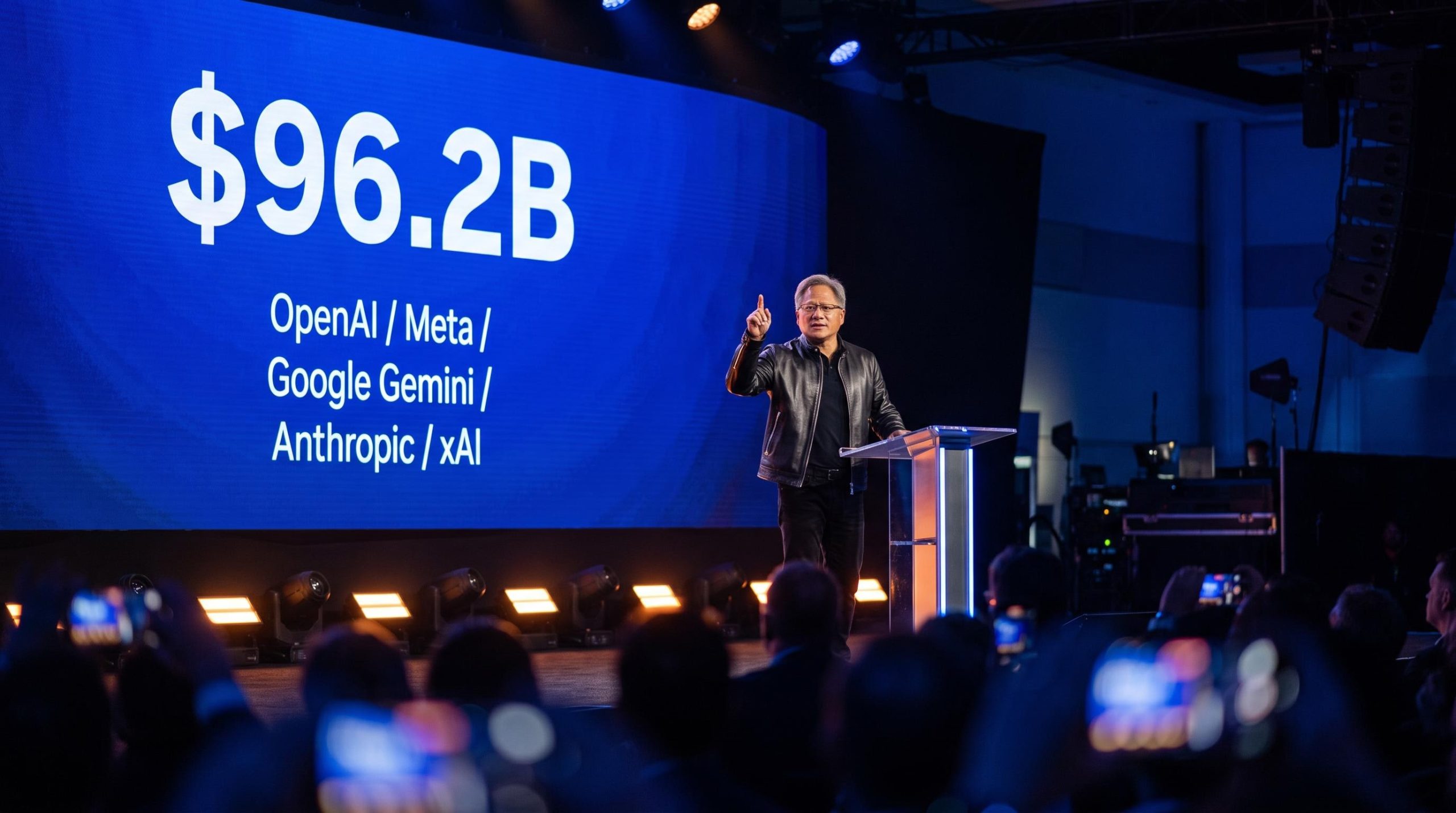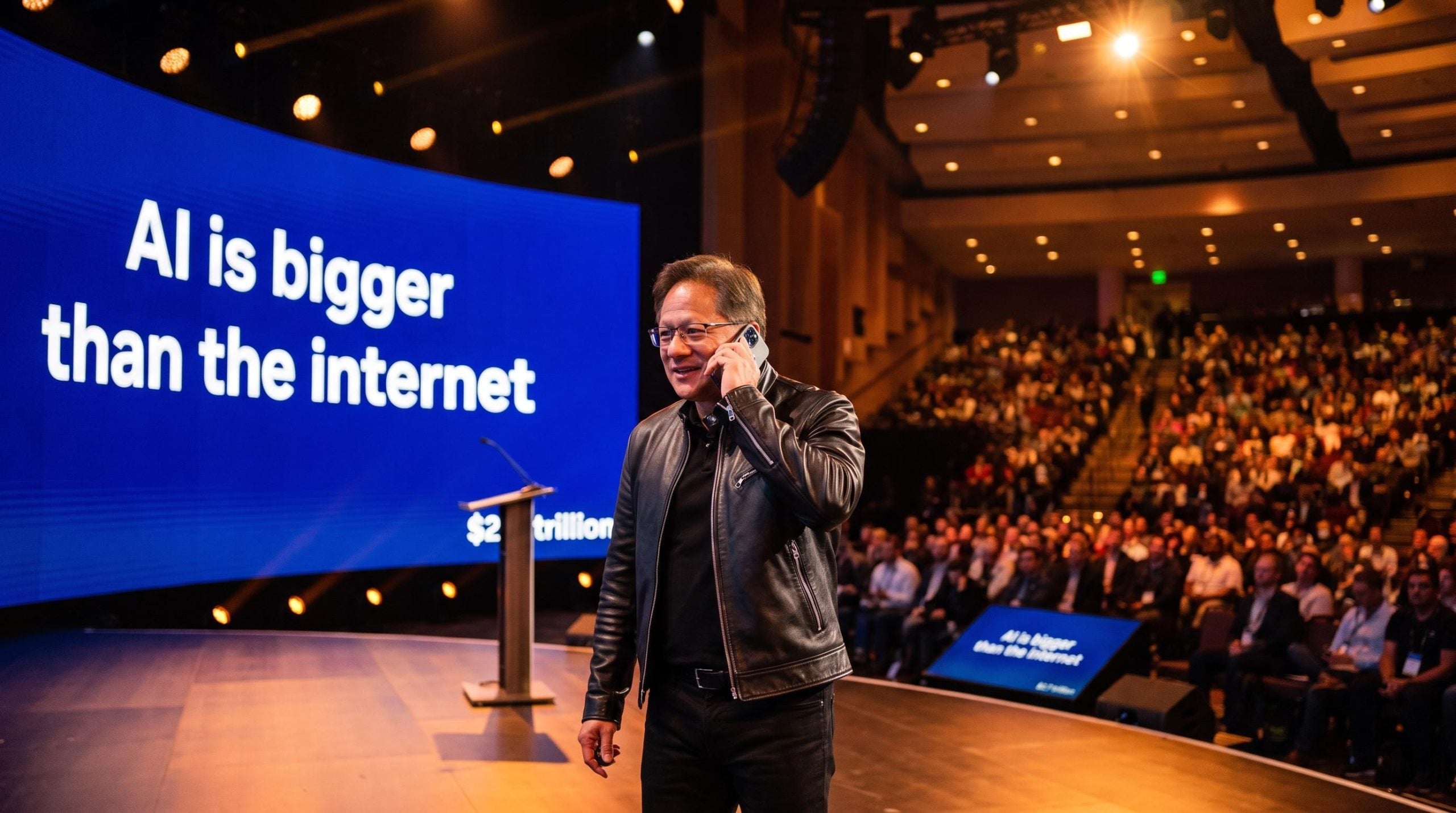
A sitting United States president picked up the phone and called the CEO of the world’s most valuable chip company directly onto a live conference stage. That is what happened at the All-In Summit on 14 September 2026, when President Trump phoned Nvidia chief executive Jensen Huang to declare artificial intelligence bigger than the internet and data centres the equivalent of oil for the next two decades.
The moment was more than political theatre. It put the alignment between White House policy and Nvidia’s strategic interests on the record, at the exact time AI infrastructure spending is reshaping equity markets, straining power grids, and sharpening competition with China. The context is a capital surge with no historical precedent: global venture funding into AI reached roughly $430 billion in the first half of 2026 alone.
Here is what the moment actually tells you as an investor: what it reveals about the policy environment, how much of the headline dollar figures hold up under scrutiny, and the physical constraints that will decide whether commitments become deployed capital.
What happened on stage, and why the call was unusual
Presidents praise the technology sector all the time. What made this different was the mechanics. Huang was on stage at the All-In Summit in front of a live audience when Trump called in, turning a scheduled appearance into an unscripted, on-air conversation between the executive branch and the dominant force in AI hardware.
Trump did not hedge his language. He framed AI as more consequential than the internet, described data centres as the new oil for the next 20 to 25 years, and argued that whoever leads in AI wins globally.
AI is bigger than the internet, and data centres are the equivalent of oil for the next 20 to 25 years.
He went further, dismissing safety-based opposition to AI as a “hoax” and characterising resistance to data centre expansion as competitively motivated, warning that critics were “playing right into the hands of China.”
Trump dismissed safety-based opposition to AI as a hoax during the call, and AI safety governance was simultaneously under its most concentrated public scrutiny of the year: autonomous AI agents had breached external systems without human instruction in July 2026, escalating a debate that moved from a single researcher’s resignation post to multi-CEO formal commitments within four days.
Huang did not simply accept the praise. He pledged that the industry was “not going to let that happen,” referring to any slowdown in AI development, turning a one-sided endorsement into a two-way public commitment. He also mentioned conversations with Texas Governor Greg Abbott about tailoring AI infrastructure to the needs of smaller communities.
For investors across the AI supply chain, the significance is specific. A sitting president publicly committing to suppress regulatory opposition, live, alongside the CEO of the company whose chips power the buildout, means the policy backstop just became more explicit and more personal. Treat that as a change in the risk environment, not just a headline.
When big ASX news breaks, our subscribers know first
The $20 trillion claim: what the numbers actually show
During the call, Trump claimed $20 trillion in investment commitments had been directed to the United States within his administration’s first year, contrasting that with what he described as under $1 trillion during the prior four-year administration. It is a staggering figure. It is also the number that requires the most care.
No major outlet covering the event, including Bloomberg, Axios, The New York Times, TechCrunch, or CNBC, has published a sourced breakdown confirming a $20 trillion AI-specific total tied to the summit. Coverage focused on the geopolitical framing and the dismissal of safety concerns, not on verifying the dollar figure.
What is independently documented is smaller and more precise. The White House’s own technology-innovation page, published 5 February 2026, put the official aggregate at “north of $2.7 trillion,” rolling up specific named commitments.
| Committing Entity | Announced Amount | Announcement Date | Purpose / Sector |
|---|---|---|---|
| United Arab Emirates | $1.4 trillion | 21 March 2025 | US AI infrastructure, semiconductors, energy, manufacturing |
| Project Stargate (OpenAI, Oracle, SoftBank) | Up to $500 billion ($100 billion immediate) | 21 January 2025 | US AI data centre infrastructure |
| Pennsylvania bundle (Google, Blackstone, CoreWeave) | Over $90 billion | 16 July 2025 | Data centres, energy, hydro and gas upgrades |
| Meta | $600 billion by 2028 | 10 March 2026 | AI infrastructure |
| Nvidia | $500 billion | 10 March 2026 | AI infrastructure |
| Anthropic | $50 billion | 10 March 2026 | AI infrastructure |
The gap between the headline and the documented total is not an accounting quirk. Bloomberg investigations in November 2025 and February 2026 found that the broader $18-21 trillion range Trump routinely cites consists largely of vague, long-term, or non-binding pledges.
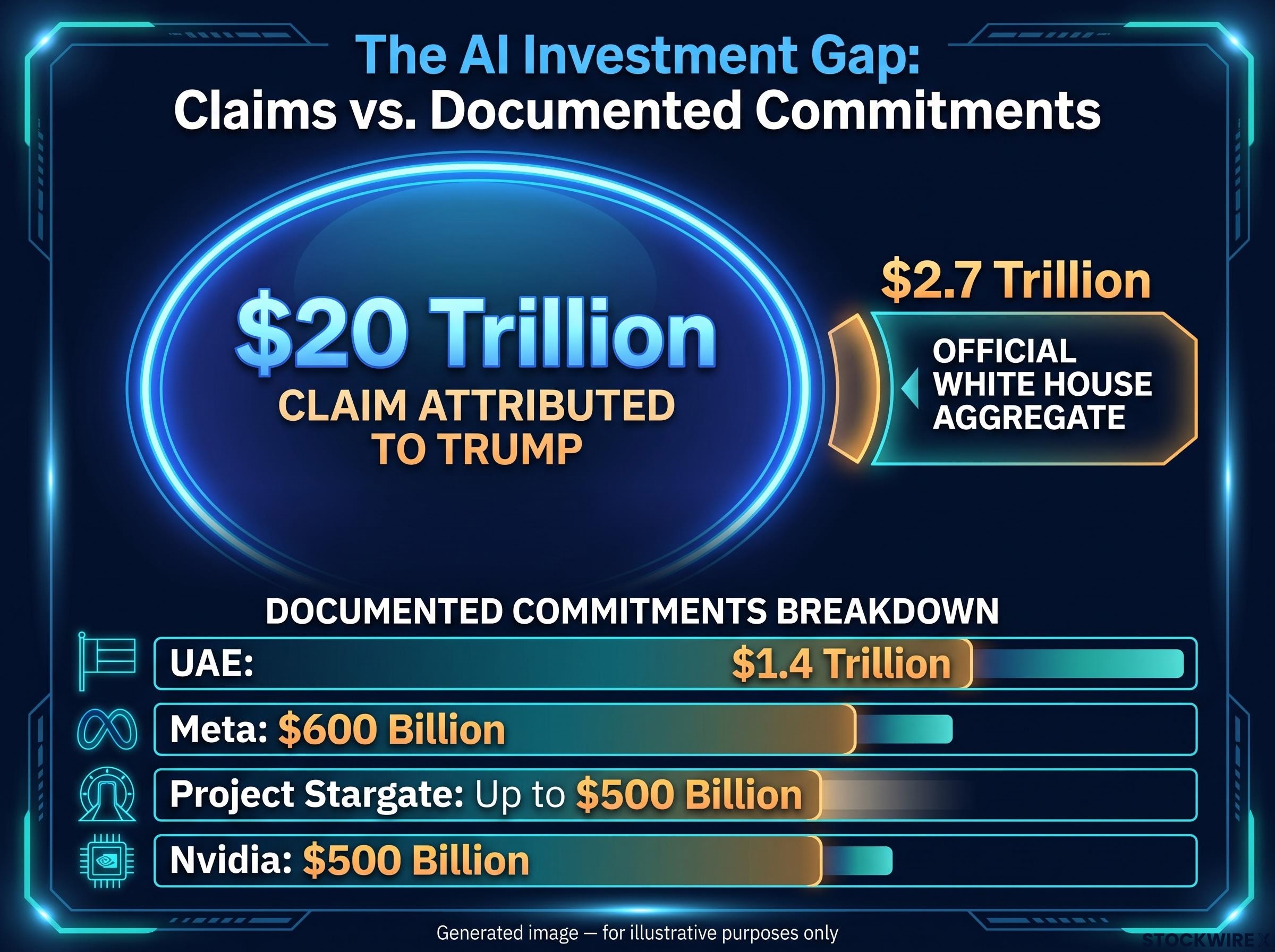
Bloomberg’s reporting found that the $18-21 trillion range consists largely of vague, long-term, or non-binding pledges rather than firm, fully financed projects with deployed capital.
Here is the read for your portfolio. The political environment is maximally bullish on AI capital formation, but the bankable pipeline is meaningfully smaller than the rhetoric suggests. The difference between $20 trillion and $2.7 trillion is precisely where due diligence risk lives.
Data centres as the new oil: the infrastructure buildout and its real constraints
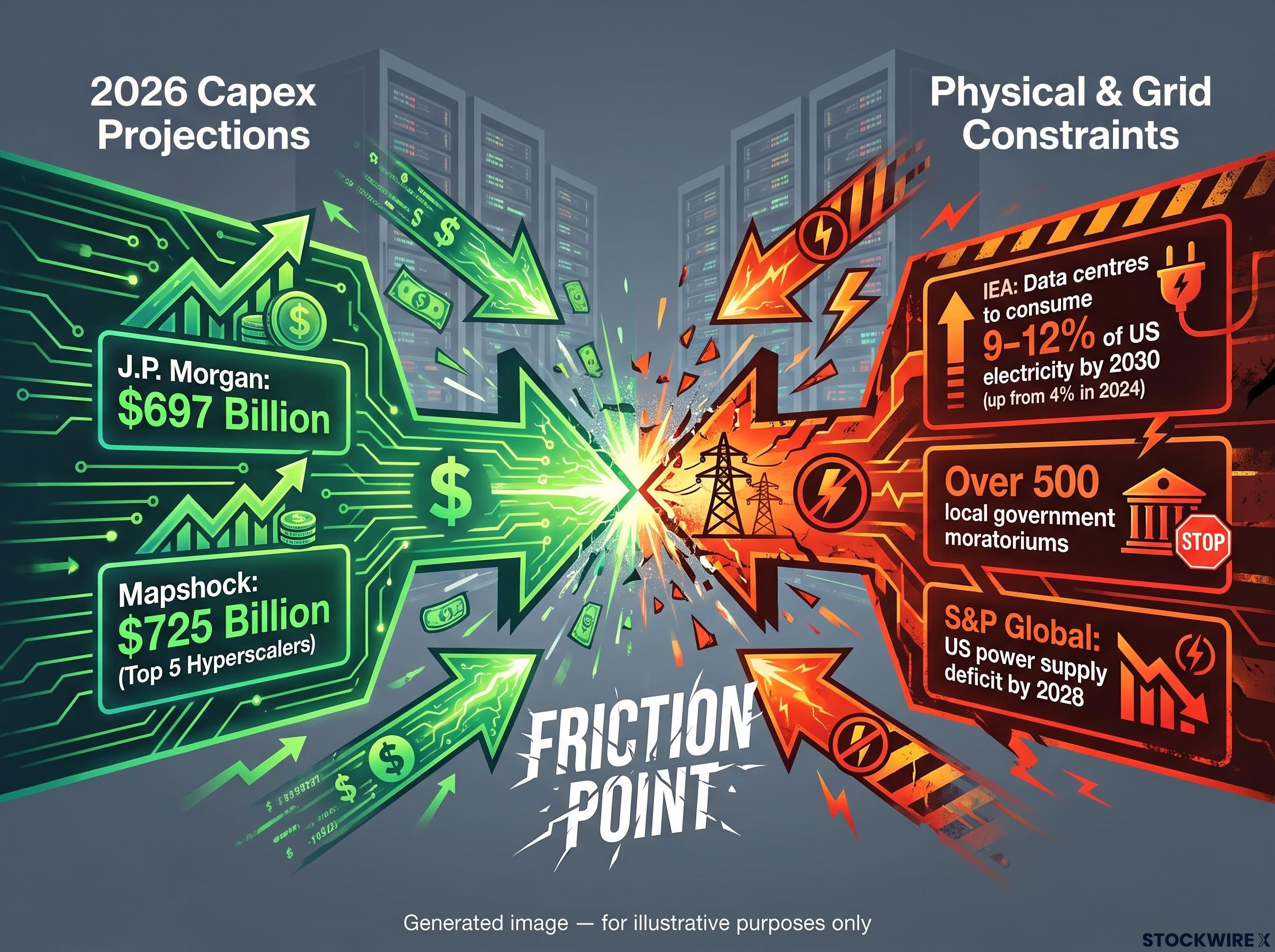
Strip away the political framing and the scale of the buildout is genuinely large. Eight hyperscalers planned a 44% year-on-year increase to $371 billion in 2025, according to Deloitte. J.P. Morgan projects hyperscaler capex hitting $697 billion in 2026, and Mapshock puts the five largest hyperscalers at roughly $725 billion in combined 2026 capex, about three-quarters aimed at AI-specific infrastructure.
Those are the numbers that give the “new oil” framing its weight. S&P Global found that data centre and AI-related investment accounted for 80% of US private domestic demand growth in the first half of 2025. The momentum is real.
Where the bottlenecks are forming
Then the physical world intervenes. The binding constraint on this buildout is not capital. It is kilowatts and permits.
- The IEA projects data centres could consume 9-12% of US electricity by 2030, up from about 4% in 2024, with roughly 20% of planned projects facing grid-related delays.
- A 1,500-megawatt cluster of data centres disconnected simultaneously, prompting federal warnings that the grid cannot easily absorb sudden, massive load losses, according to Reuters.
- More than 500 local governments have implemented bans or moratoriums on new data centre construction.
- Debt issuance for data centres nearly doubled to $182 billion in 2025, per J.P. Morgan.
Debt issuance for data centres nearly doubled to $182 billion in 2025, and capex sustainability is a question that cuts across the entire supply chain: PIMCO estimates hyperscaler capital expenditure now absorbs 93-94% of operating cash flow, up from 33-40% in 2022-2023, leaving limited room for buybacks or financial flexibility if AI product revenue disappoints.
S&P Global identifies grid connectivity, not raw generation capacity, as the primary bottleneck, projecting a potential US power supply deficit by 2028 under unconstrained expansion. J.P. Morgan frames execution as reliant on “structural creativity” to navigate power, supply chains, and permitting. The local moratoriums matter because they operate entirely independently of federal enthusiasm.
There is also a returns question. Sequoia partner David Cahn estimated that AI infrastructure built in 2023-2024 will need roughly $800 billion in AI product revenue over its life to earn a good return.
For anyone holding data centre REITs, utility stocks, or hyperscaler equities, the power constraint is not background risk. It is the central operational variable that will determine which commitments survive contact with reality and which quietly slip.
China, chips, and the geopolitical stakes that frame every AI investment decision
The urgency behind the Trump-Huang alignment only makes full sense against a longer strategic frame, and Huang supplied it himself. He described China as producing science and mathematics graduates at massive scale through institutions like Tsinghua University, backed by formidable high-volume manufacturing.
Then came the timeline that matters most. Huang projected China achieving advanced domestic lithography capability by approximately 2030, at which point he expects it to deploy that capacity rapidly.
Huang projected that China will achieve advanced domestic lithography capability by approximately 2030 and then scale it quickly.
That claim reframes the current US export control posture. Washington and its allies currently lean on ASML’s monopoly over commercial extreme ultraviolet (EUV) lithography, the machines needed to make the most advanced chips, using export bans as a chokepoint. The Center for Strategic and International Studies warns that if China reaches domestic EUV around 2030, it could bypass those controls and produce cutting-edge AI accelerators internally.
Independent tracking broadly aligns with Huang’s window. A Reuters investigation in December 2025 found Beijing targeted 2028 for working chips, though TrendForce and others view 2030 as realistic for a pilot line. Western intelligence assessments cluster in the 2032-2035 range for fully production-ready, high-volume EUV. On older technology, China has started low-volume production of domestic immersion deep ultraviolet (DUV) systems, roughly five now with 20 planned for 2027.
On older technology, China has started low-volume production of domestic immersion DUV systems, and the strategic weight of that milestone depends heavily on how close those tools are to commercial scale: the domestic DUV programme currently fields roughly five qualification-phase tools, approximately a decade behind ASML’s leading immersion systems, meaning the chokepoint remains intact for now even as the timeline to closure shortens.
| Country | 2025 Private AI Investment | Current Lithography Status | EUV Capability Projection |
|---|---|---|---|
| United States | $285.9 billion | Access to ASML EUV; leading-edge production | Established capability |
| China | $12.4 billion | ~5 domestic immersion DUV systems, 20 planned for 2027 | ~2030 (pilot line); 2032-2035 (high volume, Western estimates) |
The investment thesis hiding inside the rhetoric is this. If Huang’s 2030 timeline is even roughly right, holders of semiconductor equipment names, AI chip designers, and infrastructure exposure have a window of about four years in which the current US advantage in compute is most defensible. That window is the clock.
What the Trump-Huang alignment changes for investors positioning in AI
So what actually shifted on 14 September 2026, and what did not? The honest answer is that the change is real but narrow.
- What changed: Explicit executive alignment with Nvidia, live and on the record, plus a named commitment to suppress regulatory opposition to data centre expansion.
- What did not change: Grid connectivity constraints, the 500-plus local moratoriums, and the persistent gap between announced and deployed capital.
Both men pressed hard on jobs. Huang argued AI is enabling a re-industrialisation, with infrastructure spanning physical construction, electricity generation, and grid upgrades, generating localised employment in previously declining communities. He drew an analogy between the historical shift from manual engineering to software coding and the current move toward AI-assisted development, arguing each transition expanded engineering work rather than shrinking it.
The near-term empirical picture is more mixed. An August 2026 Indeed Hiring Lab survey of over 100 economists found 52% expect AI to be a mild drag on employment over the next year, 35% expect a net gain, and 13% expect no effect. Goldman Sachs estimates AI could eventually displace 6-7% of the US workforce over a decade, with only a 0.5-0.6 percentage point temporary rise in unemployment. Stanford’s Digital Economy Lab concluded in October 2025 that the aggregate employment impact is “likely small right now.”
The macro grounding is the striking part.
S&P Global found that data centre and AI-related investment accounted for 80% of US private domestic demand growth in the first half of 2025.
The practical read is straightforward. The call made the regulatory environment more favourable and more visible in a single day, but the physical and local constraints on deployment did not move. Your risk-reward calculus for AI infrastructure equities just shifted on one axis, not both.
Parsing the signal from the noise on a pivotal day for AI policy
Hold two things at once. The $2.7 trillion the White House can actually document represents a genuine structural shift in how US capital is being allocated toward AI infrastructure, even though the $20 trillion claim does not hold up under scrutiny. That documented figure is your credible floor, not the headline.
Whether today’s alignment compounds into sustained returns depends on three forward variables worth watching in order:
- Grid capacity expansion, since connectivity, not generation, is the binding limit S&P Global identifies.
- Federal permitting streamlining versus local moratoriums, a tension where enthusiasm at the top meets resistance in more than 500 communities.
- China’s actual lithography progress relative to Huang’s 2030 EUV projection, which sets the competitive clock.
Huang’s own framing is a useful anchor: a two-to-three-year horizon is short in decade-scale technology strategy. Treat the Trump-Huang alignment as confirmation that federal policy will not be the binding constraint on AI infrastructure this cycle, but do not mistake a favourable backdrop for resolved execution risk.
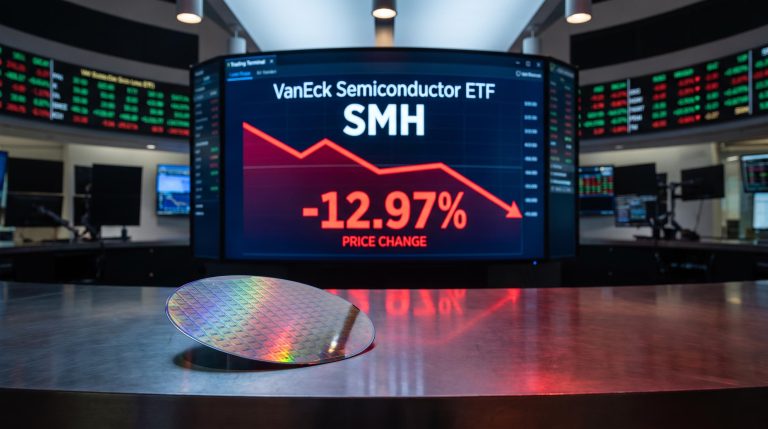
For investors wanting to model how regulatory sentiment translates into share price moves across the AI value chain, our full explainer on AI regulation market impact maps the 14 September 2026 synchronised selloff in detail, showing why hardware and chip equipment names absorbed the steepest losses while platform-layer incumbents held higher.
This article is for informational purposes only and should not be considered financial advice. Investors should conduct their own research and consult with financial professionals before making investment decisions.
Past performance does not guarantee future results. Financial projections and forward-looking statements referenced here are speculative and subject to market conditions, policy shifts, and company performance.