The Reserve Bank of Australia (RBA) raised the cash rate to 4.85% on 3 November 2026, and the Australian dollar fell anyway. Within minutes of the RBA rate hike, AUD/USD slipped roughly 0.3% to 0.5% against the US dollar. That is the opposite of what most people expect when a central bank tightens.
The surprise matters if you hold Australian dollars, plan to travel or buy from overseas, or follow mortgage and interest rate commentary. The headline decision is often not what moves the currency. The details around it usually are.
Norman Liebke of Commerzbank, writing via FXStreet, called it a “dovish hike”. In his view, markets saw a rate rise that made further rises less likely, not more.
Here is how to tell whether a rate hike is hawkish or dovish, and why that distinction matters more to the dollar than the move itself.
Why did the Australian dollar fall when the RBA raised rates?
On paper, the decision should have supported the currency. Higher interest rates usually make a currency more attractive, because holding it earns more.
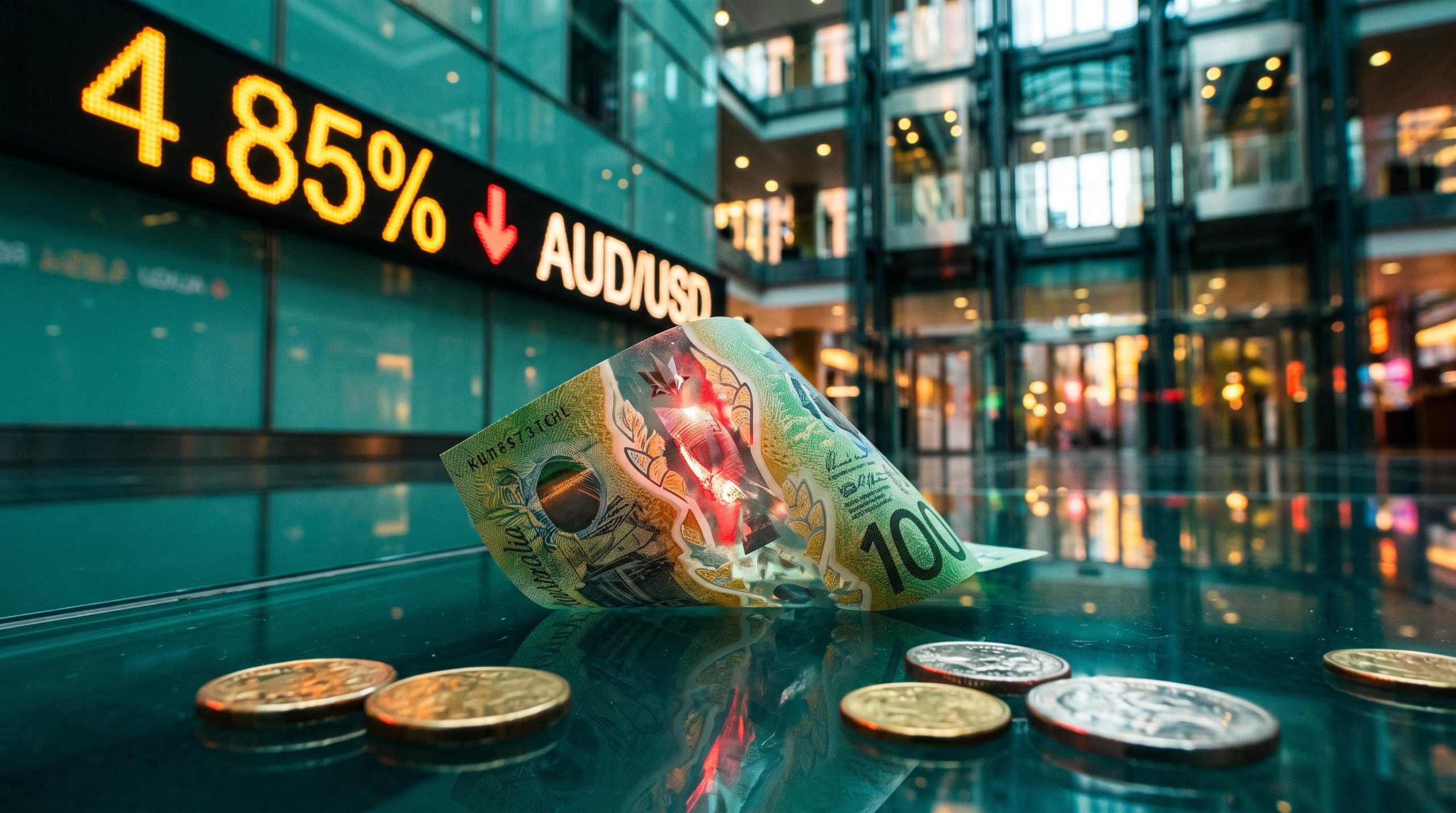
The RBA’s Monetary Policy Board lifted the cash rate target by 25 basis points, from 4.60% to 4.85%. A basis point is one hundredth of a percentage point, so 25 basis points equals 0.25%. AUD/USD fell about 0.3% almost immediately. EBC Financial Group recorded an intraday low near 0.6974.
Reported falls ranged from roughly 0.3% to 0.5%, depending on the source and the time of day. Every source showed the same direction: down.
Rate decisions are only one input, because the Aussie is exposed to five simultaneous forces, including iron ore prices, Chinese demand, global risk sentiment and the trade balance, and you need to read them together rather than chase a single headline.
Decision snapshot – Cash rate: 4.60% to 4.85% (+25 bp) – Board vote: 6-3, with three members preferring to hold – Pricing: Almost all economists in the Bloomberg survey expected 4.85% – Currency move: AUD/USD down roughly 0.3-0.5%
The explanation starts with that third line. The move was close to unanimous in forecasts. Media reports put pre-meeting market odds of a hike at around 80-90%, though those figures have not been independently confirmed.
When nearly everyone expects a hike, the higher rate is already reflected in the exchange rate before the announcement. The currency gets no extra lift because nothing new arrived.
Commerzbank’s read Liebke argued that markets had already priced the hike, so it offered no positive surprise. The split vote and softer forecasts pointed to growing caution on the Board, which led markets to treat the decision as dovish and sell the Aussie.
For you, the lesson is simple. A rate rise only supports a currency when it goes beyond what was priced. A hike that is delivered exactly as expected gives the currency nothing new to reward, and anything softer in the fine print can push it lower.
When big ASX news breaks, our subscribers know first
How do central bank guidance and a split vote move a currency?
Start with one rule: markets trade the gap between what a central bank does and what traders expected it to do. If you remember nothing else, remember that.
When a move is “priced in”, traders have already bought or sold based on the likely outcome. Prices already reflect the decision before it happens. So the announcement itself is old news, and the new information sits elsewhere.
Why guidance can outweigh the move
Guidance is what a central bank signals about its next move, through its statement, forecasts and tone. A hawkish signal points towards higher rates or tighter policy. A dovish signal points towards lower rates or a pause.
Currency traders care about the whole expected path of rates, not just today’s level. If guidance suggests more hikes than markets expected, you could see the currency rise even though today’s hike was no surprise. If guidance suggests this hike is probably the last, traders lower their expected path and the currency can fall.
That is how a single 25 basis point hike can push a currency in either direction. Central bank language sometimes uses the term “insurance hike”, meaning a rate rise made to guard against a risk, such as sticky inflation, rather than the start of a new run of increases.
| Scenario | Priced in? | Guidance signal | Likely currency reaction |
|---|---|---|---|
| Hike delivered | Yes | Hawkish: more hikes ahead | Can rise |
| Hike delivered | Yes | Dovish: likely the last hike | Can fall |
| Cut delivered | Yes | Dovish: more cuts ahead | Can fall |
| Cut delivered | Yes | Hawkish: a one-off cut | Can rise |
The bottom row is the mirror image of November’s decision, sometimes called a “hawkish cut”. No separate recent RBA example of a hawkish cut was found, so the November 2026 hike is the clearest current case of this asymmetry at work.
What a split vote tells markets
A vote split shows how committee members are divided. A unanimous decision suggests the Board shares a view. A 6-3 vote tells you a third of the Board did not want to hike at all.
That matters because it shows how close the Board may be to stopping. If three members already preferred to hold at 4.60%, it may take only a small change in the data to tip the majority towards a pause.
So the next time a rate decision makes headlines, skip “did rates go up?” Ask two questions instead: was it priced, and what did the guidance imply about the next move?
What in the RBA’s decision made the hike read as dovish?
The dovish reading did not come from one line in the statement. It built up, signal by signal.
- The hike was priced in. With almost all surveyed economists expecting 4.85%, the move added no new support for the dollar.
- The vote was split 6-3. Three members preferred to hold, which suggests the Board is close to the end of tightening.
- Growth forecasts were cut. The RBA lowered its end-2027 GDP forecast to 1.3% from 1.6%.
- Inflation is taking longer, partly for external reasons. The RBA does not expect inflation back within its 2-3% target until late 2027, about three quarters later than previously projected. Part of that revision was linked to higher fuel prices.
- No next-hike commitment. The RBA said tightening was warranted at this meeting but did not commit to December or describe a continuing sequence of hikes.
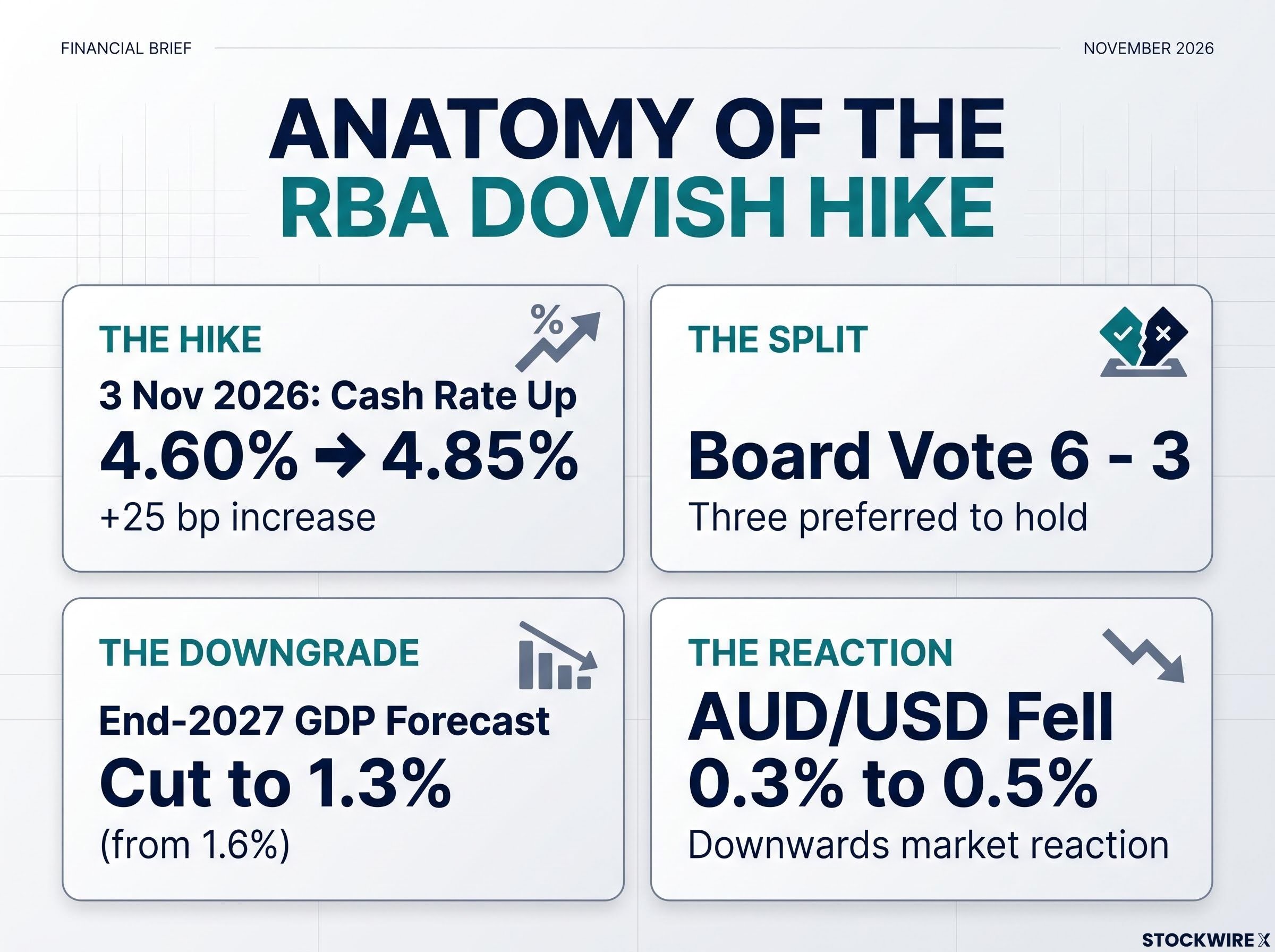
Take the growth cut first. The RBA acknowledged that higher rates, falling housing prices and weaker housing turnover would weigh on consumption and investment. A central bank that expects its own policy to slow the economy usually has less appetite for more hikes.
The fuel point adds to that. Analysis of the decision highlighted a simple limit: rate rises can reduce demand, but they cannot lower oil prices. If part of the inflation problem comes from supply, markets have less reason to expect another hike.
Pricing shows how quickly expectations moved. Before the meeting, about 1.5 further 25 basis point hikes by mid-2027 were reportedly priced, a figure not independently confirmed. After the split vote and weaker forecasts, markets priced no further hike. These are two different points in time, and the gap between them is the dovish signal in action.
Commerzbank expects the bar for another hike to be high. Its published commentary is internally inconsistent on December, but the weight of its argument points to no further increase. Commonwealth Bank of Australia (ASX: CBA) reportedly described the move as an “insurance hike” and expected holds in December and February, although this has not been independently confirmed.
Each signal points the same way. It lowers the odds of more hikes, and lower odds of future hikes is exactly what currency traders price. That is why the Aussie weakened.
The RBA has been through this before: in June, with a hold fully priced, Bullock’s forward guidance language was the only thing able to shift terminal rate pricing and move the Aussie.
What could drive the Australian dollar next?
Explaining Tuesday’s fall is the easy part. Working out what turns the Aussie next is harder, and the honest answer is that the case runs both ways.
Liebke expects the dollar may stay under pressure in the near term. Over a longer horizon, he sees its direction depending mainly on US and euro-area interest rate expectations rather than on the RBA alone.
The case for continued pressure
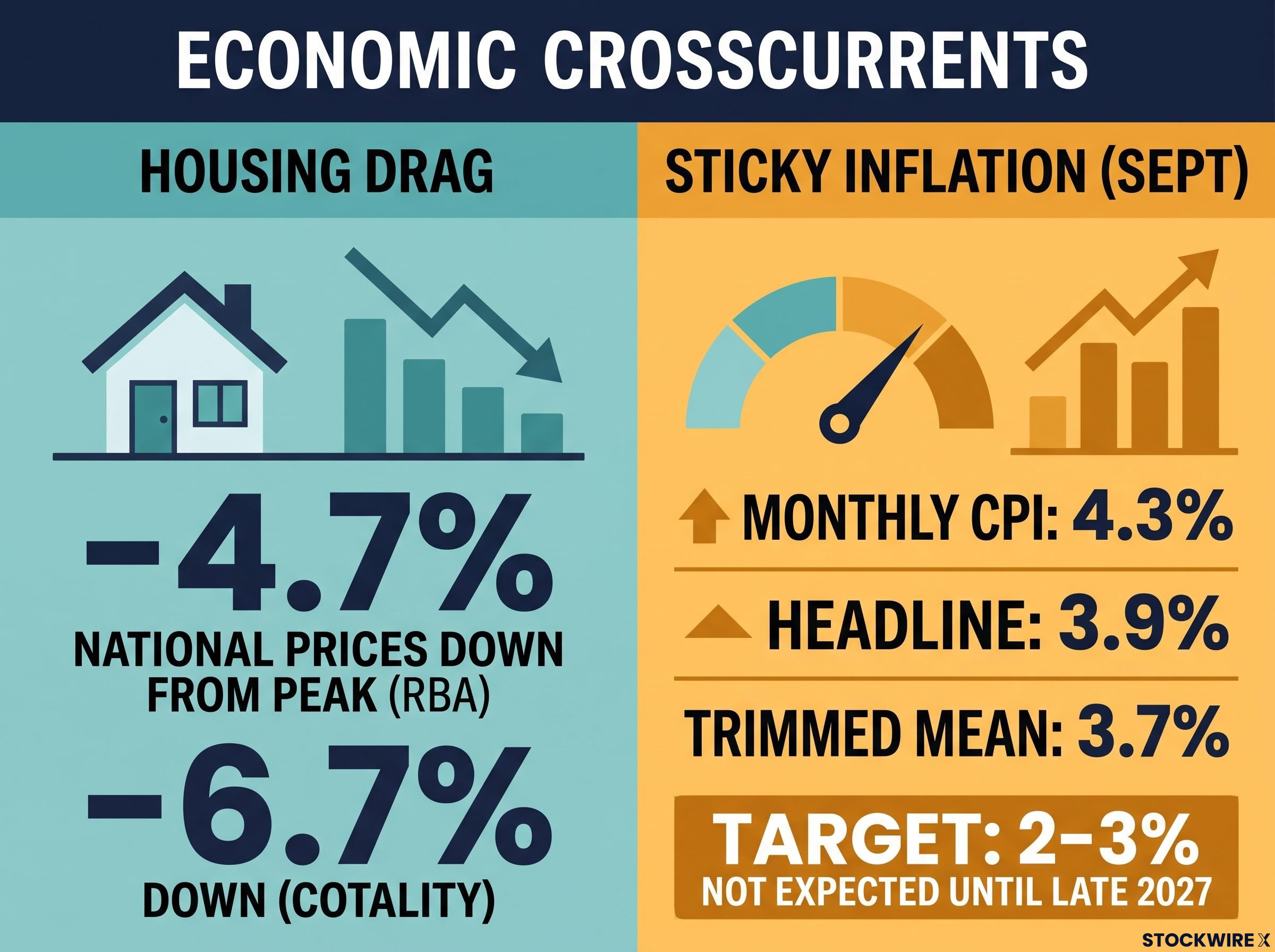
The 6-3 vote, weaker 2027 growth and the prospect of a December pause, raised by EBC Financial Group, all point towards a Board that may be done. Housing adds to the drag. According to figures not independently confirmed, the RBA put national prices 4.7% below their peak in September, while Cotality data showed a 6.7% fall from peak.
Higher rates could deepen that downturn and weaken consumption. If fuel-driven inflation fades without further tightening, the case for holding rates grows stronger.
The case for a rebound
Inflation is the wild card. Figures not independently confirmed show September monthly CPI at 4.3% year on year, September-quarter headline inflation at 3.9% and the trimmed mean at 3.7%. The trimmed mean is a measure of underlying inflation that removes the biggest price rises and falls.
The Melbourne Institute’s consumer inflation expectations reportedly reached 5.3% in October, also not independently confirmed. The RBA itself warned that higher expectations could become embedded. If inflation runs above forecasts, a hike in December 2026 or February 2027 could come back into play. Stronger commodity prices and improving global risk sentiment could also lift the Aussie.
Commerzbank also sees current market expectations of further tightening as probably exaggerated, which could eventually help the Aussie if they are priced out.
| Driver | Pressure on AUD | Support for AUD | What to watch |
|---|---|---|---|
| RBA path | Pause in December | Hike in December or February | Board statements and votes |
| Australian inflation | Fuel-driven inflation fades | Prints above RBA forecasts | CPI and trimmed mean |
| Federal Reserve | Restrictive Fed lifts the US dollar | Expected Fed cuts weaken the US dollar | US rate expectations |
| European Central Bank | More hawkish ECB lifts the euro | Easier ECB policy | Euro-area rate expectations |
| Global backdrop | Weaker risk appetite | Stronger commodity prices | Commodities and sentiment |
What matters is the relative path: how Australian rates are expected to move against US and euro-area rates. You will learn more about the Aussie’s direction by watching those expectations and the next Australian inflation prints than by watching the cash rate alone.
Relative paths matter in both directions: earlier this year the Aussie broke through 0.7200 on broad US dollar weakness rather than any Australian catalyst, a reminder that Fed and Bank of Japan decisions can outweigh the RBA.
Reading the next RBA decision with a clearer lens
The Australian dollar did not fall because rates failed to rise. It fell because the expected hike came with a weaker case for more.
When the next decision lands, run through three checks:
- Was it priced? A fully expected move adds little on its own.
- How did the Board vote? A split points to a committee closer to stopping.
- What did forecasts and guidance imply? Weaker growth and no commitment lower the expected path.
The December 2026 and February 2027 meetings are the next tests, alongside US and euro-area rate expectations. Forecasts and market pricing can change quickly, so treat this as a framework for reading decisions, not a prediction of where the dollar goes.
This article is for informational purposes only and should not be considered financial advice. Investors should conduct their own research and consult with financial professionals before making investment decisions.