

FDA grants Orphan Drug Designation to Neuren’s NNZ-2591 for HIE
The US Food and Drug Administration (FDA) has granted Orphan Drug Designation to NNZ-2591, the investigational drug candidate of Neuren Pharmaceuticals, for the treatment of neonatal hypoxic-ischemic encephalopathy (HIE), the company announced on 2 November 2026.
Neuren CEO Jon Pilcher described the designation as an “important commercial milestone”. HIE is now one of the indications for NNZ-2591 that carry Orphan Drug designation, alongside Phelan-McDermid syndrome, Pitt Hopkins syndrome and Angelman syndrome.
Jon Pilcher, CEO and Managing Director
“We are very pleased to receive the important commercial milestone of Orphan Drug designation. We now look forward to discussing the development path with the FDA and preparing the IND application for a clinical study in HIE, a devastating condition with serious need.”
When big ASX news breaks, our subscribers know first
What Orphan Drug Designation means for investors
The incentives on offer
Orphan Drug designation is a special status the FDA may grant to a drug that treats a rare disease or condition affecting fewer than 200,000 patients in the United States. It is designed for conditions with small patient populations.
Amongst other incentives, the designation qualifies the sponsor of the drug for:
- 7 years of marketing exclusivity
- Waiver of the prescription drug user fee for a marketing application
Exclusivity and fee relief are commercial benefits that bear on the economics of a drug if its development programme advances.
Why HIE matters
HIE is a potentially devastating type of brain injury caused when a baby’s brain does not receive enough oxygen or blood flow before or shortly after birth. Many thousands of children experience HIE every year, and it is one of the leading causes of neonatal death and neurodevelopmental disability worldwide.
In surviving children, HIE can lead to:
- Developmental delays
- Cognitive impairment
- Cerebral palsy
- Seizures
Some children develop serious long-term complications that can affect them well into adulthood. The company describes HIE as a condition with serious need.
Earlier FDA guidance on NNZ-2591 accepted the design of the IND-opening study for HIE, a condition estimated to affect 2-3 per 1,000 births.
NNZ-2591 pipeline: four Orphan Drug indications
Neuren is developing NNZ-2591 (ercanetide) for multiple indications. The table below summarises the designations noted in the announcement.
| Indication | Orphan Drug designation | Status noted in source |
|---|---|---|
| Phelan-McDermid syndrome | United States and European Union | In clinical development; Fast Track and Rare Pediatric Disease designations from the FDA |
| Pitt Hopkins syndrome | United States and European Union | In clinical development; Fast Track and Rare Pediatric Disease designations from the FDA |
| Angelman syndrome | United States and European Union | In clinical development; Fast Track and Rare Pediatric Disease designations from the FDA |
| HIE | Orphan Drug designation granted | n/a |
Neuren is currently conducting a Phase 3, randomised, double-blind, placebo-controlled clinical trial (“Koala”) evaluating the safety and efficacy of NNZ-2591 in children aged 3 to 12 years with Phelan-McDermid syndrome, along with a 52-week open-label extension study.
For context, DAYBUE (trofinetide) is approved by the FDA for the treatment of Rett syndrome, and Neuren has granted an exclusive worldwide license to Acadia Pharmaceuticals Inc. for its development and commercialisation.
Next steps for NNZ-2591 in HIE
The announcement outlines the following steps for NNZ-2591 in HIE:
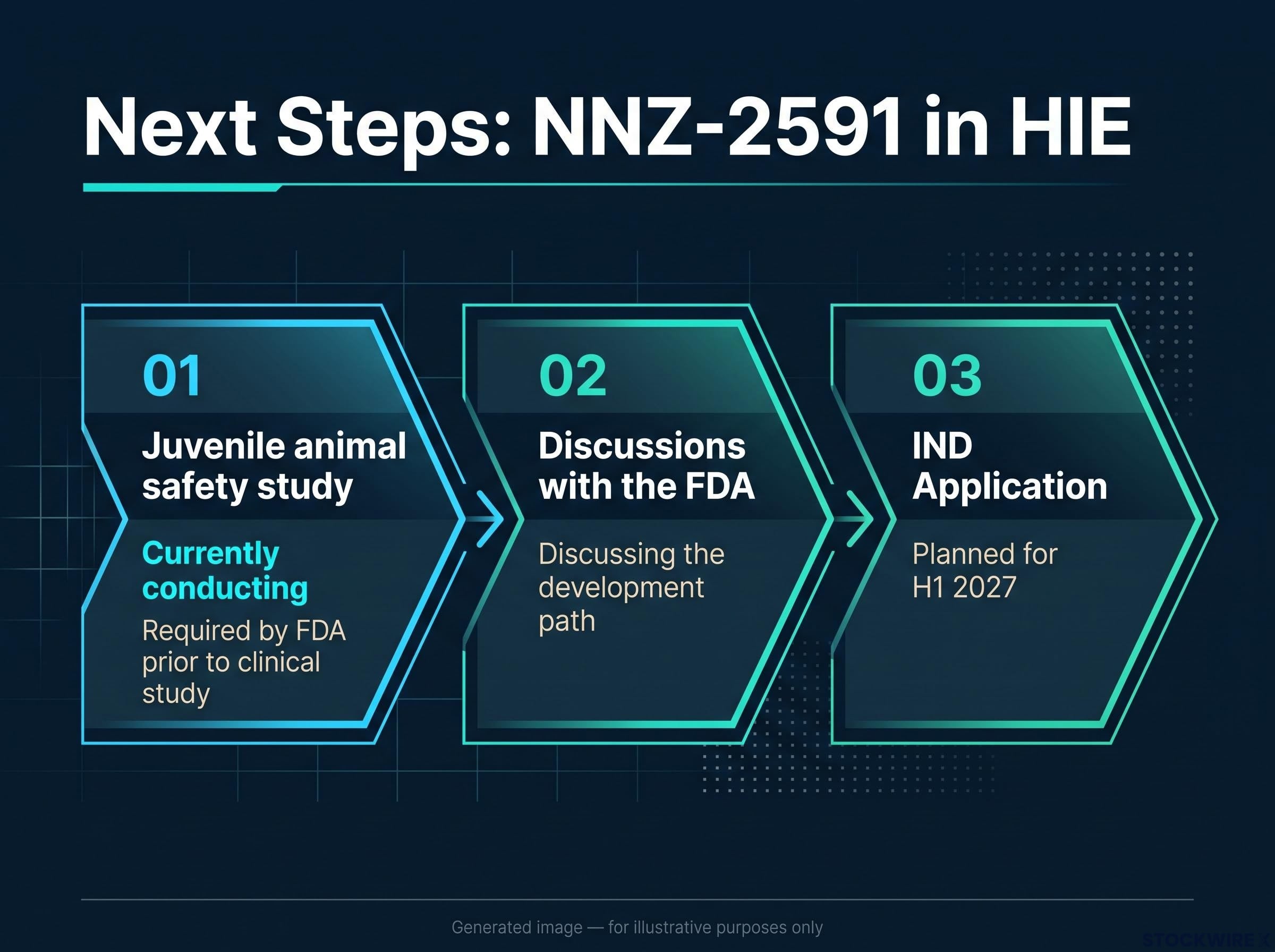
- Juvenile animal safety study: Neuren is currently conducting this study, which is required by the FDA prior to initiating a clinical study in HIE.
- Discussions with the FDA: Neuren looks forward to discussing the development path with the FDA.
- Investigational New Drug (IND) application: Neuren plans to submit an IND application in H1 2027, in preparation for a clinical study in HIE.
Don’t Miss the Next Healthcare Breakout
Get FREE breaking ASX healthcare news delivered to your inbox within minutes of release, complete with in-depth analysis and the full announcement. Join 20,000+ investors who stay ahead of the market with Big News Blast. Click the “Free Alerts” button now to receive alerts the moment market-moving news breaks.