Prediction markets gave Flávio Bolsonaro roughly an 80% chance of winning Brazil’s presidency. On Sunday, Luiz Inácio Lula da Silva took 51.79% of valid votes to Bolsonaro’s 48.21%, securing a fourth term and breaking the Brazilian real outlook that traders had built around the opposite result.
That confident positioning is what failed overnight. The real had rallied after Bolsonaro’s strong first-round showing earlier in October. Currency futures now point to a fall of up to 10%.
The real question is how far the unwind runs, and whether the drop is an entry point or a trap. All figures here are current as of 26 October 2026.
After this, you will know the three forces pushing the currency lower, the three that cushion it, and the signals that will decide which side wins.
Why did the real fall so hard after Lula’s win?
The size of the move makes more sense once you see how lopsided the bets were. Brown Brothers Harriman (BBH) put Bolsonaro’s odds at about 80%. Rio Times reported 83% on 24 October.
The gap the market missed Prediction markets: about 80-83% for Bolsonaro. Actual result: Lula 51.79%, Bolsonaro 48.21%, a margin of about 4.4 million votes (J.P. Morgan Private Bank).
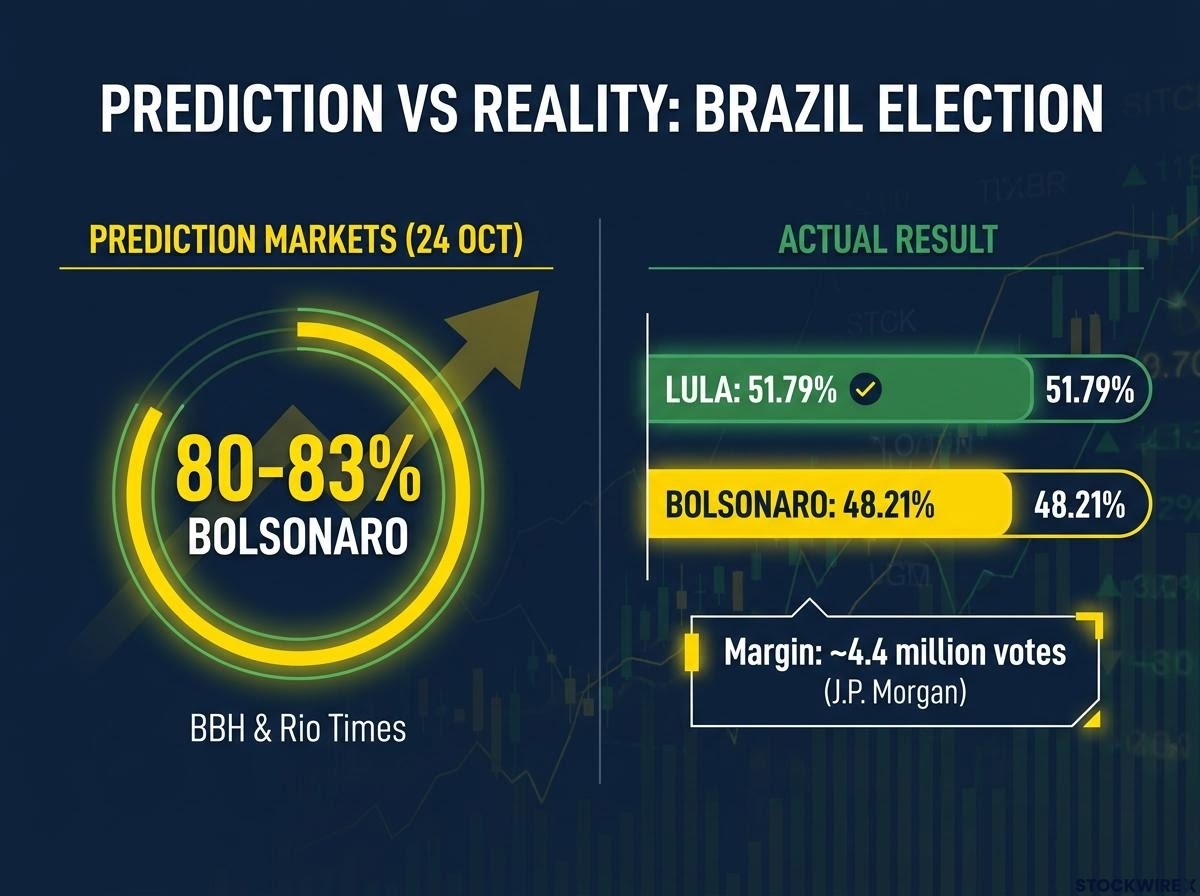
When a crowded trade loses its premise, everyone heads for the same exit. Investors who bought the real, Brazilian shares and local bonds on a Bolsonaro win are now reversing what traders call the “Bolsonaro-election trade”. BBH’s Elias Haddad expects the currency to give back its post-first-round gains.
| Item | Reported move | Source | Date |
|---|---|---|---|
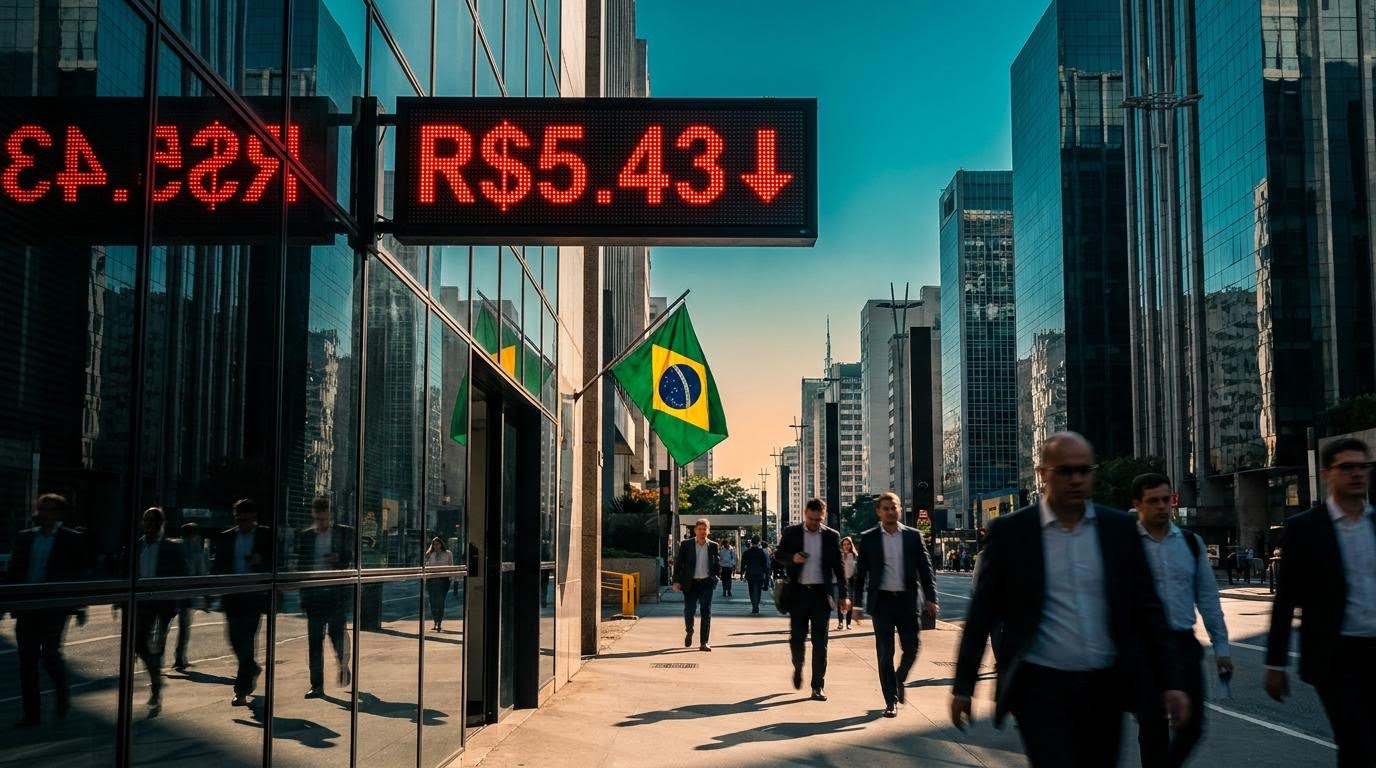
| USD/BRL futures | About R$5.43 per dollar; November futures down more than 10% | Bloomberg; Reuters | 25-26 October 2026 |
| CME real futures | About R$5.60 per dollar; real down 8-10% | Bloomberg via Asiae | 26 October 2026 |
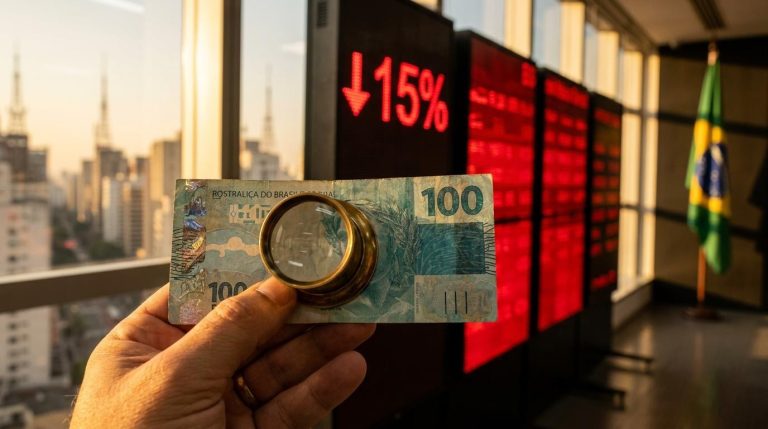
| Ibovespa futures | Down nearly 15%, near B3’s daily floor | Rio Times; Reuters | 26 October 2026 |
| DI rates | About 200 bp repricing, toward 14.50% on January 2029 contract | Morgan Stanley via Reuters | 26 October 2026 |
The Ibovespa is Brazil’s main share index. DI rates are futures contracts on Brazil’s interbank interest rate, and a basis point (bp) is one hundredth of a percentage point.
The spread between R$5.43, R$5.60 and Morgan Stanley‘s expected test of 5.50 shows the market has not settled on a level. The rally at risk is sizeable: after the 2022 first round, the real rose about 4.5% on a similar bet that Lula would face constraints.
Part of the headline drop came from thin Asian trading before Brazilian cash markets opened, so the 10% futures move is a repricing of a surprise rather than a confirmed new fair value for the currency.
What this tells you is that the market was priced for the opposite outcome. Part of the fall is positioning being flushed out, not a verdict on Brazil’s economy.
When big ASX news breaks, our subscribers know first
Where does the fiscal pressure come from?
Positioning explains the speed of the drop. Fiscal policy explains why it may not reverse quickly. Brazil’s numbers become more uncomfortable the closer you look.
- Gross debt: up from 71.7% of GDP in January 2023 to 83.0% in August 2026, the highest since 2021 (BBH; Reuters reported 82.9%)
- Primary balance: a deficit of R$10.0 billion consolidated (central bank) and R$13.6 billion for central government (Treasury) in August 2026
- Mandatory spending: about 92% of primary spending in the 2026 budget
- 2027 surplus: R$83.4 billion headline, but only about R$18.6 billion after exclusions (Folha)
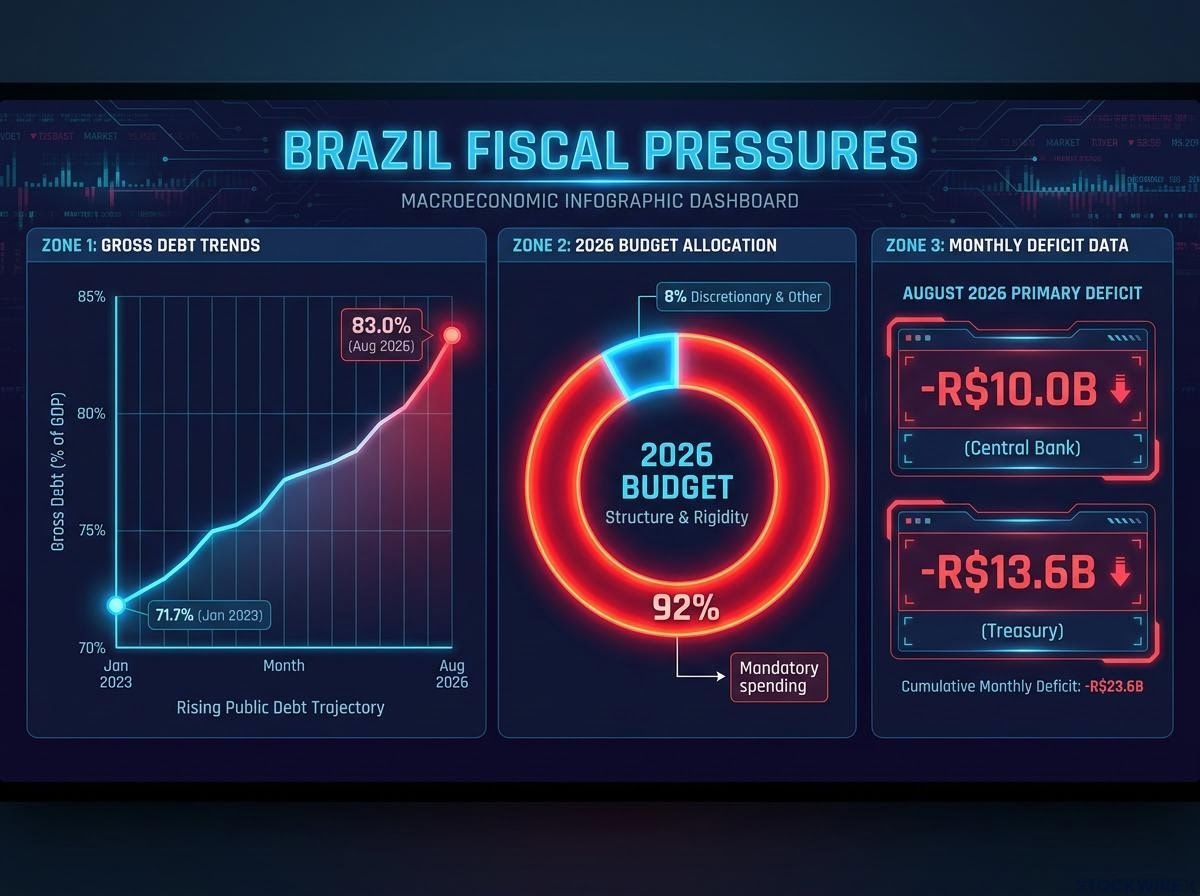
The primary balance is government revenue minus spending, before interest payments. With nine-tenths of that spending locked in by law, there is little room to cut.
The 2027 target is a surplus of 0.50% of GDP, with a lower limit of 0.25%, about R$36.6 billion (O Globo). The headline figure clears it comfortably. The effective figure does not come close.
Monetary policy adds tension. Copom, the central bank’s rate-setting committee, cut the Selic policy rate by 25 bp to 13.75% on 16 September, and its minutes warned that debt uncertainty could lift the neutral rate. Copom meets next on 4 November.
What Lula’s team has signalled so far
The team says it will keep the 2023 fiscal framework and may tighten it (Reuters; J.P. Morgan). O Globo reports it is weighing an instruction to aim for the centre of the target band, plus year-end measures to slow mandatory spending growth. Planning Minister Bruno Moretti has reportedly identified about R$20 billion of spending to remap.
These are reported intentions, not enacted policy.
The two credibility tests ahead
J.P. Morgan and Reuters point to the finance-minister pick and the 2027 budget. No appointment had been confirmed in the reports reviewed, though Reuters said before the vote that Vice President Geraldo Alckmin was under consideration.
For you, the issue is not the debt figure alone. It is whether Lula’s higher tolerance for debt, which BBH flags, shows up in the budget, because that is what would push the market to demand a larger risk premium.
Why carry, Congress and commodities may cap the decline
If the fiscal case is so uneasy, why do BBH and J.P. Morgan expect the fall to be limited? The answer starts with carry.
How carry and risk premium interact
Carry is the return you earn by borrowing in a low-interest currency and holding a high-interest one. At a 13.75% Selic, the real pays far more than the dollar, which draws capital in.
Before the vote, the one-month NDF implied yield of about 13.4% meant the real needed to fall roughly 9% a year before carry traders broke even, which helps explain why a 10% futures drop is a genuine stress test.
A risk premium is the extra return investors demand to hold an asset they see as riskier. If fiscal worries raise that premium faster than rates rise, the carry no longer compensates, and money leaves.
December 2024 proved it. Copom hiked to 12.25% on 11 December, yet the real fell 2.9% on 18 December to a record intraday low of R$6.3139 after a spending package was judged inadequate.
BBH and J.P. Morgan cite three supports:
- Right-leaning Congress: limits fiscal expansion. Limit: it cannot force spending cuts.
- High carry: rewards holding the real. Limit: only while the debt path looks credible.
- Commodity exposure: ties to energy, AI and defence themes. Limit: it cannot offset a fiscal shock at home.
Reuters names the weak point directly.
The weak point Reuters described Brazil’s fiscal position as its “Achilles heel”, citing the wide deficit and exposure to a global bond selloff.
The upside case exists. Pine Bank’s Oliveira sees the Selic ending 2027 at 11.25% if the fiscal path stays manageable. Société Générale expects only gradual consolidation, leaving debt concerns open and rates higher for longer.
High rates give you a reason to expect the real to stabilise. December 2024 shows carry only works while investors trust the debt path.
Is this a buying opportunity, and what would prove it wrong?
BBH sees a possible later buying opportunity. The rest of the field agrees on direction but splits on how far and how long.
| Institution | Stance | Key level or number | Condition |
|---|---|---|---|
| Morgan Stanley | Bearish risk | Test of 5.50; 5.60 or 6.00 in bearish case; 300-400 bp more rate pressure; equities down 20-30% | No quick spending cuts |
| Reuters-cited strategists | Bearish | 5.20-5.50 | Result read as looser fiscal policy |
| J.P. Morgan | Sharp but not lasting | Carry supports the real | Credible minister and budget |
| BBH | Limited decline | Possible later entry | Congress, carry and commodities hold |
The 2022 pattern is a warning. After that runoff, the real fell about 2% overnight and then gained more than 2%. In November 2022 the real and Bovespa each fell about 4% when Lula prioritised social spending and delayed naming his team.
A result can be followed by a second leg down. Fiscal slippage, rigid spending, global dollar strength or a bond selloff, pressure on central-bank independence and a carry-trade reversal could each turn a dip into a slide. Post-runoff views from Goldman Sachs, XP and Itaú BBA were not verified, and no new IMF or rating-agency warning was verified.
Global dollar strength matters because research links a rise in the US term premium to sharp depreciation in emerging market currencies, which is why an external bond selloff could compound Brazil’s domestic fiscal problem.
The signals to watch, in order:
- The finance-minister appointment
- The 2027 budget
- Measures to restrain mandatory spending
- The 4 November Copom decision
If you are weighing entry, these signals matter more than the date of the first dip, because they decide whether this is an opportunity or a first leg down.
What the surprise changes for the real, and what it leaves intact
The election changed the near term: a sharp unwind of positioning, with USD/BRL pushing toward the 5.50 area and local rates higher. It did not change the deeper question. Brazil’s currency still hinges on whether investors trust the debt path enough for carry, Congress and commodities to cap the damage.
BBH’s buying-opportunity view is conditional on the minister pick, a credible 2027 budget and real spending restraint. Track those in the coming weeks before reading the first drop as value. Currency views carry risk, and these figures are current only as of 26 October 2026.
This article is for informational purposes only and should not be considered financial advice. Investors should conduct their own research and consult with financial professionals before making investment decisions. Past performance does not guarantee future results. Financial projections are subject to market conditions and various risk factors.