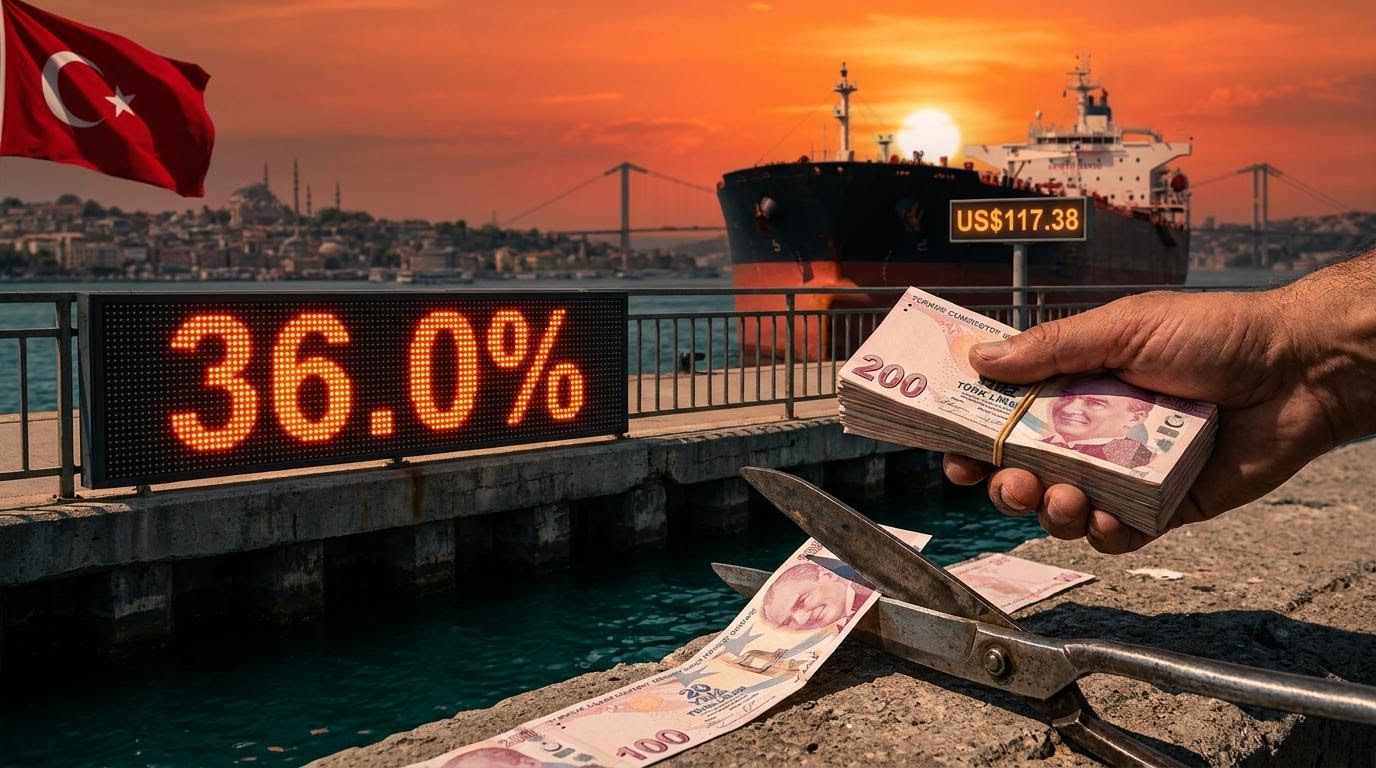
The Central Bank of the Republic of Türkiye (CBRT) cut its one-week repo rate by 100 basis points to 36.0% on 22 October 2026. One day later, Brent crude settled at US$117.38 a barrel. Commerzbank has warned that this level of energy pressure could undercut the case for further easing.
The one-week repo rate is the main rate at which the central bank lends to commercial banks, and a basis point is one hundredth of a percentage point. The cut was the first after five consecutive holds at 37%.
That makes it the first move of a resumed easing cycle, and it is already under strain from oil. If you hold or price lira exposure, the bank’s new wording and the oil price will together shape where the currency goes next.
This piece sets out whether the easing is likely to hold, which signals carry the most weight, and where the major forecasters split on the lira.
Why one soft inflation print is carrying so much weight
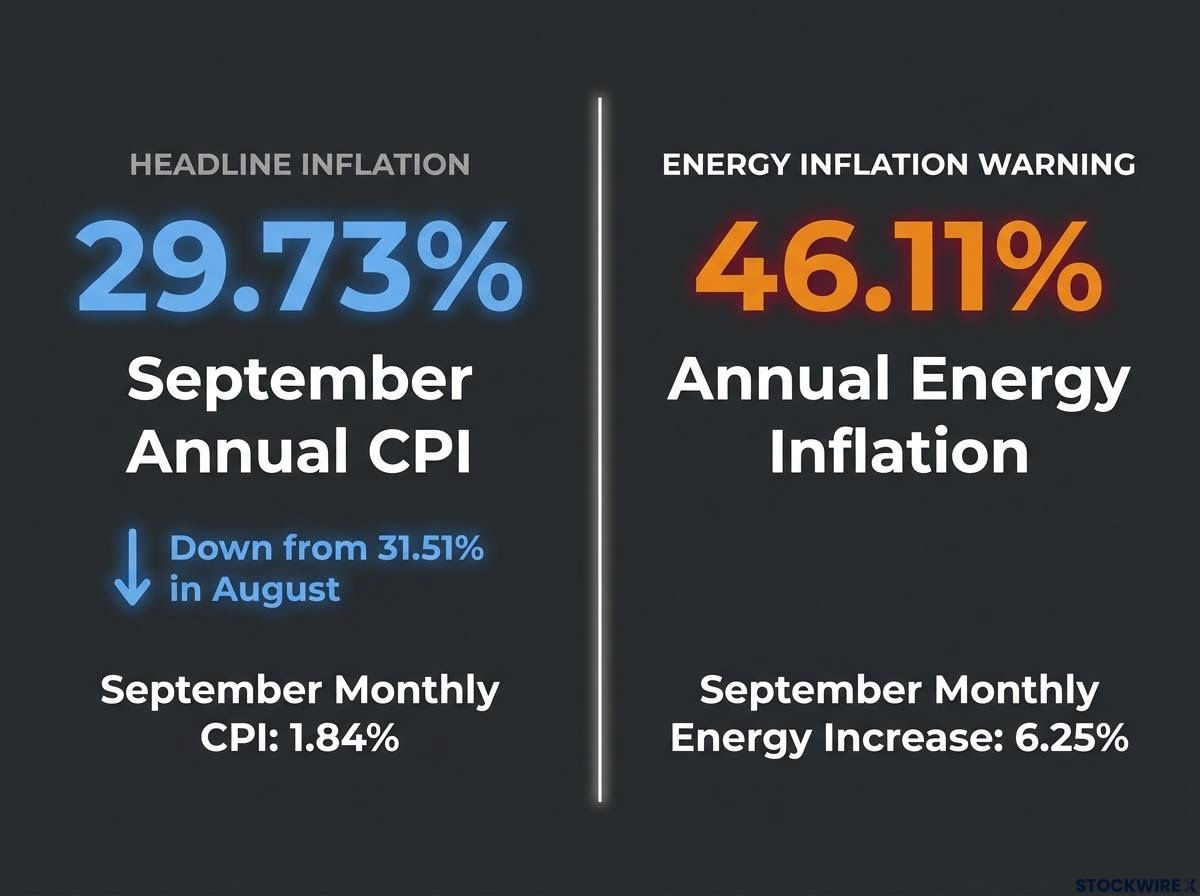
The cover for the cut came from September’s inflation data. Annual consumer prices rose 29.73%, down from 31.51% in August. It was the first reading below 30% since November 2021.
The monthly figure was softer still. Prices rose 1.84% against forecasts of roughly 2.0-2.2%, and the CBRT upgraded its language accordingly. Inflation indicators no longer “suggest” a slowdown in the underlying trend, the bank said; they now “confirm” it.
| Inflation measure | Figure | Context |
|---|---|---|
| Annual CPI (September) | 29.73% | Down from 31.51% in August |
| Monthly CPI (September) | 1.84% | Below forecasts of about 2.0-2.2% |
| CBRT 2026 year-end forecast | 28.0% | Raised from 26% in August |
| CBRT interim target, end-2026 | 24.0% | Below both the forecast and the survey |
| Market survey, year-end expectation | 29.43% | Above the CBRT forecast |
Look beneath the headline and the comfort thins out. According to the CBRT’s own price report, energy prices rose 6.25% in September, and annual energy inflation climbed to 46.11%. The decline in the headline rate was not shared across the basket.
Energy inflation of 46.11% fits a wider pattern in which war-driven energy costs feed through airfares, logistics and imported goods, often staying hidden inside headline CPI categories.
Commerzbank’s caution Tatha Ghose of Commerzbank argues the soft September reading may prove a one-off, helped along by a temporary drop in imported energy prices in the preceding months (via FXStreet, 23 October 2026).
BBVA Research expects inflation to stay sticky near 30% until late Q1 2027. Oil has also moved the wrong way, rising from US$109.86 on 16 October to US$117.38 a week later.
A falling headline rate is not the same as lasting disinflation. If you are judging whether the next cut is safe, the energy line is the number to watch.
What the 36% decision and the new “meeting-by-meeting” language actually signal
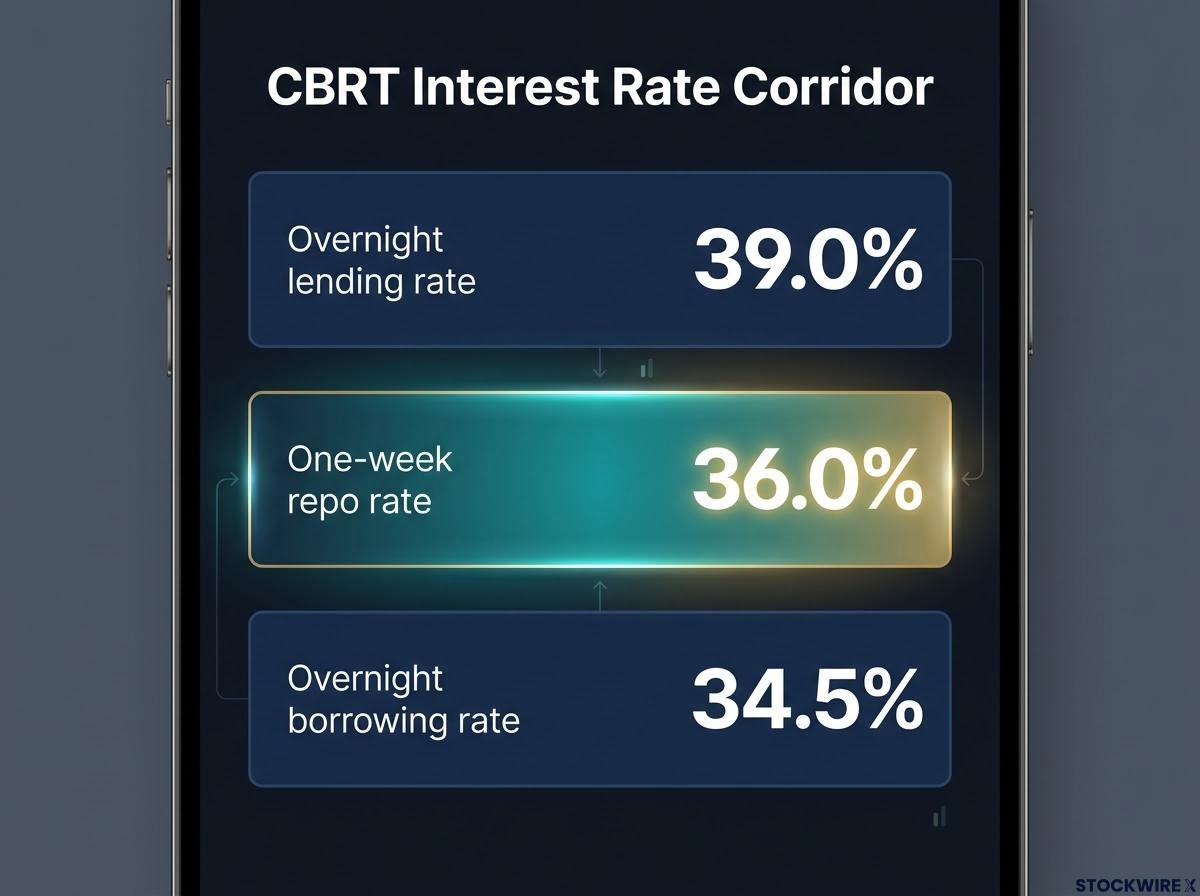
The mechanics were simple. The policy rate moved from 37.0% to 36.0%, and the bank also adjusted its corridor. The corridor is the band between the overnight rates at which the central bank takes deposits from banks and lends to them.
- Overnight borrowing rate: 34.5%
- One-week repo rate: 36.0%
- Overnight lending rate: 39.0%
BBVA described the corridor as asymmetric, because the policy rate does not sit at its midpoint.
None of this surprised anyone. A Matriks survey found 32 of 37 economists expected the cut, so the real information sits in the guidance. The Monetary Policy Committee (MPC) said it will set the size and timing of future moves meeting by meeting.
Before the decision, forecasters split between a cut and a hold, with Societe Generale and Goldman Sachs calling for no change, which is why the guidance language carried more information than the rate itself.
The bank still lists high energy prices as an upside inflation risk. It does not, however, treat them as a reason to delay easing, and it now describes the real economy as weak.
How the forecasters read the guidance
Ghose reads the new wording as flexibility at individual meetings, with the direction unchanged and an occasional skipped meeting possible. BBVA takes a more cautious view and sees pauses as part of the cycle. ING and Capital Economics form the more constructive camp, and Capital Economics expects real rates, meaning the policy rate minus inflation, to stay positive even after large nominal cuts.
| Institution | Policy-rate view | Key caveat |
|---|---|---|
| Matriks survey | 35.0% median, end-2026 | 29 of 33 expect a cut on 10 December |
| ING | 35.0% at end-2026 | Expects another 100 bp cut |
| BBVA Research | 36.0% through year-end | A December cut remains possible |
| Capital Economics | 27.50% by end-2027 | Depends on inflation easing |
The cut that came after five holds since January was a conditional restart, not a promise. Do not assume the bank will deliver a smooth run of 100 bp cuts, because it has deliberately avoided saying so.
Can the lira hold the line if oil stays above USD 110?
For now, the lira is holding steady. USD/TRY traded at 49.7375 on 23 October. Commerzbank forecasts 52.0 by year-end and ING forecasts 51.50, so both expect continued managed depreciation, the slow, controlled weakening the authorities have tolerated.
Carry trades help explain that steadiness. In a carry trade, investors borrow in a low-yielding currency to hold a higher-yielding one. ING’s Frantisek Taborsky expects carry demand to persist, even though many investors already hold the same long-lira position.
The funding channel the CBRT uses matters as much as the headline rate for any carry trade, because the August restart of one-week repo operations already removed roughly 300 basis points of effective tightening before this cut arrived.
Oil is the threat. A higher crude price raises imported inflation and widens the current-account gap, and that mechanism sits behind Commerzbank’s caution. Commerzbank has also reportedly argued that a depreciation pace of roughly 20% annualised is slow relative to inflation of 30-35%, leaving devaluation risk unresolved, though this claim has not been independently verified.
| Indicator | Level | Date |
|---|---|---|
| USD/TRY | 49.7375 | 23 October 2026 |
| Net reserves excl. swaps | US$39.34bn | Week to 16 October |
| Gross reserves | US$169.1bn | Week to 16 October |
| Brent crude | US$117.38 | 23 October 2026 |
The reserve buffer is getting thinner. Net reserves excluding swaps, the reserves the bank owns outright, fell US$4.9bn in a week and US$23.26bn since the start of 2026. Talay Insight also reported foreign selling.
- Energy shock pushing imported inflation higher
- Further reserve drawdown
- Carry-trade reversal
- Geopolitical tension (not quantified)
No quantified wage or services inflation data was available. The lira’s stability depends on reserves and carry sentiment as much as on the policy rate. A sharp oil move could force the bank to pause even if inflation cooperates, which leaves the gap between the 51.50 and 52.0 forecasts unresolved.
What the cut settles, and what stays open until 10 December
The decision settles one question: the CBRT wants to ease. It leaves the pace open on purpose, and energy and reserve data will decide whether that stance survives.
Before the 10 December meeting, four signals matter most. Watch October inflation, the direction of Brent and the weekly changes in reserves. Then compare the wording of the next statement with this one, because any shift in language will tell you more than the rate itself.
For readers wanting the conditions behind further cuts, our full explainer on the CBRT easing checkpoints sets out the CPI, reserve and credibility tests that must be met.
This article is for informational purposes only and should not be considered financial advice. Investors should conduct their own research and consult with financial professionals before making investment decisions. Past performance does not guarantee future results. Forecasts cited are subject to market conditions and various risk factors.