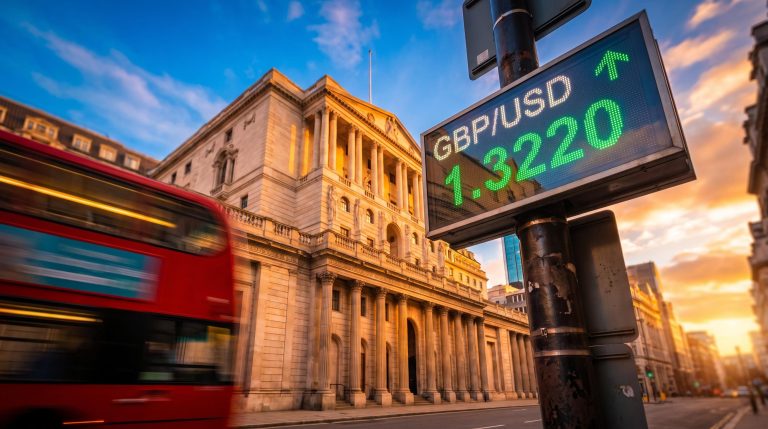
EUR/CAD is hovering near 1.5950 on Tuesday 13 October 2026, recovering from the previous session’s slide to a close near 1.5936. Two forces are doing the lifting: German inflation at its highest since December 2023, and a dip in crude that knocked the oil-linked Canadian dollar.
Those two drivers do not carry equal weight, and they may not last equally long. The euro’s support comes from an energy-driven inflation print. The Canadian dollar’s softness traces back to a Russian diesel headline and a temporary easing of US sanctions, and some strategists already expect that effect to fade.
For anyone tracking the EUR/CAD forecast, the useful question is how the move breaks down. Here is which part of the rebound looks durable, which part looks fragile, and the signposts that should shape your next read on the pair.
Why is EUR/CAD higher? Oil’s slip meets a euro propped up by energy-led inflation
The pair traded around 1.5950-1.5953 through European hours, according to FXStreet analyst Akhtar Faruqui. The euro found its footing after Destatis, Germany’s federal statistics office, released the September inflation data at 06:00.
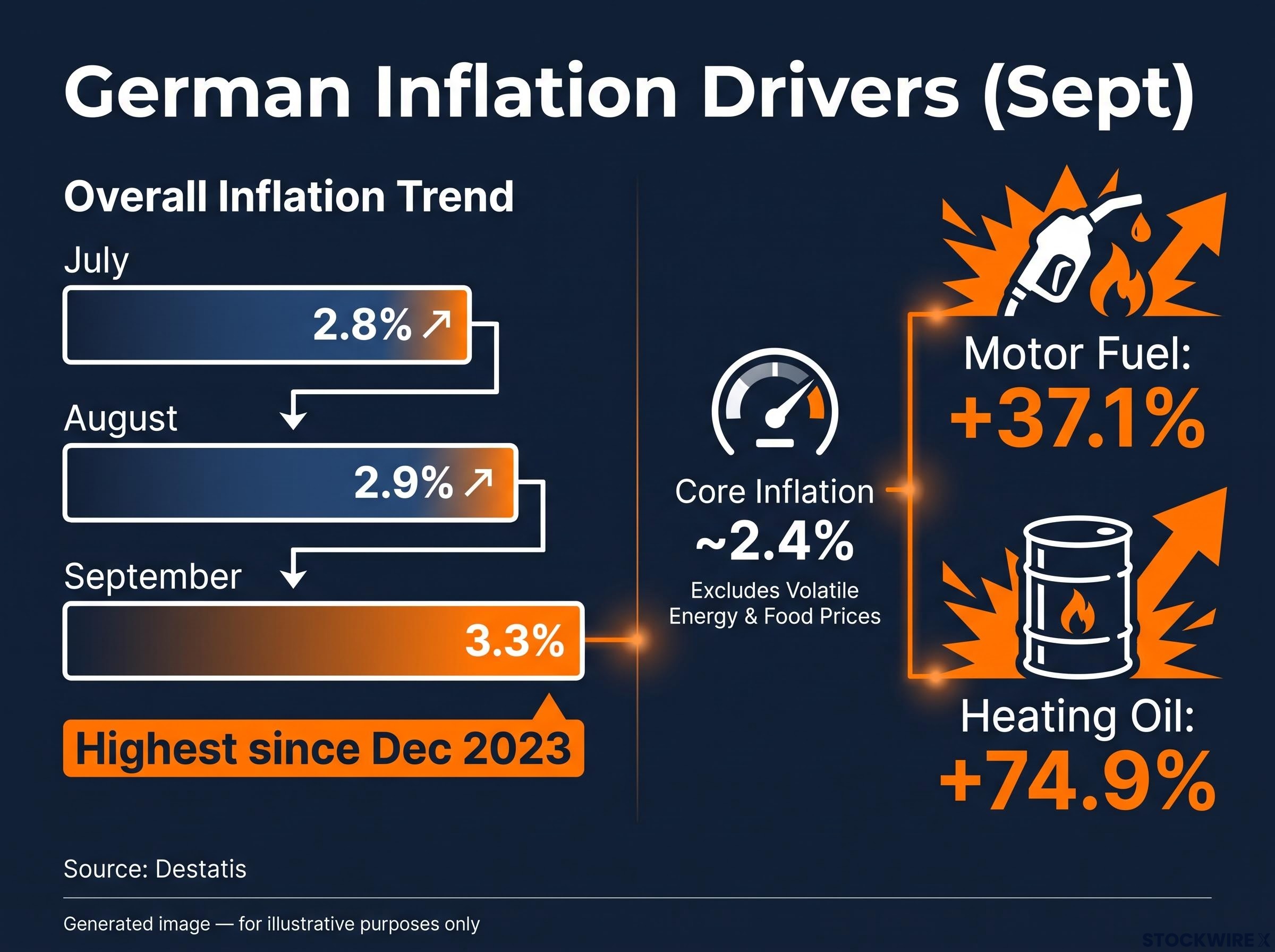
The headline figure was 3.3% year on year. That was the highest since December 2023, up from 2.9% in August and 2.8% in July. It also confirmed the provisional estimate from 30 September without revision.
| German HICP (September) | Actual | Consensus | Previous (August) |
|---|---|---|---|
| Year on year, released 13 October 2026 | 3.3% | 3.3% (one source cited 3.1%) | 2.9% |
HICP is the Harmonised Index of Consumer Prices, the EU’s standard measure of inflation across member states. Most forecasts matched the result. An Econoday table cited 3.1% as the consensus, so whether the print counts as a surprise depends on which estimate you use.
The makeup of the figure matters more than the number itself.
Destatis on the drivers President Ruth Brand attributed the move above 3% mainly to sharply higher energy costs, especially heating oil and motor fuel.
Anadolu reported motor fuel up 37.1% and heating oil up 74.9% year on year. Destatis’s provisional data put core inflation, which excludes volatile items such as energy and food, at roughly 2.4%, and that measure was easing. On these figures, Germany is dealing with an energy shock. Broad-based overheating is not what the data show, which is why the euro’s gain looks cautious rather than sweeping.
An energy-driven headline spike can interrupt a cooling trend without signalling a structural reset, which is why the easing core reading matters more to the ECB than the 3.3% headline.
That is the key read on the move. Part of this rise is a Canadian dollar story. If you treat it as pure euro strength, you will overstate what it says about the European Central Bank (ECB).
How oil moves CAD, and why energy inflation cuts differently for EUR and CAD
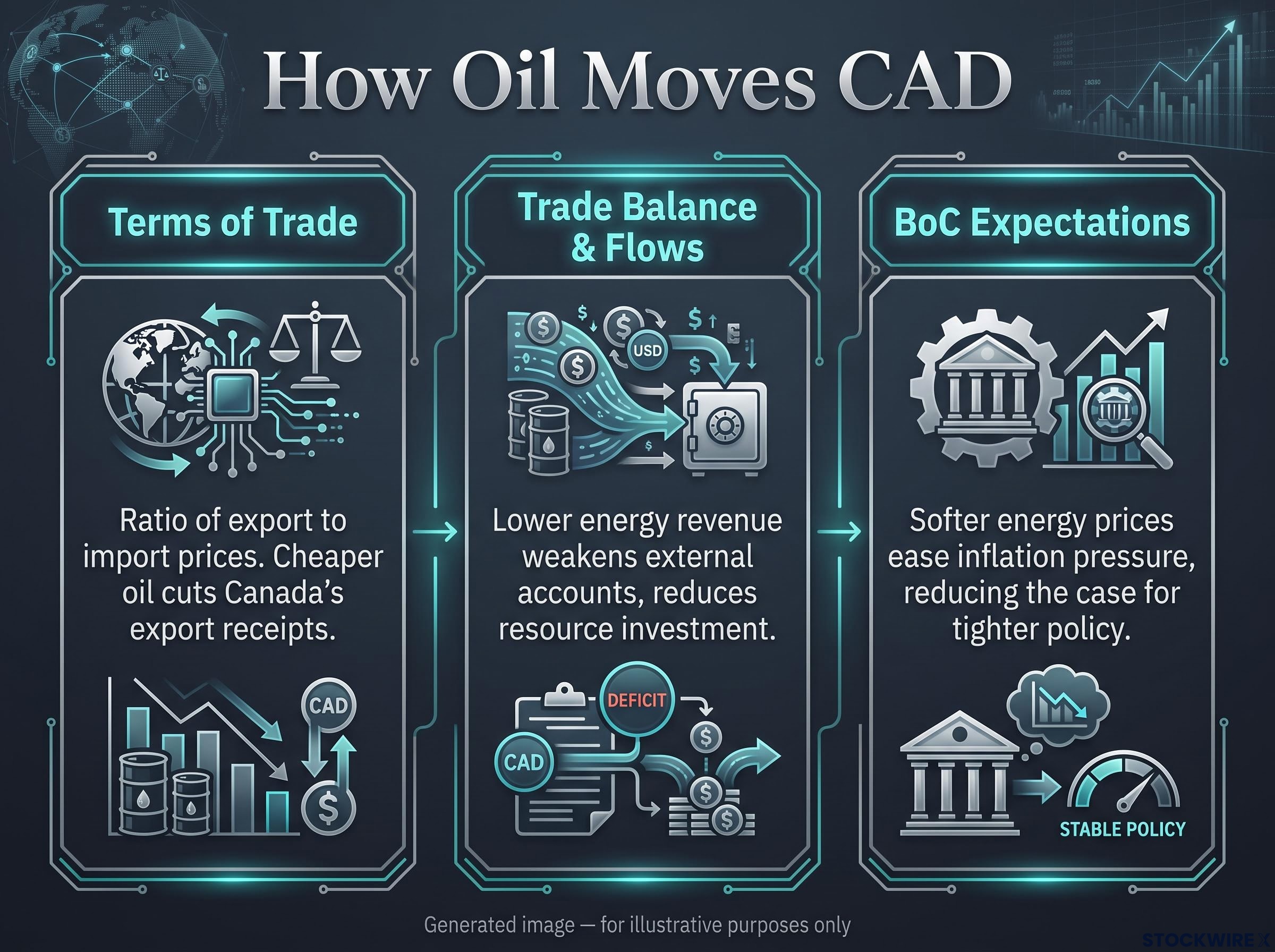
Crude affects the Canadian dollar through three channels:
- Terms of trade: the ratio of export prices to import prices. Cheaper oil cuts Canada’s export receipts.
- Trade balance and capital flows: lower energy revenue weakens the external accounts and reduces investment into resource companies.
- Bank of Canada (BoC) expectations: softer energy prices ease inflation pressure and reduce the case for tighter policy.
The euro area sits on the other side of that trade. It is a large energy importer, so higher energy prices hurt its terms of trade but can keep the ECB tighter for longer. Canada is a major exporter, and higher oil normally supports its currency.
The oil dip and the Russian diesel announcement: how much will it last?
The trigger was a headline from Washington. President Donald Trump announced that Moscow would provide diesel to international markets, and in return the US administration paused some of its restrictions on Russian fuel for a time. Those curbs had originally been designed to squeeze Moscow’s income while the Ukraine war continues.
The sanctions easing operates through OFAC’s General License 135, a revocable carve-out that leaves the underlying restrictions in force, which helps explain why strategists doubt the diesel-driven oil dip will last.
The diesel volumes are small set against global demand:
- Brent closed 1.8% higher on 12 October at about $106.65, its highest close since 15 September
- Early on 13 October, Brent was reportedly near $106.04 and WTI near $93.27 (not independently confirmed)
- Reports described an initial Russian supply of more than 300,000 metric tons, about 2.25 million barrels, with more possible
- Goldman Sachs estimated that roughly 800,000 metric tons of extra Russian diesel would cut wholesale diesel prices by only about $1-$2 a barrel in the US Gulf Coast and Europe
Taken at face value, Goldman’s estimate means a shipment almost three times the reported initial volume would still barely move fuel prices. Crude itself shrugged off most of the news.
ING’s strategists went further.
ING on the oil dip ING’s strategists judged the price impact of the US-Russia diesel deal likely to be short-lived, with Middle East and Persian Gulf supply risks still driving the market.
That leaves the Canadian dollar’s weakness resting on a fragile premise. If traders return their focus to Gulf supply, a renewed oil bid could unwind the EUR/CAD gain quickly.
What could move EUR/CAD next: ECB path, oil direction and the risks to any forecast
The German print supports two readings. Energy-led inflation running alongside easing core gives the ECB reason to stay vigilant. It also gives policymakers grounds to look through part of the jump.
September ECB staff projections reportedly have headline euro-area inflation peaking around 3.6% in Q4 2026 before falling toward 2.1% in 2028. Commerzbank reportedly expects another ECB hike. Scotiabank reportedly called the October meeting “live”, with a December move also possible.
Most economists polled expect the ECB to hold in October, yet a large majority see an ECB rate hike in December, which makes the 29 October meeting tone the key signal for the euro leg.
Oil cuts both ways for the pair. Renewed Middle East supply fears would normally support the Canadian dollar and pull EUR/CAD lower. Severe geopolitical stress, however, can also weaken it through risk aversion.
The 2022 energy shock showed that oil alone did not decide currency direction. Central bank rate gaps and risk sentiment carried more weight.
| Scenario | Oil | ECB/BoC backdrop | EUR/CAD bias |
|---|---|---|---|
| Gulf risk returns | Sustained rally | Hawkish BoC | Downside |
| Diesel relief lingers | Temporary weakness | Firm ECB | Upside |
| Global stress spike | Volatile | Risk aversion dominates | Unclear |
Any forecast near 1.5950 therefore carries a wide error band. The pair is a bet on three moving parts, so no single data release settles its direction. Watch these signposts:
- Oil headlines from the Middle East and Persian Gulf
- Whether German energy inflation spreads into core prices and wages
- The tone of ECB and BoC communication
Past performance does not guarantee future results. Financial projections are subject to market conditions and various risk factors.
Where the EUR/CAD rebound leaves traders: three signposts before the next ECB meeting
Today’s rebound has two legs with different shelf lives. The euro’s lift is genuine but driven by energy, while the Canadian dollar’s dip depends on an oil decline that ING expects to fade.
The deciding inputs from here are oil headlines out of the Gulf, any sign that German energy inflation is reaching core prices and wages, and how hawkish the ECB and BoC sound. If Gulf risk returns, expect the CAD leg to reverse first. If core inflation starts climbing, the euro leg gains real support.
This article is for informational purposes only and should not be considered financial advice. Investors should conduct their own research and consult with financial professionals before making investment decisions.