Silver just tumbled toward $60.75 while the Middle East burns and a critical oil chokepoint sits at the centre of an unresolved geopolitical standoff. On paper, that combination should be sending precious metals higher, not lower.
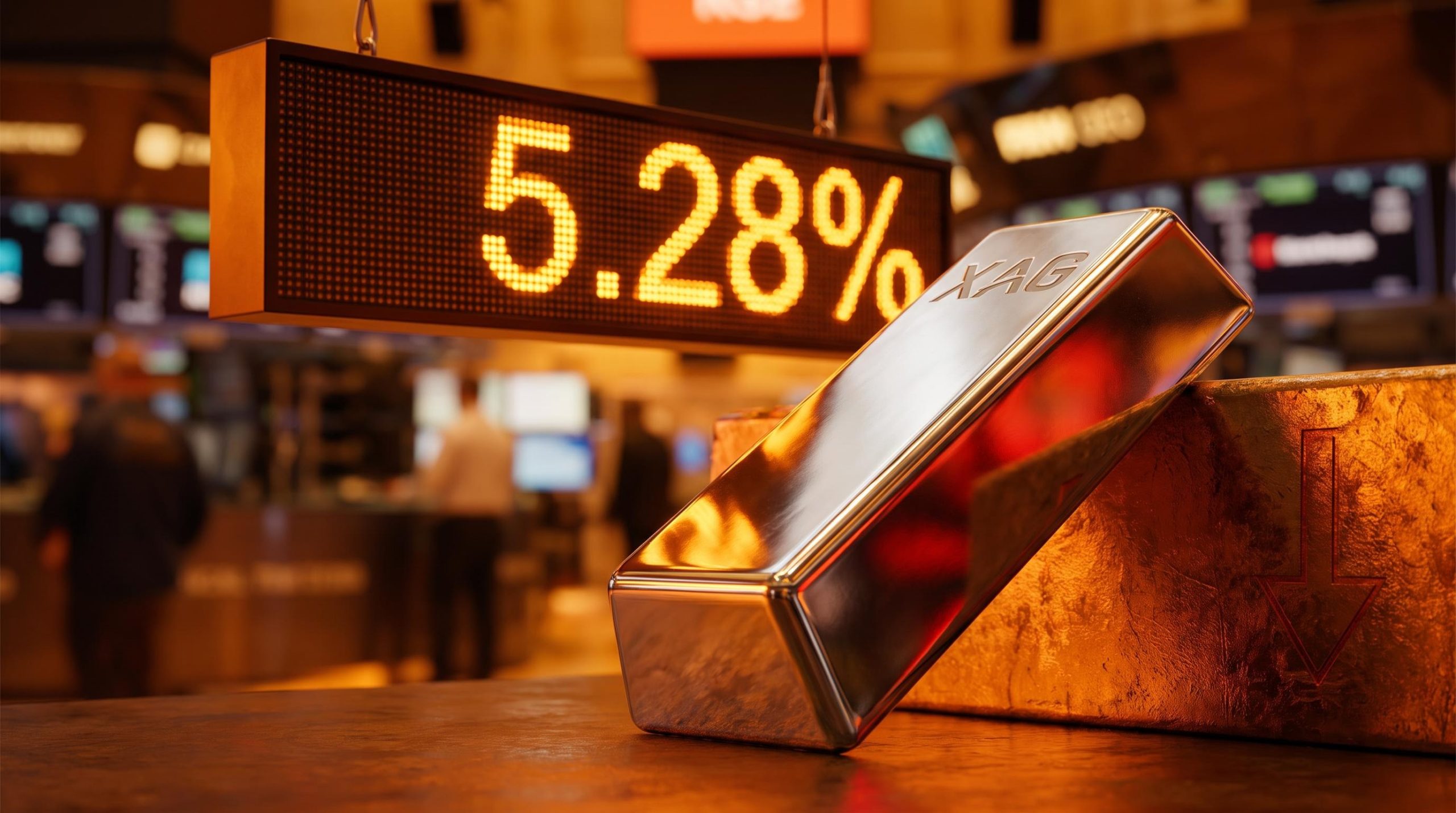
Yet here is silver, sliding 0.38% on the day, refusing to play the safe-haven role most investors expect of it. The reason sits in an unlikely place: the 10-year US Treasury yield has climbed to 5.28%, a level not seen since 2007, and the ripple effects are quietly overpowering the geopolitical fear premium.
If you have been trying to work out why silver is falling today despite obvious global instability, the confusion is understandable. This piece breaks down the hidden macroeconomic forces pulling silver lower, explains why silver behaves nothing like gold in these moments, and gives you the exact indicators to watch before you consider buying the dip.
How silver reacts to market stress differently than gold
Most investors file silver in the same mental drawer as gold: a shiny metal you buy when the world feels dangerous. That assumption is where the trouble starts.
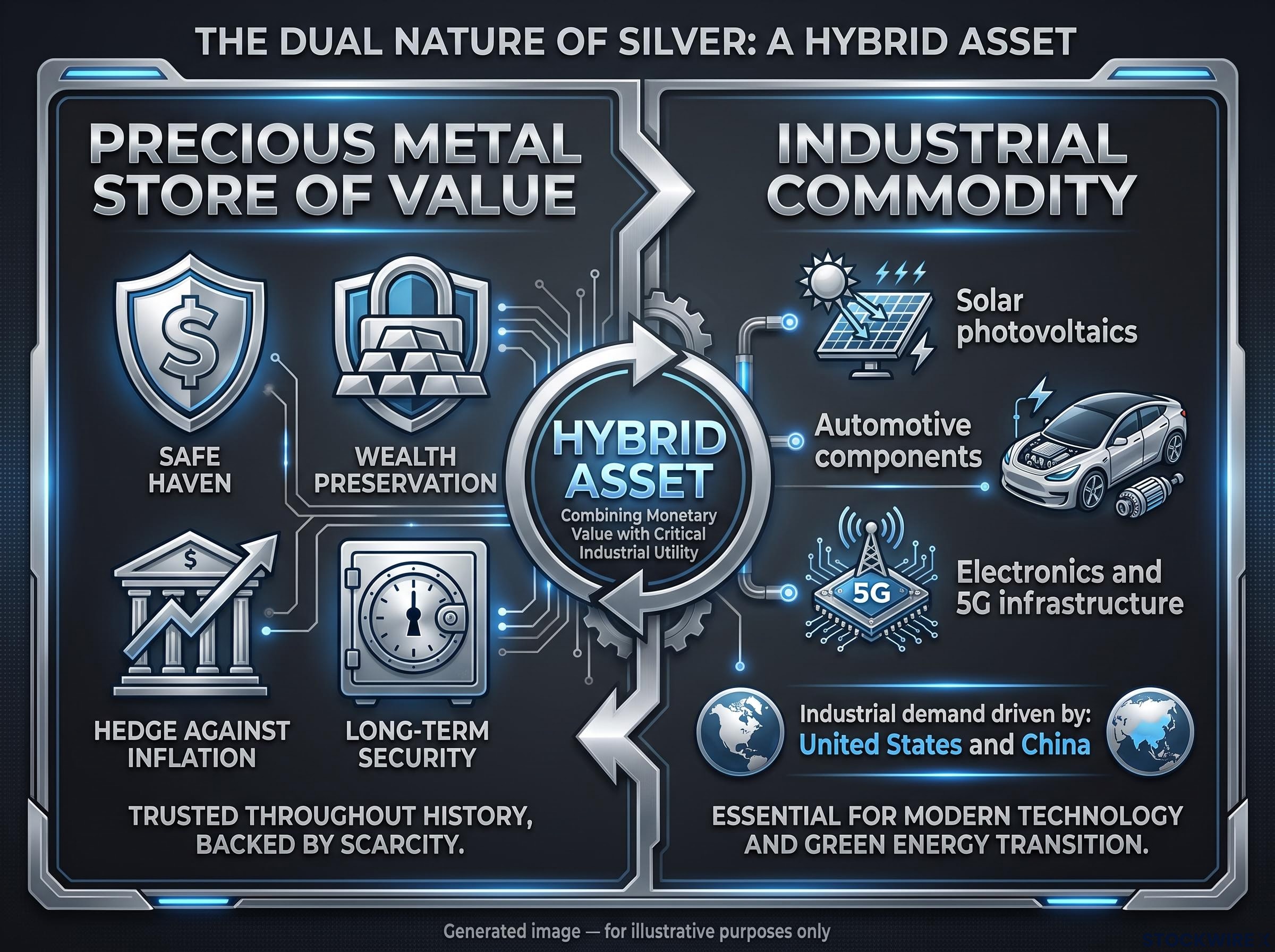
Silver is a hybrid asset, and understanding that split personality is the single most important step to reading its price action correctly.
On one hand, silver acts as a precious metal store of value, meaning investors buy it to preserve wealth during instability, inflation, and recession fears. In that role it tracks gold, though usually with less consistency and more volatility.
On the other hand, silver is a heavily used industrial commodity, and this is where it diverges sharply from gold. A large slice of silver demand comes not from nervous investors but from factories, and that demand rises and falls with the health of the global economy.
Silver possesses among the highest electrical conductivity of any metal, surpassing both copper and gold, which makes it indispensable across modern manufacturing. Industrial consumption is driven heavily by the United States and China, tying silver’s fortunes to the industrial cycles of the world’s two largest economies.
The industrial use cases stand apart from the traditional safe-haven story:
- Solar photovoltaics: silver is a core input in solar cells, and long-term energy transition policies point to structurally rising demand.
- Automotive components: electrification and modern vehicle electronics rely on silver’s conductivity.
- Electronics and 5G infrastructure: silver features throughout the hardware powering next-generation networks.
Contrast this with gold, whose demand is dominated by investment, jewellery, and central bank buying, with only a minor industrial footprint. Because so much of silver’s demand is tied to production, silver is far more sensitive to global growth than gold. When economies wobble, silver’s industrial leg buckles even if its safe-haven leg holds firm.
Some investors track the Gold/Silver ratio, which measures how many ounces of silver equal the value of one ounce of gold, to judge whether silver looks cheap or expensive relative to its counterpart.
The takeaway for you is direct: silver is not simply crisis insurance. It is also an economic barometer that needs healthy global growth to thrive, which is exactly why it can fall during a crisis when that crisis threatens growth or lifts interest rates.
The silver price drivers that matter most sit across five distinct categories: Fed rate cycles, dollar dynamics, gold correlation, industrial demand, and a structurally inelastic supply chain that cannot respond proportionately to sudden demand spikes, making silver far harder to decode than its safe-haven label suggests.
When big ASX news breaks, our subscribers know first
Why a 5.28 percent Treasury yield creates structural headwinds
Here is the force doing the real damage to silver right now, and it has nothing to do with the Middle East.
When you can lock in more than 5% annually from US government bonds with minimal risk, the appeal of holding an asset that pays you nothing collapses. Silver generates no interest and no dividends. Its entire return depends on price appreciation, and that becomes a hard sell when risk-free cash is this generous.
This is the concept of real interest rates, which is the yield on a bond after subtracting inflation. When real yields climb, the opportunity cost of holding non-yielding assets like silver rises directly, and precious metals tend to suffer.
Real yields have climbed to a 17-year high near 2.78% this cycle, and because silver generates no income, every basis point of that move raises the hurdle rate silver must clear through price appreciation alone just to match what risk-free bonds are now offering investors.
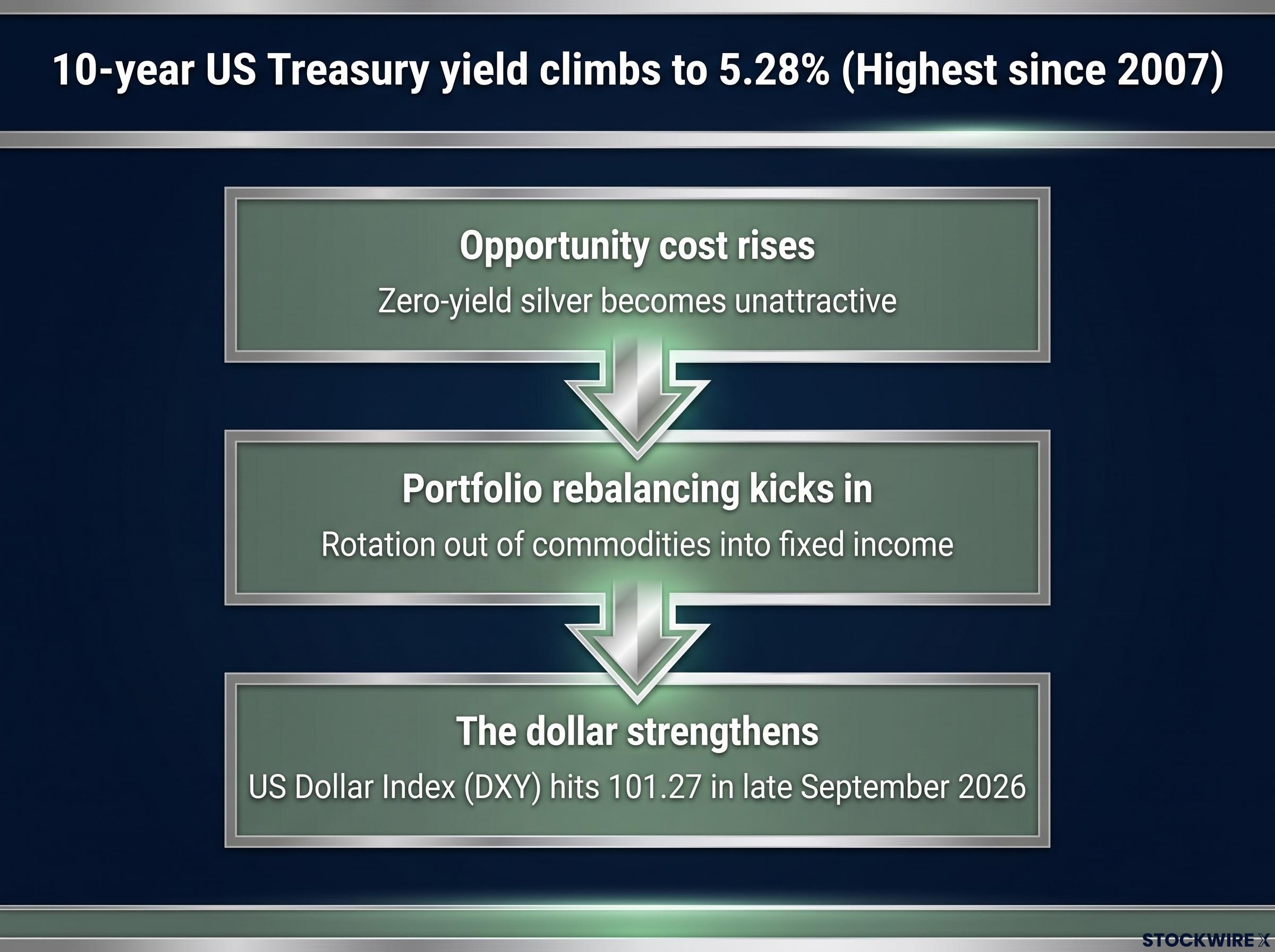
The mechanism runs through three connected stages:
- Opportunity cost rises. With the 10-year Treasury at 5.28%, the highest since 2007, investors earn a substantial guaranteed return elsewhere, making zero-yield silver comparatively unattractive.
- Portfolio rebalancing kicks in. Multi-asset funds rotate capital out of commodities and into fixed income to capture that yield, a shift that pulls money away from silver during tightening cycles.
- The dollar strengthens. Rising US yields draw global capital into dollar-denominated assets, pushing the US Dollar Index (DXY) higher.
That final stage matters enormously for silver. The DXY was trading firmly in the low-101s in late September 2026, with TradingEconomics reporting 101.27 on 29 September and Investing.com showing 101.22 the day prior.
A stronger dollar suppresses commodity prices through a simple mechanism. Silver is priced in dollars, so when the dollar rises, silver becomes more expensive for buyers using euros, yen, or rupees. That higher effective cost dampens global demand and drags the dollar price of silver down with it.
Put the pieces together and you have a compounding headwind. High yields make silver less attractive to hold, they pull investment flows into bonds, and they strengthen the currency silver is priced in. All three push in the same direction, and all three are active right now.
For your own decision-making, this gives you two indicators to watch above all others: the 10-year Treasury yield and the DXY. As long as both remain elevated, the macro gravity on silver stays firmly in place, and any dip you are tempted to buy is fighting that current. When you can secure over 5% risk-free, your bar for holding a zero-yield metal has to rise significantly, and that is precisely why silver is struggling to hold ground.
How the Strait of Hormuz deadlock complicates the inflation picture
The geopolitical story does not disappear, though. It just works in a more roundabout way than most investors assume.
As of late September 2026, mediated negotiations between the United States and Iran over the Strait of Hormuz are ongoing but unresolved. Communication channels have reopened, yet the substantive gaps remain wide.
Reuters reported on 24 September 2026 that negotiators in New York are exploring a phased deal in which Iran would reopen the strait and Washington would lift its economic blockade, though talks were described as far from agreement. Iranian Foreign Minister Abbas Araghchi confirmed indirect talks through Qatari mediators, with Tehran awaiting a formal US reply.
The public positions, however, remain strikingly far apart.
Iran demands the lifting of the US naval blockade, the release of frozen assets, and an end to pressure on its regional allies as conditions for reopening the strait. President Donald Trump, speaking on 28 September 2026, insisted his administration had offered Tehran “nothing,” rejecting reports of any sanctions relief.
Why does this matter for a metal? Because the Strait of Hormuz handles roughly one-fifth of global oil and LNG trade, and any disruption to that waterway threatens to send energy prices spiking. Higher energy costs feed straight into headline inflation.
The Federal Reserve policy connection
This is where the tug of war for silver becomes clear. An energy-driven inflation shock could push silver in two opposite directions at once.
The supportive case is straightforward. Rising inflation expectations can reinforce silver’s inflation-hedge appeal and attract safe-haven buying during periods of stress.
The undermining case is more powerful in the current environment. If energy prices spike and inflation reaccelerates, the Federal Reserve would likely be forced to hold interest rates higher for longer to contain it. That keeps Treasury yields elevated and the dollar strong, reinforcing the exact headwinds already weighing silver down.
The net effect hinges entirely on the policy response. If central banks tighten aggressively into energy inflation, the yield and dollar pressures tend to dominate and silver suffers. If they are constrained or slow to respond, silver’s hedge narrative has more room to work.
The Federal Reserve FOMC calendar documents the official meeting schedule and policy statements that set the interest rate path markets are currently pricing, making it the primary source for tracking how long restrictive monetary conditions are likely to persist.
For you, this reframes how to read Middle East headlines. A failure at the negotiating table that spikes energy prices may not rescue your silver position. It may instead force the Federal Reserve to maintain the very rates currently crushing it. Watch the diplomatic channel closely, because the second-order effect on monetary policy matters more to silver than the fear itself.
Tracking silver performance through past high-yield cycles
History does not repeat exactly, but the pattern of silver under a strong dollar and rising yields is consistent enough to be instructive. Look at the last three major episodes and a clear rhythm emerges.
During the 2013 to 2015 taper tantrum, as the Federal Reserve signalled it would wind down quantitative easing, US yields climbed and the dollar entered a sustained bull run. Silver fell sharply from its post-crisis highs and stayed under multi-year downward pressure, with only brief rallies tied to short-term risk events interrupting the slide.
The 2018 late-cycle hiking period told a similar story. The Fed raised rates several times, the dollar stayed firm, and silver traded weak for most of the year. Short-lived safe-haven bounces around trade-war escalations did not reverse the trend.
The 2021 to 2023 tightening cycle added a twist. Silver benefited early from inflation-hedge narratives and stimulus-driven industrial demand, but as real yields moved from deeply negative into positive territory and the dollar firmed, those macro forces reasserted themselves and silver struggled.
| Period | Dominant macro factor | Silver’s primary reaction |
|---|---|---|
| 2013-2015 | Taper tantrum and dollar bull run | Sharp fall from post-crisis highs; multi-year downward pressure |
| 2018 | Late-cycle Fed hiking and firm USD | Weak for most of the year; brief safe-haven bounces faded |
| 2021-2023 | Real yields turning positive amid tightening | Early inflation-hedge gains, later pressured as yields rose |
That history feeds directly into today’s analyst debate. The bearish camp argues elevated yields and a firm dollar will cap any rally, while a constructive camp points to structural industrial demand from solar and electronics as a floor beneath the price.
One more layer amplifies the volatility. Commodity Futures Trading Commission (CFTC) positioning data often shows heavy speculative flows, and crowded long or short bets can trigger sharp reversals independent of the underlying fundamentals.
Your trading timeline is what matters most here. History shows silver can endure multi-year declines during strong dollar cycles, punctuated by brief geopolitical rallies that revert once restrictive policy reasserts itself.
For readers wanting to map the macro picture onto specific price levels, our full explainer on silver’s current chart structure covers the live Head and Shoulders pattern, the $68.00 breakout trigger, and the downside sequence to $54.89 that activates on a close below $62.20.
Positioning your portfolio for the next macro shift
The picture that emerges is a contest between two forces. On one side, a 5.28% Treasury yield and a firm dollar exert relentless downward pressure. On the other, structural industrial demand from solar, electronics, and 5G offers a longer-term floor beneath the metal.
For now, the macro side has the upper hand, and history suggests it tends to win these standoffs until the monetary backdrop shifts.
Whether the real yield cycle peak is already in place or represents a new structural floor is the pivotal debate for silver positioning: a cyclical peak eventually relieves the opportunity-cost pressure on zero-yield metals, while a structural reset extends the headwind through the entire decade.
Over the coming weeks, keep your attention on three things: Federal Reserve commentary on the path of rates, movements in the DXY, and headlines out of the Strait of Hormuz negotiations that could reshape inflation expectations.
The disciplined approach is patience. Rather than aggressively sizing a position now, wait for a clear breakdown in the dollar or a genuine easing in inflation expectations before adding conviction. Those signals, not the geopolitical noise, are what will mark a real turn.
This article is for informational purposes only and should not be considered financial advice. Investors should conduct their own research and consult with financial professionals before making investment decisions. Past performance does not guarantee future results, and financial projections are subject to market conditions and various risk factors.