

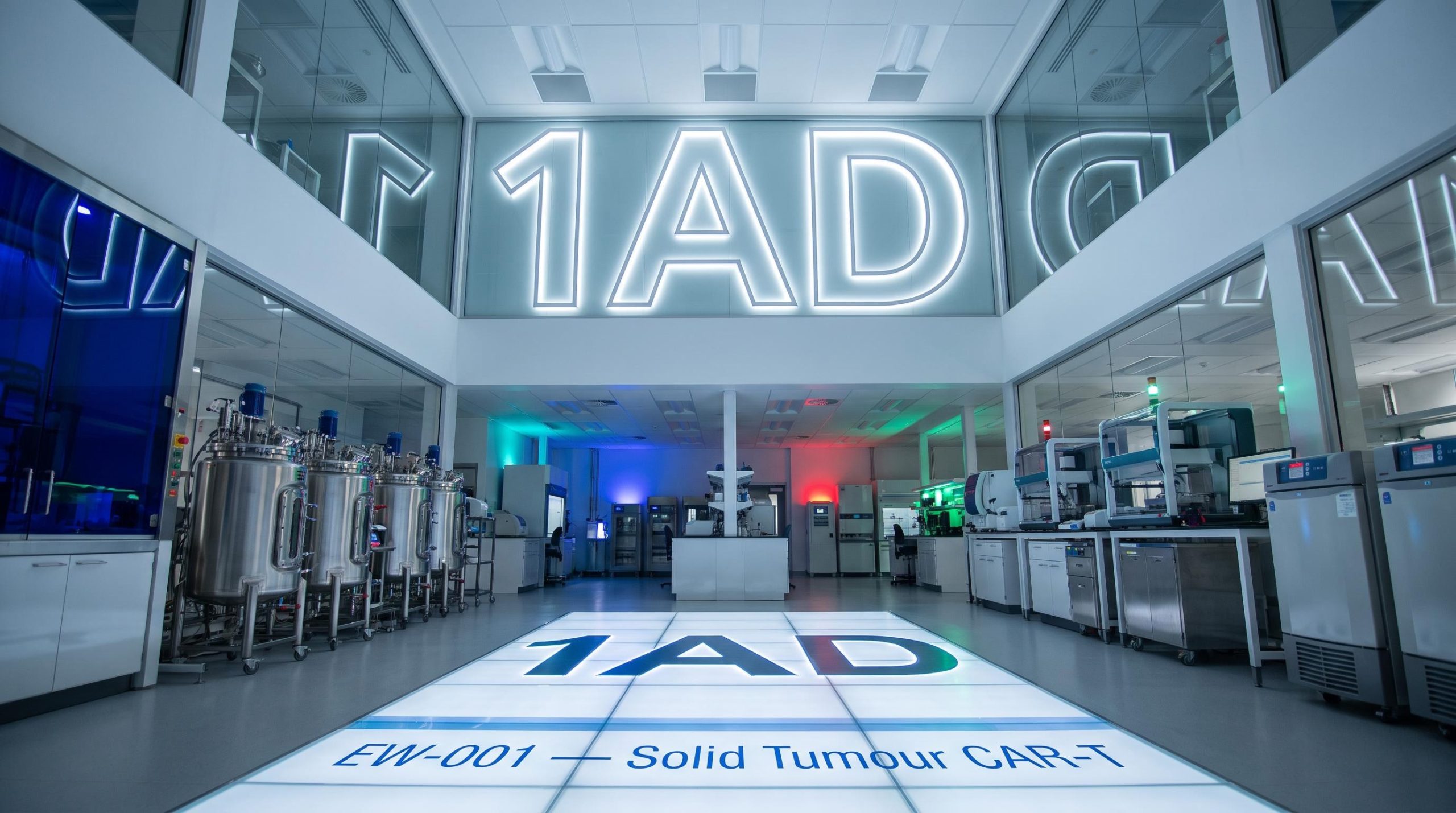
AdAlta takes EW-001 to the heart of the global CAR-T market
AdAlta Limited (ASX: 1AD) is presenting a poster at the 11th Annual CAR-TCR Summit in Boston on 16–17 September 2026, the leading global forum for companies developing CAR-T and TCR cell therapies. The event brings together senior pharmaceutical executives, biotechnology developers, clinicians, and specialist investors — precisely the audience AdAlta expects will ultimately buy or partner the products it develops.
The poster, titled “An East to West business model for commercialising solid tumour CAR-T therapies”, is being presented by CEO and Managing Director Dr Tim Oldham. The United States is the world’s largest market for cell therapies and home to most of the large pharmaceutical companies AdAlta expects to be the ultimate buyers of its products, making this appearance a strategically targeted move.
When big ASX news breaks, our subscribers know first
The ‘East to West’ model explained
AdAlta’s core strategy is built on a straightforward observation: Asia, particularly China, has developed a deep pool of clinically validated CAR-T assets, but many of those therapies cannot reach Western patients due to regulatory, manufacturing, capital, and commercialisation barriers. AdAlta’s ‘East to West’ model is designed to bridge that gap.
The four-step process, as outlined in the poster, works as follows:
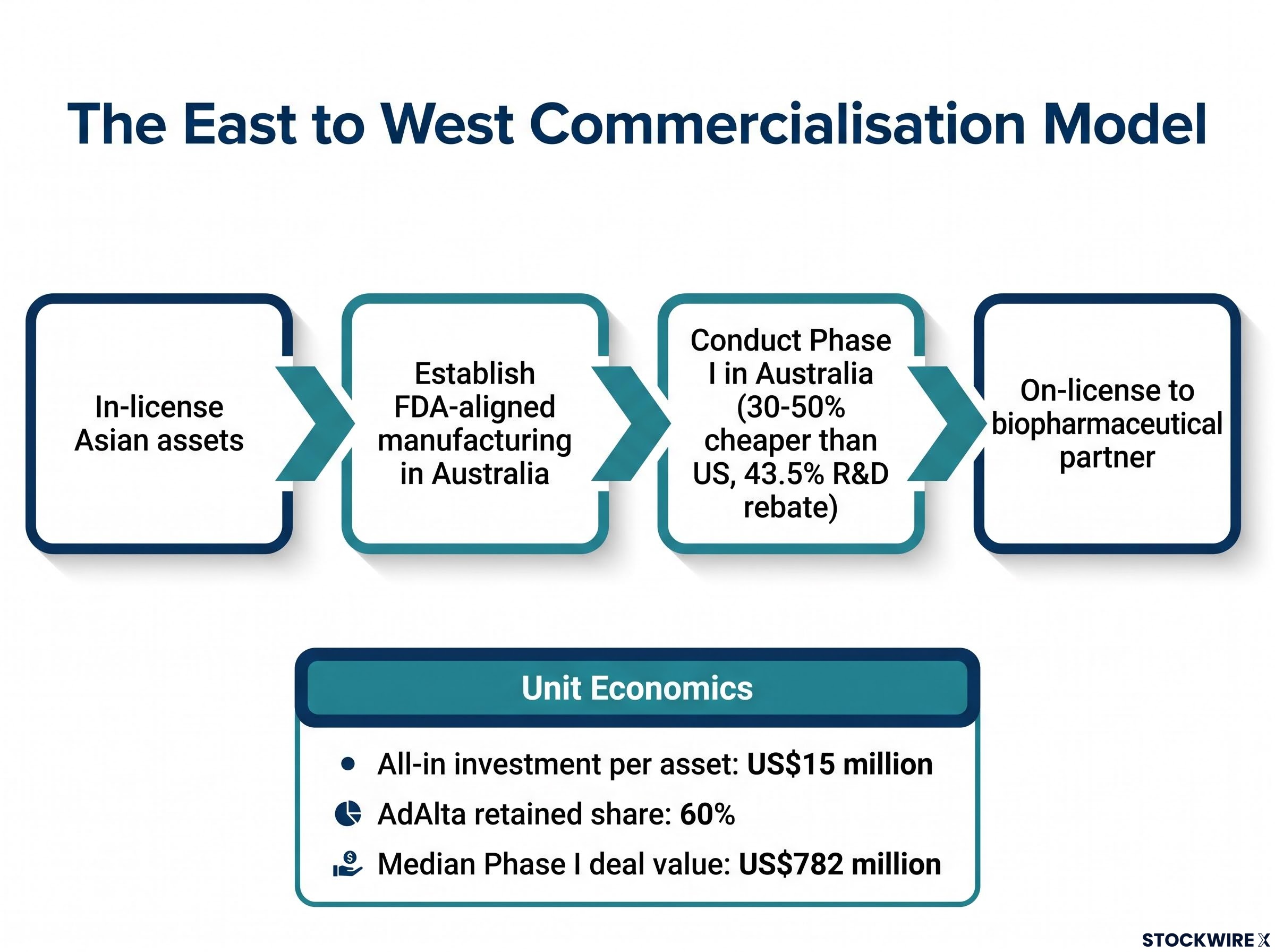
- In-license clinically differentiated Asian assets at low up-front cost
- Establish US FDA-aligned manufacturing in Australia
- Conduct Phase I clinical studies in Australia, which offers cost advantages of 30–50% cheaper than the US, plus a 43.5% R&D Tax Incentive rebate
- On-license the de-risked, Western-data-enabled asset to a larger biopharmaceutical partner
Per the poster’s unit economics panel, the all-in investment per asset is approximately US$15 million, with AdAlta retaining a 60% share of Phase I commercialisation event proceeds. The poster cites a median comparable Phase I deal value of US$782 million, framing the potential return on that investment.
The strategic rationale for targeting solid tumours is also clearly stated. Solid tumours account for approximately 90% of all cancers, yet they remain largely underserved by existing cellular immunotherapies. The broader cellular immunotherapy market is projected to grow at a compound annual growth rate of approximately 34%, reaching US$20.3 billion by 2028.
EW-001 clinical results — why the data turns heads in Boston
EW-001 is AdAlta’s lead asset: a mesothelin-targeted, anti-PD1 nanobody-armoured autologous CAR-T therapy developed in collaboration with Shanghai Cell Therapy Group. It is designed to treat mesothelioma, a rare and rapidly fatal cancer typically linked to asbestos exposure, with potential application across more than ten other solid tumours.
The clinical backdrop makes EW-001’s data particularly notable. Current standard-of-care therapies deliver complete tumour clearance in fewer than 3% of first-line mesothelioma patients and almost never in second-line patients. Against that baseline, EW-001’s results in relapsed or advanced mesothelioma patients stand out:
- Up to 20% Complete Response rate (complete tumour clearance)
- Up to 50% Overall Response rate (tumour shrinkage)
- Two patients achieving Complete Responses have now reached two-year and one-year survival milestones respectively, with no evidence of cancer returning
- Median overall survival has not yet been reached in the current manufacturing generation, though an earlier generation of EW-001 achieved more than 25 months median survival
- 36 patients treated to date; special access approved in China
The two-year survival milestone reached by the first Complete Responder represents an outcome with no documented precedent in second-line mesothelioma treatment, where median overall survival under standard immunotherapy sits at approximately 10 months.
The table below compares standard-of-care outcomes against EW-001 results across key clinical measures:
| Outcome Measure | First-Line Chemotherapy (CHECKMATE-743) | First-Line Immunotherapy (CHECKMATE-743) | Second-Line Placebo (CONFIRM) | Second-Line Immunotherapy (CONFIRM) | EW-001 All Patients (n=14) | EW-001 Higher Doses (n=10) |
|---|---|---|---|---|---|---|
| Complete Response Rate | 0% | 2.6% | 0% | 0% | 14% | 20% |
| Overall Response Rate | 44.0% | 39.6% | 1% | 11%* | 43% | 50% |
| Median Overall Survival | 14.1 months | 18.1 months | 6.9 months | 10.2 months | Not reached | Not reached |
*Overall response rates up to 29% have been reported in other studies.
It should be noted that EW-001 has not yet received regulatory approval for general commercial launch anywhere in the world.
Dr Tim Oldham, CEO & Managing Director, AdAlta
AdAlta’s poster describes its goal of using cell therapies as living drugs to bring new hope to patients with solid cancers, and its ‘East to West’ business model, which sources the most promising Asian cell therapies and makes them accessible to Western patients and pharmaceutical companies in a de-risked, capital efficient manner.
What Boston means for AdAlta’s investment case
The CAR-TCR Summit appearance carries significance beyond the science itself, touching on three angles relevant to AdAlta’s investment case.
Partner pipeline: The summit’s audience includes the senior pharmaceutical executives who represent the eventual buyers or licensing partners for EW-001. Direct engagement at this forum supports the future on-licensing of the asset, which is a core step in AdAlta’s commercialisation model.
Funding optionality: Building awareness among US-based specialist investors supports AdAlta’s ability to fund and scale its pipeline. The poster notes that third-party financing forms part of the Phase I budget structure, with an estimated total Phase I budget of US$14–19 million over four years.
Execution momentum: AdAlta continues to advance manufacturing transfer, US FDA engagement, and preparations for Australian Phase I development of EW-001. The poster also notes that 30% of big-pharma licensing deals now involve a China biotech, indicating that appetite for Chinese-originated assets among Western pharmaceutical companies already exists at scale.
The automated CAR-T manufacturing platform AdAlta has deployed through its partnership with Oribiotech and Cell Therapies Pty Ltd holds US FDA Advanced Manufacturing Technology designation and targets 10-50x higher throughput versus legacy processes, a capability that directly supports the cost efficiency framing central to the East to West model.
Looking further ahead, AdAlta describes its model as scalable and replicable, with a pipeline of assets currently under diligence and a “two-lane” platform in development that would extend the model beyond the East to West pathway. No partnerships or licensing agreements are confirmed at this stage.
Don’t Miss the Next Healthcare Breakthrough
Big News Blast delivers FREE breaking ASX healthcare news to your inbox within minutes of release, complete with in-depth analysis. Join 20,000+ subscribers already staying ahead of the market. Click the “Free Alerts” button at StockWire X to get the next market-moving announcement the moment it drops.