
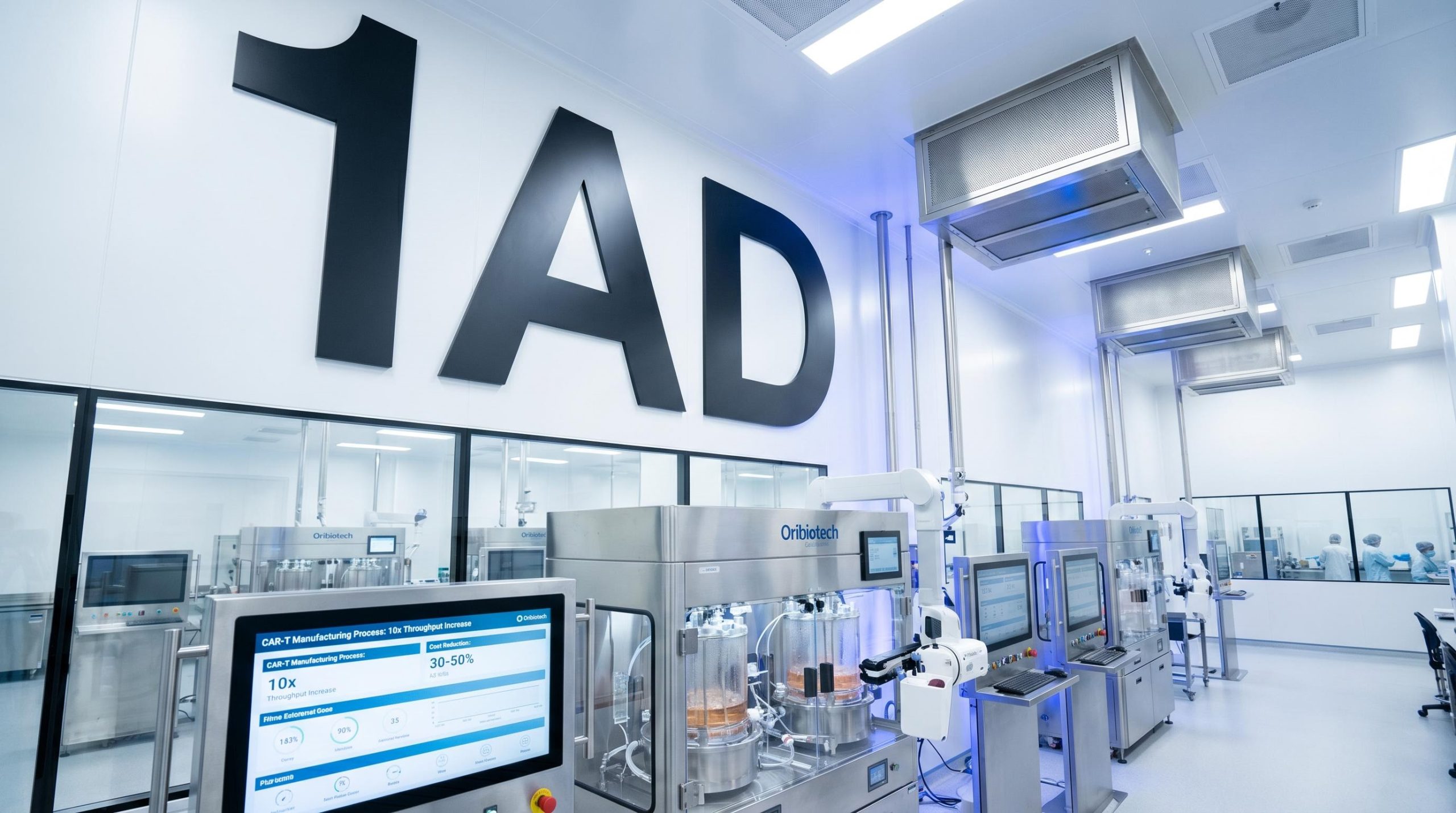
AdAlta partners with Oribiotech to tackle CAR-T manufacturing bottleneck
AdAlta Limited (ASX: 1AD) has entered a three-party Memorandum of Understanding with Oribiotech (Ori) and Cell Therapies Pty Ltd (CTPL) to deploy Ori’s automated cell therapy manufacturing platform, IRO®, across Australia and the Asia Pacific region. The non-binding collaboration agreement positions AdAlta to address a critical commercialisation barrier facing the CAR-T therapy industry: manufacturing cost and scalability.
The MoU supports AdAlta’s “East to West” globalisation strategy, which involves in-licensing T cell therapies from Asian originators, conducting FDA-regulated manufacturing and Phase I trials in Australia, then out-licensing to larger pharmaceutical companies for registrational studies. By demonstrating manufacturing credibility through IRO adoption, AdAlta strengthens its pitch to potential licensees seeking therapies that are both clinically effective and commercially viable.
When big ASX news breaks, our subscribers know first
Why CAR-T manufacturing remains the industry’s biggest hurdle
CAR-T therapies have transformed cancer treatment by engineering patients’ immune cells to target tumours. However, the technology faces a fundamental scaling problem. Current legacy manufacturing platforms are complex, labour-intensive, and expensive, requiring highly specialised facilities and processes that limit throughput.
According to Oribiotech CEO Jason Foster, manufacturing constraints mean that only 5% of patients globally currently access CAR-T therapies despite their life-saving potential. The cellular immunotherapy market is projected to reach US$20.3 billion by 2028 at a 34% compound annual growth rate, but capturing that growth requires solving the manufacturing bottleneck. IRO aims to address this by automating key production steps, improving consistency, and reducing costs.
What IRO promises to deliver
Oribiotech claims IRO’s automation platform can deliver the following performance metrics, based on internal data:
- 10–50x higher throughput in the same physical footprint
- Shorter manufacturing timelines and improved success rates
- 30–50% potential cost savings compared to legacy processes
- Digital tools enabling rapid process optimisation and simplified technology transfer between manufacturing sites
Jason Foster, CEO of Oribiotech
“Getting CAR-T and other cell therapies into the clinic isn’t the biggest challenge anymore—it’s making them commercially viable.”
These targets represent what IRO is designed to achieve. The platform is a fully closed system that automates, digitises, and standardises the most labour-intensive steps of cell and gene therapy manufacturing.
How this supports AdAlta’s pipeline and commercial strategy
AdAlta’s “East to West” strategy depends on delivering T cell therapies that meet two criteria: clinical efficacy in solid cancers and commercial manufacturability. The company’s lead product, BZDS1901, already incorporates shorter, lower-cost manufacturing technology and has demonstrated complete clearance of advanced mesothelioma tumours in up to 20% of patients in early clinical trials.
However, other cellular immunotherapy products being evaluated by AdAlta do not yet have this manufacturing advantage. IRO adoption could enhance the commercial attractiveness of these pipeline assets by reducing production costs and enabling scalable manufacturing. For AdAlta’s partnering model to succeed, the company must demonstrate that its therapies can be manufactured at scale, cost-effectively, and transferred easily between sites—a requirement IRO is positioned to address.
The cellular immunotherapy market’s projected growth to US$20.3 billion by 2028 at 34% CAGR is heavily dependent on solving the manufacturing cost equation. Therapies that remain too expensive to produce at scale cannot capture the broader patient population or justify the investment required for registrational trials.
Dr Tim Oldham, CEO & Managing Director of AdAlta
“Our strategy depends on showing partners that our therapies are not only effective but can be manufactured at scale, cost-effectively, and transferred easily between sites. IRO offers the potential to deliver this across multiple products in our pipeline.”
MoU goals and next steps
The three-party MoU outlines the following strategic goals, though these represent intent rather than confirmed deliverables:
- Deploy the IRO platform at CTPL for process development and clinical manufacturing
- Use IRO to optimise relevant AdAlta group manufacturing processes for scalability and cost reduction
- Create additional capacity at CTPL for other cell therapy developers with pre-clinical, clinical, and commercial programmes
The third goal positions CTPL as a regional contract development and manufacturing organisation (CDMO) hub, potentially generating revenue streams beyond AdAlta’s internal pipeline by serving other Asia Pacific developers.
IRO’s track record and regulatory recognition
Oribiotech’s IRO platform is not an unproven concept. The platform has achieved several technical and regulatory milestones that provide validation of its commercial readiness.
| Milestone | Status |
|---|---|
| Characterisation runs | 900+ across 80+ donor and patient samples |
| Manufacturing processes | 11 different cell therapy processes |
| Clinical trial approval | China (first patient dose pending) |
| Deployments | 14 cell therapy developers, contract manufacturers, academic medical centres, and large pharmaceutical companies |
| Regulatory recognition | US FDA Advanced Manufacturing Technology (AMT) designation |
The US FDA Advanced Manufacturing Technology designation is particularly significant. The AMT programme encourages adoption of technologies that improve manufacturing reliability, product quality, and scalability. For developers using IRO, AMT designation provides reduced regulatory uncertainty and a clearer pathway from early development through to commercial launch. It validates the platform as a leading solution for overcoming critical challenges in cell and gene therapy manufacturing.
What investors should watch next
The MoU represents strategic intent rather than a binding commercial agreement. The key milestones to monitor are:
- Execution of binding agreements between the three parties
- Confirmed deployment timeline for IRO at CTPL facilities
- First manufacturing runs using IRO for AdAlta pipeline assets
- Announcements of additional CDMO clients for CTPL leveraging the IRO platform
CTPL is positioned as the leading cell therapy CDMO in the Asia Pacific region, with more than 20 years of experience manufacturing and delivering advanced cell and gene therapies to patients. The organisation is co-located with the Peter MacCallum Cancer Centre, maintaining close ties to clinical investigators and academic scientists while running independent GMP-licensed operations.
Dr Bev Menner, CEO of Cell Therapies Pty Ltd
“Access to IRO will help us attract commercial CAR-T programs to Australia and Asia, and accelerate development of scalable, lower cost therapies, improving patient access to these groundbreaking therapies.”
The value realisation for AdAlta depends on moving from this MoU framework to operational deployment. Success would validate AdAlta’s differentiation in the cellular immunotherapy space: not just promising clinical candidates, but commercially viable manufacturing infrastructure that makes those therapies attractive to large pharmaceutical partners.
Want the Next Biotech Breakout in Your Inbox?
Join 20,000+ investors receiving FREE breaking ASX healthcare news delivered within minutes of release, complete with in-depth analysis. Click the “Free Alerts” button at Big News Blast to get real-time alerts and expert coverage the moment market-moving announcements break.